HOME > BLOG > Finance > GST Course: Eligibility, Fees, Syllabus & Career Scope in 2026
Finance
GST Course: Eligibility, Fees, Syllabus & Career Scope in 2026
J
By Arif Siddiqui
October 3, 20267 min read
Published on October 3, 2026
SHARE THIS ARTICLE
Table Of Content
What Is a GST Course?
Why Learn GST in 2026?
Types of GST Courses
GST Course Eligibility
Key Insights
A GST course teaches Goods and Services Tax law, return filing, input tax credit and compliance, and many programmes add hands-on practice in Tally.
Most GST certificate courses have open eligibility, but enrolling as a GST Practitioner has specific requirements under Rule 83 of the CGST Rules.
The syllabus should reflect GST 2.0, which restructured the rate slabs from 22 September 2025.
A Tally GST course is valuable because TallyPrime supports GST invoicing, return preparation, reconciliation, e-invoicing and e-way bills.
Short GST certificate courses are typically low-cost and last from a few days to about two months, so course quality and practical exposure matter more than price.
In this blog, you'll learn what a GST course covers, its eligibility, fees, syllabus, career scope and how to choose the right programme.
Almost every registered business in India deals with GST every month, which is why employers keep asking for people who can handle invoices, returns and input tax credit accurately. A GST course is one of the quickest ways for commerce students, accountants and business owners to build that skill.
This guide explains what a GST course is, the main types available, who is eligible, what it costs, what the syllabus covers and where it can take your career in 2026.
A GST course is a training programme on Goods and Services Tax, India’s unified indirect tax on the supply of goods and services. It teaches you how GST works in law and in practice: registration, tax invoices, input tax credit, return filing and compliance.
The subject also keeps changing. Following the 56th GST Council meeting, the government moved to a simplified rate structure from 22 September 2025, with most goods and services falling into 5% and 18% slabs and a 40% rate for luxury and sin goods, as outlined in the PIB summary of the reforms. A good GST course must teach the current structure, not the older five-rate one.
GST touches almost every part of a business: pricing, purchasing, invoicing, cash flow and audits. A wrong rate on an invoice or a missed input tax credit claim can directly affect a company’s margins and lead to notices or penalties, which is why accuracy in GST work is valued.
The reforms also changed day-to-day work. Businesses had to update rates on invoices, review credit positions and retrain teams after the slab changes, and that created fresh demand for people who understand both the law and the software. For students, this makes GST one of the more practical skills to add alongside a commerce degree.
Types of GST Courses
GST Certification Online
Online programmes are popular with working professionals and students who want flexibility. A GST certification online typically includes recorded or live sessions, case studies and a final assessment. Before enrolling, check whether it includes practice on GST return workflows rather than only theory. If you are unsure whether an online credential is worthwhile, see our guide on whether online certification is worth it.
Tally GST Course
A Tally GST course, sometimes listed as a Tally course with GST, combines accounting in TallyPrime with GST entries and returns. It is popular with those who want to work as accounts executives or run small-business books. Because you practise entries, ledgers and reports on real software, it tends to be more hands-on than a purely theoretical GST certificate.
GST Practitioner Training
This is aimed at people who plan to file returns on behalf of clients. It covers the law in more depth and prepares you for the enrolment process explained in the eligibility section below. It suits people who want to serve multiple clients, such as small traders, professionals and start-ups.
For certificate courses: eligibility is usually open. Training providers commonly accept graduates in commerce, arts or engineering, working accountants, CAs, CMAs, company secretaries and law aspirants, and some institutes also accept students who have completed Class 12. Always confirm on the provider’s page, as rules differ.
For enrolling as a GST Practitioner: the CGST Rules set specific conditions. Under Rule 83, you may qualify through a graduate or postgraduate degree in commerce, law, banking including higher auditing, business administration or business management from an Indian university, or a recognised foreign equivalent. Other routes include passing the final examinations of ICAI, ICMAI or ICSI, or at least five years’ experience as a sales tax practitioner or return preparer under earlier law.
Enrolled practitioners must also pass an examination notified by the authorities, which NACIN conducts. A GST course helps you prepare, but it does not replace enrolment. Check current rules on the official portal before you apply.
Free Courses
Finance for All – Free Finance Certification Course
Fees and duration vary widely. Published listings from private institutes show short programmes such as a four-day weekend GST certification priced around ₹7,500 and a two-month GST practitioner course around ₹8,000, though these figures are only examples and change over time.
Courses that add Tally training, live projects or a university or professional-body credential can 2cost more. When comparing, look at what the fee actually includes: study material, practice on the GST portal or Tally, assessments, certificate and placement support.
A cheaper course is not automatically better value. A short programme that leaves you unable to prepare a return has cost you time, while a slightly costlier one with supervised practice can save months of on-the-job learning. If you are weighing a short certificate against a longer qualification, compare the options in our guides on the best finance courses in India before deciding.
GST Course Syllabus
While every provider structures its curriculum differently, a solid syllabus usually covers the following modules.
1. GST Fundamentals
Concepts such as supply, CGST, SGST, IGST, time, place and value of supply, registration and the current rate structure under GST 2.0.
2. Input Tax Credit
Eligibility, blocked credits, reversals and matching your purchase records with government-reported data. ITC reconciliation is a valued skill in accounting roles.
3. Returns and Payments
Preparing and filing GSTR-1, GSTR-3B and the annual return, payment of tax and handling amendments.
4. E-Invoicing and E-Way Bills
Documentation required for businesses and for the movement of goods, including generating e-invoices and e-way bills and understanding when each is needed.
5. Tally GST Practicals
Enabling GST in TallyPrime, creating tax ledgers, recording sales and purchase vouchers, and generating reports. Strengthen the accounting base with our guides to types of accounting and financial vs managerial accounting.
6. Compliance and Assessments
Refunds, notices, audits and record-keeping, along with how to respond to a department query with supporting records. Pair this with the guide on taxation in India and our explainer on corporate tax for the wider tax picture.
Why a Tally GST Course Matters
Many small and mid-sized businesses record transactions in Tally, so employers often prefer candidates who can do both accounting and GST. According to TallyPrime’s taxation features, the software connects with the GST portal to upload GSTR-1 and GSTR-3B data, reconcile GSTR-2A and 2B, and support e-way bills.
That means a Tally course with GST trains you on the same workflow you may use on the job. Since Excel is also common in tax work, add skills from our Excel formulas list and read about top accounting skills.
These roles exist in accounting firms, manufacturing, retail, e-commerce, logistics and consulting. Some professionals also build a freelance practice by handling returns for small businesses.
Salary depends on skills, city and employer. Private training-portal estimates place fresher GST executive pay at roughly ₹2.5–4.5 lakh per year, but treat this as a guide, not a guarantee. For broader benchmarks, read our tax consultant salary guide. To grow further, explore how to become an auditor or the top finance courses.
A GST course is a practical, affordable way to build compliance skills that businesses need every month. Choose a programme with updated GST 2.0 content, hands-on Tally or portal practice and a clear assessment, and check Rule 83 if you plan to practise as a GST Practitioner.
A GST course teaches Goods and Services Tax law and practice, including registration, invoicing, input tax credit and return filing. It is available as short certificates, practitioner training and part of larger degrees.
Most certificate courses are open to graduates, accountants and professionals, and some accept Class 12 students. Enrolling as a GST Practitioner has separate conditions under Rule 83 of the CGST Rules.
Short programmes can be completed in a few days on weekends, while others run for about two months. Longer credentials with Tally or projects take more time.
Published listings for short courses are around ₹7,500 to ₹8,000, but fees vary by provider, mode and inclusions. Compare what is covered before paying.
Yes, if you want an accounts or GST executive role. Tally is widely used for billing and returns, so practising GST entries in it makes you job-ready.
Yes. Many providers offer GST certification online through live or recorded classes. Choose one that includes practical filing exercises and a proper assessment.
Not legally. Eligibility comes from your qualification or experience under Rule 83, plus passing the notified examination. A course simply helps you prepare.
You can look for roles such as GST executive, accounts executive, tax consultant, compliance analyst and audit associate, or offer return-filing services once you meet the requirements.
Arif Siddiqui
Head of Accounting and Treasury
Arif Siddiqui is a finance leader specializing in accounting, treasury, and financial strategy. As Head of Finance at Generali Employee Benefits, he brings extensive experience in managing global financial operations. He is known for driving financial efficiency and governance across organizations. His leadership supports sustainable business growth and financial excellence.
Get Free Upskilling Guidance
Fill in the details for a free consultation
Related Courses
Explore our programs
Executive Certificate Programme in Corporate & Strategic Finance

 October 3, 2026
 7 min read




 Key Insights
 ChatGPT
 Perplexity
 Claude
 Grok
Grok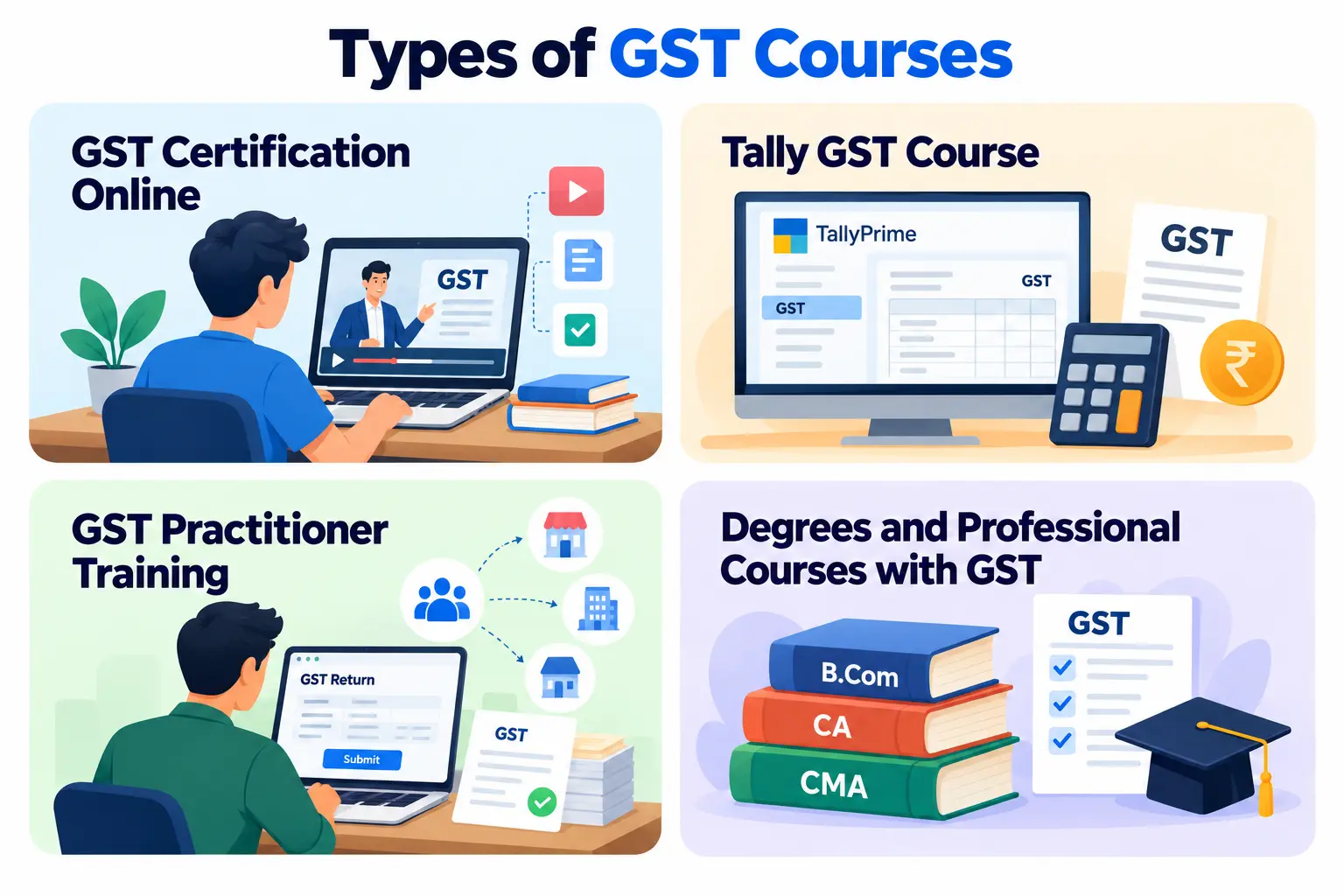









 ROI Calculator