HOME > BLOG > Web Design > Front End Technologies List: Skills Every Developer Must Know
Web Design
Front End Technologies List: Skills Every Developer Must Know
J
By Shubham Lal
May 19, 20268 min read
Last updated on July 9, 2026
SHARE THIS ARTICLE
Table Of Content
Types of Front-End Technologies
The Framework Hierarchy: React's Dominance and the TypeScript Mandate
AI-Augmented Development: Mastering the New Baseline
The 15 Essential Front-End Skills: Expert Insights for 2026
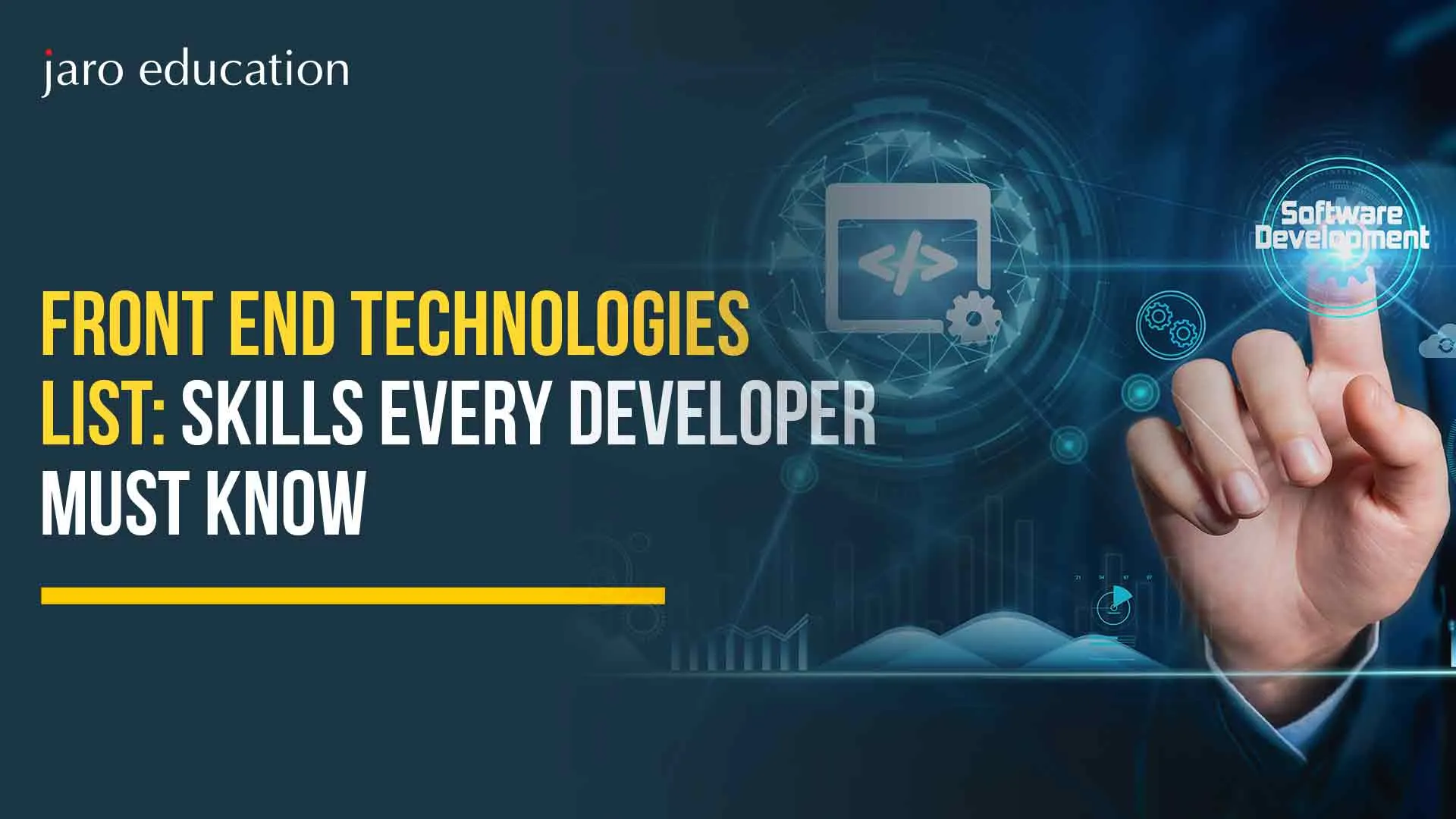
What are front-end technologies? It is the backbone of everything users see and interact with on a digital platform. From eye-catching layouts to smooth navigation and responsive design, front-end technologies shape the entire user experience. They combine core languages like HTML, CSS, and JavaScript with modern frameworks to bring websites to life. As businesses increasingly rely on digital presence, mastering front-end technologies has become essential for creating intuitive, visually appealing, and high-performing web applications that keep users coming back.
The front-end development landscape has fundamentally shifted. What once separated a strong candidate from an average one — clean HTML, polished CSS, functional JavaScript — now represents the bare minimum to get past an initial screening call. Senior roles at tier-1 companies demand something far more strategic.
The baseline has moved. Proficiency in core web technologies is table stakes, not a competitive edge.
According to the Stack Overflow 2023 Developer Survey, 76% of developers are currently using or planning to integrate AI tools like GitHub Copilot into their workflow. That single shift is compressing timelines, raising output expectations, and fundamentally redefining what "senior" actually means on a job description.
The complete Front End Technologies List: Skills Every Developer Must Know has expanded dramatically. This article frames 15 essential skills across a practical ROI-and-seniority matrix — helping you understand not just what to learn but when and why it accelerates career growth.
Ready to break down exactly which technologies deliver the most leverage? Let's start with the landscape itself.
Before diving into which specific tools dominate senior job listings, it helps to map the broader landscape. Any solid Front End Technologies List breaks down into distinct layers, each serving a specific role in how modern web applications are built and delivered.
The Core Layer: Structure, Style, and Behavior
At the foundation sit three technologies that haven’t changed in purpose, only in complexity:
HTML5 — Semantic markup, accessibility attributes, and Web Components
CSS3 — Including preprocessors like Sass and modern layout systems (Grid, Flexbox, Container Queries)
JavaScript (ES2024+) — The engine powering interactivity, logic, and asynchronous data handling
These aren’t beginner topics anymore. Senior roles expect deep fluency, not surface-level familiarity.
The Tooling Layer: Build Systems and Developer Experience
Above the core sits a tooling ecosystem that handles how code gets compiled, bundled, and optimized. According to the ASSIST Software frontend guide, build tools like Vite and esbuild have largely replaced slower legacy bundlers, dramatically improving developer experience and deployment speed.
The Framework Layer: Where Specialization Begins
The framework layer is where generalist developers become specialists and where hiring managers draw the sharpest distinctions between candidates. This is precisely why understanding which frameworks define the current market is critical for anyone targeting senior growth in 2026.
The Framework Hierarchy: React's Dominance and the TypeScript Mandate
Any credible Front End Technologies List tools breakdown for 2026 puts React at the top—and the data makes that case decisively. React job listings now exceed 50,000 openings, nearly double those of Angular and significantly higher than competing frameworks. That’s not a trend—it’s an industry standard with compounding momentum.
Technology
Market Presence
Seniority Impact
React
~44.7% usage rate
Near-universal requirement
TypeScript
~85% of senior job ads
Eliminates candidates without it
Next.js
Rapidly growing adoption
Expected for full-stack roles
Zustand/TanStack Query
Emerging standard
Differentiates senior engineers
React: The Non-Negotiable Starting Point
React’s dominance stems from more than popularity—it reflects an entire ecosystem that enterprises have built workflows, hiring pipelines, and codebases around. In practice, skipping React in favor of alternatives is a career risk most senior candidates can’t afford to take. Proficiency with hooks, component architecture, and performance optimization patterns like memoization is table stakes at this level.
TypeScript: The Mandate Senior Developers Can’t Ignore
TypeScript has moved from “nice to have” to a gatekeeping requirement. Approximately 80% of senior front-end job advertisements now explicitly require TypeScript proficiency. What was once optional type safety has become the enterprise baseline for maintaining large, collaborative codebases. Candidates without it are routinely screened out before the first interview.
Next.js and the SSR Shift
Beyond React itself, Next.js has redefined what senior front-end developers are expected to deliver. Server-Side Rendering, static generation, and hybrid rendering models aren’t advanced specializations—they’re core competencies. What typically happens is that organizations adopting Next.js simultaneously shift state management away from the heavyweight Redux pattern towards lighter solutions like Zustand or TanStack Query, prioritizing developer experience without sacrificing predictability.
That state management evolution points to a broader theme: the tools changing fastest aren’t the frameworks themselves—they’re the layers surrounding them. Which brings us to perhaps the most disruptive layer of all: the AI tools now embedded directly into how developers write code.
AI-Augmented Development: Mastering the New Baseline
Frameworks and TypeScript fluency matter—but in 2026, the gap between good developers and great ones increasingly comes down to how effectively they work with AI. Any updated Front End Technologies List software breakdown now includes AI-powered tools as a non-negotiable category, not a nice-to-have.
Ambacia’s 2023 research makes the stakes clear: mastery of AI-enhanced development is considered a must-have for 85% of modern front-end roles. This isn’t about replacing skill—it’s about multiplying it.
Three AI-Driven Workflows Redefining the Role
Prompt engineering for code review and generation. Moving beyond “write me a button component”, senior developers craft precise, context-rich prompts that produce architecturally sound, maintainable output—then critically evaluate what comes back rather than accepting it wholesale.
Rapid UI prototyping with generative tools. Platforms like Vercel allow developers to translate design specs into functional component scaffolding in minutes. GitHub Copilot accelerates repetitive logic, while GitHub Copilot’s codebase-aware suggestions reduce context-switching across large projects.
AI-assisted debugging and documentation. What previously consumed hours of stack-trace analysis now takes minutes. The productivity unlock is real—but it demands developers verify outputs against security standards and performance benchmarks, not simply ship them.
Expert Insight: The most dangerous assumption in AI-augmented development is that speed equals correctness. Architectural integrity and security reviews remain entirely human responsibilities—AI tools surface options, not decisions.
Balancing velocity with rigor is the defining skill of the AI-era developer. That balance connects directly to the foundational technical competencies every senior role demands—which the next section maps out in full.
The 15 Essential Front-End Skills: Expert Insights for 2026
Consider this your definitive Front End developer technologies. List guide—a structured breakdown of the skills that separate reactive junior developers from proactive senior engineers. Previous sections covered React dominance, TypeScript fluency, and AI tooling. Now it’s time to get granular. Here are the 15 skills, grouped into five expert-validated categories, that define career-level front-end expertise in 2026.
Core Foundations
Semantic HTML5 — Why it matters for seniors: Proper landmark elements and ARIA roles directly impact accessibility compliance and SEO ranking signals that stakeholders measure.
Advanced CSS Grid and Flexbox — Why it matters for seniors: Complex layout systems eliminate JavaScript-driven positioning hacks, reducing bundle weight and improving render performance.
Container Queries — Why it’s a big deal for seniors: Component-level responsiveness replaces brittle viewport-only breakpoints, enabling truly portable design system components.
Architectural Skills
Component-Driven Development — Why it matters for seniors: Thinking in isolated, reusable units enforces separation of concerns and dramatically reduces regression risk across large codebases.
Design Systems with Storybook — Why it matters for seniors: Documented, living component libraries create a shared language between engineering and design that accelerates feature delivery.
Monorepo Architecture — Why it matters for seniors: Managing shared packages across multiple apps at scale is a senior-level expectation in enterprise environments.
Performance Optimization
Core Web Vitals Tuning — Why it matters for seniors: LCP, INP, and CLS scores are business metrics now—not just engineering benchmarks—making performance ownership aleadership responsibility.
Code-Splitting — Why it matters for seniors: Route-level and component-level splitting directly reduces time-to-interactivity, the metric users feel most acutely.
Lazy Loading — Why it matters for seniors: Deferring off-screen resources is a foundational optimization that compounds with every additional asset added to a growing application.
Security Essentials
Content Security Policy (CSP) — Why it matters for seniors: Configuring robust CSP headers is a first-line defense that many teams neglect until a breach forces the conversation.
XSS Prevention — Why it matters for seniors: Understanding attack vectors at the framework level—not just relying on sanitization libraries—distinguishes security-aware engineers.
Secure Authentication Flows — Why it matters for seniors: Implementing OAuth 2.0 and token refresh strategies correctly protects user dataand satisfies enterprise security audits.
Testing & Quality
Unit Testing with Vitest — Why it matters for seniors: Fast, Vite-native unit tests remove friction from test-driven workflows, making comprehensive coverage a realistic daily practice.
E2E Testing with Playwright — Why it matters for seniors: Cross-browser end-to-end coverage catches integration failures that unit tests structurally cannot surface.
Accessibility Testing — Why it matters for seniors: Automated A11y checks integrated into CI pipelines prevent costly retrofits and satisfy increasingly enforced legal standards.
Mastering these 15 skills transforms your profile from capable to indispensable. Notably, technical professionals who hold specialized credentials in high-demand areas command salary premiums of 10% to 25%, according to the CodersLink 2024 Tech Salaries Report—which raises an important question about where targeted investment delivers the greatest career return.
The ROI of Specialization: Certifications and Salary Premiums
Understanding the essential front-end developer skills expert insights covered throughout this guide is only half the equation. The other half is knowing how to package and credential those skills for maximum career leverage.
Cloud-Native Credentials Are No Longer Optional
For senior engineers, AWS and Azure certifications have shifted from “nice to have” to genuine differentiators. As front-end architecture increasingly intersects with CDN configuration, serverless functions, and cloud-based CI/CD pipelines, employers expect senior developers to navigate infrastructure decisions—not just consume them. Holding a relevant cloud certification signals fluency directly to hiring managers.
The 10–25% Salary Premium: What the Data Shows
According to ISACA and CodersLink 2024 data, specialized credentials frequently act as the differentiator for leadership roles and higher-tier compensation brackets.
Visualized salary impact by credential tier:
Credential Level
Approximate Salary Premium
General front-end skills
Baseline
Framework specialization
+10–15%
Cloud + framework combo
+18–25%
Leadership certs (AWS, Azure)
+20–25%
“Specialized credentials aren’t just résumé decoration—they compress the negotiation conversation. Candidates walk in already justified at a higher number.” — Engineering Hiring Lead, fintech industry
Degrees vs. Bootcamps: What High-Paying Employers Actually Want
In practice, top-tier employers in 2026 care less about the source of your education and more about demonstrated, verifiable competency. Bootcamp graduates with strong portfolios and cloud certificationsregularly outcompete four-year degree holders who lack hands-on project depth.
Build a T-Shaped Profile
The most hirable senior developers combine deep expertise in one primary framework—React, Vue, or Angular—with broad working knowledge of performance optimization, accessibility, testing, and cloud deployment. This T-shaped skill profile is exactly what separates specialists from generalists in a competitive market.
With the right credentials and skill architecture in place, the final step is mapping it all into a coherent, forward-looking career roadmap.
Conclusion: Your Future-Proof Front-End Roadmap
The direction is clear. TypeScript has moved from “nice to have” to non-negotiable, and AI-assisted development is reshaping what senior-level output actually looks like. The demand for front-end developer skills in 2026 centers on this intersection—developers who combine technical depth with adaptability will consistently outperform those coasting on yesterday’s stack.
Continuous learning isn’t optional in this landscape. It’s your competitive edge.
Your Next Steps checklist — audit your skills today:
Confirm TypeScript proficiency beyond basic type annotations
Integrate at least one AI development tool into your daily workflow
Identify one performance or accessibility gap in your current projects
Research one specialized certification aligned with your target salary tier
Specialization compounds over time—every certification and deepened skill set builds credibility that generic experience simply can’t match.
Frequently Asked Questions
TypeScript proficiency, React expertise, performance optimization, and accessibility fundamentals form the non-negotiable core. Beyond those, AI-assisted development workflows and web security awareness are rapidly becoming senior-level differentiators. A well-rounded frontend developer roadmap now spans technical depth, tooling fluency, and cross-functional collaboration.
In practice, most developers reach senior-level roles within four to six years — though the timeline compresses significantly when specialization, certifications, and consistent portfolio building are prioritized alongside day-to-day work.
Largely, yes. Most enterprise teams and product companies now list TypeScript as a baseline expectation, not an optional skill. Treating it as optional limits your competitiveness in the current market.
They do when paired with demonstrated project experience. Certifications signal commitment and domain depth, but employers weigh portfolio evidence heavily alongside credentials.
Performance engineering combined with accessibility creates a rare skill pairing that’s in high demand and genuinely underserved — making it one of the sharpest investments any senior-track developer can make today.
Shubham Lal
Lead Software Developer
Shubham Lal joined Microsoft in 2017 and brings 8 years of experience across Windows, Office 365, and Teams. He has mentored 5,000+ students, supported 15+ ed-techs, delivered 60+ keynotes including TEDx, and founded AI Linc, transforming learning in colleges and companies.

 May 19, 2026
 8 min read




 ChatGPT
 Perplexity
 Claude
 Grok
Grok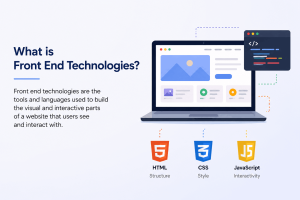






 Admission Open
 Admission Open
 Admission Open
 ROI Calculator