HOME > BLOG > Finance > ESG Careers in India 2026: Why Finance and MBA Professionals Are Making the Shift
Finance
ESG Careers in India 2026: Why Finance and MBA Professionals Are Making the Shift
J
By Arif Siddiqui
July 9, 20268 min read
Last updated on July 21, 2026
SHARE THIS ARTICLE
Table Of Content
Understanding ESG in Modern Business
Why ESG Careers Are Growing Rapidly in India
Why MBA Professionals Are Transitioning into ESG Careers
Why MBA Professionals Are Transitioning into ESG Careers
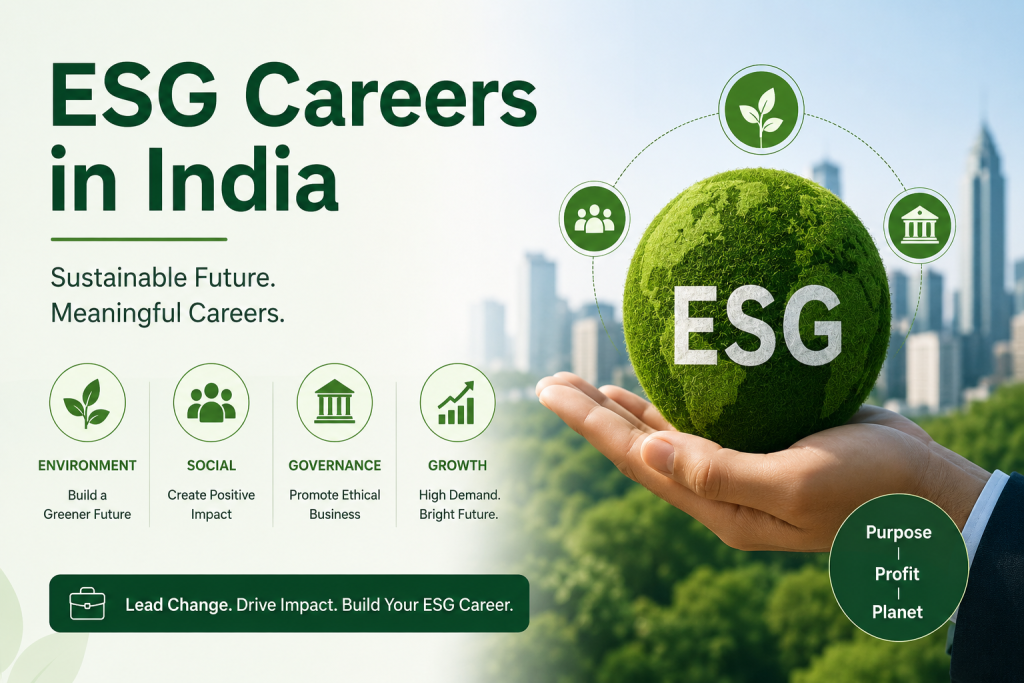
The business landscape in India is rapidly evolving, and Environmental, Social, and Governance (ESG) practices are becoming central to corporate strategy. In 2026, ESG is no longer viewed as just a compliance requirement or sustainability initiative. It has emerged as a critical business function influencing investment decisions, corporate reputation, risk management, and long-term profitability.
As companies increasingly focus on sustainable growth and responsible business practices, professionals with expertise in ESG are becoming highly valuable across industries. This shift has opened exciting career opportunities for finance professionals, MBA graduates, consultants, analysts, and business leaders who want to align their careers with future business trends.
Today, organisations are actively seeking professionals who understand sustainability reporting, ESG investing, green finance, climate risk, ethical governance, and responsible business management. As a result, ESG careers are witnessing significant growth in India and globally.
This blog explores why ESG careers are booming in 2026, the growing demand for ESG professionals, top career opportunities, required skills, salary trends, and how MBA and finance professionals can transition into this rapidly expanding field.
Businesses today are expected not only to generate profits but also to create long-term value for society and the environment. Investors, regulators, consumers, and stakeholders increasingly evaluate companies based on ESG performance.
This shift has transformed ESG from a niche concept into a mainstream business priority.
Indian companies are increasingly integrating ESG frameworks into business operations. Organisations are now prioritising sustainability goals, carbon neutrality targets, ethical governance practices, and responsible investing.
Large corporations across sectors such as banking, manufacturing, IT, energy, consulting, healthcare, and FMCG are building dedicated ESG teams to meet global sustainability expectations.
2. Strong Investor Demand for ESG Reporting
Investors today actively analyse ESG performance before making investment decisions. Global institutional investors and venture capital firms increasingly prefer companies with strong ESG strategies.
As ESG investing grows, organisations require professionals who can prepare ESG reports, assess sustainability metrics, and manage responsible investment strategies.
3. Regulatory Push Towards ESG Compliance
Indian regulators and stock exchanges are promoting ESG disclosures and sustainability reporting standards. Companies are now expected to provide transparent ESG data and sustainability performance reports.
This has created demand for professionals who understand:
ESG reporting frameworks
Sustainability disclosures
Climate risk assessment
Governance standards
Corporate compliance practices
4. Growing Consumer Awareness
Modern consumers increasingly support brands that focus on ethical sourcing, sustainability, environmental protection, and social responsibility.
Businesses therefore need ESG professionals who can align sustainability initiatives with customer expectations and brand positioning.
5. Global Business Transformation
Global companies operating in India are implementing ESG strategies across supply chains, operations, finance, and governance structures. Indian professionals with ESG expertise are therefore becoming globally employable.
Free Courses
Stakeholder Communication & Negotiation Skill Sets
Why MBA Professionals Are Transitioning into ESG Careers
MBA graduates possess strong business, leadership, strategy, and analytical skills, making them highly suitable for ESG-focused roles.
Strategic Business Understanding
ESG is deeply connected with long-term business strategy. MBA professionals understand business operations, competitive positioning, market dynamics, and organisational growth, which helps them contribute to sustainable business transformation.
Leadership and Decision-Making Skills
ESG roles often involve cross-functional collaboration, stakeholder management, and strategic decision-making. MBA graduates are trained to lead teams and manage organisational change effectively.
Growing Demand for ESG Consultants and Managers
Companies increasingly hire MBA graduates for ESG consulting, sustainability strategy, responsible investing, and ESG project management roles.
Alignment with Future Business Trends
As sustainability becomes a major business priority, many MBA professionals are transitioning into ESG careers to remain future-ready and aligned with emerging corporate needs.
Why MBA Professionals Are Transitioning into ESG Careers
MBA graduates possess strong business, leadership, strategy, and analytical skills, making them highly suitable for ESG-focused roles.
Strategic Business Understanding
ESG is deeply connected with long-term business strategy. MBA professionals understand business operations, competitive positioning, market dynamics, and organisational growth, which helps them contribute to sustainable business transformation.
Leadership and Decision-Making Skills
ESG roles often involve cross-functional collaboration, stakeholder management, and strategic decision-making. MBA graduates are trained to lead teams and manage organisational change effectively.
Growing Demand for ESG Consultants and Managers
Companies increasingly hire MBA graduates for ESG consulting, sustainability strategy, responsible investing, and ESG project management roles.
Alignment with Future Business Trends
As sustainability becomes a major business priority, many MBA professionals are transitioning into ESG careers to remain future-ready and aligned with emerging corporate needs.
Finance professionals are among the biggest beneficiaries of the ESG boom.
Rise of ESG Investing
The growth of sustainable investing, green finance, and impact investing has created demand for professionals who can evaluate ESG-related financial risks and opportunities.
ESG Risk Assessment
Financial institutions increasingly integrate ESG risk into lending, investment, and portfolio managementdecisions.
Sustainable Finance Opportunities
Banks, investment firms, and consulting companies now hire professionals for roles such as:
ESG Analyst
Sustainable Finance Consultant
ESG Investment Specialist
Climate Risk Analyst
Responsible Investment Manager
Financial Reporting and ESG Metrics
Finance professionals with knowledge of ESG reporting standards and sustainability disclosures are becoming highly valuable in corporate finance and investment sectors.
Top ESG Career Opportunities in India 2026
The ESG sector offers diverse career opportunities across industries.
ESG Analyst
ESG Analysts evaluate environmental, social, and governance performance of organisations and investment portfolios.
Sustainability Consultant
These professionals help companies design and implement sustainable business practices and ESG frameworks.
ESG Reporting Specialist
They prepare sustainability reports and ensure compliance with ESG disclosure standards.
Sustainable Finance Manager
These professionals work on green investments, ESG financing, and responsible investment strategies.
Corporate Sustainability Manager
This role focuses on sustainability planning, carbon reduction strategies, and ESG implementation within organisations.
Climate Risk Consultant
Climate risk professionals assess environmental and climate-related business risks.
ESG Investment Analyst
Investment firms hire ESG analysts to assess sustainability-related investment opportunities and risks.
CSR Manager
Corporate Social Responsibility managers oversee social impact initiatives and community engagement programmes.
Industries Hiring ESG Professionals
ESG talent demand is growing across multiple sectors.
Banking and Financial Services
Banks and investment firms increasingly integrate ESG metrics into lending and investment decisions.
Consulting Firms
Consulting companies hire ESG experts to advise clients on sustainability transformation and ESG compliance.
Manufacturing and Energy
Industrial companies focus heavily on carbon reduction, sustainable supply chains, and environmental compliance.
Technology Companies
Tech companies are prioritising sustainability reporting, diversity initiatives, and ethical governance.
FMCG and Retail
Consumer-facing brands increasingly focus on ethical sourcing, sustainability, and social responsibility.
Healthcare and Pharmaceuticals
Healthcare organisations are integrating ESG principles into governance,supply chain, and environmental management.
Skills Required for ESG Careers
Professionals entering ESG careers need a combination of business, analytical, financial, and sustainability-related skills.
Important ESG Skills Include:
Sustainability reporting
ESG framework understanding
Financial analysis
Business strategy
Data analytics
Corporate governance knowledge
Risk management
Communication and stakeholder management
Climate risk analysis
Leadership and problem-solving
Professionals with interdisciplinary knowledge often have stronger career growth opportunities in ESG roles.
ESG and Technology: The Growing Connection
Technology is playing a major role in ESG implementation and reporting.
ESG Data Analytics
Companies increasingly use analytics tools to track sustainability performance and carbon emissions.
Blockchain technology is being used to improve supply chain transparency and sustainability verification.
Digital Sustainability Platforms
Businesses are investing in digital platformsfor ESG monitoring, reporting, and compliance management.
This growing intersection between ESG and technology is creating additional career opportunities for tech-savvy business professionals.
Salary Trends in ESG Careers
ESG salaries in India are becoming increasingly competitive due to high demand and limited specialised talent.
Approximate ESG Salary Trends in India
Role
Approximate Salary Range
ESG Analyst
INR 6–12 LPA
Sustainability Consultant
INR 8–18 LPA
ESG Investment Analyst
INR 10–20 LPA
Corporate Sustainability Manager
INR 12–25 LPA
ESG Consulting Manager
INR 20+ LPA
Salary levels vary depending on industry, experience, certifications, and organisational scale.
Why ESG Is Becoming a Long-Term Career Choice
Unlike short-term industry trends, ESG is expected to remain a long-term business priority because sustainability and responsible governance are becoming deeply integrated into global economic systems.
Key Reasons ESG Has Strong Future Potential
Increasing regulatory focus
Global climate commitments
Sustainable investing growth
Corporate accountability expectations
Rising stakeholder awareness
Long-term environmental challenges
As businesses continue to prioritise sustainability, demand for ESG professionals is expected to increase significantly over the coming years.
How Professionals Can Transition into ESG Careers
Professionals interested in ESG can begin by building foundational knowledge and relevant business skills.
Ways to Enter ESG Careers
Upskilling Through ESG Programmes
Specialised ESG-focused MBA programmes and certifications help professionals gain structured knowledge in sustainability, governance, and responsible business practices.
Learning ESG Reporting Standards
Understanding sustainability frameworks and reporting standards improves employability.
Building Analytical and Financial Skills
Strong finance, analytics, and business strategy capabilities are highly valuable in ESG careers.
Gaining Industry Exposure
Participating in sustainability projects, consulting assignments, or ESG research can strengthen practical understanding.
The Role of ESG Education in Career Growth
Educational institutions are increasingly introducing ESG-focused management programmes to prepare professionals for future business environments.
Business schools now integrate subjects such as:
Sustainable finance
ESG reporting
Climate risk
Ethical leadership
Green business strategy
Responsible governance
Social impact management
These programmes help learners develop both strategic and sustainability-focused business expertise.
Exploring ESG-Focused MBA Programmes
As ESG careers continue to expand, many professionals are exploring specialised management programmes that combine business leadership with sustainability and responsible governance concepts.
One such option is the MBA in ESG programme offered through Jaro Education in collaboration with Amrita University. The programme is designed to help professionals understand sustainable business strategy, ESG frameworks, governance principles, responsible finance, and environmental management practices.
The programme focuses on preparing learners for emerging business roles where sustainability, ethical leadership, and strategic decision-making are becoming increasingly important. It can be a valuable option for finance professionals, MBA aspirants, consultants, and business leaders looking to transition into ESG-focused careers in 2026.
Final Thoughts
ESG careers in India are rapidly transforming the future of business and management. As organisations prioritise sustainability, ethical governance, and responsible growth, the demand for ESG professionals continues to rise across industries.
For finance professionals and MBA graduates, ESG offers a future-ready career path that combines strategic business leadership with meaningful impact. The growing integration of ESG into investment decisions, corporate strategy, governance practices, and technology systems makes it one of the most promising professional domains in 2026.
Professionals who build ESG expertise today will be better positioned to lead businesses in an economy increasingly shaped by sustainability, innovation, and responsible growth.
Frequently Asked Questions
Some of the top ESG careers in 2026 include ESG Analyst, Sustainability Consultant, ESG Investment Analyst, Climate Risk Consultant, Corporate Sustainability Manager, and Sustainable Finance Specialist.
MBA professionals are moving toward ESG careers because companies increasingly demand leaders with expertise in sustainability, ethical governance, strategic management, and responsible business practices.
Yes, ESG is becoming one of the fastest-growing career domains for finance professionals due to the rise of sustainable investing, green finance, ESG reporting, and climate-risk assessment roles.
Key ESG skills include sustainability reporting, business strategy, ESG analytics, corporate governance, financial analysis, risk management, stakeholder communication, and climate-focused decision-making.
Yes, an MBA in ESG can help professionals build future-ready business and sustainability expertise, opening opportunities in consulting, finance, corporate strategy, sustainability management, and global ESG leadership roles.
Arif Siddiqui
Head of Accounting and Treasury
Arif Siddiqui is a finance leader specializing in accounting, treasury, and financial strategy. As Head of Finance at Generali Employee Benefits, he brings extensive experience in managing global financial operations. He is known for driving financial efficiency and governance across organizations. His leadership supports sustainable business growth and financial excellence.
Get Free Upskilling Guidance
Fill in the details for a free consultation
Find a Program made just for YOU
We'll help you find the right fit for your solution. Let's get you connected with the perfect solution.

 July 9, 2026
 8 min read





 ChatGPT
 Perplexity
 Claude
 Grok
Grok





 ROI Calculator