Key Employability Skills To Be Successful In The Workplace
J
By Prerna Singh
April 26, 20268 min read
Published on April 26, 2026
SHARE THIS ARTICLE
Table Of Content
What are Employability Skills?
Skills You Need That Are Lacking in the Job Market Today
How to Improve Your Employability Skills
Final Thoughts
Walk into any workplace today, and one thing that you will notice is that technical skills aren’t enough to survive in the corporate sector. You might be an expert in handling software responsibilities, managing processes, or analysing numbers, but how you think, collaborate, incorporate strategies, and bring ideas equally matter. And this is called employability skills, which have a major role today.
So, what are employability skills? These are the practical, transferable skills that help you perform effectively in any job role. They are not limited to a specific industry. Instead, they shape how you work, interact with others, and solve problems. Employers look for candidates who not only understand their job but also bring these essential workplace abilities.
Today, almost 90% of companies seek candidates who can think differently, adapt quickly, and have strong communication skills. In fact, according to a report shared by many firms, there is a huge gap between what candidates know and what they actually need to succeed in their careers. That's why it is utmost important to understand and develop employability skills. In this blog, we will talk about what employability skills are, the top 10 Employability skills and how to improve them.
Employability skills can be defined as a set of skills that make someone ready for work, without relying solely on academic knowledge or technical skills. These are the skills that can help you in effectively doing a job as well as adjusting to various roles and industries.
Employability means not only what you know but also how you use the knowledge, how you behave at work, and how you can present yourself to employers. Your education and experience might get you through to a job, but they are probably not enough to succeed in the long term.
Skills like communication, teamwork, problem-solving, and willingness to change are among the requirements for growth in today’s workplace. These skills, also known as soft skills, greatly influence how you manage duties and interact with colleagues in the workplace. Employability skills are, in a way, the pillars of a career.
They help you to be a professional who can not only work in a specific role but also along with those outside the industry in which you were trained. For this reason, employers prefer to hire people who already have these skills, as they can’t be taught or learned in a short time through experience.
Skills You Need That Are Lacking in the Job Market Today
1. Specialized Digital Skills
Digital transformation has changed the way businesses operate. Almost every industry now depends on technology in some form, whether it’s marketing, operations, finance, or customer service.
Specialized digital skills go beyond basic computer knowledge. These are role-specific abilities such as Python programming, Search Engine Optimization (SEO), Data analytics, Graphic design, and Video editing.
For example, a marketing professional today is expected to understand analytics tools, while a supply chain professional might need to work with data dashboards or ERP systems.
What makes these skills important is their direct impact on business outcomes. Companies want employees who can not only use tools but also extract value from them. If you’re planning to improve your employability skills, focusing on one or two digital specializations can give you a strong advantage.
2. Digital Literacy
Although specialised digital skills tend to be associated with specific roles, digital literacy is an essential aspect of everyone’s life. In simple terms, digital literacy means the ability to use technology for one’s daily work in a comfortable and confident way. The various aspects of digital literacy can be work you do daily, like writing emails, preparing reports, having virtual meetings, or working with spreadsheets. These tasks are all calling for some degree of digital comfort.
Most employers will expect workers to be able to pick up new tools fast. If you find it hard to do the most fundamental digital tasks, your performance can be hindered. Conversely, a good command of digital literacy enables you to change more quickly and be a more productive worker.
3. Creativity
Creativity is not limited to artists or designers. It’s a skill that applies to every profession. In a workplace setting, creativity means:
Finding new ways to solve problems
Thinking beyond standard processes
Bringing fresh ideas to improve efficiency
For instance, if a process is taking too long, a creative employee might suggest a smarter workflow. If a customer issue keeps repeating, creative thinking can help identify a better solution.
Employers value creativity because it drives innovation. It helps companies stay competitive and adapt to change. You can build this skill by exposing yourself to new ideas, taking on challenges, and being open to experimentation.
4. Written Communication
Written communication is one of the most underrated yet essential employability skills. In job roles, you will be responsible for writing emails, preparing reports, documenting processes, and communicating updates.
The key is clarity. Your message should be easy to understand and free from confusion. Poor writing can lead to misunderstandings, delays, and errors.
Good written communication means keeping sentences simple and clear, structuring information properly, and using the right tone. Even a simple email can reflect your professionalism. Strong writing skills help you build credibility and ensure smooth communication within teams.
Verbal communication plays a huge role in everyday workplace interactions. Whether you’re discussing ideas in meetings, giving updates to your manager, or collaborating with teammates, your ability to express yourself clearly matters.
Good verbal communication includes:
Speaking confidently
Listening actively
Being concise and to the point
It’s not just about talking; it’s also about understanding others. When communication flows smoothly, teamwork becomes more effective, and misunderstandings are reduced.
6. Public Speaking
Public speaking is something many people feel uncomfortable with, but it’s an important skill in professional life.
At work, you might be asked to present ideas, share project updates or speak in meetings or conferences. Thus, confidence is key here. Even if your ideas are strong, they won’t have an impact if you can’t present them well.
To improve public speaking,
Practice regularly
Prepare your points in advance
Focus on clarity rather than perfection
7. Data Analysis
Data is everywhere. From sales numbers to customer behavior, businesses rely heavily on data to make decisions. Data analysis involves understanding data, identifying patterns, and drawing meaningful conclusions.
While tools can help process data, human thinking is still required to interpret it correctly. For example, numbers might show a drop in sales, but understanding why it happened requires analysis.
Even basic data skills can improve your employability skills significantly. You don’t need to be an expert analyst; just being comfortable with data can make you more valuable in any role.
8. Collaboration
Very few jobs are done in isolation. Most roles require working with others. Collaboration means working effectively in a team, respecting different opinions, and managing conflicts professionally.
Thus, being a good team player helps you to communicate clearly, support team members, and stay open to feedback. In addition, strong collaboration skills lead to better outcomes because ideas are shared, problems are solved faster, and productivity improves.
9. Critical Thinking
Critical thinking is about understanding situations deeply before making decisions. It helps with analysing information, questioning assumptions, and making logical conclusions. Instead of reacting quickly, critical thinkers take time to evaluate options and choose the best approach.
For example, if a project is delayed, a critical thinker won’t just fix the surface issue; instead, they’ll identify the root cause to prevent it from happening again. This skill is highly valued because it leads to better decision-making and long-term solutions.
10. Problem-Solving
Every workplace faces challenges. What matters is how you deal with them. With excellent problem-solving abilities, one can easily identify issues, find practical solutions, and take action confidently. Furthermore, such skills also help professionals to stay calm under pressure, think logically, and focus on solutions rather than problems.
Employers value people who can handle unexpected situations without constant guidance. This skill shows independence, confidence, and reliability.
How to Improve Your Employability Skills
Now that you understand what employability skills are, the next step is to actively build them through consistent effort and the right approach. Improving these skills is not about doing everything at once but about taking small, practical steps that create long-term impact.
1. Enroll in Online Courses
One of the most effective ways to build employability skills is through structured learning. Platforms like Jaro Education offer industry-focused programs in areas such as data science, digital marketing, business analytics, and management. Programs like the Digital Marketing Programand Diploma in Business Analyticsusing R Programming are designed with real-world case studies and practical exposure, helping you develop both technical and workplace skills.
2. Practice Communication Daily
Strong communication develops with regular practice. Whether it’s writing emails, participating in meetings, or presenting ideas, try to express yourself clearly and confidently in everyday situations.
3. Work on Real-Life Projects
Practical experience plays a huge role in skill development. Try to apply what you learn through projects, internships, or workplace tasks to gain a deeper understanding.
4. Seek Regular Feedback
Feedback helps you grow faster. Ask your managers, mentors, or peers for honest input so you can identify areas that need improvement.
5. Take an Employability Skills Mock Test
An employability skills mock test can help you assess your strengths and weaknesses. It also prepares you for job assessments and builds confidence for interviews.
Employability skills are not something you learn once and forget. They grow with experience and continuous practice. Technical knowledge may help you get a job, but these skills help you keep it and grow in your career. Whether it’s communication, collaboration, or problem-solving, each skill plays a role in shaping your professional journey.
If you are serious about building strong employability skills, learning from the right platform can make a big difference. This is where Jaro Education plays an important role. Jaro helps you gain real-world exposure, hands-on experience, and practical knowledge that employers actually look for.
The right guidance, combined with consistent effort, can help you bridge the gap between learning and applying skills in real situations. So, start investing in yourself today because strong employability skills are not just an advantage anymore, they are a necessity
Frequently Asked Questions
Employability skills are transferable skills like communication, teamwork, problem-solving, and adaptability that help you perform effectively in any job role and grow in your career.
These skills help you work better with others, handle challenges, and adapt to changes. Employers value them because they directly impact productivity and overall performance.
You can improve them by taking online courses, practicing communication, working on real-life projects, seeking feedback, and regularly upgrading your knowledge.
An employability skills mock test is an assessment that helps you evaluate your strengths and weaknesses in key workplace skills and prepares you for job interviews and assessments.
Prerna Singh
Talent Acquisition Manager - India
Prerna Singh is a results-driven Talent Acquisition Manager with expertise in end-to-end HR management. She has a strong background in recruitment, employee engagement, and HR operations across IT domains. Skilled in ATS/HRIS platforms and vendor management, she is passionate about building productive workplaces. She is committed to aligning talent strategies with business growth.

 April 26, 2026
 8 min read




 ChatGPT
 Perplexity
 Claude
 Grok
Grok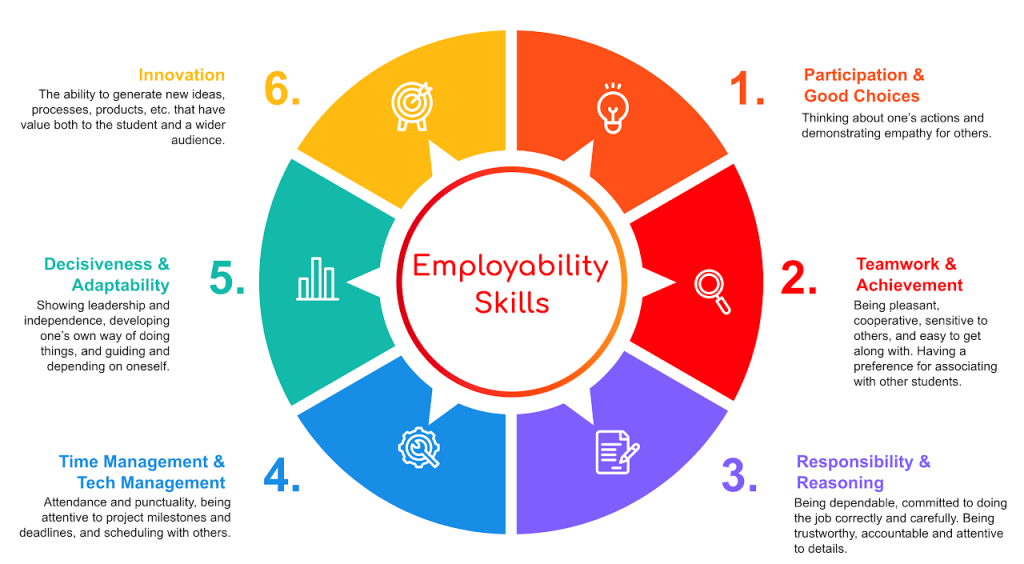


 Admission Open
 Admission Closed

 Admission Open
 Admission Open
 ROI Calculator