What Is the Metaverse? Understanding the Core Definition
Metaverse Meaning: More Than Just a Buzzword
Top Metaverse Platforms You Should Know
How the Metaverse Is Reshaping Key Industries
The internet as we know it is evolving. We started with static web pages, moved to social media, and now we are standing on the edge of something far more immersive, the metaverse. Whether you have heard the term from a tech headline, a gaming friend, or a boardroom discussion, it is hard to ignore the buzz that surrounds it.
But what exactly is it? What does metaverse mean in practical terms? And why are global companies, educators, and entrepreneurs investing billions in it? This guide breaks it all down — from the basic metaverse meaning to the leading metaverse platforms and the massive opportunities that lie ahead.
What Is the Metaverse? Understanding the Core Definition
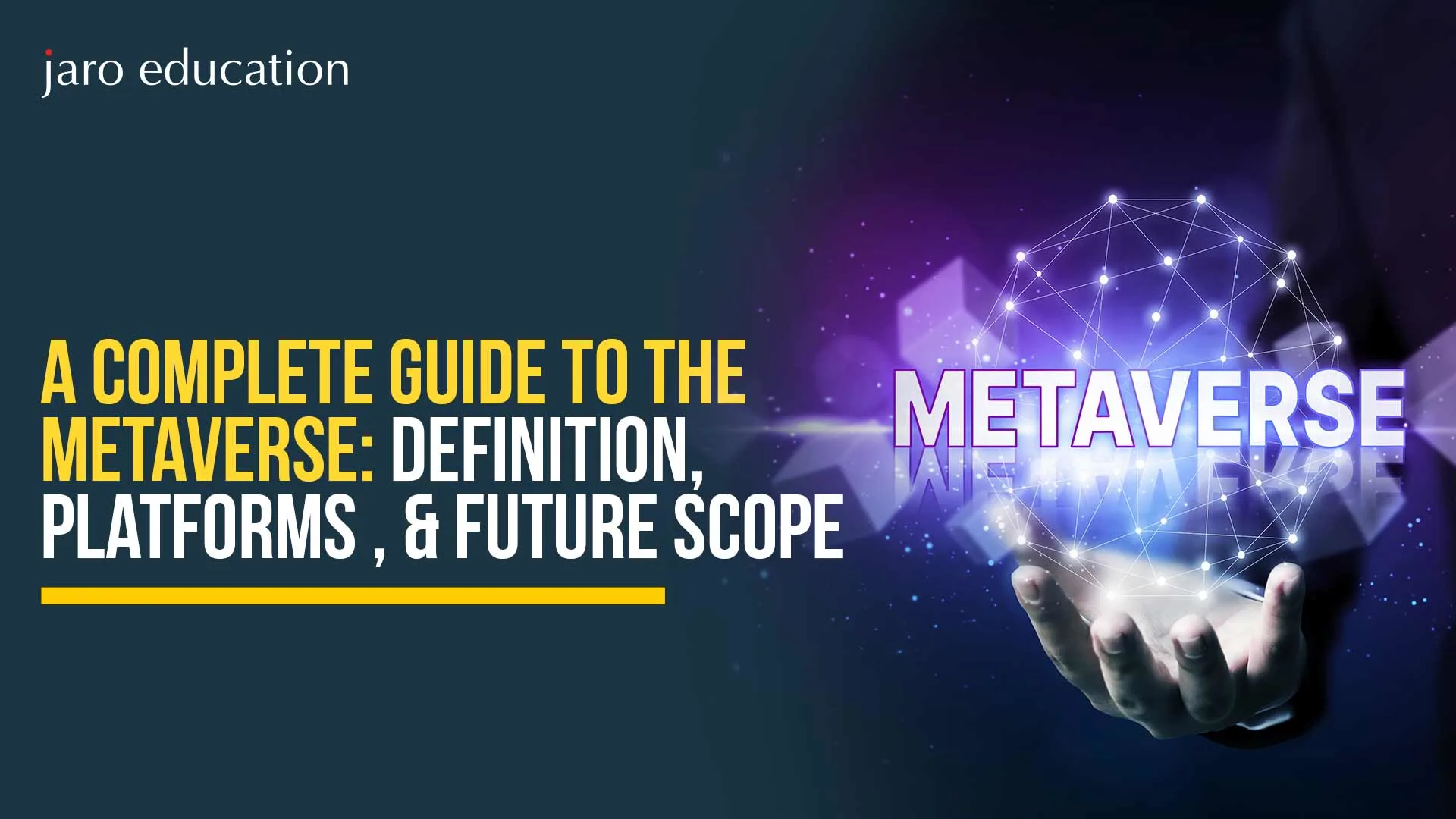
To answer the question, what is metaverse simply: it is a shared, persistent, and immersive virtual world where people can interact, work, play, socialize, and transact — often through avatars. Unlike a video game or a website you visit and leave, the metaverse is always “on.” It runs continuously, evolves in real time, and is accessible to millions of users simultaneously.
The term itself was coined by author Neal Stephenson in his 1992 science fiction novel Snow Crash, where characters escaped into a dystopian virtual world. Three decades later, that concept is turning into a technological reality, powered by innovations in virtual reality (VR), augmented reality (AR), blockchain, artificial intelligence, and high-speed internet.
A simple way to picture it: imagine putting on a headset and walking into a 3D version of the internet, where you can attend a class, join a meeting, visit a digital store, or hang out with friends — all without leaving your home.
Metaverse Meaning: More Than Just a Buzzword
The metaverse’s meaning goes far deeper than a gaming environment or a tech experiment. At its core, it refers to the merging of multiple technologies that build a constantly evolving digital universe. Here are the main features that define it:
Persistence: The world continues to exist and evolve even when you log off.
Interoperability: Users can carry their digital assets, identity, and currency across different platforms.
Immersion: Through VR and AR, users experience environments as if they were physically present.
Economy: It supports real economic activity — buying, selling, earning, and investing in digital assets.
Social interaction: It enables real-time collaboration and communication, just like the physical world.
Understanding the metaverse meaning also means recognising what powers it. Blockchain ensures ownership of digital assets through NFTs and cryptocurrencies. AI personalises experiences and drives intelligent virtual agents. VR and AR hardware make immersion possible. Cloud computing keeps everything running at scale.
To understand how artificial intelligence underpins much of this technology, explore this detailed overview of AI applications in 2026 from Jaro Education.
The metaverse is not a single place — it is a collection of interconnected (and sometimes standalone) environments built by different companies. Here is a look at the most prominent metaverse platforms shaping the space today:
1. Meta Horizon Worlds
Created by Meta (formerly Facebook), Horizon Worlds is one of the most high-profile metaverse platforms in the world. It allows users to build and explore virtual worlds, attend events, and socialise through VR headsets. Meta has invested tens of billions of dollars in its metaverse vision, making it one of the most well-resourced players in the field.
2. Decentraland
Decentraland is a blockchain-based virtual world where users can buy, sell, and develop parcels of virtual land using MANA, the platform’s native cryptocurrency. It is entirely user-owned and governed by a decentralised autonomous organisation (DAO), making it one of the most open and democratic metaverse platforms available.
3. The Sandbox
The Sandbox is a user-generated content platform where players create, own, and monetise gaming experiences using NFTs and the SAND token. Major brands, including Adidas, Snoop Dogg, and HSBC have purchased virtual land here, signalling its mainstream commercial appeal.
4. Roblox
While Roblox predates the current metaverse wave, it fits squarely within the definition — a persistent, user-created virtual world with its own economy. With hundreds of millions of registered users, it has become a proving ground for what immersive social gaming can look like at scale.
5. Microsoft Mesh
Aimed squarely at enterprise users, Microsoft Mesh integrates metaverse capabilities into Microsoft Teams, enabling mixed-reality meetings where colleagues appear as avatars in shared virtual spaces. It is particularly relevant for organisations exploring remote and hybrid work environments.
Each of these metaverse platforms has a distinct focus — social, financial, creative, or professional — demonstrating the versatility of the metaverse as a concept.
How the Metaverse Is Reshaping Key Industries
The impact of the metaverse extends well beyond gaming and socialising. Here is how different sectors are already being transformed:
Education
Virtual classrooms are becoming a reality. Students can attend lectures in immersive 3D environments, conduct virtual lab experiments, and collaborate with peers across the globe — all through metaverse platforms. This aligns powerfully with the rise of EdTech, where technology is already transforming how we learn.
The integration of VR, AR, and immersive tools in online learning is a growing trend — something Jaro Education explores in depth in its article on educational technology trends for 2026.
Business and Marketing
Forward-thinking brands are already hosting virtual product launches, operating digital storefronts, and running immersive advertising campaigns inside metaverse environments. AI is a key enabler here, helping personalise user experiences at scale.
If you are curious about how AI is transforming marketing strategies, Jaro Education’s guide on how to leverage AI in marketing is a useful read.
Finance and Blockchain
Virtual real estate, digital fashion, and NFT art are now multi-billion-dollar markets. Cryptocurrencies serve as the native currencies of many metaverse platforms, and DeFi (decentralised finance) protocols allow users to earn yield on digital assets. The metaverse is, in many ways, the consumer layer on top of the Web3 financial ecosystem.
To understand the financial infrastructure beneath metaverse economies, Jaro Education’s overview of cryptocurrency and the Indian economy provides helpful context.
Healthcare
From virtual therapy sessions to surgical training simulations, the metaverse is opening new doors in medicine. Doctors can practise complex procedures in risk-free virtual environments, while patients in remote areas can access specialist consultations through immersive telehealth platforms.
The Metaverse and the Future of Work
Remote work accelerated during the pandemic and the metaverse is poised to take that evolution further. Instead of flat video calls, teams can collaborate in persistent 3D office spaces, attend virtual conferences with global participants, and build genuine professional relationships across distances.
Entire economies are emerging within metaverse platforms. Developers, architects, event planners, educators, marketers, and content creators are all finding new career opportunities in the metaverse. It is estimated that the global metaverse market could be worth over $1 trillion by the early 2030s.
For professionals looking to stay ahead of this shift, developing skills in AI, data, and digital strategy is essential. Jaro Education’s breakdown of the top high-income skills for 2026 highlights which competencies will be most valuable in this new landscape.
No technological revolution comes without hurdles, and the metaverse is no exception. Here are the key challenges the industry must navigate:
Privacy and data security: Immersive environments collect unprecedented volumes of personal data, raising serious questions about surveillance and misuse.
Accessibility: High-end VR hardware remains expensive, creating a potential digital divide between those who can and cannot participate.
Regulation: Governments are still catching up on how to regulate virtual economies, digital assets, and user conduct in virtual spaces.
Mental health: Excessive immersion in virtual environments raises concerns about addiction, social isolation, and the blurring of real and virtual identities.
These challenges are significant, but they are not insurmountable. Responsible development, clear regulation, and inclusive design will be critical to building a metaverse that benefits everyone.
The Future Scope of the Metaverse
The trajectory of the metaverse is unmistakably upward. Several major trends are set to define its next chapter:
AI-driven personalisation: Intelligent virtual assistants and AI-generated environments will make metaverse experiences increasingly adaptive and realistic.
5G and edge computing: Faster, lower-latency networks will remove the technical barriers that currently limit mass adoption.
Interoperability standards: Industry bodies are working toward open standards that allow users to move seamlessly between different metaverse platforms.
Enterprise adoption: More organisations will use the metaverse for training, onboarding, collaboration, and customer engagement.
Digital twin technology: Physical infrastructure — from factories to cities — will be mirrored in the metaverse for planning, monitoring, and simulation.
The metaverse is not a distant science fiction scenario — it is already here in its early form, and it is growing fast. The question for individuals and organisations is not whether the metaverse will matter, but how quickly they will be ready to engage with it.
The metaverse represents one of the most significant technological shifts of our era. From its foundational metaverse meaning — a persistent, immersive, shared digital universe — to the diverse and rapidly evolving metaverse platforms that are bringing it to life, the opportunity ahead is immense.
What is metaverse, ultimately? It is the next version of the internet — one you will not just browse, but live in. For learners, professionals, and businesses, the time to understand and engage with it is now.
Whether your interest lies in technology, business, education, or creative industries, the metaverse will intersect with your field. Equipping yourself with the right knowledge and digital skills today is the best way to thrive in the immersive world of tomorrow.
Explore Jaro Education’s range of programmes in AI, data science, digital marketing, and technology to future-proof your career.
Frequently Asked Questions
Metaverse is a virtual digital world where people can interact, work, play, and socialize using avatars. The metaverse uses virtual reality, augmented reality, and internet technologies to provide interactive online experiences. The metaverse is, in simple terms, a virtual space that connects people in the physical and digital worlds.
There are four major types of metaverse environments: augmented reality worlds, lifelogging worlds, mirror worlds, and virtual worlds. These types of metaverse environments provide different experiences and shape the nature of metaverse operations in different sectors such as gaming, learning, and business.
Examples of metaverse in 2026 include gaming, social, and business domains, emphasizing persistence, 3D, and interactivity in virtual environments. Key metaverse platforms include Roblox, Fortnite, Meta Horizon, Decentraland, and The Sandbox, where users interact, work, shop, and attend events in virtual environments using avatars.
Yes, the metaverse is legal in India, but it is not regulated by specific legislation. It is in a “legal void” where existing legal frameworks, such as the Information Technology Act 2000 and the newly enacted Digital Personal Data Protection Act 2023, are applicable to virtual activities. It is not illegal, but it is not regulated by specific legal frameworks, raising questions about virtual property rights, etc.
Shubham Lal
Lead Software Developer
Shubham Lal joined Microsoft in 2017 and brings 8 years of experience across Windows, Office 365, and Teams. He has mentored 5,000+ students, supported 15+ ed-techs, delivered 60+ keynotes including TEDx, and founded AI Linc, transforming learning in colleges and companies.
Get Free Upskilling Guidance
Fill in the details for a free consultation
Related Courses
Explore our programs
Admission Open
Executive Programme in Artificial Intelligence and Cyber Security for Organizations
 HOME > BLOG > Digital Marketing > A Complete Guide to the Metaverse: Definition, Platforms & Future Scope
 March 17, 2026
 8 min read




 ChatGPT
 Perplexity
 Claude
 Grok
Grok


 Admission Open

 Admission Open
 Admission Closed
 ROI Calculator