
Explore Exciting Career Opportunities After an Online BCA
 April 29, 2025
 10 min read





Table Of Content
- Top 14 BCA Career Options
- Government Jobs After BCA
- BCA Salary in India: What Can You Expect?
- Should You Pursue Higher Studies After BCA?
An online BCA can prepare learners for a range of technology-focused roles across industries. As businesses continue to adopt cloud computing, data analytics, artificial intelligence, cybersecurity and digital platforms, the demand for professionals with relevant technology skills continues to create new opportunities.
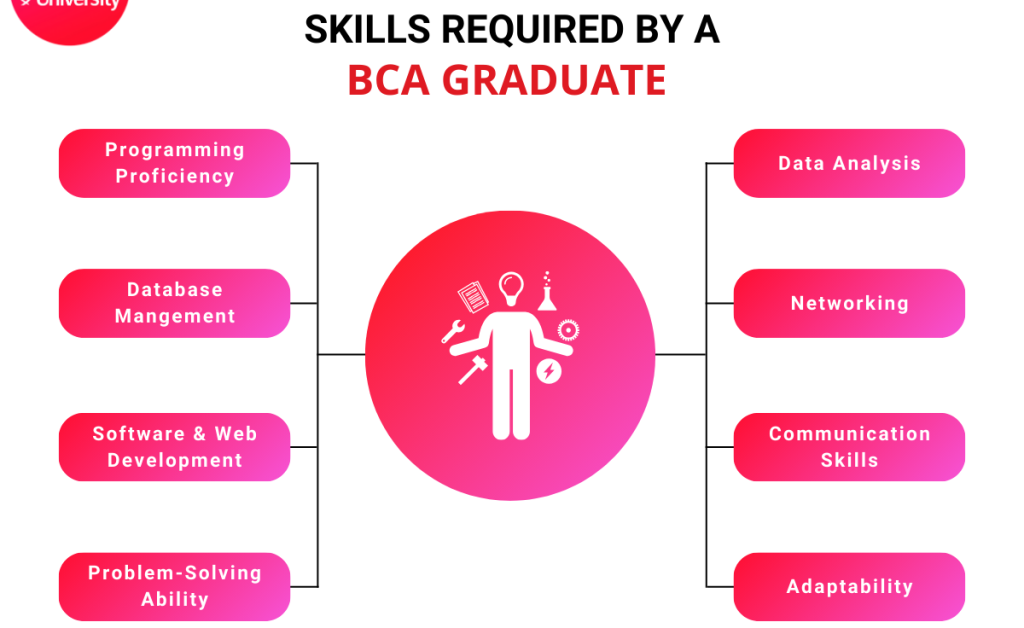
The BCA career options available today go beyond traditional software development. Graduates can explore careers in web development, data analytics, cybersecurity, cloud computing, mobile application development, artificial intelligence, software testing, database administration, networking and more.
The right career options after BCA depend on your interests, technical skills, certifications, practical experience and long-term goals. Some roles require strong programming skills, while others focus more on analytics, infrastructure, design, testing or project coordination.
 ChatGPT
 Perplexity
 Claude
 Grok
GrokTop 14 BCA Career Options
The career after BCA can take several directions. While software development remains one of the most popular choices, emerging technology areas are creating opportunities across multiple specialisations.
Below are some of the leading BCA career opportunities you can consider.
1. Software Developer
Software development remains one of the most sought-after job options after BCA. Software developers design, develop, test and maintain applications used by businesses and consumers.
Depending on your interests, you can specialise in front-end development, back-end development, full-stack development or specific programming ecosystems such as Java, Python or C++.
Technology-specific hiring in India has shown strong growth, making software development a relevant option for graduates who enjoy programming and problem-solving.
Skills needed:
- Java, Python, C++ or other programming languages
- Data structures and algorithms
- Object-oriented programming
- Git and version control
- Agile and Scrum methodologies
- Problem-solving and analytical skills
Indicative salary: Around ₹3 lakh to ₹6 lakh per year for many entry-level roles, with potential for considerably higher earnings as experience and specialisation increase.
2. Web Developer
Web development is another popular career option after BCA. Web developers create and maintain websites and web applications, working on their functionality, performance and user experience.
You can specialise in front-end, back-end or full-stack development. Full-stack development can be particularly useful for learners who want exposure to both client-side and server-side technologies.
Skills needed:
- HTML, CSS and JavaScript
- React, Angular or Vue.js
- Node.js or other back-end technologies
- Databases
- Web hosting and server management
- Basic understanding of SEO and web performance
Indicative salary: Approximately ₹2.5 lakh to ₹5 lakh per year for entry-level roles, with earning potential increasing with experience and technical specialisation.
3. Data Analyst
The growing importance of data-driven decision-making has made data analysis an attractive career after BCA. Data analysts collect, clean and interpret data to help organisations identify trends and make informed decisions.
This role can be suitable for BCA graduates who enjoy working with numbers, databases and visualisation but do not necessarily want to pursue a purely programming-focused career.
Skills needed:
- SQL
- Excel
- Python
- Statistics
- Power BI or Tableau
- Data visualisation
- Communication and analytical skills
Indicative salary: Entry-level data analyst roles may offer around ₹3.5 lakh to ₹6 lakh annually, with specialised professionals potentially earning significantly more.
4. Cybersecurity Analyst
As businesses increasingly depend on digital systems, cybersecurity has become an important area of technology. Cybersecurity analysts help organisations monitor systems, identify vulnerabilities, investigate incidents and protect sensitive information. This can be one of the more specialised job opportunities after BCA, particularly for graduates interested in networking, security and risk management.
A postgraduate certification or specialised training can help you build knowledge in areas such as network security, ethical hacking and security operations.
Skills needed:
- Networking fundamentals
- Linux
- Security principles
- Firewalls and intrusion detection
- Vulnerability assessment
- Incident response
Indicative salary: Entry-level cybersecurity roles commonly fall in the ₹4 lakh to ₹7 lakh range, although compensation varies substantially by employer, skills and certifications.
5. Mobile App Developer
Mobile applications have become an integral part of how people shop, communicate, access financial services and consume entertainment. This has created opportunities for mobile application developers.
As a mobile app developer, you may work on Android, iOS or cross-platform applications. You can also specialise in areas such as application performance, user experience or mobile security.
Skills needed:
- Kotlin or Java for Android
- Swift for iOS
- Flutter or React Native
- APIs
- Databases
- UI and UX fundamentals
Indicative salary: Entry-level mobile application developers may earn approximately ₹4 lakh to ₹6 lakh annually, depending on technical skills and employer.
6. Cloud Computing Specialist
Cloud computing has transformed how businesses store data, run applications and manage IT infrastructure. This makes cloud computing a valuable specialisation for BCA graduates.
Cloud professionals work with platforms such as Amazon Web Services, Microsoft Azure and Google Cloud. With additional experience, you can progress towards cloud engineering, DevOps or cloud architecture roles.
Skills needed:
- AWS, Microsoft Azure or Google Cloud
- Cloud architecture
- Linux
- Networking
- Scripting
- Containers and automation
- Cloud security
Indicative salary: Entry-level cloud roles can offer approximately ₹4 lakh to ₹7 lakh annually, with significant growth possible as professionals develop cloud engineering and DevOps expertise.
7. IT Project Manager
If you have strong communication, planning and organisational skills, IT project management could be an interesting career option after BCA. IT project managers coordinate technology projects, manage timelines and resources, communicate with stakeholders and help teams deliver projects according to agreed objectives.
Fresh BCA graduates may typically begin in roles such as project coordinator, PMO analyst or junior project associate before moving into project management positions.
Skills needed:
- Project management
- Communication
- Agile and Scrum
- Risk management
- Jira or similar project management tools
- Leadership and stakeholder management
Indicative salary: Compensation varies considerably by experience and role. Entry-level project coordination positions may start around ₹3 lakh to ₹6 lakh annually, while experienced IT project managers can earn substantially more.
8. Software Tester or QA Analyst
Software testing is another option for graduates who are interested in technology but do not want to spend their entire career writing code. QA analysts test applications to identify bugs, performance issues and usability problems before software reaches users. With experience, professionals can move into automation testing and QA engineering.
Skills needed:
- Software testing methodologies
- Manual testing
- Test case creation
- Selenium or other automation tools
- Basic programming
- SQL
- Problem-solving
Indicative salary: Entry-level software testing roles may offer approximately ₹3 lakh to ₹5 lakh annually, with automation and QA engineering skills supporting stronger career progression.
9. Database Administrator
A database administrator, or DBA, manages an organisation’s databases and helps ensure that information remains available, secure and properly organised. This can be a suitable option for BCA graduates who enjoy working with databases and backend systems.
Skills needed:
- SQL
- MySQL, PostgreSQL, Oracle or SQL Server
- Database security
- Backup and recovery
- Performance optimisation
- Database management
Indicative salary: Entry-level database professionals may earn around ₹4 lakh to ₹6 lakh annually, depending on their database expertise and employer.
10. Network Administrator
Network administrators are responsible for maintaining an organisation’s computer networks. Their work may include configuring network devices, monitoring connectivity, troubleshooting problems and supporting network security.
Networking can also provide a foundation for later moving into cloud computing or cybersecurity.
Skills needed:
- Networking fundamentals
- TCP/IP
- DNS and DHCP
- Network security
- Linux and Windows administration
- Cisco or other networking technologies
Indicative salary: Entry-level network administration roles may offer around ₹3 lakh to ₹5 lakh annually, with higher compensation possible as professionals move into specialised networking, cloud or security roles.
11. AI and Machine Learning Associate
Artificial intelligence and machine learning are emerging areas that BCA graduates can explore after developing strong foundations in programming, mathematics and data analysis. An entry-level professional may work as an AI/ML associate, junior ML developer or data-focused technology professional. However, advanced AI and ML positions generally require deeper knowledge of mathematics, statistics, algorithms and machine learning frameworks.
Skills needed:
- Python
- Statistics and mathematics
- Machine learning fundamentals
- SQL
- Pandas and NumPy
- Machine learning frameworks
- Data preprocessing
Indicative salary: Entry-level AI and ML-related roles may start around ₹5 lakh to ₹9 lakh annually, depending on the role and skill level.
12. UI/UX Designer
Not every career after BCA requires advanced programming. If you are interested in technology and design, UI/UX can be another career path.
UI/UX professionals work on how websites, applications, and digital products look and function from the user’s perspective. A BCA background can be useful because it provides an understanding of how digital products are built.
Skills needed:
- Figma
- Wireframing
- Prototyping
- User research
- Design principles
- Usability testing
Indicative salary: Entry-level UI/UX roles may offer approximately ₹4 lakh to ₹9 lakh annually, depending on portfolio quality, employer and location.
13. Technical Support Engineer
Technical support is one of the practical job options after BCA for graduates looking to enter the IT industry and gain hands-on experience.
Technical support engineers troubleshoot hardware, software, network and application-related problems. With experience, professionals can move into system administration, cloud, networking, cybersecurity or IT service management.
Skills needed:
- Operating systems
- Networking basics
- Troubleshooting
- IT service management
- Communication
- Customer support
Indicative salary: Entry-level technical support roles can start around ₹3 lakh to ₹6 lakh annually, depending on the organisation and technical requirements.
14. Digital Marketing Specialist
A BCA degree can also support careers outside traditional IT roles. Digital marketing is one such option, particularly for graduates interested in technology, analytics and online platforms.
Digital marketing professionals work across SEO, paid advertising, social media, content, email marketing and web analytics. Your technical background can be useful when working with analytics platforms, websites and marketing technologies.
Skills needed:
- Search engine optimisation
- Google Analytics
- Paid advertising
- Social media marketing
- Content marketing
- Data analysis
Indicative salary: Entry-level digital marketing roles may start around ₹3 lakh to ₹4 lakh annually, with experienced professionals potentially earning ₹10 lakh or more depending on specialisation and responsibilities.
Government Jobs After BCA
If you prefer a career in the public sector, government jobs after BCA can also be considered. A BCA degree may make you eligible for certain government recruitment examinations and technical or administrative positions, subject to the specific educational qualification mentioned in each notification.
Graduates can explore recruitment opportunities through organisations such as UPSC, SSC, banking recruitment bodies and state-level public service commissions. UPSC, for example, conducts recruitment examinations and publishes specific eligibility requirements for different examinations and posts.
Some potential areas to explore include:
- IT and technical support roles
- Computer operator positions
- Data-related government roles
- Banking and financial technology roles
- Administrative positions for which a bachelor’s degree is accepted
- State government recruitment
- Public sector organisations
Always check the latest official notification before applying because eligibility varies by post, examination, subject requirements and recruiting organisation.
BCA Salary in India: What Can You Expect?
The salary after BCA depends on several factors, including your technical skills, location, employer, experience, certifications and job role.
For many entry-level technology roles, a broad starting range of around ₹3 lakh to ₹8 lakh per year is a reasonable benchmark, although individual offers can fall outside this range. A 2025-26 higher education salary snapshot places the average starting range for BCA graduates at approximately ₹3 lakh to ₹8 lakh, with software development and cybersecurity among the areas associated with stronger starting opportunities.
| Job role | Indicative entry-level salary |
| Software Developer | ₹3-6 LPA |
| Web Developer | ₹2.5-5 LPA |
| Data Analyst | ₹3.5-6 LPA |
| Cybersecurity Analyst | ₹4-7 LPA |
| Cloud Specialist | ₹4-7 LPA |
| Mobile App Developer | ₹4-6 LPA |
| Software Tester | ₹3-5 LPA |
| Database Administrator | ₹4-6 LPA |
| Network Administrator | ₹3-5 LPA |
| UI/UX Designer | ₹4-9 LPA |
| Technical Support Engineer | ₹3-6 LPA |
| Digital Marketing Specialist | ₹3-4 LPA |
These are indicative ranges rather than guaranteed salaries. Actual compensation varies by company, location, skills, experience and hiring conditions.




Should You Pursue Higher Studies After BCA?
Starting a job is not the only option after completing BCA. If you want to deepen your technical knowledge or qualify for more specialised roles, higher education can be worth considering.
An MCA is one of the most common choices. An online MCA can allow graduates to continue learning while developing knowledge in areas such as software development, databases, networking, cloud computing and information systems.
You can also consider programmes or certifications related to:
- Data science and analytics
- Artificial intelligence and machine learning
- Cybersecurity
- Cloud computing
- DevOps
- Business analytics
- Digital marketing
- IT management
The right choice depends on your intended career path. For example, a cybersecurity certification may make more sense for someone targeting security roles, while an MCA may be useful for a graduate seeking broader postgraduate knowledge in computer applications.
What Are the Top Universities for Online BCA?
An online BCA can provide a flexible route for students who want to develop their technology skills. When selecting a programme, consider factors such as university recognition, curriculum, faculty, practical learning, assessment methods, student support and career services.
Below are programmes listed on Jaro Education’s platform:
| University | Programme | Description |
| Amity University | Online Bachelor of Computer Applications | A 3-year programme covering areas such as data structures, C++, DBMS, computer networks, operating systems, Java programming and web technologies. |
| Manipal University | Bachelor of Computer Applications (BCA) | An online BCA programme covering areas including cloud computing, Big Data, machine learning and application development. |
| Symbiosis School for Online and Digital Learning (SSODL) | Online Bachelor of Computer Applications (BCA) | A programme designed to build foundational and professional knowledge for careers in the IT sector. |
Before enrolling, prospective students should verify the latest programme structure, eligibility, fees and recognition directly with the university or education provider.
How Jaro Education Can Help You Achieve Your Career Goals
Jaro Education provides higher education and upskilling programmes along with career guidance and learner support. For students exploring BCA career options, structured guidance can help identify suitable specialisations and courses based on their interests and career goals.
Jaro Education provides:
- Learning support
- Career guidance and counselling
- Access to faculty and industry experts
- Peer learning opportunities
- Professional networking
- Access to Jaro’s alumni network of 3,50,000+ professionals
- Learning resources and industry insights
The objective is to help learners make more informed decisions about their education and career development.
Final Thoughts
The BCA career options available today extend well beyond software development. From data analytics and cybersecurity to cloud computing, AI, testing, networking and UI/UX, graduates can choose a path based on their strengths and interests.
Building practical skills, completing relevant certifications, gaining project experience and continuously learning can improve your chances of finding suitable job opportunities after BCA. The key is to choose a direction early and build the skills that employers in that field actually require.
Frequently Asked Questions
Yes. Career options after BCA include software development, data analytics, cybersecurity, cloud computing, testing, networking and several other technology roles. However, long-term career growth depends on your skills, experience, specialisation and ability to keep up with changes in technology.
You can start with a full-time IT role, freelance work, internships that lead to employment or specialised technology roles. Software development, data analytics, cybersecurity and cloud computing can offer strong earning potential as you gain experience. Building practical projects and earning relevant certifications can also strengthen your profile.
The job scope after BCA is broad. Graduates can pursue development, analytics, cybersecurity, cloud, networking, database administration, testing, technical support, UI/UX and digital marketing. You can also pursue an MCA or another postgraduate qualification to deepen your expertise.
There is no single BCA job that always offers the highest salary. Compensation depends on experience, skills, company and location. Specialised areas such as cybersecurity, cloud computing, AI and machine learning, software engineering and data-related roles can offer strong salary growth with experience.
The best career options after BCA depend on your interests. Software development may suit students who enjoy coding, while data analytics may suit those interested in numbers and insights. Cybersecurity and cloud computing can suit students interested in infrastructure and technology security. UI/UX can be considered by creative learners, while an MCA can be useful for those who want further academic and technical specialisation.
Yes, depending on the recruitment notification. Government jobs after BCA can include technical, computer-related and administrative positions for which the relevant bachelor’s degree is accepted. Eligibility differs across examinations and posts, so always check the latest official notification before applying.
No, an MCA is not mandatory for every BCA graduate. You can enter the workforce directly after BCA if you have the required skills for your target role. However, an MCA can be useful if you want advanced academic knowledge, broader computer application expertise or access to roles where postgraduate qualifications are preferred.
Yes, subject to the eligibility requirements of the university and programme you choose. An online MCA can be a flexible way to pursue postgraduate education while developing advanced knowledge in computer applications and related technology areas.
Related Courses
Explore our programs




Find a Program made just for YOU
We'll help you find the right fit for your solution. Let's get you connected with the perfect solution.
Is Your Upskilling Effort worth it?
 ROI Calculator

Are Your Skills Meeting Job Demands?
Try our Skill Gap tool
Experience Lifelong Learning and Connect with Like-minded Professionals
Explore Jaro Connect

