
Best Flexible Learning Programs for Working Professionals
 May 29, 2026
 8 min read




Table Of Content
- Applying the 70-20-10 Rule to Online Professional Development
- The ROI of Elite Credentials for Working Adults
- How to Identify the Best Online Programs for Career Growth
- Navigating Accelerated Degree Paths for Senior Leadership
Pursuing higher education no longer means stepping away from your career and for today's executives, that distinction is everything.
The traditional sabbatical model — pausing professional momentum to earn a degree in isolation — is losing ground fast. Organizations don't wait, markets don't pause, and leadership opportunities don't hold open. Professionals who disappear from the workforce for two or more years to earn credentials often return to find their networks have shifted and their institutional knowledge has aged.
The data is unambiguous: according to McKinsey & Company, 79% of adult learners cite flexibility as their top priority when selecting a graduate or professional program. That's not a preference — it's a mandate reshaping how institutions design learning at every level.
The working learner has emerged as the new corporate elite. These are professionals who pursue professional development courses online without sacrificing the day-to-day experience that makes advanced learning meaningful. Rather than trading career capital for credentials, they're building both simultaneously.
This shift isn't simply logistical convenience. Flexibility, when structured into a rigorous program framework, becomes a strategic advantage — one that compounds over time. Understanding exactly how that advantage works means examining how learning frameworks like the 70-20-10 rule apply directly to the online environment.
 ChatGPT
 Perplexity
 Claude
 Grok
GrokApplying the 70-20-10 Rule to Online Professional Development
Most professionals learn best not in classrooms, but on the job and the 70-20-10 framework makes that reality the foundation of a smarter development strategy.
The 70-20-10 model holds that adults develop 70% of their skills through direct work experience, 20% through collaboration and mentorship, and just 10% through formal education. That final 10% isn’t small — it’s the catalyst that sharpens everything else.
Here’s how each layer breaks down:
- 70% — Experiential learning: Stretch assignments, high-stakes decisions, and on-the-job problem-solving that build real competence.
- 20% — Social learning: Peer feedback, mentoring relationships, and collaborative projects that accelerate growth through shared context.
- 10% — Formal learning: Structured coursework, frameworks, and credentials that supply the language and models executives apply immediately at work.
What makes accelerated degree programs online so well-suited to this model is the elimination of lag time. In a traditional residential program, formal learning stays isolated until you return to work. Online formats collapse that gap — a framework studied on Tuesday can be tested in a boardroom by Thursday.
In practice, professionals enrolled in flexible executive programs apply concepts in real time, turning the 10% into a constant multiplier for the other 90%. As the UPCEA 2025 Predictions Report notes, institutions that meet students where they are will emerge as leaders in this space. That practical alignment is exactly what makes the ROI case so compelling, which we’ll examine in the next section.
The ROI of Elite Credentials for Working Adults
The financial case for choosing recognized, tier-1 online degree programs for working adults is no longer anecdotal — it’s measurable, consistent, and significant.
Salary growth is the most immediate signal. According to GMAC 2024 data, online MBA graduates see an average annual salary increase of $25,000 to $45,000 within two years of completion — a return that dwarfs the program cost for most tier-1 institutions. That kind of lift reflects not just credential value, but the compounding effect of peer networks, institutional branding, and applied learning.
Micro-credentials from elite institutions carry their own premium. The Coursera Micro-Credentials Impact Report 2025 found that 97% of employers are willing to offer higher starting salaries to candidates holding micro-credentials from recognized institutions. When those institutions carry the weight of established rankings and industry relationships — think IIMs, IITs, or globally accredited business schools — the market response is markedly stronger.
The Prestige Premium is real and quantifiable. Employers aren’t just hiring a qualification; they’re hiring the rigor, the brand association, and the talent filter that elite programs represent. Whether you’re evaluating a full MBA or a management diploma, the institutional name on your credential shapes how hiring managers perceive your profile before the interview even begins.
How to Identify the Best Online Programs for Career Growth
Choosing among the best online colleges for working adults requires a sharper evaluation lens than flexibility alone — program architecture, brand equity, and curriculum design all determine your actual career return.
The right program doesn’t just fit your schedule; it compounds your professional value over time.
| Feature | Why It Matters | Elite Standard |
| Stackable credentials | Allows you to build momentum one certificate at a time, without committing to a two-year pause in your career and each credential counts toward a full degree | Credit-bearing modules that ladder into a recognized postgraduate qualification |
| Alumni network strength | Institutional branding opens doors; a weak alumni network limits your access to the senior circles where executive opportunities actually circulate | Verified placement outcomes, active industry chapters, and peer cohorts at your career level |
| Competency-based curriculum | Real-world application distinguishes programs that produce promotable leaders from those that simply issue certificates | Case-driven, project-based assessments tied to measurable professional competencies |
Institutional branding remains one of the most underweighted selection criteria. A credential from a recognized tier-1 partner signals quality to hiring committees in ways that curriculum PDFs simply can’t.
For executives weighing diploma versus degree structures, understanding how PGDM and MBA programs differ in their learning methodology is a practical starting point. Those closer to senior leadership transitions may also find that an accelerated executive format addresses both time constraints and depth requirements simultaneously — a balance the next section explores in detail.



Top 5 Flexible Learning Programs
1. Online MBA Programs
Online MBA programs offer flexibility, leadership development, and business management expertise without requiring professionals to leave their jobs. They are ideal for those seeking managerial and leadership roles across industries.
Key Benefits:
- Learn at your own pace
- Weekend or recorded classes
- Networking opportunities with professionals
- Career advancement and salary growth
2. Executive MBA (EMBA) Programs
Executive MBA programs are designed specifically for experienced professionals and managers. Classes are usually conducted on weekends or in hybrid formats, making them suitable for busy schedules.
Key Benefits:
- Leadership-focused curriculum
- Suitable for mid-to-senior-level professionals
- Minimal career interruption
- Strong industry exposure
3. Professional Certification Programs
Industry-recognized certifications help professionals upskill quickly in specialized domains such as project management, digital marketing, cloud computing, cybersecurity, and data analytics.
Key Benefits:
- Short duration
- Practical skill development
- Cost-effective learning
- Improved employability
4. Postgraduate Diploma Programs
Online and distance postgraduate diploma programs provide advanced knowledge in fields such as management, finance, HR, healthcare, and technology while offering flexible study schedules.
Key Benefits:
- Specialized expertise
- Affordable alternative to full degrees
- Flexible learning format
- Industry-relevant curriculum
5. Data Science and AI Programs
With growing demand for technology professionals, flexible online programs in Data Science, Artificial Intelligence, and Machine Learning help working professionals transition into high-growth careers.
Key Benefits:
- High-demand skills
- Project-based learning
- Career transition opportunities
- Strong salary potential
The Bottom Line: What You Need to Know
Tier-1 flexible learning wins on every metric that matters — flexibility gets executives in the door, but institutional prestige determines the career ROI they walk away with.
Here’s what the evidence distills down to:
- Flexibility is non-negotiable, but not sufficient. While 79% of learners rank flexibility as their top priority, programs that lack brand credibility consistently underdeliver on long-term earnings growth. The credential on your resume matters as much as the convenience of earning it.
- Learning while working outperforms isolated study. The 70-20-10 rule for employee development — 70% experiential, 20% social, 10% formal — validates what elite online programs are built around: applying new frameworks in real time, within your actual role, produces deeper and faster skill transfer.
- Micro-credentials from elite institutions drive measurable salary gains. Tier-1 certifications are linked to salary increases of up to $45,000, making them one of the highest-yield career investments available today.
- Stackable, accelerated formats offer the optimal speed-to-brand ratio. General management programs from top-tier institutes let executives build recognized credentials incrementally — without pausing their careers.
The intersection of digital delivery and elite institutional branding is the most efficient path for career transformation in 2026. Knowing what to look for is only half the equation — finding the right partner to deliver it is what comes next.
Securing Your Future with Jaro Education
Tier-1 flexible learning delivers its highest ROI when professionals access the right institutional credentials through a trusted pathway, and that’s precisely where Jaro Education’s value becomes concrete. Jaro Education specializes in bridging the gap between working professionals and world-renowned academic institutions, connecting ambitious executives with programs from IIMs, IITs, and leading global universities that carry the prestige employers and boards recognize.
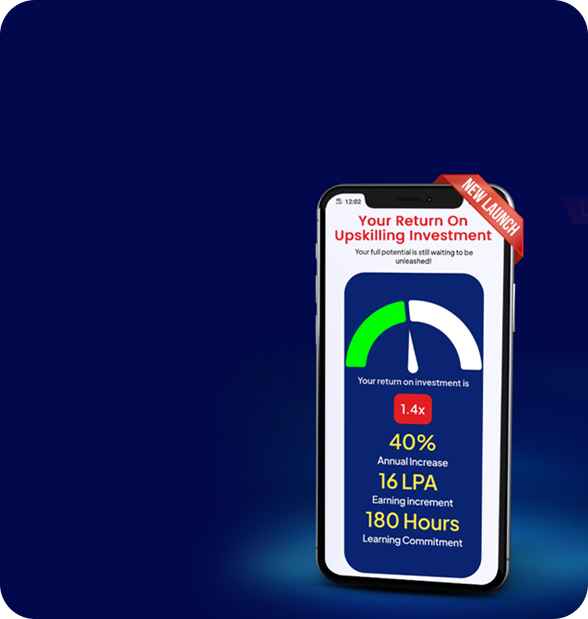
The decision to invest in executive education shouldn’t be made on instinct alone. Data-driven tools like ROI calculators help professionals quantify expected salary growth, promotion timelines, and network value before committing — a disciplined approach that higher education ROI research consistently supports. Whether you’re pursuing an IIT Bombay-backed design credential or an advanced management and analytics certification, Jaro Education’s curated portfolio maps directly to measurable career outcomes.
The Indian EdTech space for executive growth is still in an early adoption phase, which means there’s a genuine first-mover advantage for professionals who commit now. Leaders who earn elite credentials today will hold a positioning that late adopters simply won’t replicate. The window is open; the question is whether you’ll move through it. Explore Jaro Education’s program portfolio and identify the credential that aligns with your next career milestone.
Frequently Asked Questions
The best flexible learning programs include Online MBA programs, Executive MBA (EMBA) programs, professional certification courses, postgraduate diploma programs, and Data Science or AI courses. These programs are designed to help professionals upskill while managing their jobs.
Yes, many universities and learning platforms offer online, part-time, and hybrid programs that allow working professionals to study at their own pace without leaving their jobs.
The ideal program depends on your career goals. An Online MBA or EMBA is suitable for leadership and management roles, while certifications and specialized programs are better for developing technical or industry-specific skills.
Yes, accredited online degrees, executive programs, and industry-recognized certifications are widely accepted by employers and can enhance your professional profile and career prospects.
Flexible learning programs allow professionals to gain new skills, earn qualifications, advance their careers, and stay competitive in the job market without interrupting their current employment.

Related Courses
Explore our programs
 Admission Open
 Admission Open
 Admission Open
 Admission Open
Find a Program made just for YOU
We'll help you find the right fit for your solution. Let's get you connected with the perfect solution.
Is Your Upskilling Effort worth it?
 ROI Calculator
Are Your Skills Meeting Job Demands?
Try our Skill Gap tool
Experience Lifelong Learning and Connect with Like-minded Professionals
Explore Jaro Connect
