Data is everywhere today. Every time you use a smartphone, shop online, watch a video, or even order food, a large amount of data is generated in the background. Companies collect this data to understand customer behaviour, predict trends, improve products, and make smarter decisions.
However, here is the challenge: raw data is of no use unless someone can analyse and convert it into valuable insights. That is where data science steps in.
Over the decades, organisations worldwide have understood that data-driven decisions are much more trustworthy than those based on random assumptions. From startups to multinational corporations, companies are looking for professionals who can analyse complex data and have a deep understanding of business strategy.
This increasing demand has contributed to the popularity of niche programmes like an MBA in Data Science. Such a course combines the two powerful fields of business management and data analytics. It equips the students with the skills to analyse data and then use it to create solutions to business challenges.
In this comprehensive blog, we are going to cover everything you need to know about an MBA in data science, including its importance, curriculum, career opportunities, eligibility criteria, and much more. So, if you’re planning to pursue an MBA in Data Science in India, this blog will help you make an informed decision.
An MBA in Data Science is a postgraduate management degree that primarily focuses on the use of data analysis, machine learning, and statistical tools to solve business challenges.
Unlike a traditional MBA that concentrates on management principles such as marketing, finance, and operations, this specialised programme integrates technical data skills into business education.
In this course, students learn how to work with vast datasets, analyse patterns, and derive insights that help organisations make better decisions.
The goal of the programme is not just to teach students how to analyse numbers but also how to communicate insights effectively to business leaders and decision-makers.
50% in an undergraduate degree from a recognised university
Average Fees
INR 4-5 Lacs per annum
Average Salary
INR 4.5 Lacs per annum (Source: Payscale)
Why is MBA Data Science Important?
*pynetlabs.com
The importance of data science in business has grown significantly in recent years. Companies now rely heavily on data to guide their strategies.
According to reports from global consulting firms, businesses that use data-driven decision-making are 5–6% more productive and profitable compared to those that rely only on traditional approaches.
Here are some key reasons why pursuing an MBA in Data Science has become increasingly important.
1. Businesses Are Becoming Data-Driven
Nowadays, companies rely on data in practically every aspect of customer analysis, supply chain management, marketing strategies and financial forecasting.
A professional with business knowledge and analytical skills can be a major resource to the company in researching data.
2. Growing Demand for Skilled Professionals
Globally, there is a rising demand for data professionals. According to industry estimates, India is expected to create more than 1 million data science jobs over the next few years.
Therefore, a Data Science MBA in India is one of the most convenient choices for management students.
3. Better Decision-Making
Using data science, companies can significantly reduce the element of risk in their decisions. Instead of basing their decisions on intuition or guesswork, companies have predictive models and insights at their disposal.
4. Competitive Advantage for Organisations
A company’s data analysis capability allows it to gain a competitive edge over its competitors.
Take a look at the examples:
Retail businesses analyse customer purchasing patterns to bring the right products to customers.
Pursuing an MBA in Data Analytics or Data Science requires a combination of academic preparation and analytical interest.
Let’s understand who can apply for this programme.
Academic Qualifications
Bachelor’s Degree
Candidates must hold a recognised bachelor’s degree from a university. Most universities require:
Minimum 50% aggregate marks
45% for reserved categories in India
The degree can be from almost any field, including Engineering, Commerce, Economics, Science, and Business Administration.
Strong Quantitative Skills<
Since the programme involves statistics and data analysis, having strong numerical ability is beneficial.
Students with backgrounds in Mathematics, Statistics, Engineering, Economics, and Computer Science often find it easier to adapt to the coursework.
Non-STEM Entry
Most importantly, many universities offering Data Science MBAs in India welcome students from non-technical backgrounds as well. As long as candidates have studied basic mathematics or statistics during school or college, they can succeed in the programme with proper training.
Curriculum Structure of MBA in Data Science
The MBA in Data Science curriculum is designed to combine business management knowledge with analytical expertise.
Although the exact subjects vary by university, most programmes follow a similar structure.
Aspect
Courses
Description
Foundation Courses
Principles of Management
Financial Accounting
Organisational Behaviour
Marketing Management
Business Economics
These courses ensure that students understand how businesses operate before diving into analytics.
Data Science and Analytics Courses
Data Mining
Machine Learning
Big Data Analytics
Data Visualization
Business Intelligence
Students also learn programming tools commonly used in data science, such as Python, R, and SQL.
Advanced Business Analytics
Marketing Analytics
Financial Analytics
Supply Chain Analytics
Customer Behaviour Analysis
These subjects show how data science directly influences business decisions.
Capstone Projects and Internships
Industry internships
Live projects with companies
Capstone research projects
These experiences help students apply theoretical knowledge to real business situations.
An MBA in Data Science equips students with technical and managerial skills. Some important skills students acquire during the course are:
Data Analysis Skills
Students are taught how to analyse huge datasets with the help of statistical tools and machine learning models.
Business Strategy Thinking
It is equally important to know the business challenges as well as data analysis. The programme educates the students on how to integrate data findings with the business goals.
Data Visualisation
It is one of the most important skills that helps students to effectively communicate data in a simple and easy manner.
Programming skills
Students acquire knowledge of tools like Tableau, Power BI, Python visualisation libraries, and many more.
Communication Skills
A data professional must know how to share their findings with non-technical managers. Therefore, communication clearly becomes a very useful skill.
Problem-Solving Ability
Students become capable of spotting trends, analysing problems and coming up with solutions based on data insights.
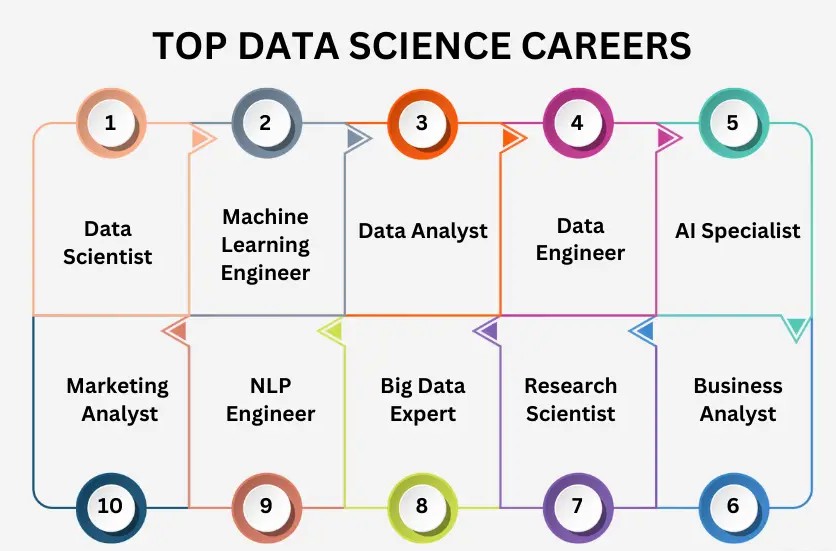
After completing an MBA in Data Science, students have many career opportunities. From business to marketing analyst, students can build their careers in many fields such as finance, healthcare, and IT.
Data Scientist
A data scientist analyses vast datasets and uncovers trends that can help organisations to make better choices. These experts use statistical methods, machine learning algorithms, and predictive models to discover insights hidden in the data. For instance, a data scientist at an e-commerce company might study customer behaviour to suggest products more efficiently.
Business Intelligence Analyst
Business intelligence analysts primarily transform raw data into meaningful reports and dashboards. They guide management teams in understanding trends and performance metrics using visualisation tools such as Power BI, Tableau, and Excel dashboards.
Data Analyst
Data analysts are responsible for collecting, filtering, and analysing data to support business decision-making. They often collaborate with various departments within the company and help identify patterns and trends in business data.
Marketing Analyst
Marketing analysts work with data to get insights into consumer behaviour and market trends. They look at customer demographics, purchasing patterns, and the impact of advertising.
Risk Analyst
Banks, insurance companies, and other financial institutions mostly recruit risk analysts. Their main task is to analyse financial data and identify risks associated with investments, credit, or market fluctuations.
Management Consultant
Consulting firms regularly hire analysts to join their teams and provide expert advice to companies on strategy and operations. Consultants examine large data sets, identify problems, and produce a list they share with management as a blueprint for implementing changes to improve performance.
Advantages of an MBA in Data Science
An MBA in Data Science offers several long-term advantages for professionals who want to build careers at the intersection of business and technology.
High Demand Across Industries
One of the biggest advantages of this programme is the growing demand for data science professionals. Businesses across sectors such as banking and financial services, healthcare, and IT are adopting data-driven strategies, which means skilled professionals are required in almost every industry.
Combination of Business and Technical Skills
Unlike traditional technical courses that focus mainly on programming or statistics, an MBA in Data Science also teaches business strategy, leadership, and management skills.
This combination makes graduates more valuable to organisations because they can both analyse data and understand business objectives.
Strong Career Growth Potential
Data science roles often offer rapid career growth. Professionals who show strong analytical abilities and strategic thinking can apply for leadership roles.
For example, a data analyst may eventually progress to positions such as:
Analytics Manager
Data Strategy Lead
Head of Data Analytics
Opportunity to Work with Emerging Technologies
Students pursuing a Data Science MBA in India gain exposure to cutting-edge technologies such as Artificial Intelligence, Machine Learning, Big Data Analytics, and Cloud Computing. These technologies are shaping the future of industries worldwide.
Global Career Opportunities
Data science is a globally recognised skill. Professionals with strong analytical and business expertise can work not only in India but also in international markets.
Many multinational companies recruit data science professionals for global roles, making this field attractive for individuals seeking international career opportunities.
One of the main reasons students are thinking about doing an MBA in Data Science is the high salary potential. As mentioned above, companies make most of their decisions based on data, so professionals with the right skills are in demand. However, the salary of a candidate varies based on their experience, level of skills, location, and the companies they are working with.
Below is an approximate salary overview for professionals with a Data Science MBA in India.
Experience Level
Job Role Examples
Average Salary Range (India)
Entry Level (0–2 Years)
Data Analyst, Business Analyst, Junior Data Scientist
₹6 LPA – ₹12 LPA
Mid-Level (3–5 Years)
Data Scientist, Business Intelligence Analyst, Analytics Consultant
₹12 LPA – ₹20 LPA
Senior Level (6–10 Years)
Senior Data Scientist, Analytics Manager, Product Analyst
₹20 LPA – ₹35 LPA
Leadership Roles (10+ Years)
Head of Analytics, Chief Data Officer, Data Strategy Lead
Enroll for MBA in Data Science Programme With Jaro Education
Jaro Education offers programmes that help professionals develop expertise in modern business and analytics.
Through our partnerships with leading universities, Jaro provides access to advanced management programmes in data science and analytics designed for working professionals and aspiring managers.
The programme typically focuses on:
Practical industry applications of data science
Advanced analytics tools and technologies
Strategic decision-making using data insights
Industry mentorship and networking opportunities
Conclusion
From the above discussion, you should have gained an understanding of the importance of an MBA in data science and of how it is a booming sector globally. Since the data is a part of our everyday lives and cannot go anywhere, the demand for professionals to work with that data will never go away. So, if you’re looking for a thriving career ahead, data science is exactly what you need.
To enrol in the best MBA in Data Science programme, visit Jaro Education’s website to explore available courses, learn about programme details, and start your journey toward becoming a data-driven business professional.
Frequently Asked Questions
An MBA in Data Science is a postgraduate management programme that combines business management education with data analytics and machine learning skills.
Entry-level salaries usually range between ₹6 lakh and ₹12 lakh per year, depending on the institution and job role.
Yes. Many universities offering Data Science MBA in India accept students from non-technical backgrounds, provided they have basic mathematical knowledge.
Yes. With increasing demand for data professionals and strong salary potential, this field offers excellent career opportunities across industries.
Dr. Sanjay Kulkarni
Data & AI Transformation Leader
Dr. Sanjay Kulkarni is a Data & AI Transformation Leader with over 25 years of industry experience. He helps organizations adopt data-driven and responsible AI practices through strategic guidance and education. With experience across startups and global enterprises, he bridges the gap between theory and real-world application. His work empowers teams to innovate and thrive in AI-driven environments.

 April 22, 2026
 8 min read




 ChatGPT
 Perplexity
 Claude
 Grok
Grok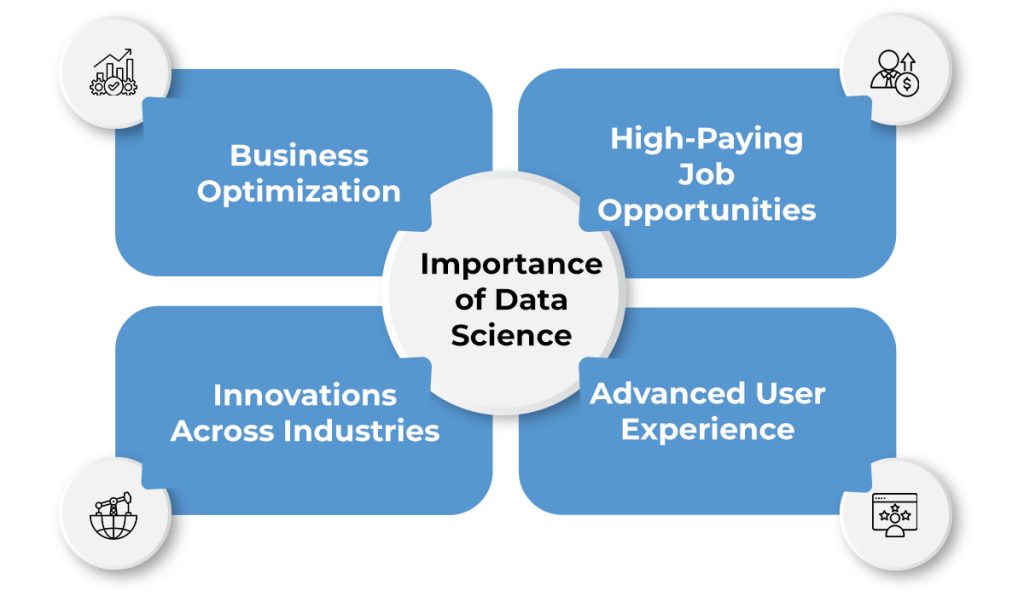




 Admission Open
 Admission Closed

 Admission Closed
 Admission Open
 ROI Calculator