HOME > BLOG > Online UG > Explore Exciting Career Opportunities After an Online BCA
Online UG
Explore Exciting Career Opportunities After an Online BCA
J
By Jaro Education
April 29, 202510 min read
Last updated on August 26, 2026
SHARE THIS ARTICLE
Table Of Content
Top 14 BCA Career Options
Government Jobs After BCA
BCA Salary in India: What Can You Expect?
Should You Pursue Higher Studies After BCA?
An online BCA can prepare learners for a range of technology-focused roles across industries. As businesses continue to adopt cloud computing, data analytics, artificial intelligence, cybersecurity and digital platforms, the demand for professionals with relevant technology skills continues to create new opportunities.
The BCA career options available today go beyond traditional software development. Graduates can explore careers in web development, data analytics, cybersecurity, cloud computing, mobile application development, artificial intelligence, software testing, database administration, networking and more.
The right career options after BCA depend on your interests, technical skills, certifications, practical experience and long-term goals. Some roles require strong programming skills, while others focus more on analytics, infrastructure, design, testing or project coordination.
The career after BCA can take several directions. While software development remains one of the most popular choices, emerging technology areas are creating opportunities across multiple specialisations.
Below are some of the leading BCA career opportunities you can consider.
1. Software Developer
Software development remains one of the most sought-after job options after BCA. Software developers design, develop, test and maintain applications used by businesses and consumers.
Depending on your interests, you can specialise in front-end development, back-end development, full-stack development or specific programming ecosystems such as Java, Python or C++.
Technology-specific hiring in India has shown strong growth, making software development a relevant option for graduates who enjoy programming and problem-solving.
Skills needed:
Java, Python, C++ or other programming languages
Data structures and algorithms
Object-oriented programming
Git and version control
Agile and Scrum methodologies
Problem-solving and analytical skills
Indicative salary: Around ₹3 lakh to ₹6 lakh per year for many entry-level roles, with potential for considerably higher earnings as experience and specialisation increase.
2. Web Developer
Web development is another popular career option after BCA. Web developers create and maintain websites and web applications, working on their functionality, performance and user experience.
You can specialise in front-end, back-end or full-stack development. Full-stack development can be particularly useful for learners who want exposure to both client-side and server-side technologies.
Skills needed:
HTML, CSS and JavaScript
React, Angular or Vue.js
Node.js or other back-end technologies
Databases
Web hosting and server management
Basic understanding of SEO and web performance
Indicative salary: Approximately ₹2.5 lakh to ₹5 lakh per year for entry-level roles, with earning potential increasing with experience and technical specialisation.
3. Data Analyst
The growing importance of data-driven decision-making has made data analysis an attractive career after BCA. Data analysts collect, clean and interpret data to help organisations identify trends and make informed decisions.
This role can be suitable for BCA graduates who enjoy working with numbers, databases and visualisation but do not necessarily want to pursue a purely programming-focused career.
Skills needed:
SQL
Excel
Python
Statistics
Power BI or Tableau
Data visualisation
Communication and analytical skills
Indicative salary: Entry-level data analyst roles may offer around ₹3.5 lakh to ₹6 lakh annually, with specialised professionals potentially earning significantly more.
4. Cybersecurity Analyst
As businesses increasingly depend on digital systems, cybersecurity has become an important area of technology. Cybersecurity analysts help organisations monitor systems, identify vulnerabilities, investigate incidents and protect sensitive information. This can be one of the more specialised job opportunities after BCA, particularly for graduates interested in networking, security and risk management.
A postgraduate certification or specialised training can help you build knowledge in areas such as network security, ethical hacking and security operations.
Skills needed:
Networking fundamentals
Linux
Security principles
Firewalls and intrusion detection
Vulnerability assessment
Incident response
Indicative salary: Entry-level cybersecurity roles commonly fall in the ₹4 lakh to ₹7 lakh range, although compensation varies substantially by employer, skills and certifications.
5. Mobile App Developer
Mobile applications have become an integral part of how people shop, communicate, access financial services and consume entertainment. This has created opportunities for mobile application developers.
As a mobile app developer, you may work on Android, iOS or cross-platform applications. You can also specialise in areas such as application performance, user experience or mobile security.
Skills needed:
Kotlin or Java for Android
Swift for iOS
Flutter or React Native
APIs
Databases
UI and UX fundamentals
Indicative salary: Entry-level mobile application developers may earn approximately ₹4 lakh to ₹6 lakh annually, depending on technical skills and employer.
6. Cloud Computing Specialist
Cloud computing has transformed how businesses store data, run applications and manage IT infrastructure. This makes cloud computing a valuable specialisation for BCA graduates.
Cloud professionals work with platforms such as Amazon Web Services, Microsoft Azure and Google Cloud. With additional experience, you can progress towards cloud engineering, DevOps or cloud architecture roles.
Skills needed:
AWS, Microsoft Azure or Google Cloud
Cloud architecture
Linux
Networking
Scripting
Containers and automation
Cloud security
Indicative salary: Entry-level cloud roles can offer approximately ₹4 lakh to ₹7 lakh annually, with significant growth possible as professionals develop cloud engineering and DevOps expertise.
7. IT Project Manager
If you have strong communication, planning and organisational skills, IT project management could be an interesting career option after BCA. IT project managers coordinate technology projects, manage timelines and resources, communicate with stakeholders and help teams deliver projects according to agreed objectives.
Fresh BCA graduates may typically begin in roles such as project coordinator, PMO analyst or junior project associate before moving into project management positions.
Indicative salary: Compensation varies considerably by experience and role. Entry-level project coordination positions may start around ₹3 lakh to ₹6 lakh annually, while experienced IT project managers can earn substantially more.
8. Software Tester or QA Analyst
Software testing is another option for graduates who are interested in technology but do not want to spend their entire career writing code. QA analysts test applications to identify bugs, performance issues and usability problems before software reaches users. With experience, professionals can move into automation testing and QA engineering.
Skills needed:
Software testing methodologies
Manual testing
Test case creation
Selenium or other automation tools
Basic programming
SQL
Problem-solving
Indicative salary: Entry-level software testing roles may offer approximately ₹3 lakh to ₹5 lakh annually, with automation and QA engineering skills supporting stronger career progression.
9. Database Administrator
A database administrator, or DBA, manages an organisation’s databases and helps ensure that information remains available, secure and properly organised. This can be a suitable option for BCA graduates who enjoy working with databases and backend systems.
Skills needed:
SQL
MySQL, PostgreSQL, Oracle or SQL Server
Database security
Backup and recovery
Performance optimisation
Database management
Indicative salary: Entry-level database professionals may earn around ₹4 lakh to ₹6 lakh annually, depending on their database expertise and employer.
10. Network Administrator
Network administrators are responsible for maintaining an organisation’s computer networks. Their work may include configuring network devices, monitoring connectivity, troubleshooting problems and supporting network security.
Networking can also provide a foundation for later moving into cloud computing or cybersecurity.
Skills needed:
Networking fundamentals
TCP/IP
DNS and DHCP
Network security
Linux and Windows administration
Cisco or other networking technologies
Indicative salary: Entry-level network administration roles may offer around ₹3 lakh to ₹5 lakh annually, with higher compensation possible as professionals move into specialised networking, cloud or security roles.
11. AI and Machine Learning Associate
Artificial intelligence and machine learning are emerging areas that BCA graduates can explore after developing strong foundations in programming, mathematics and data analysis. An entry-level professional may work as an AI/ML associate, junior ML developer or data-focused technology professional. However, advanced AI and MLpositions generally require deeper knowledge of mathematics, statistics, algorithms and machine learning frameworks.
Skills needed:
Python
Statistics and mathematics
Machine learning fundamentals
SQL
Pandas and NumPy
Machine learning frameworks
Data preprocessing
Indicative salary: Entry-level AI and ML-related roles may start around ₹5 lakh to ₹9 lakh annually, depending on the role and skill level.
12. UI/UX Designer
Not every career after BCA requires advanced programming. If you are interested in technology and design, UI/UX can be another career path.
UI/UX professionals work on how websites, applications, and digital products look and function from the user’s perspective. A BCA background can be useful because it provides an understanding of how digital products are built.
Skills needed:
Figma
Wireframing
Prototyping
User research
Design principles
Usability testing
Indicative salary: Entry-level UI/UX roles may offer approximately ₹4 lakh to ₹9 lakh annually, depending on portfolio quality, employer and location.
13. Technical Support Engineer
Technical support is one of the practical job options after BCA for graduates looking to enter the IT industry and gain hands-on experience.
Technical support engineers troubleshoot hardware, software, network and application-related problems. With experience, professionals can move into system administration, cloud, networking, cybersecurity or IT service management.
Skills needed:
Operating systems
Networking basics
Troubleshooting
IT service management
Communication
Customer support
Indicative salary: Entry-level technical support roles can start around ₹3 lakh to ₹6 lakh annually, depending on the organisation and technical requirements.
14. Digital Marketing Specialist
A BCA degree can also support careers outside traditional IT roles. Digital marketing is one such option, particularly for graduates interested in technology, analytics and online platforms.
Digital marketing professionals work across SEO, paid advertising, social media, content, email marketing and web analytics. Your technical background can be useful when working with analytics platforms, websites and marketingtechnologies.
Skills needed:
Search engine optimisation
Google Analytics
Paid advertising
Social media marketing
Content marketing
Data analysis
Indicative salary:Entry-level digital marketing roles may start around ₹3 lakh to ₹4 lakh annually, with experienced professionals potentially earning ₹10 lakh or more depending on specialisation and responsibilities.
Government Jobs After BCA
If you prefer a career in the public sector, government jobs after BCA can also be considered. A BCA degree may make you eligible for certain government recruitment examinations and technical or administrative positions, subject to the specific educational qualification mentioned in each notification.
Graduates can explore recruitment opportunities through organisations such as UPSC, SSC, banking recruitment bodies and state-level public service commissions. UPSC, for example, conducts recruitment examinations and publishes specific eligibility requirements for different examinations and posts.
Some potential areas to explore include:
IT and technical support roles
Computer operator positions
Data-related government roles
Banking and financial technology roles
Administrative positions for which a bachelor’s degree is accepted
State government recruitment
Public sector organisations
Always check the latest official notification before applying because eligibility varies by post, examination, subject requirements and recruiting organisation.
The salary after BCA depends on several factors, including your technical skills, location, employer, experience, certifications and job role.
For many entry-level technology roles, a broad starting range of around ₹3 lakh to ₹8 lakh per year is a reasonable benchmark, although individual offers can fall outside this range. A 2025-26 higher education salary snapshot places the average starting range for BCA graduatesat approximately ₹3 lakh to ₹8 lakh, with software development and cybersecurity among the areas associated with stronger starting opportunities.
Job role
Indicative entry-level salary
Software Developer
₹3-6 LPA
Web Developer
₹2.5-5 LPA
Data Analyst
₹3.5-6 LPA
Cybersecurity Analyst
₹4-7 LPA
Cloud Specialist
₹4-7 LPA
Mobile App Developer
₹4-6 LPA
Software Tester
₹3-5 LPA
Database Administrator
₹4-6 LPA
Network Administrator
₹3-5 LPA
UI/UX Designer
₹4-9 LPA
Technical Support Engineer
₹3-6 LPA
Digital Marketing Specialist
₹3-4 LPA
These are indicative ranges rather than guaranteed salaries. Actual compensation varies by company, location, skills, experience and hiring conditions.
Free Courses
Free Python Course with Certificate – Python for Data Analysis
Starting a job is not the only option after completing BCA. If you want to deepen your technical knowledge or qualify for more specialised roles, higher education can be worth considering.
An MCA is one of the most common choices. An online MCA can allow graduates to continue learning while developing knowledge in areas such as software development, databases, networking, cloud computing and information systems.
You can also consider programmes or certifications related to:
Data science and analytics
Artificial intelligence and machine learning
Cybersecurity
Cloud computing
DevOps
Business analytics
Digital marketing
IT management
The right choice depends on your intended career path. For example, a cybersecurity certification may make more sense for someone targeting security roles, while an MCA may be useful for a graduate seeking broader postgraduate knowledge in computer applications.
What Are the Top Universities for Online BCA?
An online BCA can provide a flexible route for students who want to develop their technology skills. When selecting a programme, consider factors such as university recognition, curriculum, faculty, practical learning, assessment methods, student support and career services.
Below are programmes listed on Jaro Education’s platform:
A programme designed to build foundational and professional knowledge for careers in the IT sector.
Before enrolling, prospective students should verify the latest programme structure, eligibility, fees and recognition directly with the university or education provider.
How Jaro Education Can Help You Achieve Your Career Goals
Jaro Education provides higher education and upskilling programmes along with career guidance and learner support. For students exploring BCA career options, structured guidance can help identify suitable specialisations and courses based on their interests and career goals.
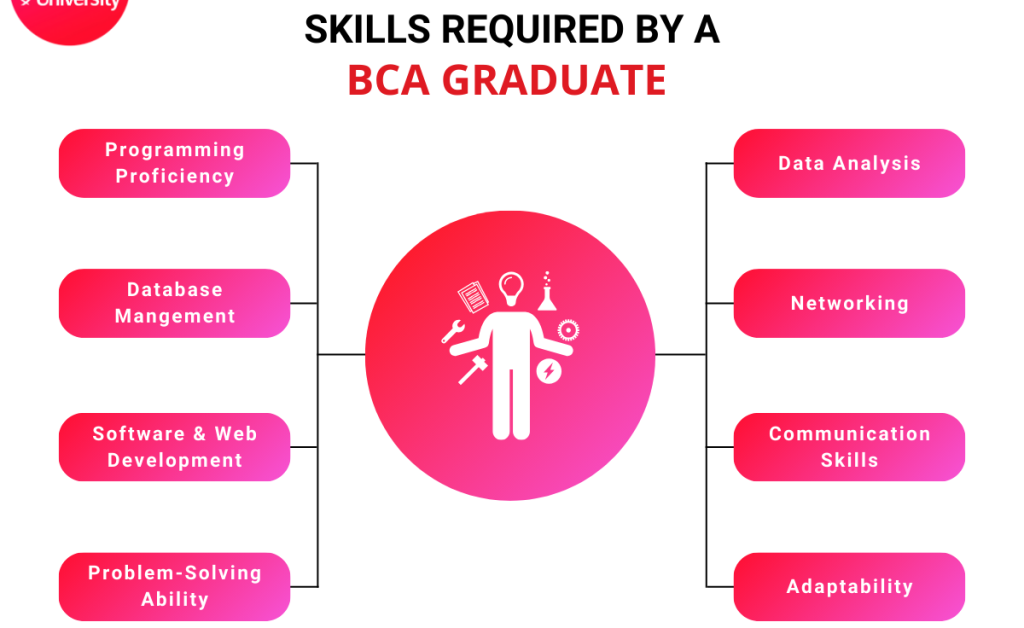
The BCA career options available today extend well beyond software development. From data analytics and cybersecurity to cloud computing, AI, testing, networking and UI/UX, graduates can choose a path based on their strengths and interests.
Building practical skills, completing relevant certifications, gaining project experience and continuously learning can improve your chances of finding suitable job opportunities after BCA. The key is to choose a direction early and build the skills that employers in that field actually require.
Frequently Asked Questions
Yes. Career options after BCA include software development, data analytics, cybersecurity, cloud computing, testing, networking and several other technology roles. However, long-term career growth depends on your skills, experience, specialisation and ability to keep up with changes in technology.
You can start with a full-time IT role, freelance work, internships that lead to employment or specialised technology roles. Software development, data analytics, cybersecurity and cloud computing can offer strong earning potential as you gain experience. Building practical projects and earning relevant certifications can also strengthen your profile.
The job scope after BCA is broad. Graduates can pursue development, analytics, cybersecurity, cloud, networking, database administration, testing, technical support, UI/UX and digital marketing. You can also pursue an MCA or another postgraduate qualification to deepen your expertise.
There is no single BCA job that always offers the highest salary. Compensation depends on experience, skills, company and location. Specialised areas such as cybersecurity, cloud computing, AI and machine learning, software engineering and data-related roles can offer strong salary growth with experience.
The best career options after BCA depend on your interests. Software development may suit students who enjoy coding, while data analytics may suit those interested in numbers and insights. Cybersecurity and cloud computing can suit students interested in infrastructure and technology security. UI/UX can be considered by creative learners, while an MCA can be useful for those who want further academic and technical specialisation.
Yes, depending on the recruitment notification. Government jobs after BCA can include technical, computer-related and administrative positions for which the relevant bachelor’s degree is accepted. Eligibility differs across examinations and posts, so always check the latest official notification before applying.
No, an MCA is not mandatory for every BCA graduate. You can enter the workforce directly after BCA if you have the required skills for your target role. However, an MCA can be useful if you want advanced academic knowledge, broader computer application expertise or access to roles where postgraduate qualifications are preferred.
Focus on skills that align with your chosen career. For software development, learn programming, data structures, databases and Git. For data analytics, focus on SQL, Python, Excel and Power BI or Tableau. For cloud, learn AWS, Azure or Google Cloud along with Linux and networking. For cybersecurity, build strong networking, Linux and security fundamentals.
Yes, subject to the eligibility requirements of the university and programme you choose. An online MCA can be a flexible way to pursue postgraduate education while developing advanced knowledge in computer applications and related technology areas.

 April 29, 2025
 10 min read





 ChatGPT
 Perplexity
 Claude
 Grok









 ROI Calculator