 HOME > BLOG > Career Development > What Is Creative Thinking? Examples and 13 Ways to Improve Your Skills
What Is Creative Thinking? Examples and 13 Ways to Improve Your Skills
 April 25, 2026
 10 min read




Table Of Content
- What Is Creative Thinking?
- Types of Creative Thinking
- Why Is Creative Thinking Important?
- Examples of Creative Thinking
Creativity has always been associated with artists, writers, or designers. But some of us know that creativity is one of the most important aspects of everyone’s life. From showing problem-solving abilities at work to finding a different and smarter way to manage time, communicate ideas, and be productive, creativity helps people to act and think differently and come up with better solutions.
So, what does creative thinking really mean? To put it simply, it refers to the capability of seeing problems, circumstances, or ideas in a new light. It empowers individuals not to be limited by traditional solutions and to produce novel ideas.
In fact, many people believe creativity is something you either have or you don’t. In reality, creative thinking is a skill that can be learned and improved with practice. By developing this skill, you can become a better problem-solver, communicator, and innovator.
In this blog, you will read about what creative thinking is, how it works, examples of creative thinking, and 13 practical ways to develop your creativity skills.
 ChatGPT
 Perplexity
 Claude
 Grok
GrokWhat Is Creative Thinking?
*21kschool.com
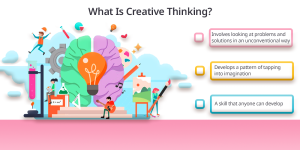
Creative thinking involves the ability to come up with new ideas, identify patterns, and explore new opportunities or possibilities. It requires imagination, curiosity, and thinking logically to see a situation from several perspectives.
In simple words, creative thinking is all about discovering new solutions to problems or finding a new way of expressing ideas.
Rather than staying in the same thought patterns, creative thinkers will question assumptions and try out different ways. They link up unrelated ideas and turn them into effective solutions.
For example, if you are having a project at your work with a deadline nearby and due to a lot of work, your team is running out of time. This is where a leader with creative thinking skills may find a way of completing tasks more quickly through alternative ways, using automation tools, or changing the workflow.
Being able to think differently is useful not only at the workplace but also in personal life. In fact, companies seek team members with a creative thought process because it can help benefit several departments and increase productivity.
Types of Creative Thinking
Creative thinking is not just about imagination. There are several ways people come up with out-of-the-box ideas and solutions. Understanding different thinking styles can help you approach problems in a more innovative way. Here are five common types of creative thinking you must know about.
Divergent Thinking
Divergent thinking is about experimenting with different ideas and solutions to one problem. It’s the method that is usually practised during brainstorming. Rather than looking for the right answer, you look for a number of possibilities.
The purpose is to have freedom of thinking and broaden your choices. For example, if a business wants to enhance customer experience, using divergent thinking would mean initially coming up with a long list of improvements before choosing a few of them.
Convergent Thinking
Convergent thinking is more analytical. After having many ideas, this method helps you evaluate them and choose the most practical solution.
It involves gathering information, comparing options, and selecting the best possible answer. Divergent and convergent thinking often work together. First, you generate ideas. Then, you analyse them to find the most effective one.
Lateral Thinking
Lateral thinking encourages you to approach problems in unexpected ways. Instead of following a traditional step-by-step process, you deliberately look for unconventional solutions.
This method often involves asking unusual questions or looking at problems from a different perspective.
Inspirational Thinking
Inspirational thinking focuses on imagining the outcomes you truly want to achieve. By clearly picturing the ideal result, people often discover creative approaches and unexpected paths that bring them closer to their goals.
This type of thinking is commonly seen among visionaries, entrepreneurs, and innovators. It encourages individuals to look beyond limitations and see possibilities where others may only notice obstacles. Much like appreciating a work of art, inspirational thinking involves recognising meaning, balance, and perspective in an idea. At times, even imperfections can add character and depth, reminding us that progress and creativity rarely follow a perfectly straight path.
Aesthetic Thinking
Aesthetic thinking involves observing patterns, balance, and beauty in ideas or designs. It encourages people to appreciate creativity and find meaning in visual or conceptual elements. Designers, artists, and architects frequently use this thinking style.
Why Is Creative Thinking Important?
*kapable.club
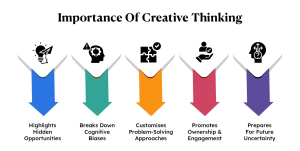
Creative thinking plays an important role in today’s workplaces and everyday life. It allows individuals to adapt, innovate, and respond to challenges effectively. Here are some reasons why creative thinking is important.
It Helps Solve Problems
Problems rarely have a single solution. Creative thinking allows people to be open-minded and explore different possibilities to find better ways to resolve issues.
For example, a business facing declining sales may explore new marketing strategies, product ideas, or customer engagement methods through creative thinking.
It Encourages Innovation
Creativity and imagination are sources of innovation. Companies that support creativity frequently develop new products, services and business approaches.
Successful companies create innovative environments that support the free flow of new ideas among their employees.
It Supports Critical Thinking
Creative thinking and critical thinking are close to each other. When these two skills are combined, they make it possible for someone to examine a problem and come up with several unique solutions.
Focused on the logical evaluation of facts, critical thinkers are critical thinkers, whereas creative thinkers consider the scope of what can be done. It Improves Decision-Making.
It Improves Decision-Making
Taking the time to look at various perspectives and possibilities leads to making better decisions. Before settling on one answer, creative minds usually take a look at the issue from several different points of view.
It Enhances Personal Growth
Creativity encourages curiosity and self-reflection. When people explore new ideas, they also learn more about their own perspectives and abilities. This process helps individuals grow intellectually and emotionally.
Examples of Creative Thinking
Creative thinking is useful in many everyday situations. Here are five examples that show how creativity can help solve problems and generate ideas.
If you want to learn about the importance of critical thinking, read this blog: Role of Critical Thinking in Strategic Decision Making | Jaro Education.
1. Mind Mapping for Brainstorming
Mind mapping is a tool used to brainstorm and visualise how the ideas are connected to one another. It consists of creating a map that starts with a central idea and has branches representing different groups of ideas or topics that are related to it.
Using mind mapping allows you to visualise how the ideas are related to one another, which in turn helps to inspire creative solutions to problems.
For example, when developing a new business strategy, the team could use the Mind Map method to brainstorm different marketing ideas, customer needs, and product feature lists.
2. Reverse Thinking
Reverse Thinking is a technique that involves thinking about a challenge or problem from an opposite perspective.
Instead of thinking about how to make something better, you would instead think of things that could make it worse. By identifying the factors that could create a negative impact, you would also be able to avoid making mistakes.
For example, if a company wants to improve the quality of customer service, the first thing they could do is identify the things that make their customers frustrated.
3. Combining Unrelated Ideas
Creative thinkers often combine two ideas that are completely unrelated to come up with unique, original solutions. For example, a cafe with a library-style reading area can give customers a way to relax and enjoy reading by having their favourite coffee.
4. Role-Playing
Role-playing involves imagining yourself in someone else’s position. This approach helps you understand a situation from different perspectives and test new ideas.
For example, a product designer may imagine being the end user to understand their problems and requirements.
5. The SCAMPER Technique
The SCAMPER method is a structured approach to creativity. It encourages people to improve ideas by asking questions related to:
- Substitute
- Combine
- Adapt
- Modify
- Put to another use
- Eliminate
- Reverse
Benefits of Creative Thinking
Developing creative thinking skills offers many benefits in both professional and personal life.
Better Problem-Solving
Creative thinkers often find solutions faster because they are open to multiple possibilities. Instead of getting stuck with one idea, they explore alternative approaches.
Improved Communication
Creative thinking can help people explain ideas more clearly and persuasively. This improves teamwork and collaboration.
Increased Productivity
When individuals feel stuck in repetitive routines, productivity often declines. Creative thinking helps break those patterns and restore motivation.
Stronger Relationships
Creative discussions often encourage collaboration and idea sharing. This strengthens relationships between colleagues, friends, and family members.
Greater Self-Awareness
Creative thinking encourages people to question assumptions and explore new perspectives. This process improves self-awareness and emotional intelligence.
13 Ways to Enhance Your Creativity Capabilities
This list consists of thirteen techniques that will help you develop and enhance your creative abilities:
1. Meet New People
Meeting new individuals from diverse backgrounds, cultures or professions can expose you to new techniques, varying perspectives, etc.
In fact, having a conversation can stimulate a new, innovative idea while inspiring a different mindset.
2. Let Yourself Be Bored
Sometimes it may happen that working on the same pattern can limit your thinking abilities. That’s okay! Allowing yourself some moments of boredom creates the space for your mind to wander and create ideas. Most of the time, inspiration comes out of nothing.
3. Be Curious
Curiosity encourages creativity; ask as many questions about the things that intrigue you until you find an answer; exploring questions and finding answers encourage deeper thought.
4. Pursue Different Experiences
Travel, new hobbies, attending workshops, experiencing new cultures, and many other things will widen your experience of the world and help develop your creative abilities.
5. Practice Mindfulness
Practising mindfulness and meditation helps eliminate some of the mental clutter you may be stuck with. When the mind becomes calm and clear, it is easier to be creative.
6. Collaborate With Others
When people from diverse backgrounds and skill sets work together, they can develop innovative solutions/ideas. Group discussions often lead to some new ideas to approach a problem in an innovative way.
7. Journal
Journaling may help you better organise your thoughts and ideas, and creative individuals often use journals to track down their creative thoughts before they fade away.
8. Schedule brainstorming sessions
Spend time brainstorming by giving yourself enough space to solve complex problems with a better approach and a different topic. The best creative thought will come from many creative but imperfect ideas.
9. Change your physical environment
An easy way to stimulate creativity is simply to change your environment. If you have the opportunity to work in other locations, offices, or family homes, rearrange your workspace regularly or get outside!
10. Read Widely
Reading books, articles, and research from different subjects introduces you to fresh perspectives. Knowledge from one field often inspires ideas in another.
11. Try Creative Activities
Engage in any creative pursuits or activities that may promote or spark your creativity, such as drawing, writing fictional stories, creating music, and solving puzzles or challenging problems.
12. Take Risks and Learn from Failure
Creativity involves experimentation. Not every idea will succeed, and that is perfectly normal. Failure often provides valuable lessons that lead to better ideas.
13. Work with a Coach or Mentor
Guidance from a mentor or coach can help you develop creative habits and stay motivated. Experienced mentors often provide valuable insights that inspire new ways of thinking.
Improve Your Creative Thinking With Jaro Education
Practising creative thinking activities daily helps, but structured learning can strengthen your skills faster. Platforms like Jaro Education offer industry-relevant programs in collaboration with top institutes that develop innovation, problem-solving, and strategic thinking abilities. These programs encourage professionals to combine critical thinking and creative thinking while solving real business challenges.
Some relevant programmes include:
- Executive General Management Programme – IIM Trichy
- Professional Certificate Programme in Strategic Management – IIM Kozhikode
- IIM Nagpur PG Program in Product & Brand Management – Apply Now!
These programmes help professionals build innovative thinking and practical decision-making skills for modern workplaces
Final Thoughts
Creative thinking is not limited to artists or innovators. It is a valuable skill that anyone can develop with practice. This comprehensive blog will help you foster original ideas, solve complex problems, and encourage innovation through lateral thinking, collaboration, and adaptability.
Whether you are a student, professional, entrepreneur, or leader, creativity can improve your problem-solving abilities, productivity, and decision-making.
Start small by practising curiosity, trying new experiences, and engaging in creative activities. Over time, these habits will strengthen your creativity and help you approach challenges with fresh perspectives.
In a world where innovation drives progress, developing strong creative thinking skills can make a powerful difference in both your career and personal life.
Frequently Asked Questions
Creative thinking is the ability to approach problems or ideas in new and innovative ways. For example, using mind mapping to generate different solutions for a project is a common example of creative thinking.
Some effective creative thinking activities include brainstorming sessions, mind mapping, role-playing, journaling ideas, and solving puzzles that encourage innovative thinking.

Related Courses
Explore our programs






Find a Program made just for YOU
We'll help you find the right fit for your solution. Let's get you connected with the perfect solution.

Is Your Upskilling Effort worth it?
 ROI Calculator

Are Your Skills Meeting Job Demands?
Try our Skill Gap tool
Experience Lifelong Learning and Connect with Like-minded Professionals
Explore Jaro Connect

