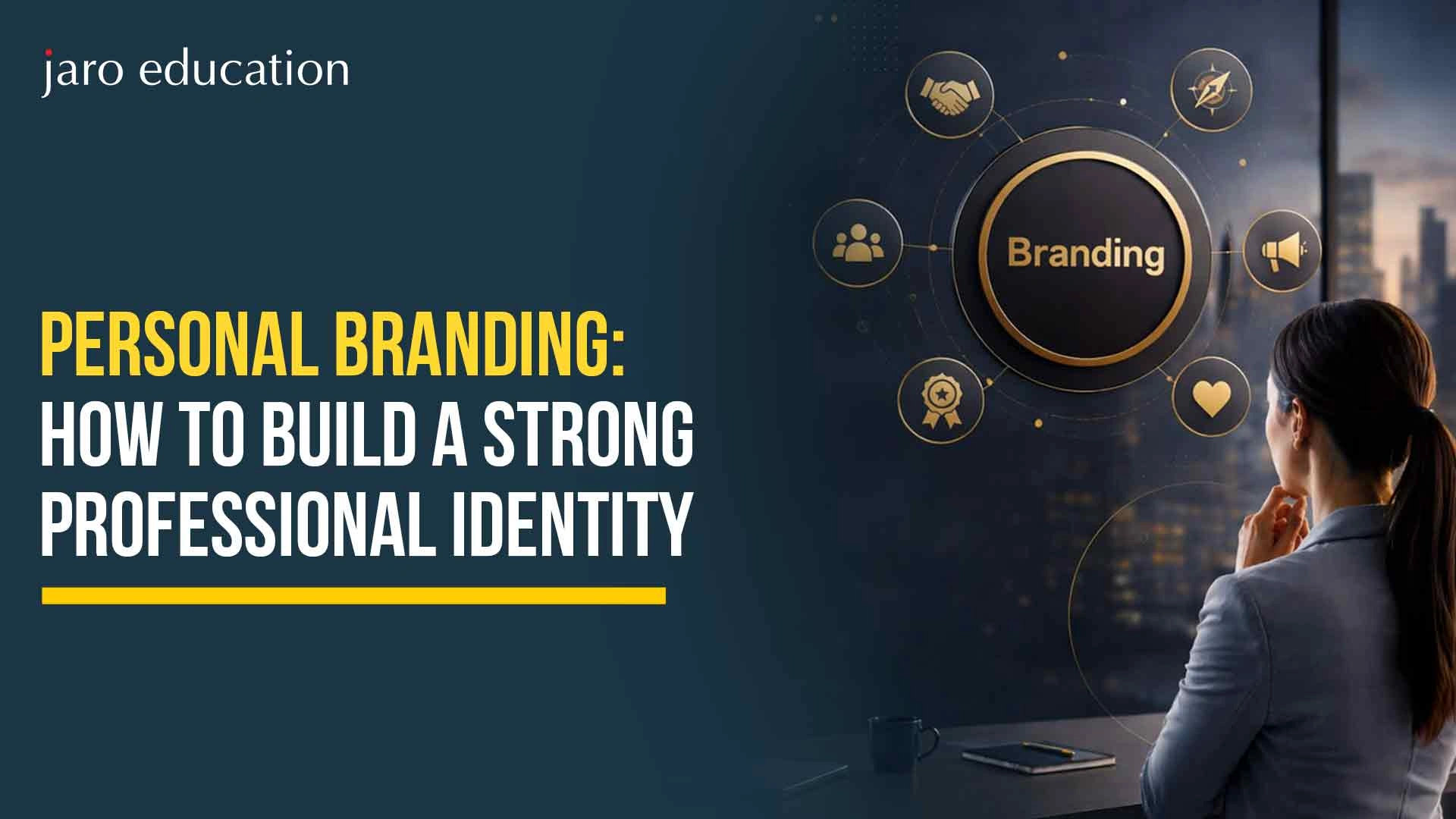
Personal Branding: How to Build a Strong Professional Identity
J
By Shubham Lal
October 3, 20267 min read
Published on October 3, 2026
SHARE THIS ARTICLE
Table Of Content
What Is Personal Branding?
Why Personal Branding Matters in 2026
The Core Elements of a Strong Professional Identity
Branding Myself: A Step-by-Step Process
Key Insights
Personal branding is the deliberate way you shape what others think and say about your skills, values and reliability, and it is closely tied to your professional reputation.
A strong personal brand rests on five elements: clarity, positioning, credibility, consistency and visibility.
Employers routinely look candidates up online, so what they find becomes part of your first impression.
LinkedIn is the most practical place to start: a clear photo, keyword-aware headline, purposeful About section and visible proof of work make up the core of personal branding on LinkedIn.
Personal branding is not self-promotion. It works best when it reflects real strengths and is backed by results.
In this blog, you'll learn what personal branding is, why it matters, a step-by-step method for branding yourself, LinkedIn best practices and mistakes to avoid.
Two professionals can have similar degrees, similar experience and similar salaries, yet one is the person everyone recommends while the other goes unnoticed. The difference is often not talent but visibility and clarity: one of them is easy to understand, easy to find and easy to trust.
That is what personal brandingis about. This guide explains what it means, why it matters in 2026, and how to go about branding yourself step by step, with a focus on LinkedIn, where most professional first impressions now begin.
Personal branding is the practice of deliberately shaping how others perceive your professional identity: your strengths, values, expertise and the results you deliver. It is not a logo or a slogan. It is the reputation you carry into rooms you are not in.
The term is widely traced to Tom Peters’ 1997 Fast Company article, “The Brand Called You”, which argued that professionals should think of themselves as the head marketer of their own brand. Peters later said the idea was often misread as self-promotion. The useful takeaway is the opposite: everything you do, and choose not to do, communicates something about your work, whether you plan it or not.
Personal Brand vs Reputation vs Image
These three ideas overlap but are not identical. Your reputation is what people already believe about you, based on past behaviour. Your image is how you appear at a given moment, such as a profile or an interview. Your personal brand is the managed link between the two: the deliberate effort to make sure your image accurately reflects the reputation you want to earn. If the gap between them is large, people notice.
Hiring managers, clients and colleagues increasingly search for people online before meeting them. A widely cited CareerBuilder survey found that 70% of employers research candidates on social networking sites, and 47% were less likely to call someone for an interview if they could not find them online. The survey is a few years old and figures vary across studies, but the direction is consistent.
A clear brand also helps in ways that go beyond job hunting. It makes referrals easier because people know what to recommend you for, and it supports the kind of career networking that opens doors before roles are advertised. Branding also matters inside organisations. Managers give visible, well-understood people the stretch projects and promotions, and colleagues recommend those they can describe clearly. For consultants, freelancers and founders, it directly affects whether prospects trust you enough to reach out.
In a market where many skills can be automated, judgement, credibility and relationships stand out, which is why our list of jobs AI cannot replace is dominated by trust-based work.
The Core Elements of a Strong Professional Identity
Clarity
You should be able to say in a sentence who you are professionally and what you want to be known for.
Positioning
Positioning is the specific space you occupy, such as “operations analyst who simplifies reporting for small manufacturers.” It borrows from company branding, so our guide to brand storytelling and positioning and the importance of branding translate well to individuals.
Credibility
Claims need proof: projects, outcomes, certifications, testimonials and published work. A statement such as “I improve reporting speed” is far more persuasive when followed by “cut monthly close reporting from five days to three.”
Consistency
Your resume, LinkedIn profile, communication style and behaviour at work should tell the same story.
Visibility
A brand nobody sees does not work. Visibility means sharing what you know and taking part in your professional community.
Branding Myself: A Step-by-Step Process
If you have ever asked “how do I start branding myself?”, use this sequence.
Step 1: Audit Your Current Brand
Search your name on Google and review your social profiles. Ask two or three colleagues to describe you in three words. Then run a personal SWOT analysis to list strengths, gaps, opportunities and risks.
Quick audit checklist
Does the first page of search results reflect your current role?
Do your LinkedIn headline and resume describe the same person?
Are old or off-brand posts still public?
Can a stranger tell in ten seconds what you do best?
Step 2: Define Your Goal and Audience
Decide who needs to notice you: recruiters, clients, managers or peers. Tie this to a target role by following our guide to defining and achieving career goals.
Step 3: Write Your Positioning Statement
A simple formula is: “I help [audience] achieve [outcome] using [strength].” For example, “I help early-stage startups turn messy data into clear dashboards using SQL and Power BI.” Practise saying it aloud, since it doubles as your answer to “tell me about yourself” in an interview. See our tips on introducing yourself in an interview.
Publish short posts, articles or project notes on topics you genuinely understand. The principles of content marketing, such as knowing your audience and being useful, apply to your own content as well.
Step 6: Review and Refine
Every quarter, check whether the opportunities and messages you receive match the brand you want. If they do not, adjust your positioning or proof.
Personal Branding on LinkedIn
LinkedIn is where recruiters, clients and peers are most likely to look you up, so personal branding on LinkedIn deserves focused effort. For a full walkthrough, read our guide on how to build a LinkedIn profile.
Profile Photo and Banner
LinkedIn’s help centre states that a good photo builds credibility and that members with a photo receive up to twice as many profile views. Use a clear, recent, well-lit headshot and a banner that reflects your field.
Headline
By default, your headline shows your current role, but you can rewrite it. Combine your role, key skills and value, for example “Data Analyst | SQL, Power BI | Turning reports into decisions.”
A weak headline says “Marketing Professional at XYZ”. A stronger one says “Content Strategist | B2B SaaS SEO | Helped grow organic traffic 3x”. The second tells a recruiter what you do, in which field and with what result, and it uses the words people actually search for.
About Section
LinkedIn advises using the About section to express your mission, motivation and skills. Open with a strong first line, add two or three achievements with numbers, and end with what you want to be contacted for.
Experience and Featured Sections
Describe outcomes rather than duties, and pin your best work, such as a project, article or presentation, to the Featured section so visitors can verify your claims.
Custom URL, Skills and Recommendations
Create a personal profile URL and list the skills you want to be found for. Ask former managers or clients for specific recommendations.
Content and Engagement
Comment thoughtfully on posts in your field and share one useful idea each week. To extend this into a wider strategy, see our LinkedIn marketing guide.
You do not need vanity metrics. Look for signals that match your goal: relevant recruiter or client messages, profile views from your target companies or industry, people tagging you in discussions in your field, and colleagues describing you the way you want to be described. If you are getting attention but the wrong kind, your positioning is too broad or off-target. If you are getting almost none, revisit your visibility and proof.
Personal branding is about making your real strengths visible, credible and consistent. Start with an honest audit, write a clear positioning statement, build proof of your work and put your best foot forward on LinkedIn. Small, steady actions add up faster than one dramatic makeover. Pick one action from this guide, such as rewriting your headline or publishing your first short post, and do it this week.
The best brand is one you can live up to on an ordinary Tuesday, not only in your profile.
Frequently Asked Questions
Personal branding is the deliberate effort to shape how others perceive your professional strengths, values and expertise. It combines how you present yourself with the proof and behaviour that back it up.
It makes you easier to find, understand and trust. Employers and clients often research people online, so a clear brand improves first impressions and can lead to referrals and opportunities
Audit how you appear today, define your goal and audience, write a one-sentence positioning statement, build proof through projects, and share your knowledge consistently.
Use a clear photo, a keyword-aware headline, a purposeful About section, achievement-based experience and a Featured section with your best work. Then engage regularly with relevant content.
No. Self-promotion focuses on attention, while personal branding focuses on reputation. It works best when you share useful knowledge and real results rather than exaggerated claims.
Shubham Lal
Lead Software Developer
Shubham Lal joined Microsoft in 2017 and brings 8 years of experience across Windows, Office 365, and Teams. He has mentored 5,000+ students, supported 15+ ed-techs, delivered 60+ keynotes including TEDx, and founded AI Linc, transforming learning in colleges and companies.

 October 3, 2026
 7 min read




 Key Insights
 ChatGPT
 Perplexity
 Claude
 Grok
Grok







 ROI Calculator