How Local SEO Differs From Traditional SEO and Why It Matters
J
By Priya Sahu
April 17, 202510 min read
Last updated on September 8, 2026
SHARE THIS ARTICLE
Table Of Content
What Is Local SEO?
How Does Local SEO Work?
Local SEO vs Traditional SEO
Why Is Local SEO Important for Businesses?
Key Insights
Local SEO is about connecting businesses with people actively looking for services in their area.
Local SEO explains that simply doing traditional SEO isn’t enough for location-based businesses, businesses need to build a strong local presence across Google, their website, reviews, and local listings to turn nearby searches into real customers.
When people search for a product, service or business near them, search engines try to provide results that are relevant to their location. This is where local SEO becomes important. Unlike traditional SEO, which generally focuses on improving a website's visibility for broader searches, local SEO helps businesses appear in searches with a geographic or local intent. For example, someone searching for "dentist near me" or "best cafes in Delhi" is looking for a local solution rather than general information.
For businesses that serve customers in specific locations, understanding what is local SEO and how it works can help improve online visibility, attract relevant visitors and generate more enquiries or visits.
Local SEO is the process of improving a business’s online presence so that it can appear more prominently in search results for location-specific queries. It is particularly useful for businesses that have a physical location or serve customers within a defined geographic area. These can include restaurants, clinics, salons, retailers, educational institutions, repair services, real estate businesses and professional service providers.
For example, a person searching for “plumber in Mumbai” has a clear local intent. Search engines may consider factors such as the business’s location, relevance, prominence and online information when determining which results to show.
Search engines use several signals to determine which local businesses are relevant to a user’s search. Although search algorithms are complex and constantly changing, businesses can improve their local presence by ensuring that their information is accurate, consistent and useful.
Google Business Profile
A Google Business Profile is one of the most important components of a local search strategy. Businesses can use it to provide information such as their name, address, phone number, website, business category, opening hours, services, photos and customer reviews.
Keeping this information accurate helps customers find and contact the business.
Local Keywords
Local keyword research identifies the terms people use when searching for businesses or services in a particular area.
For example:
“dentist in Delhi”
“digital marketing agency in Mumbai”
“best bakery near me”
“CA in Bangalore”
“AC repair service in Pune”
The objective is not to insert locations unnaturally throughout a website. Instead, businesses should create useful content and pages that genuinely address local search intent.
Online Reviews
Reviews can influence how potential customers perceive a business. They can also contribute to a business’s overall local presence.
Businesses should encourage genuine customers to leave reviews and respond professionally to both positive and negative feedback. Reviews should never be artificially generated or manipulated.
Local Citations
A local citation is an online mention of a business’s key information, such as its name, address and phone number.
Business directories, industry websites, local organisations and relevant listing platforms can all contribute to a business’s online presence.
Consistency matters. If a business has different addresses or phone numbers across multiple platforms, it can create confusion for customers and search engines.
Location-Specific Website Content
Businesses operating in multiple locations can create useful location pages when there is genuine value for users.
For example, a company serving Delhi, Mumbai and Bengaluru could create individual pages explaining the services available in each location rather than simply replacing the city name on the same page.
Good local content should provide information that is genuinely relevant to customers in that area.
Local SEO vs Traditional SEO
Credits: klientsolutech.com
Local SEO and traditional SEO share many fundamental principles, including keyword research, content quality, technical optimisation and link building. The main difference is search intent and geographic relevance.
Factor
Local SEO
Traditional SEO
Primary focus
Local visibility
Broader organic visibility
Search intent
Location-specific
Informational, commercial or transactional
Target audience
Customers in specific areas
Users across wider geographic areas
Important asset
Google Business Profile and website
Website and content
Keywords
“restaurant in Delhi”
“best restaurant recipes”
Reviews
Often highly relevant
Useful but generally less central
Local citations
Important
Usually less important
Location pages
Often useful
Not always required
Example business
Local clinic or restaurant
National software company
A business can use both strategies. For example, a national company may use traditional SEO to reach users across India while implementing local SEO for its individual offices or service locations.
Why Is Local SEO Important for Businesses?
Local search can connect people with businesses that are relevant to where they live, work or intend to visit.
Helps customers discover nearby businesses
Local SEO can improve the chances of a business appearing when potential customers search for relevant products or services in their area.
Reaches users with strong purchase intent
Someone searching for “emergency dentist near me” or “laptop repair shop near me” may already be looking for a provider. Appearing prominently for relevant searches can therefore help businesses reach users closer to making a decision.
Builds trust
Accurate business information, genuine reviews, photographs and helpful website content can give potential customers more confidence when evaluating a local business.
Supports website and offline visits
Local search visibility can lead to different types of actions, including website visits, phone calls, enquiries, direction requests and physical store visits.
Helps smaller businesses compete
A strong local presence can help smaller businesses reach customers within their service area without needing to compete for every broad, national keyword.
This is one reason local SEO for small businesses has become an important part of digital marketing.
Local SEO for Small Business
Local SEO can be particularly valuable for small businesses because their customers are often concentrated within a specific geographic area.
A small business can begin with the fundamentals rather than trying to implement every SEO tactic at once.
1. Create and optimise your Google Business Profile
Make sure the business name, category, address, phone number, website and operating hours are accurate.
Add relevant photographs and keep the profile updated when business information changes.
2. Build a useful website
Your website should clearly explain what you offer, where you operate and how customers can contact you.
Important information should be easy to find, particularly on mobile devices.
3. Target relevant local searches
Research the terms potential customers actually use. Focus on search intent instead of adding city names repeatedly to every page.
4. Collect genuine reviews
Ask satisfied customers to share honest feedback. Respond to reviews professionally and use feedback to improve customer experience.
5. Maintain consistent business information
Check your business details across relevant directories and platforms. Correct outdated or inconsistent information wherever possible.
6. Create useful local content
Consider answering questions that customers in your area frequently ask. Depending on the business, this could include local guides, service information, neighbourhood-specific advice or frequently asked questions.
What Are Local SEO Tools?
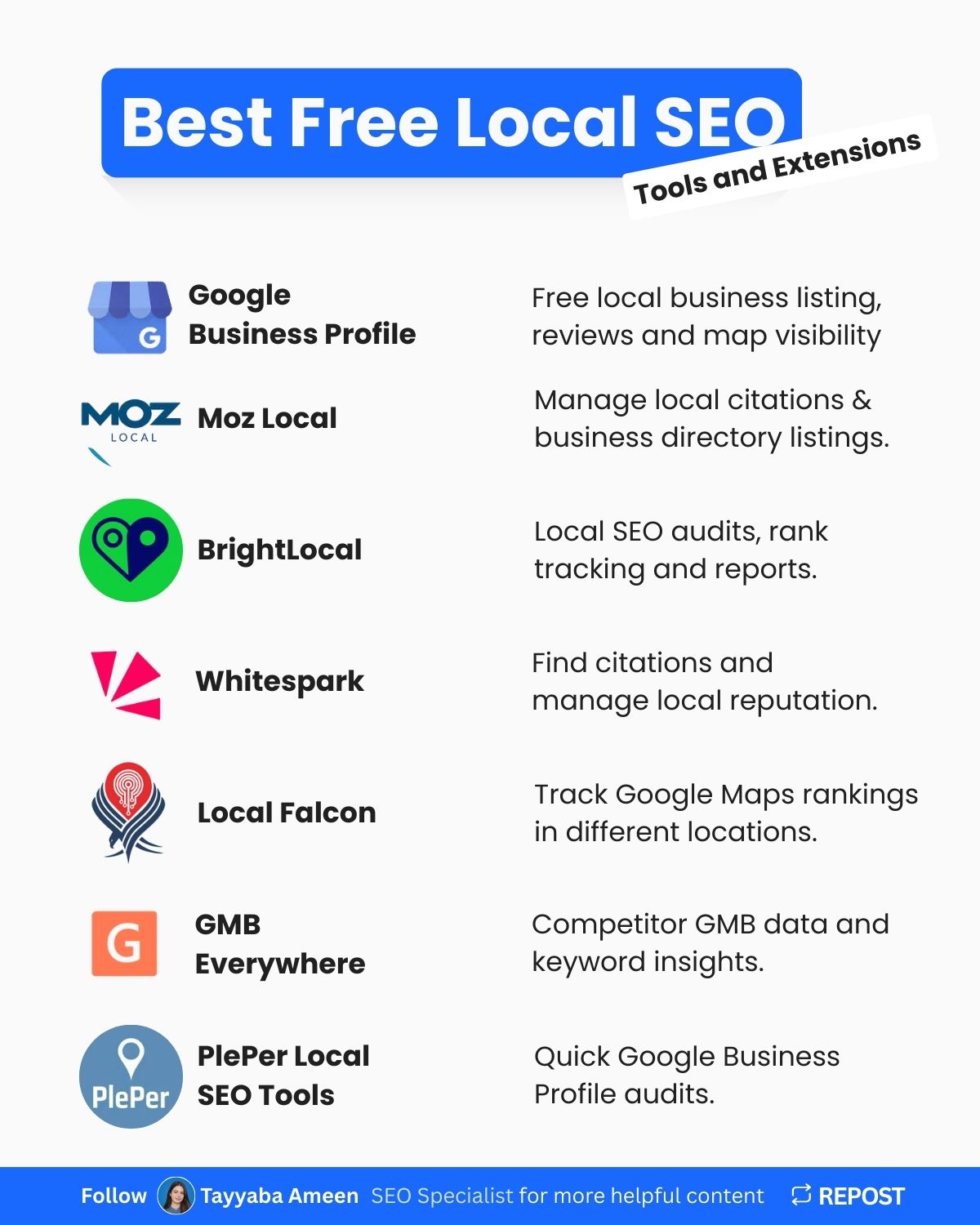
Credit: linkedin.com
Local SEO tools help marketers and business owners research, manage and monitor their local search presence.
Different tools serve different purposes. Some focus on keyword research, while others help with listings, reviews, rankings or competitor analysis.
Common categories of local SEO tools include:
Keyword research tools
These tools help identify search terms, search intent and related queries that potential customers may use.
Local rank tracking tools
Rank tracking platforms can help businesses monitor how their website or local listings perform for selected searches in specific locations.
Citation and listing management tools
These tools can help businesses manage information across multiple online directories and platforms.
Review management tools
Review-focused platforms can help businesses monitor customer feedback and manage responses across supported websites.
Website SEO tools
General SEO platforms can help identify technical issues, analyse competitors, research keywords and monitor organic search performance.
Popular platforms used by SEO professionals include Google Search Console, Google Analytics, Google Business Profile, Semrush, Ahrefs, BrightLocal and Moz. The most suitable tool depends on the business’s size, requirements and budget.
What Is White Label Local SEO?
White label local SEO refers to a model in which one company provides local SEO services that another agency can offer to its own clients under its own brand.
For example, a digital marketing agency may work with a specialised SEO provider to fulfil local SEO services. The agency then manages the client relationship while the specialist provider handles some or all of the underlying work.
White label local SEO services may include:
Local keyword research
Google Business Profile optimisation
Citation management
Local content creation
Local link building
Review management
Local rank tracking
SEO reporting
This approach can be useful for agencies that want to expand their service offering without building a large in-house local SEO team.
However, agencies should evaluate the provider carefully. Service quality, reporting transparency, communication, data ownership and adherence to search engine guidelines are important considerations.
Local SEO is not simply about adding a city name to every webpage. Several practices can undermine the quality of a local search strategy.
Inconsistent business information
Different addresses, phone numbers or business names across platforms can create confusion.
Keyword stuffing
Repeating location keywords excessively can make content difficult to read and may provide little value to users.
Creating low-value location pages
Creating dozens of nearly identical pages with only the city name changed does not necessarily create a useful local search presence.
Ignoring reviews
Reviews are part of the customer experience. Businesses should monitor and respond to them rather than treating them as a one-time SEO task.
Neglecting mobile users
Many local searches happen on mobile devices. A website that loads slowly or is difficult to navigate can create a poor customer experience.
Buying fake reviews
Artificial reviews can damage credibility and violate platform policies. Businesses should focus on genuine customer feedback.
How to Build a Local SEO Strategy
A practical local SEO strategy can be developed in stages.
Step 1: Define your service area
Identify the cities, neighbourhoods or regions you genuinely serve.
Step 2: Research local search intent
Find out what potential customers search for and what type of information they expect to see.
Step 3: Optimise your business profile
Make sure your business information is complete, accurate and up to date.
Step 4: Improve your website
Create clear service and location pages where they provide genuine value.
Step 5: Build local authority
Earn relevant mentions, links and citations from credible local or industry websites.
Step 6: Manage reviews
Encourage genuine reviews and respond constructively to customer feedback.
Step 7: Measure performance
Track relevant metrics such as local rankings, website traffic, calls, enquiries, direction requests and conversions.
How to Measure Local SEO Performance
Ranking position alone does not tell you whether your local SEO strategy is successful.
Businesses can monitor several indicators, including:
Local search visibility
Google Business Profile interactions
Website visits from local searches
Phone calls
Direction requests
Form submissions
Online bookings
Review volume and sentiment
Local keyword rankings
Organic conversions
The most important metrics depend on the business model. A restaurant may care about calls, bookings and direction requests, while a local professional service provider may focus more on enquiries and website conversions.
Take Your Career Forward with Jaro Education
The Professional Certificate Programme in AI-Powered Digital Marketing for Performance & Growth by IIM Kozhikode is designed to help marketing professionals and aspiring digital marketers build practical expertise in AI-enabled marketing, performance optimisation and data-driven growth.
Course Detail
Programme Information
Institute
IIM Kozhikode
Programme
Professional Certificate Programme in AI-Powered Digital Marketing for Performance & Growth
Duration
9 Months
Learning Hours
120 Hours
Batch
06
Commencement Date
15 November 2026
Session Timing
Sundays, 3:30 PM to 6:30 PM
Learning Format
Live online sessions
Programme Focus
AI-powered digital marketing, performance marketing, analytics and growth
What Will You Learn?
The programme combines digital marketing fundamentals with emerging AI capabilities to help participants approach marketing from both a strategic and performance perspective. Key learning areas include:
AI applications in digital marketing
Consumer behaviour and predictive analytics
Generative AI for marketing
Performance marketing and ROI optimisation
Marketing automation and AI-driven personalisation
Digital marketing analytics and data-driven decision-making
SEO and AI-enabled search strategies
AI-powered content and campaign development
Emerging technologies and immersive marketing
Real-world marketing case studies and simulations
Hands-On Exposure to Industry Tools
Participants will also gain exposure to a range of AI and marketing platforms used across modern digital workflows, including OpenAI, Claude, Gemini, Google Cloud Platform, Semrush, HubSpot Breeze AI, CleverTap, Zapier AI, Lovable, Replit, Bolt, Retell AI, ElevenLabs and Jasper AI.
The exact tools and platforms covered may be updated periodically based on industry developments and the institute’s discretion.
Career-Ready Learning Experience
The programme goes beyond classroom learning by incorporating practical case studies, live simulations and real-world projects. Through Jaro Expedite, participants can also benefit from profile building, resume review and career enhancement sessions featuring industry speakers.
This combination of AI knowledge, digital marketing skillsand career support can help professionals prepare for evolving roles in digital marketing, performance marketing, growth, marketing analytics and AI-enabled marketing.
Local SEO helps businesses become more visible when customers search for products and services in a specific area. While it shares many principles with traditional SEO, it places greater emphasis on geographic relevance, local search intent, business listings and customer reviews.
For local SEO for small business, starting with accurate business information, a well-optimised Google Business Profile, useful website content and genuine customer reviews can provide a strong foundation. As the business grows, more advanced strategies and local SEO tools can help monitor and improve performance.
Frequently Asked Questions
Local SEO is the process of improving a business’s online presence to increase its visibility for searches with local or geographic intent. It can involve Google Business Profile optimisation, local keywords, reviews, citations, location pages and other SEO activities.
Traditional SEO generally focuses on improving a website’s visibility for broader searches, while local SEO focuses on searches that have a geographic component. Local SEO places greater emphasis on factors such as business location, local listings, reviews and local search intent.
Local SEO for small business can help businesses reach customers searching for nearby products or services. It can improve local visibility and potentially generate website visits, calls, enquiries, bookings and visits to physical locations.
The best local SEO tools depend on your requirements. Google Business Profile and Google Search Console provide useful first-party data, while platforms such as Semrush, Ahrefs, BrightLocal and Moz offer different SEO and local search capabilities.
White label local SEO is a service model where a specialist provider performs local SEO work on behalf of another agency, allowing that agency to offer the services to its clients under its own brand.
No. Local SEO can also benefit service-area businesses that travel to customers or operate within specific geographic regions. The appropriate strategy depends on how the business serves its customers.
There is no fixed timeframe. Results can depend on factors such as competition, website quality, business authority, location, existing online presence and the consistency of SEO efforts. Local SEO is generally an ongoing process rather than a one-time activity.
Yes. A business can handle basic local SEO activities in-house, particularly tasks such as maintaining its business profile, updating website information and responding to reviews. More technical or large-scale campaigns may benefit from professional support.
Priya Sahu
Sales & Digital Marketing Strategist
Sales and Marketing professional with 6+ years of experience in B2B and B2C growth, specializing in business development and digital marketing. Skilled in CRM systems, paid campaigns, and AI-driven strategies to drive revenue, optimize performance, and build lasting client relationships.

 April 17, 2025
 10 min read




 Key Insights
 ChatGPT
 Perplexity
 Claude
 Grok
Grok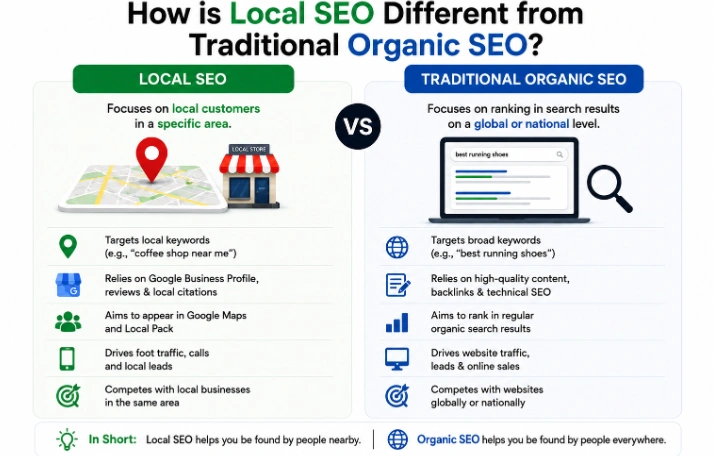















 ROI Calculator