Lead Generation: Types, Strategies & Tools for Business Growth
J
By Shubham Lal
February 11, 202610 min read
Last updated on March 18, 2026
SHARE THIS ARTICLE
Table Of Content
What is Lead Generation?
Types of Lead Generation
What Is a Way to Do Lead Generation Effectively?
Understanding Different Stages of Lead Generation
Picture this – you wake up every day to people already interested in what your business offers. There is no hassle of cold guessing, no wasted outreach, only having meaningful conversations to convert more customers into paying leads. This is what lead generation is all about. A highly competitive market means businesses today must take different approaches to promote their products and services. Whether you’re a startup, building a brand, or have an established business, the quality of leads you generate will play an important role in determining the speed and sustainability of your growth.
Lead generation is the bridge between marketing efforts and revenue. From building awareness to nurturing prospects and finally converting them into loyal customers, lead generation connects marketing efforts directly to revenue. In this blog, we break down “what is lead generation”, explore proven strategies, and uncover the best lead generation tools that help businesses turn interest into action.
Lead generation is the process of attracting potential customers, capturing their interest, and converting that interest into actionable sales opportunities. In simple terms, it is how businesses identify people who are most likely to buy their product or service and guide them through the sales funnel.
By effectively implementing lead generation strategies, a business can improve its conversion rate of leads to customers, build strong relationships with customers, and ultimately drive more business growth.
What is lead generation exactly about? Lead generation is not just about collecting email addresses or phone numbers; rather, lead generation represents the process of developing trust with potential customers by understanding their pain points and providing solutions to these problems at each stage of the buying cycle.
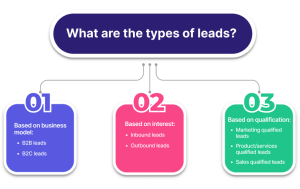
There are different types of lead generation that help in building a strategy and attracting the right audience. Some of them are:
1. Inbound Lead Generation
Inbound lead generation is the process of finding new potential customers with useful resources in a natural/organic manner and via engaging experiences with your brand.
Content marketing: Provide information to your potential customers and help them solve their problems with articles, eBooks, white papers, videos, and other formats.
Search engine optimisation (SEO): You can produce quality website content that can rank at the top of search engines and receive consistent and organic traffic.
Social media marketing: You can share your content, interact with your audience, and drive traffic back to your website from the various social media channels you use.
Email marketing: You can nurture your prospects through targeted email campaigns that are customised and based on behaviours.
2. Outbound Lead Generation
This type of lead generation technique helps to build relationships with potential buyers. It can be done in the ways given below:
Cold Calling: Direct calls to prospective customers, typically using a sales script, that introduce the business’ products/services.
Direct Mail: Sending printed advertisements, such as brochures/flyers, to a defined prospect model list.
Email Outreach: Sending one-off direct email correspondence to prospective customers.
Paid Advertising: Using various types of PPC campaigns (e.g., video ads, banner ads, etc.) as well as retargeting ads to entice intended targets into becoming prospects.
3. Online Lead Generation
Online lead generation leverages digital platforms and tools to capture and convert leads efficiently.
Using webinars & virtual events: Online webinars and other (online) events (challenges), webinars, and other events to inform your audience and capture your lead’s contact information.
Using Landing Pages: Creating landing pages for conversion and audience capture using a call to action.
Social Media Advertising: Generating Leads Via Targeted Ads Using Social Media Platforms Such As Facebook, Instagram, Or LinkedIn.
4. Offline Lead Generation
Despite digital growth, offline lead generation remains effective for building trust and personal connections.
Attending Trade Shows And Conferences: Attending trade shows and conferences where your target market is gathered together to network with potential leads.
Networking: Creating relationships with business organizations/networking/meetings/groups and networking with other businesses.
Advertising Through Print Media: Placing ads in print media such as newspapers, magazines, brochures, and flyers to reach your market.
5. B2B Lead Generation
B2B lead generation focuses on building long-term relationships with businesses and decision-makers.
Account-Based Marketing (ABM): Targeting high-value accounts with personalised campaigns and tailored messaging.
LinkedIn Outreach: Leveraging LinkedIn for professional networking, prospecting, and lead nurturing.
Industry Reports and Whitepapers: Offering detailed reports and research to attract business professionals.
Webinars and Workshops: Hosting educational sessions specifically designed for industry experts and corporate audiences.
6. B2C Lead Generation
B2C lead generation targets individual consumers and focuses on emotional connection and engagement.
Influencer Marketing: Collaborating with social media influencers to reach and engage their audiences.
Contests and Giveaways: Running interactive campaigns to attract consumer leads and boost engagement.
Customer Reviews and Testimonials: Using real customer feedback to build credibility and trust.
Email Newsletters: Sharing valuable updates, offers, and content through regular newsletters to nurture leads.
*mailmodo.com
What Is a Way to Do Lead Generation Effectively?
What is a way to do lead generation? There’s no single answer, but there are some strategies that can be used for lead generation effectively. They are:
1. Create Content to Solve Actual Pain Points
The best way to create quality leads for your business is through content. When a potential lead reads about the problems they face, they are more likely to trust your company and want to purchase something.
For example, if a company sells software that helps people manage projects, you could write articles, post videos, or create case study presentations about project management, team collaboration and workflow optimisation. When a company shares success stories of how their product has helped customers succeed, it creates trust in the brand and positions them as the expert in the industry.
High-quality content can answer questions, educate prospects and prompt them to take action such as, sign up, download, or subscribe.
2. Set Up a Lead Scoring System
Lead scoring helps prioritise prospects based on their behaviour and engagement. Each action such as opening emails, attending webinars, or visiting pricing pages, is assigned a score.
A lead who frequently interacts with product-related content should receive a higher score than someone who only browses general pages. This ensures that sales teams focus their energy on leads most likely to convert, saving time and resources.
3. Know Where Your Target Audiences Are
When generating leads effectively, you need to reach the people who will benefit from your product or service where they are engaging in the social media space.
If your customer base can be engaged visually, then a visual-focused social network such as Instagram or Pinterest will likely yield better results than SMM platform without that same visual component.
B2B customers tend to respond well to advertisements on LinkedIn; therefore, that platform serves as a great place for B2B marketers. Knowing where your audience spends time will allow you to develop and promote your content effectively.
4. Develop Strong Calls-To-Action
No matter how well-written, informative, and engaging your content is, it must include some form of call to action to encourage users to take action after viewing it. Therefore, the call to action should be clear, straightforward, and specific, telling users precisely what they should do next after reading your content (i.e., download a free guide/schedule a demo/register for a newsletter).
Along with providing a call to action (CTA) with a high likelihood of being converted, CTAs with well-designed and aesthetic layouts/copy and CTA’s backed by social proof (such as testimonials or case studies) produce a much higher percentage of engagement and opportunity for conversion.
5. Perform A/B Testing for Continuous Improvement
You can use A/B tests to compare multiple variations of headlines, email messages, landing pages or calls-to-action (CTAs) in order to determine which one performs best. Even minor tweaks like changing the wording of a headline or placing a button in a different spot can lead to a major increase in conversion rate.
If a business is able to monitor data in real-time, it will be able to make ongoing improvements to its lead generation process, which results in much larger gains.
Although outbound prospecting is still an extremely effective method for generating B2B leads, there are four general stages of lead generation.
Stage 1: Understanding and Defining Your Strategy
At this stage, you need to determine your lead generation strategy. An ideal customer profile will define who your ideal client is based on several characteristics: demographics (age, income, education level), geographics (location), technographics (technology preferences), and business needs (size of company, revenue, industry).
Stage 2: Research and Collect Data
Once you have developed your ideal customer profile, you can begin to find new leads by using various methods of finding incoming leads and their contact information. This includes keeping your databases clean and organized so that marketing and sales teams can easily work together by tracking lead activity.
Stage 3: Pre-Targeting
The purpose of this stage is to generate interest in your company and its products and services prior to actually contacting prospective leads directly. Rather than making cold calls or sending countless emails to individual prospective leads, pre-targeting builds brand awareness through advertising and content dissemination.
This method will increase all of the metrics associated with your marketing efforts like, click-through rates, response rates, and conversion rates, while also increasing your company’s brand recall.
Stage 4: Landing Pages
Landing pages are critical to successfully generating leads for businesses. Unlike your business’s main website, which has many different objectives, landing pages are designed for one purpose only: to complete one action. A landing page reduces distractions, increases conversion rates, and creates micro-segments of the audience, therefore allowing for hyper-targeted messaging.
Stage 5: Reaching Out to Leads
At this stage, sales teams engage leads through emails and calls based on their activity levels. Leads showing higher engagement are prioritised, while others continue in nurturing campaigns.
All interactions are tracked in a CRM system to monitor performance and progression.
Stage 6: Reporting and Optimisation
Tracking results is an important part of all phases. Lead volume, open rates of emails sent, response rates received, number of qualified leads and number of closed sales give the team insight to what is effective and what requires further refinement.
Lead generation is an ongoing cycle where regular modifications are made to ensure that the cycle is as effective as possible
Utilising lead generation tools correctly will greatly facilitate the growth and efficiency of your business through improved infrastructure and an increased number of leads.
CRM Systems
Salesforce: It provides enterprise-level CRM solutions that are highly customizable; therefore, sales teams at large organizations can benefit from many of the features Salesforce offers.
HubSpot: A CRM software package that integrates all your marketing and sales needs into one user-friendly application. It is mainly used by small to mid-sized companies.
Zoho CRM: An affordable, cloud-based CRM option for small to mid-sized businesses. It provides functionalities to streamline processes through all stages of your company’s growth, from lead acquisition to case management.
Email Marketing Platforms
ActiveCampaign: It includes the latest technologies in automation, segmenting, A/B testing and provides your customers with personalized email marketing campaigns.
Mailchimp: It is a user-friendly email marketing platform that provides a drag-and-drop template builder. Startups feel it is very easy to use these tools.
Constant Contact: Created specifically for small businesses to simplify the process of sending emails to customers and to provide reliability.
Landing Page Builders
Unbounce: It includes hundreds of customizable landing page template designs and focuses on increasing your conversion rates through its replication technology.
Leadpages: It offers a straightforward interface and the ability to quickly add marketing tools to your landing page(s).
Instapage: It has been shown to create high-converting landing pages, and it offers sophisticated A/B testing functionality.
Analytical Tools
SEMrush: This tool provides detailed reports on your website’s SEO performance, keyword rankings and practices by your competitors.
Google Analytics: Free and an extremely effective way to track website traffic and conversion activity through tracking the way users behave on your website.
Adobe Analytics: Very advanced enterprise-level analytics product that provides companies with many advanced insight capabilities.
Social Media Management Tools
Hootsuite: Hootsuite enables businesses to schedule, monitor, and track performance on all social media platforms.
Buffer: Offers a clean interface for scheduling posts and analysing engagement.
Sprout Social: A comprehensive platform with advanced analytics and customer engagement tools.
Wrapping Up
Lead generation is not just a marketing tactic; it is a growth engine. Businesses that understand what is lead generation and implement it strategically gain a competitive edge in customer acquisition and retention.
In a world where attention is limited, lead generation ensures your brand reaches the right people at the right time with the right message.
How Can Jaro Education Assist You?
If you want to build strong marketing foundations, learn data-driven lead generation strategies, and gain hands-on exposure to modern marketing tools, Jaro Education can help you take that next step.
With access to industry-aligned programs, expert mentorship, and practical learning frameworks, Jaro Education empowers professionals and aspiring marketers to transform theory into real-world impact. Whether you aim to scale your business or advance your marketing career, Jaro Education gives you the knowledge, confidence, and guidance to succeed.
Lead generation is the process of attracting people who are interested in your product or service and converting that interest into potential customers by collecting their contact information.
Lead generation helps businesses identify the right prospects, reduce marketing costs, improve conversion rates, and create a steady pipeline of potential customers for long-term growth.
A proven way to do lead generation effectively is by creating value-driven content, using targeted calls-to-action, nurturing leads through email marketing, and optimising campaigns using data and analytics.
Some beginner-friendly lead generation tools include HubSpot CRM, Mailchimp for email marketing, Google Analytics for tracking performance, and Leadpages for creating high-converting landing pages.
Shubham Lal
Lead Software Developer
Shubham Lal joined Microsoft in 2017 and brings 8 years of experience across Windows, Office 365, and Teams. He has mentored 5,000+ students, supported 15+ ed-techs, delivered 60+ keynotes including TEDx, and founded AI Linc, transforming learning in colleges and companies.
 HOME > BLOG > IT/Software Development > Lead Generation: Types, Strategies & Tools for Business Growth
 February 11, 2026
 10 min read




 ChatGPT
 Perplexity
 Claude
 Grok
Grok


 Admission Closed
 Admission Closed
 Admission Closed

 Admission Open

 ROI Calculator



