HOME > BLOG > Career Guidance > How to Get a State Scholarship After 12th: A Step-by-Step Guide
Career Guidance
How to Get a State Scholarship After 12th: A Step-by-Step Guide
J
By Manya Tohani
August 28, 20267 min read
Last updated on September 1, 2026
SHARE THIS ARTICLE
Table Of Content
What Is a State Scholarship?
Who Can Apply for a State Scholarship After 12th?
How to Get Scholarship After 12th: Step-by-Step Process
How to Improve Your Chances of Getting a Scholarship
Key Insights
A state scholarship can provide financial support for eligible students pursuing higher education after Class 12, with eligibility varying by academic performance, income, domicile, category, course, and institution.
Students should research available scholarships, carefully check eligibility criteria, secure admission to an eligible course, and prepare the required documents before applying.
Accurate information and complete documentation are essential, as errors, missing documents, poor-quality scans, or incomplete verification can lead to delays or rejection.
After submitting the application, students should save their application details, complete the verification process, track their scholarship status, and respond promptly to any correction requests.
In this blog, you'll learn how to get a scholarship after Class 12, including eligibility requirements, document preparation, the step-by-step application process, common mistakes, and tips for improving your chances.
Completing Class 12 is an important milestone for students planning to pursue higher education. However, the cost of college tuition, books, accommodation, transportation, and other academic expenses can make higher education difficult for many families. This is where a state scholarship can provide valuable financial support.
State governments offer different scholarships to help eligible students continue their education after Class 12. These scholarships may be based on academic merit, family income, social category, domicile, disability, or other eligibility conditions. Since every state has its own scholarship schemes and application process, students need to understand the requirements before applying.
If you are wondering how to get a scholarship after Class 12, the process becomes easier when you follow a structured approach. This guide explains the major steps, documents, eligibility factors, application process, common mistakes, and ways to improve your chances of receiving a scholarship.
A state scholarship is financial assistance provided by a state government to eligible students pursuing education. These scholarships are designed to reduce the financial burden associated with higher education and encourage students to continue their studies.
Depending on the scheme, financial assistance may be provided toward tuition fees, maintenance expenses, educational materials, or other approved academic costs. The benefits and eligibility criteria vary from one state and scheme to another.
Some scholarships are available specifically for students from certain social or economic backgrounds, while others may focus on academic performance. Students should carefully review the conditions of each scheme before submitting an application.
Who Can Apply for a State Scholarship After 12th?
Eligibility depends on the particular scholarship scheme. However, students may commonly need to meet requirements related to the following:
Domicile: The student may need to be a resident of the concerned state.
Academic performance: Some scholarships require students to achieve a specified percentage or merit level in Class 12.
Family income: Certain schemes are intended for students whose family income falls within a specified limit.
Category: Scholarships may be available for eligible students belonging to particular categories.
Course and institution: The scholarship may apply only to specific undergraduate, professional, technical, or other approved courses.
Enrollment status: Students may need to secure admission to a recognized college or institution.
Because requirements can change between schemes and academic years, students should always check the latest eligibility conditions before applying.
How to Get Scholarship After 12th: Step-by-Step Process
If you are searching for how to get scholarship after 12th, following the right sequence can help you avoid unnecessary delays and application errors.
Step 1: Identify the Scholarships Available in Your State
Start by researching scholarships offered by your state government. Look for schemes that are applicable to students who have completed Class 12 and are entering undergraduate or other higher education programs.
Check the scholarship details carefully, including:
Eligibility requirements
Income criteria
Academic requirements
Domicile requirements
Applicable courses
Eligible institutions
Application dates
Required documents
Renewal conditions
Do not apply simply because the scholarship title appears relevant. Read the complete eligibility criteria before beginning the application.
Step 2: Check Your Eligibility
Once you have shortlisted potential scholarships, compare the requirements with your personal and academic details.
Check your Class 12 marks, state domicile, family income, category, course, and college eligibility. A scholarship may have multiple conditions, and meeting only one or two requirements does not necessarily make you eligible.
Create a simple checklist of the conditions for each scholarship. This can help you eliminate schemes for which you do not qualify and focus on relevant opportunities.
Step 3: Secure Admission to an Eligible Course
Many scholarships after Class 12 require students to be enrolled in an eligible higher education program. Therefore, admission to college may be an important part of the scholarship process.
Before finalizing your admission, check whether your selected college and course are covered under the scholarship scheme. Some scholarships may have specific requirements regarding recognized institutions or approved courses.
Keeping your admission confirmation and related documents safely is also important because these details may be required during the application or verification process.
Step 4: Prepare the Required Documents
Document preparation is one of the most important parts of the scholarshipprocess. Missing or incorrect documents can result in delays or rejection.
Depending on the scholarship, students may be asked to provide documents such as:
Class 10 and Class 12 mark sheets
Domicile or residence certificate
Income certificate
Category certificate, where applicable
Admission or enrollment proof
Bank account details
Identity document
Passport-size photograph
Fee receipt
Disability certificate, where applicable
Other documents specified by the scholarship authority
Make sure the information is consistent across all documents. Names, dates of birth, addresses, and other details should be checked carefully before uploading or submitting them.
Step 5: Complete Registration on the Relevant Scholarship Portal
State scholarship applications are generally submitted through the designated scholarship platform or government portal. Some schemes may also be available through a centralized scholarship system.
For example, the National Scholarship Portal provides information and application facilities for several scholarship schemes and includes both merit-based and welfare-based opportunities. The portal also uses One Time Registration for scholarship applications.
When registering, use accurate information and keep your login credentials secure. Avoid creating multiple registrations unless the scholarship instructions specifically require it.
Step 6: Fill Out the Application Form Carefully
After registration, complete the scholarship application form with accurate information.
Pay attention to:
Personal details
Academic information
Course details
College information
Family income
Domicile details
Bank account information
Category details, if applicable
Do not enter information based on assumptions. If a field is unclear, review the scholarship instructions or seek clarification from the appropriate authority.
A small error in an important field can create problems during verification.
Step 7: Upload Documents in the Required Format
Upload the required documents according to the portal’s specifications. Check the file type, size, clarity, and other requirements before submitting them.
Poor-quality scans can make verification difficult. Ensure that all text is clearly visible and that certificates have not been cropped incorrectly.
Before clicking the final submission button, review every uploaded document and make sure it belongs to the correct applicant.
Step 8: Review and Submit the Application
Never rush through the final submission.
Review the entire application once again and compare the information with your original documents. Check your name, marks, income details, bank information, course, institution, and other important fields.
After confirming that everything is correct, submit the application.
Save the application number, registration number, acknowledgment, or other reference details provided by the portal. These details can help you track the application later.
Step 9: Complete Verification
Submitting the application does not always mean the scholarship has been approved. Applications may go through different stages of verification.
The educational institution may verify the student’s academic and enrollment information. Depending on the scheme, further verification may also be conducted by relevant authorities.
For this reason, students should regularly check their application status and respond promptly if any correction or additional information is requested.
Step 10: Track Your Scholarship Status
After submission and verification, keep checking the application status through the relevant scholarship platform.
Possible application stages may indicate that the form has been submitted, verified, marked defective, approved, or processed for payment. The exact status terminology can vary between schemes.
If your application is marked defective, carefully read the reason and make the required correction within the permitted timeline.
Tracking the application is important because students should not assume that an application will automatically progress after submission.
How to Improve Your Chances of Getting a Scholarship
Knowing how to get a scholarship is not only about submitting an application. It also involves preparation and attention to detail.
First, start your research early instead of waiting until the application deadline. Keep important documents ready and check their validity where applicable.
Second, maintain accurate academic and personal records. When applying, enter information exactly as it appears in official documents.
Third, apply only for scholarships for which you meet the eligibility requirements. Carefully reading the scholarship guidelines can save time and reduce the possibility of rejection.
Finally, monitor your application after submission. Keep track of verification requirements, correction windows, and status updates.
State Scholarship vs. Other Scholarships
Students should not limit their search to one scholarship category. Depending on their eligibility, they may explore state government scholarships as well as other education-related scholarship opportunities.
A state scholarship is generally associated with a particular state government and may have domicile-based eligibility requirements. Other scholarships may be based on academic merit, specific student categories, courses, institutions, or other criteria.
The best approach is to understand the eligibility requirements of each opportunity and apply only where the conditions are satisfied.
Keep these points in mind when applying for a scholarship after Class 12:
Research early: Start looking for scholarships before the admission process is complete.
Read eligibility rules: Do not rely only on the scholarship name or general descriptions.
Prepare documents: Keep academic, income, domicile, and other relevant certificates ready.
Check every detail: Make sure the application matches your official documents.
Save application details: Keep acknowledgment numbers and submitted forms for future reference.
Track the status: Regularly monitor the application after submission.
Meet deadlines: Submit the form and complete verification within the specified timeline.
Conclusion
Getting financial support for higher education can make the transition after Class 12 easier for eligible students. The key is to start early, identify the right state scholarship, understand the eligibility criteria, prepare accurate documents, and complete every stage of the application process carefully.
If you are researching how to get scholarship after 12th, remember that submitting the form is only one part of the process. Verification, document accuracy, deadlines, and application tracking are equally important. By following a systematic approach and staying updated about scholarship requirements, students can make the application process more organized and improve their chances of receiving financial assistance for higher education.
Frequently Asked Questions
To get a scholarship after 12th, identify scholarships for which you are eligible, check their academic, income, domicile, course, and category requirements, prepare the required documents, register on the relevant portal, complete the application accurately, and track it through the verification process.
Yes, students entering eligible higher education programs may be able to apply for state scholarship schemes, provided they satisfy the specific eligibility requirements of the scholarship.
Common documents may include Class 10 and Class 12 mark sheets, domicile certificate, income certificate, category certificate where applicable, admission proof, bank details, identity documents, and other scheme-specific certificates.
First, check the reason for rejection or any defect mentioned in the application status. If the scholarship authority provides a correction or grievance process, follow the prescribed procedure and submit the required information within the applicable timeline.
Whether you can apply for or receive multiple scholarships depends on the rules of the individual schemes. Always check the scholarship guidelines for restrictions related to multiple applications or benefits.
Manya Tohani
Personal Growth Mentor
Manya Tohani is a Personal Growth Mentor and content strategist, helping individuals build strong personal brands and accelerate career growth. With 8M+ impressions and experience mentoring students, she empowers others through actionable guidance, resilience, and real-world insights.

 August 28, 2026
 7 min read





 Key Insights
 ChatGPT
 Perplexity
 Claude
 Grok
Grok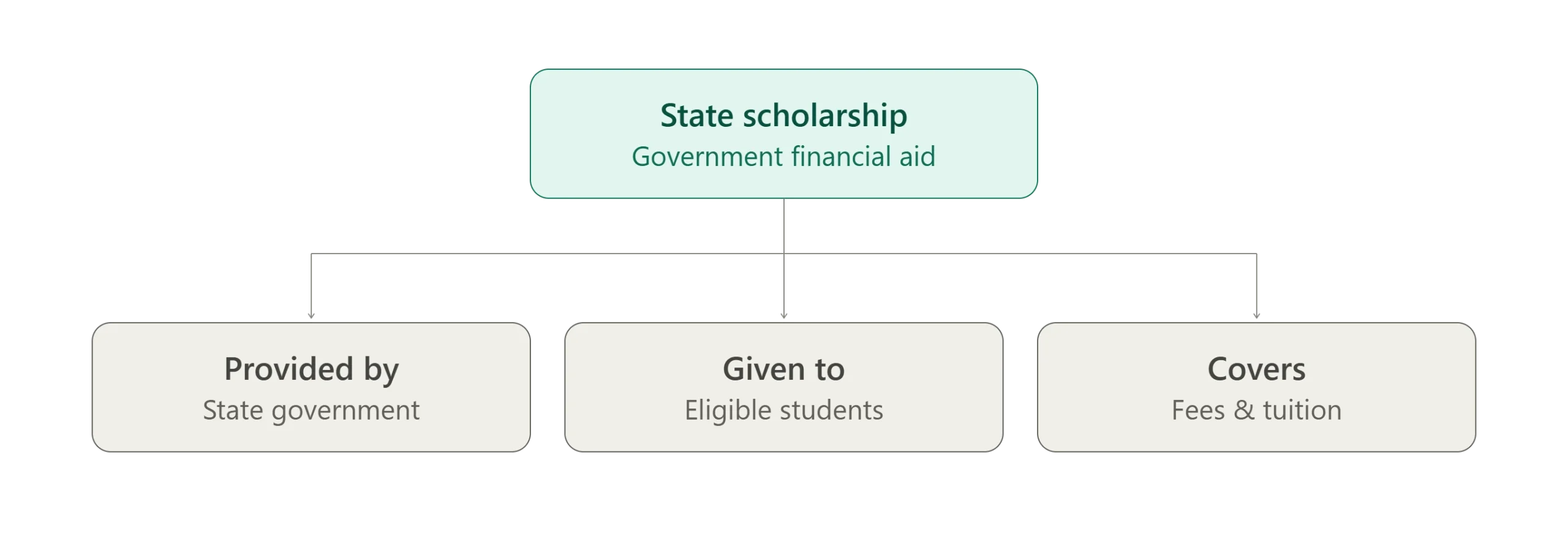












 ROI Calculator