Data Science Course Syllabus: Subjects, Specializations & Career Benefits
J
By Shubham Lal
May 5, 20259 min read
Last updated on September 22, 2026
SHARE THIS ARTICLE
Table Of Content
What Does a Data Science Course Syllabus Actually Cover?
Data Science Qualifications: Who Can Apply
Data Science Prerequisites: What to Brush Up on Before You Start
Specialization in Data Science: Choosing Your Path
Key Insights
The Data Science Course Syllabus covers statistics, Python, SQL, data handling, machine learning, AI, data visualization, big data, and cloud technologies.
Data science qualifications and prerequisites vary by course level, with mathematics, logical thinking, spreadsheets, and basic programming knowledge being useful starting points.
Data science specializations include NLP, computer vision, data engineering, MLOps, business intelligence, and domain-focused data science.
A data science course can provide practical skills, project experience, career flexibility, and opportunities across roles such as data scientist, data analyst, and data engineer.
Every data-driven decisionyou see today- the route your cab app picks, the show Netflix recommends, the fraud alert your bank sends- starts life as a line item in a data science course syllabus. If you're evaluating programmes and the reading lists feel like alphabet soup (Python, SQL, Spark, NLP, EDA), this guide untangles it. We'll walk through what the syllabus actually covers module by module, the data science qualifications you need to get in, the data analytics prerequisites worth brushing up on before day one, the specializations you can choose once the basics are done, and the real-world data science course benefits that make the effort worthwhile.
What Does a Data Science Course Syllabus Actually Cover?
Strip away the jargon and a data science course syllabus is built around one simple idea: take raw, messy data and turn it into a decision someone can act on. To do that, every syllabus whether it’s a six-week bootcamp or a one-year postgraduate programme moves through four broad stages:
Credit: geeksforgeeks.org
Understand the data (statistics, exploratory analysis, data wrangling)
Model the data (machine learning, deep learning)
Communicate the data (visualization, business intelligence)
Operate at scale (big data tools, cloud platforms, ethics)
Shorter courses tend to compress or skip the last stage; longer, university-backed programmes cover all four in depth and add a capstone project. Here’s how the modules typically break down.
Module
Core Topics
What You Learn to Do
Foundations
Statistics, probability, linear algebra, calculus, Python/R programming
Build the mathematical and coding base every later module depends on
Data Handling
Data wrangling, cleaning, SQL, NoSQL, data pipelines
Turn messy, real-world data into an analysis-ready dataset
One of the most common questions before enrolling is simple: am I even eligible? The honest answer is that data science qualifications vary a lot depending on the level of the programme, but the field is unusually open to career-switchers compared to, say, medicine or law.
Course Level
Typical Qualification Needed
Undergraduate (BSc/BTech)
10+2 with Mathematics; most institutes ask for 50–60% aggregate
Postgraduate certificate/diploma
Bachelor’s degree in any stream, preferably with quantitative coursework; some programmes prefer engineering, statistics, computer science, or commerce backgrounds
Executive/working-professional programmes
Bachelor’s degree plus relevant work experience (often 2+ years); a coding or analytics background helps but isn’t always mandatory
Short-term / online certifications
Usually open to anyone; basic comfort with logic, spreadsheets, and problem-solving is enough to start
A few things matter more than the certificate on your existing degree:
Quantitative comfort: You are comfortable with numbers and logical reasoning, even if you haven’t formally studied statistics
Some technical exposure: You have at least basic exposure to Excel, SQL, or any programming language
Willingness to practise: You’re willing to spend a few hours a week practising outside class, since data science is a hands-on skill, not a memorisation subject
If you’re weighing a data science course qualification against your existing background say, a commerce or biology degree, don’t let the absence of an engineering tag stop you. Institutes increasingly design bridge modules specifically for non-technical graduates, covering programming and statistics from scratch in the first few weeks.
Data Science Prerequisites: What to Brush Up on Before You Start
You don’t need to be an expert on day one, but a little preparation makes the first month far less overwhelming. These are the data analytics prerequisites most instructors quietly expect:
High-school level maths: Percentages, ratios, averages, basic algebra, and an intuitive sense of probability
Spreadsheet fluency (Excel or Google Sheets): Formulas, pivot tables, and basic charting, this maps directly onto how you’ll later think about dataframe
Basic logical/programming literacy: You don’t need to code yet, but understanding what a variable, loop, or function does will save you weeks
A first look at SQL: SELECT, WHERE, GROUP BY, and JOIN cover most of what you’ll use in the first semester
Curiosity and structured thinking: The ability to break a vague question like why did sales drop into smaller, testable pieces
If even one of these feels shaky, most platforms offer free primer content, spend a weekend on it, and the core syllabus will move much faster for you.
Specialization in Data Science: Choosing Your Path
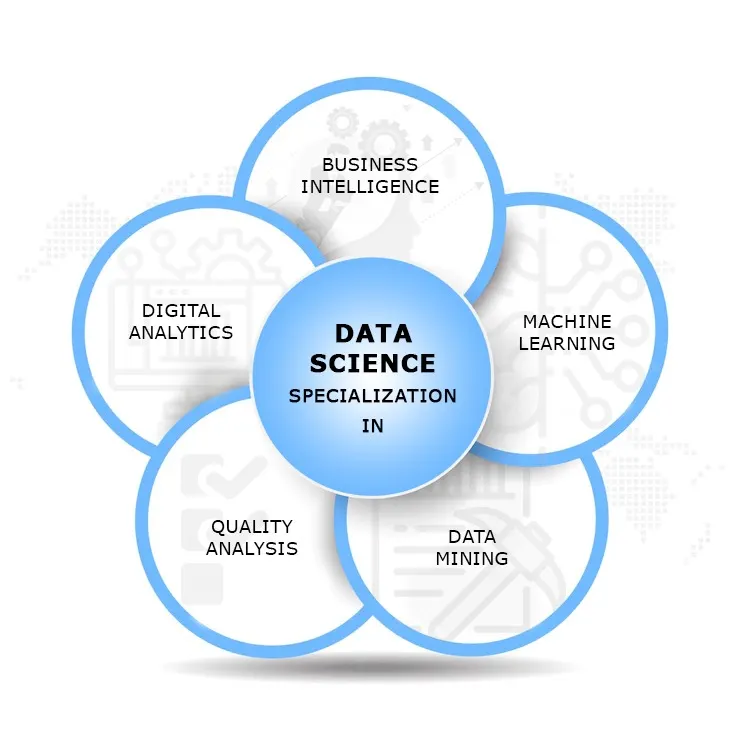
Once the fundamentals are locked in, almost every programme lets you branch into a specialization in data science that matches the kind of problems you enjoy solving. Generalists are valuable early in a career, but specialists tend to command better roles and pay once they have two to three years of experience. Common tracks include:
Natural Language Processing (NLP) – training models to understand, summarise, and generate human language; the skill set behind chatbots and search.
Computer Vision – teaching machines to interpret images and video, used heavily in retail, manufacturing, and healthcare imaging.
Data Engineering– building the pipelines, warehouses, and infrastructure that keep data flowing reliably to everyone else.
MLOps and Model Deployment – packaging and monitoring machine learning models so they actually run reliably in production, not just in a notebook.
Business Intelligence and Analytics – turning data into dashboards, forecasts, and reports that guide company strategy and operations.
Domain-Focused Data Science – applying data science to a single sector such as banking, healthcare, or e-commerce, where domain knowledge is as valuable as the technical skill.
Pick a specialization based on the industry you want to work in, not just what sounds impressive , a fintech company will value fraud-detection and risk-modelling skills far more than a generic AI expert tag.
Data Science Course Benefits: Is It Actually Worth It?
The data science course benefits go well beyond a certificate to hang on the wall. Here’s what tends to show up in practice:
Strong job demand across sectors: Roles like data scientist, data analyst, and machine learning engineer routinely feature on most in-demand jobs lists across IT, BFSI, healthcare, retail, and manufacturing.
Above-average pay: In India, fresher data scientists typically start around ₹6–9 LPA, with the national average sitting near ₹11–16 LPA depending on company type and city; professionals with AI/GenAI skills often earn 25–40% more than generalists.
Career flexibility: A data science foundation opens doors to analyst, engineering, product, and even strategy or consulting roles, the skill set transfers far beyond one job title.
Future-proof skill set: The core toolkit (statistics, Python, SQL) doesn’t expire, even as specific tools rise and fall in popularity, making it a durable long-term investment.
Practical, project-based learning: Most postgraduate and executive programmes are built around real datasets and business case studies rather than pure theory, so you graduate with a portfolio, not just a transcript.
Peer and mentor network: Structured cohorts, faculty office hours, and alumni communities give you a network of people solving similar problems, something self-study alone rarely provides.
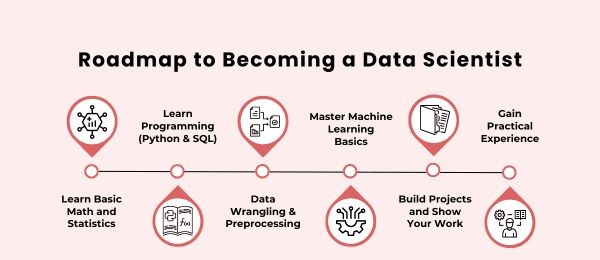
How to Become a Data Scientist: A Step-by-Step Roadmap
If your real goal is the job title, not just the certificate, here’s a practical sequence for how to become a data scientist starting from scratch:
Credit:skillfloor.com
Build the foundations
Get comfortable with statistics, Python or R, and SQL. Free resources or a short prerequisite course work fine here.
Enrol in a structured data science course
Choose a programme that matches your timeline and budget, a full-time degree, a part-time postgraduate certificate, or an intensive online bootcamp.
Follow the syllabus, don’t skip around
Work through the syllabus in order: statistics and programming first, machine learning next, then data visualization, big data, and a specialization.
Build a portfolio of real projects
Recreate 3–5 end-to-end projects (data cleaning to a deployed model or dashboard) using public datasets, and publish them on GitHub or a portfolio site.
Specialize once you have the basics
Aim for one specialization like NLP, computer vision, BI, or data engineering, so your resume tells a focused story rather than a scattered one.
Get hands-on experience
Contribute to open-source projects, take part in Kaggle competitions, and target internships or entry-level analyst roles to get real feedback loops.
Certify and showcase your work
Certifications from recognised platforms or institutes, plus a well-documented portfolio, carry real weight with recruiters, use both together.
There’s no single correct timeline, some professionals move from a non-technical role to a junior data science position in under a year of focused study; others take two to three years while working alongside a part-time programme. What matters more than speed is consistency.
Career Paths After a Data Science Course
The syllabus you complete typically opens the door to more than one job title. The three most common entry points are:
Data Scientist – Builds predictive models, cleans and analyses data, and translates findings for business stakeholders.
Data Engineer – Designs and maintains the pipelines and databases that keep data flowing cleanly to everyone downstream.
Data Analyst – Focuses on reporting, dashboards, and trend analysis to support day-to-day business decisions.
From any of these, natural next steps include machine learning engineer, analytics manager, or a domain-specialist role once you’ve built a few years of experience and a specialization.
Build Your Data Scientist Career with Jaro Education
Jaro Education helps learners build relevant skills for a career in data science through programmes offered in collaboration with reputed institutes. The Post Graduate Certificate Programme in Data Science for Business Excellence and Innovation from IIM Nagpur and other relevant course provides exposure to AI, machine learning, Python, Tableau, and real-world business applications.
A 1-year programme combining data science, AI, machine learning and analytics with business strategy. Suitable for graduates with 50% marks and 2+ years of work experience.
A 10-month programme focused on advanced data science, deep learning and Generative AI for business applications. Designed for managers and working professionals.
An 8-month programme covering data engineering, statistics, predictive modelling, machine learning and visualisation. Suitable for graduates or diploma holders with 2+ years of engineering experience.
A 10–12-month programme developing practical skills in Python, SQL, data analysis, machine learning and deep learning. Open to graduates with at least 50% marks.
A 6–8-month programme focused on data science, AI, machine learning and analytics for real-world applications. Open to graduates with 50% marks, with work experience preferred.
Along with programme access, Jaro Education offers career-focused support such as profile development and guidance to help learners prepare for opportunities in the data science field. This combination of learning and career support can help learners build a strong foundation for their professional journey.
Final Thoughts
A data science course syllabus can look intimidating on paper, but it’s really just a sequence: learn to understand data, learn to model, explain and scale it. Check that you meet the basic data science qualifications, brush up on the handful of data analytics prerequisites that make the first month easier, and pick a specialization in data science once the fundamentals feel solid. Do that, and the data science course benefits include strong demand, competitive pay, and genuine career flexibility are well within reach, whether you’re starting from a technical degree or switching in from an entirely different field.
Frequently Asked Questions
A standard data science course syllabus covers statistics and probability, programming in Python or R, SQL and database management, machine learning, data visualization, and in longer programmes- deep learning, big data tools, cloud platforms, and a capstone project.
For most postgraduate and certificate programmes, a bachelor’s degree in any discipline is enough, though a quantitative background (engineering, statistics, computer science, commerce) is an advantage. Undergraduate programmes usually require 10+2 with mathematics. Many short online courses have no formal qualification requirement at all.
No. Basic comfort with logical thinking and spreadsheets is enough to start; programming in Python or SQL is taught from the ground up in almost every structured course.
It depends on the industry you want to work in, choose NLP or computer vision for AI-heavy roles, data engineering if you enjoy infrastructure and pipelines, or business intelligence if you prefer working close to business strategy and decision-making.
A structured course gives you a sequenced curriculum, hands-on projects, mentor feedback, a recognised certificate, and often placement support all of which are hard to replicate through unstructured self-study alone.
Timelines vary: an intensive full-time programme can take you to entry-level readiness in 6–12 months, while part-time study alongside a job usually takes 12–24 months. Building a strong project portfolio matters more than the exact duration.
Shubham Lal
Lead Software Developer
Shubham Lal joined Microsoft in 2017 and brings 8 years of experience across Windows, Office 365, and Teams. He has mentored 5,000+ students, supported 15+ ed-techs, delivered 60+ keynotes including TEDx, and founded AI Linc, transforming learning in colleges and companies.
Get Free Upskilling Guidance
Fill in the details for a free consultation
Related Courses
Explore our programs
Advanced Professional Certification Programme in Data Science & Machine Learning
 HOME > BLOG > Data Science and BI Analytics > Data Science Course Syllabus: Subjects, Specializations & Career Benefits
 May 5, 2025
 9 min read




 Key Insights
 ChatGPT
 Perplexity
 Claude
 Grok
Grok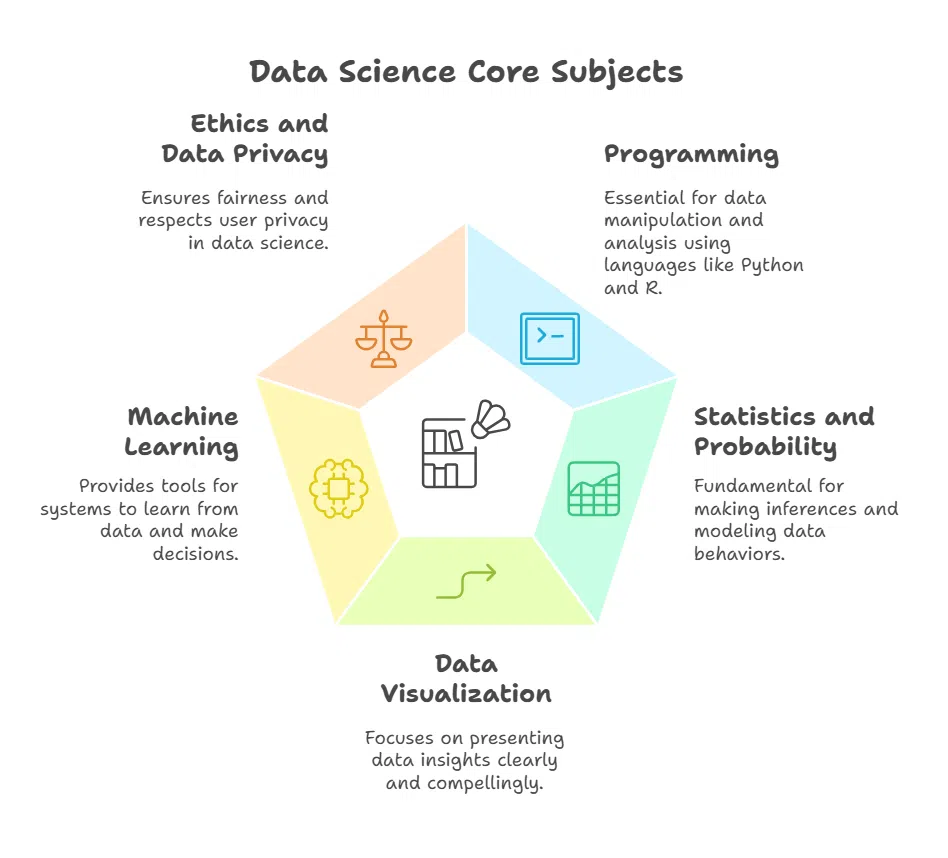







 ROI Calculator