How to Become a Cloud Architect: Skills, Roadmap, and Career Scope
J
By Jaro Education
January 24, 202610 min read
Last updated on September 11, 2026
SHARE THIS ARTICLE
Table Of Content
Who Are Cloud Architects?
Key Responsibilities of a Cloud Architect
Why Choose a Career as a Cloud Architect?
Technical Skills Required for Cloud Architects
Did you know that a cloud architect earns, on average, more than $149,000 per year in the United States? With this figure, you can imagine why cloud architecture has become one of the promising career paths in the IT sector. But here salary is just one part of the coin. The real driver behind this surge is rapid expansion of cloud computing across industries.
According to Gartner, the global public cloud services is expected to reach nearly USD 1.28 trillion by 2028, growing at an annual rate of around 20 percent. As organizations are more into including digital-first strategies, cloud platforms have become an essential part of the operations, such as data storage, cybersecurity. Now cloud technologies are used to power all these services that organizations rely on everyday. This shift has increased the demand of professional cloud architects. It is a career choice that brings growth, diverse job roles, and opportunities in sectors such as finance, healthcare, e-commerce, manufacturing, and telecom.
Thus, if you have interest in this career path, understanding what architects do, skills required, and a roadmap to achieve this role can help you make an informed decision. Stay tuned with this blog only to get real information.
A cloud architect is a senior-level IT professional responsible for planning, designing, and overseeing an organisation’s cloud computing strategy. Apart from technical execution, a cloud architect is also responsible for aligning technologies with business objectives, ensuring that systems are secure, scalable, and cost-effective. Furthermore, they also act as a bridge between stakeholder and technical teams. They work by understanding business goals, budget,and timelines, and guide companies through digital transformation without compromising on performance.
Cloud architects are usually interested in high-impact decisions, such as choosing cloud service providers, designing multi-cloud or hybrid architectures, and defining long-term technology roadmaps. Their work directly influences business agility, innovation, and resilience.
The roles & responsibilities of a cloud architect varies from the industry they are in or the stage of cloud adoption. But, most roles share a common set of core responsibilities.
Cloud Strategy and Architecture Design
The cloud architect is responsible for developing an overall cloud strategy for an organisation. When developing this strategy, they use cloud services from different providers, the cloud infrastructure and how to implement either a cloud-only or hybrid approach. They also create a suitable design that balances the performance, security, scalability, and cost aspects of the design.
Cloud Migration and Modernisation
A major responsibility of a cloud architect is to provide guidance to organisations when migrating their applications and their data, from a physical location to a cloud location. In this, they ensure that migrations need to be completed with minimal disruption to day-to-day business processes, and that data will not be lost during the migration.
Cost Optimisation and Resource Management
Cloud resources are typically billed based on usage on a monthly basis using a pay as you go model. Cloud architects are responsible for continually assessing the overall costs associated with using cloud resources, identifying areas for improvement, and developing strategies to optimise expenses associated with the use of cloud resources without impacting either performance or security
Security and Compliance
The role of a cloud architect is to help organisations build and maintain secure cloud environments. They have extensive knowledge of industry standards and regulatory requirements for the implementation of identity and access management, encryption, and monitoring solutions.
Performance, Reliability, and Scalability
To maintain the highest level of performance, cloud architects continuously evaluate and adjust workflows, configuration settings, and other factors that can affect performance. In addition, they create flexible, scalable solutions that can grow with the organisation’s business needs.
Automation and DevOps Integration
Automation plays a crucial role in modern applications. Cloud architects enable organisations to achieve increased reliability, improved speed of deployment, and increased efficiency through the integration of DevOps, infrastructure as code, and continuous integration/continuous deployment (CI/CD) pipelines.
Why Choose a Career as a Cloud Architect?
If you are wondering why you should go for a cloud architect career, here are some of the reasons clearly explained to support your decision:
High Demand Across Industries
The modern business setting cannot function without cloud computing. In fact, finance, healthcare, manufacturing, they all rely on cloud infrastructure. This vast adoption creates high demand for cloud architect professionals who can design and manage these complex cloud environments.
Strong Salary and Career Growth
Cloud architects hold senior-level positions that come with attractive salary packages and long-term growth opportunities. With experience, professionals can move into roles such as principal cloud architect, enterprise architect, or technology consultant, making this a financially rewarding career path.
Future-Proof Skill Set
Cloud technologies are constantly evolving, but the core principles of cloud architecture, scalability, security, and system design, remain relevant. Learning these skills ensures long-term career stability and adaptability as technology changes.
Opportunity to Work on Strategic Projects
Cloud architects are involved in high-impact decisions that shape an organisation’s digital strategy. They work closely with leadership teams to design solutions that support business goals, innovation, and growth.
Continuous Learning and Innovation
The cloud ecosystem is dynamic and fast-moving. This career encourages ongoing learning, exposure to new tools, and opportunities to work with emerging technologies, keeping the role both challenging and engaging.
If you already work in a mid-level DevOps, infrastructure, or development role, you are well-positioned to move toward cloud architecture. The key lies in strengthening and broadening your technical foundation.
Build on Existing Cloud and DevOps Skills
Skills such as automation, CI/CD pipelines, configuration management, and infrastructure as code are highly transferable. Cloud architects must understand how systems are built and deployed, not just how they are designed. Deepening your expertise in at least one major cloud platform, AWS, Azure, or Google Cloud, is essential.
Earn Cloud Architecture Certifications
Certifications help validate your skills and demonstrate your readiness for advanced roles. Popular options include:
AWS Certified Solutions Architect – Associate
Microsoft Certified: Azure Solutions Architect Expert
Google Cloud Professional Cloud Architect
Deepen Knowledge in Core Technical Areas
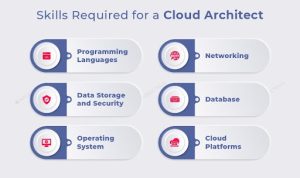
Networking and Security: A strong grasp of virtual networks, subnets, routing, firewalls, VPNs, DNS, TCP/IP, and identity and access management is critical.
Programming and Scripting: Cloud architects don’t need to be full-time developers, but proficiency in languages like Python, Java, or PowerShell helps in automation and integration.
Enterprise Computing:Understanding different operating systems, system configurations, and enterprise workloads allows you to design compatible and efficient architectures.
Cloud Design Patterns: Architects must know how to design for fault tolerance, high availability, scalability, and cost efficiency using proven cloud design patterns.
Soft Skills That Make a Successful Cloud Architect
Besides being technically proficient in their area of expertise, cloud architects work in very complex organisational environments where communication and leadership skills are extremely important. Therefore:
Leadership
As cloud architects lead teams of engineers and often collaborate with multiple departments, they must provide a clear vision for the organisation and help guide technical decisions for team members as well as offer support for team members in their ability to resolve challenges successfully.
Collaboration and Communication
Cloud architects play an integral role in working with multiple stakeholders throughout the organisation including Products, Security, Legal, Finance and Operations. This includes clearly articulating technical concepts in easy to understand terms, as well as assisting to resolve conflicting priorities.
Analytical Thinking and Problem-Solving
Cloud architects analyse what a business needs and translate that into architectural solutions that are practical and useful. Cloud architects need to use both their creativity and their ability to think systematically when trying to solve complex issues, in addition to integrating new technology into existing systems.
Commitment to Continuous Learning
Cloud technology evolves rapidly. Successful cloud architects stay updated through industry news, professional communities, certifications, webinars, and conferences. Continuous learning ensures long-term relevance.
How to Become a Cloud Architect: Step-by-Step Roadmap
*tryexponent.com
Here’s the breakdown of how to become a cloud architect:
Step 1: Earn a Bachelor’s Degree
Most employers prefer candidates with a bachelor’s degree in computer science, IT, or a related field. Formal education provides a strong foundation in programming, systems, and networking.
Step 2: Gain Industry Certifications
Cloud certifications strengthen your profile and show platform-specific expertise. They also help bridge the gap between theoretical knowledge and practical application.
Step 3: Build Professional Experience
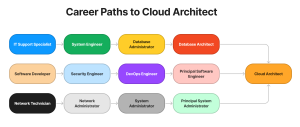
Cloud architecture is rarely an entry-level role. Most professionals start in foundational IT or development positions and grow gradually.
Common Roles for Beginning a Career as a Cloud Architect
*infosectrain.com
IT Support Technician
Average annual salary (India): ₹5,00,000
This role builds strong fundamentals in hardware, software, operating systems, and troubleshooting. It teaches how real systems behave and fail knowledge that is essential for designing resilient cloud solutions.
Cloud Support Associate
Average annual salary (India): ₹8,00,000
Cloud support roles provide hands-on experience with cloud platforms, customer issues, and real-world troubleshooting. You interact with engineers, learn best practices, and gain exposure to production cloud environments.
A popular pathway into this role is the Microsoft Cloud Support Associate Professional Certificate, which helps beginners develop job-ready cloud support skills in around five months.
Web Developer (Front-end, Back-end, or Full-stack)
Average annual salary (India): ₹4,80,000
Developers understand how applications are built, deployed, and scaled. This knowledge is invaluable for cloud architects, who must design infrastructure that supports application performance and growth.
Cloud Engineer
Average annual salary (India): ₹7,00,000
Cloud engineers design, deploy, and manage cloud systems. This role is one of the closest stepping stones to cloud architecture, as it involves hands-on infrastructure design and operational responsibility.
Cloud Platforms Used by Cloud Architects
Mastering cloud platforms is central to a cloud architect’s career. The most widely used platforms include:
Amazon Web Services (AWS): The market leader with a vast ecosystem
Microsoft Azure: Popular for enterprise and hybrid solutions
Google Cloud Platform (GCP): Known for innovation and data services
IBM Cloud: Focused on hybrid and enterprise workloads
Oracle Cloud Infrastructure: Strong in data-intensive applications
Cloud Architect Jobs: Career Scope and Salary Insights
Cloud architects are in high demand, and compensation reflects this.
Cloud Architect Salary in India
Job Profile
Average Annual Salary
AWS Solution Architect
₹6 L
Azure Cloud Architect
₹19 L
OpenStack Architect
₹9 L
Cloud Network Architect
₹20 L
Cybersecurity Solutions Architect
₹20.5 L
Junior Cloud Solutions Architect
₹7 L
Senior Cloud Architect
₹30 L
Principal Cloud Architect
₹38.5 L
Source: Glassdoor
Top Hiring Companies for Cloud Architects
Leading organisations actively recruiting cloud architects include:
Tata Consultancy Services (TCS)
Capgemini
HCL Technologies
Hexaware Technologies
Pwc India
Accenture
Amazon Web Services
Infosys
Microsoft
Challenges Faced by Cloud Architects
Cloud architects operate in complex and constantly evolving environments, which makes the role both exciting and demanding. One of the biggest challenges they face is:
Managing complexity across systems and platforms. Modern cloud environments often involve multi-cloud or hybrid setups, where applications, data, and services are spread across different platforms.
Ensuring security and compliance. As cyber threats continue to grow in sophistication, staying ahead of security risks and implementing robust safeguards becomes an ongoing responsibility rather than a one-time task.
Cost management: It is another critical concern. Cloud services follow a usage-based pricing model, and without proper monitoring, costs can escalate quickly.
Tips to Become a Successful Cloud Architect
To succeed as a cloud architect, it is essential to:
Build a strong technical foundation by focusing on mastering cloud fundamentals, networking, security, and system design principles before moving into advanced architectural concepts.
Certifications validate your knowledge and demonstrate your commitment to professional growth, making you more competitive in the job market.
A successful cloud architect must clearly explain technical ideas to non-technical stakeholders, collaborate with cross-functional teams, and guide engineers toward shared goals.
Finally, learning to think from a business perspective, understanding costs, risks, and long-term impact, will help you design solutions that truly add value and set you apart as a successful cloud architect.
How Can Jaro Education Help You Build a Career as a Cloud Architect?
If you want to transform your career as a cloud architect, trust Jaro Education. We are a trusted online higher education and upskilling company providing online courses and certification programmes to ensure your gain skills and credentials to succeed.
Whether you want to boost your knowledge or advance your skills, here we have courses that are perfect for mastering your technical skills:
Beyond courses, you can take advantage of our expert counseling and academic guidance for your career-related queries.
Final Thoughts
A career in cloud architecture is challenging, rewarding, and future-proof. It requires a strong technical foundation, practical experience, and a mindset geared toward continuous improvement. While the journey takes time, each step, whether in IT support, development, or cloud engineering, adds value to your skill set.
With cloud adoption accelerating worldwide, skilled cloud architects will remain in high demand for years to come. If you enjoy solving complex problems, designing scalable systems, and working at the intersection of technology and business, cloud architecture could be the right career path for you.
Frequently Asked Questions
A cloud architect designs, plans, and manages an organization’s cloud infrastructure while ensuring security, scalability, performance, and cost efficiency.
The average cloud architect salary in India ranges between ₹19 L – ₹30 L per year, depending on experience and role, with senior and principal architects earning even more.
Yes. A cloud security architect focuses specifically on securing cloud systems, including risk management, compliance, encryption, and threat protection, while a cloud architect handles overall cloud design and strategy.
Beginners should start with courses that cover cloud fundamentals, networking, and scripting, along with certifications like AWS Solutions Architect, Azure Architect, or GCP Cloud Architect, combined with hands-on learning.
 HOME > BLOG > Cloud Computing and Cyber Security > How to Become a Cloud Architect: Skills, Roadmap, and Career Scope
 January 24, 2026
 10 min read





 ChatGPT
 Perplexity
 Claude
 Grok
Grok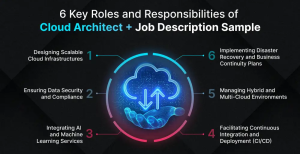 *edstellar.com




 *infosectrain.com
 *tryexponent.com
 *infosectrain.com
 Admission Open
 Admission Open
 Admission Open
 Admission Open
 ROI Calculator