HomeHOME > BLOG > Design Thinking > What is the Difference Between Combinational Vs. Sequential Circuits
Design Thinking

What is the Difference Between Combinational Vs. Sequential Circuits

J
By Priya Sahu
UpdatedOctober 2, 2024Read time3 min read
Last updated on May 26, 2026
SHARE THIS ARTICLE
Jaro Education Facebook PageJaro Education Instagram PageJaro Education Twitter PageJaro Education Whatsapp Page Jaro Education Linkedin PageJaro Education Youtube Page
difference between combinational and sequential circuit
Table of Contents

Table Of Content

  • What is a Combinational Circuit?
  • Examples of Combinational Logic Circuits
  • What is a Sequential Circuit?
  • Working of Sequential Circuits

Digital electronics plays a crucial role in modern computing systems, communication devices, and embedded technologies. Two of the most important concepts in digital electronics are combinational and sequential circuits.

Understanding the difference between combinational and sequential circuit is essential for students, electronics engineers, and professionals working in computer architecture and digital system design.

Both circuits are widely used in digital devices, but they differ in terms of memory, output generation, clock dependency, and data processing methods.

In this guide, we will explain what is combinational circuit, what is sequential circuit, their working principles, types, applications, and major differences.

What is a Combinational Circuit?

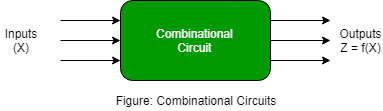
A combinational circuit is a type of digital circuit in which the output depends only on the present input values. These circuits do not store previous data or memory states.

Combinational Circuit

*geeksforgeeks

Key Characteristics of Combinational Circuits

  • Output depends only on current inputs
  • No memory element is used
  • Faster processing speed
  • Does not require feedback
  • Independent of clock signals

Working of Combinational Logic Circuits

Combinational logic circuits use logic gates such as:

  • AND gate
  • OR gate
  • NOT gate
  • NAND gate
  • NOR gate
  • XOR gate

The combination of these gates produces the required output based on input conditions.

Also Read:

Examples of Combinational Logic Circuits

Some common combinational logic circuits include:

Multiplexer (MUX)

A multiplexer selects one input from multiple inputs and forwards it to the output.

Demultiplexer (DEMUX)

A demultiplexer distributes a single input to multiple outputs.

Encoder

An encoder converts data into coded output formats.

Decoder

A decoder converts coded input into readable output signals.

Adder and Subtractor Circuits

These circuits perform arithmetic operations in digital systems.

What is a Sequential Circuit?

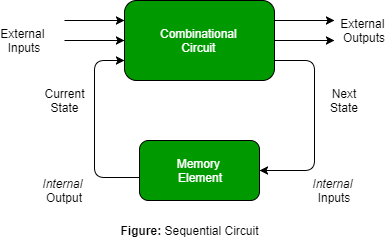
A sequential circuit is a digital circuit in which the output depends on both present input values and previous output states.

Unlike combinational circuits, sequential circuits contain memory elements that store data temporarily.

Sequential Circuit

*geeksforgeeks

Key Characteristics of Sequential Circuits

  • Output depends on current and previous inputs
  • Uses memory elements
  • Requires clock signals
  • Includes feedback mechanism
  • More complex than combinational circuits

Sequential circuits are widely used in memory systems, processors, counters, and storage devices.

Working of Sequential Circuits

Sequential circuits use components such as:

  • Flip-flops
  • Registers
  • Counters
  • Memory units

These components help store binary data and maintain previous states.

The output changes according to clock pulses and stored information.

How Many Types of Sequential Circuits Are There?

Sequential circuits are mainly divided into two types.

Synchronous Sequential Circuits

In synchronous circuits, all operations are controlled using a clock signal.

Features

  • Faster synchronization
  • Predictable output
  • Widely used in processors and computers

Asynchronous Sequential Circuits

Asynchronous circuits do not rely on a common clock signal.

Features

  • Faster response time
  • Complex design
  • Higher risk of timing errors

Difference Between Combinational and Sequential Circuit

Understanding the difference between combinational and sequential circuit helps students analyze digital systems more effectively.

BasisCombinational CircuitSequential Circuit
Output DependencyPresent Input OnlyPresent + Previous Input
MemoryNo MemoryUses Memory
Clock SignalNot RequiredRequired
FeedbackNo FeedbackFeedback Present
ComplexitySimpleComplex
SpeedFasterComparatively Slower
ExamplesAdders, MultiplexersFlip-Flops, Registers
ApplicationsArithmetic OperationsData Storage

Applications of Combinational and Sequential Circuits

Both circuits are widely used in modern electronic devices and computer systems.

Applications of Combinational Circuits

  • Calculators
  • Arithmetic Logic Units (ALU)
  • Data routing systems
  • Signal processing systems

Applications of Sequential Circuits

  • Memory devices
  • Digital clocks
  • Counters
  • CPUs and microprocessors
  • Embedded systems

Advantages of Combinational Circuits

High Speed

Since there is no memory storage, combinational circuits process data quickly.

Simple Design

These circuits are easier to design and implement.

Lower Cost

Combinational circuits require fewer components compared to sequential circuits.

Advantages of Sequential Circuits

Data Storage Capability

Sequential circuits can store previous states and process data accordingly.

Suitable for Complex Operations

These circuits are useful in advanced computing systems.

Better Control Systems

Sequential circuits provide better control in automation and digital systems.

Limitations of Combinational Circuits

  • Cannot store data
  • Limited functionality
  • Not suitable for complex processing tasks

Limitations of Sequential Circuits

  • More complex design
  • Requires synchronization
  • Higher power consumption
Also Read:

Combinational and Sequential Circuits in Modern Technology

Combinational and sequential circuits form the foundation of modern digital electronics.

They are used in:

Understanding these concepts is important for students pursuing electronics engineering, computer science, and digital system design.

Conclusion

Understanding the difference between combinational and sequential circuit is essential for learning digital electronics and computer architecture. While combinational circuits generate output based only on present inputs, sequential circuits depend on both present and past inputs using memory elements.

Both combinational and sequential circuits have unique advantages, applications, and functionalities in digital systems. From arithmetic operations to memory storage and processor design, these circuits play a critical role in modern electronic devices and computing technologies.

Students and professionals working in electronics, computer engineering, and embedded systems should develop a strong understanding of these fundamental concepts for future technological advancements.

Frequently Asked Questions

A combinational circuit is a digital circuit where the output depends only on present input values without using memory elements.

A sequential circuit is a digital circuit in which the output depends on current input values as well as previous states stored in memory.

Combinational logic circuits are digital circuits made using logic gates where outputs are generated based only on current inputs.

Sequential circuits are mainly divided into two types: synchronous sequential circuits and asynchronous sequential circuits.

The main difference is that combinational circuits do not use memory, while sequential circuits store previous states using memory elements.
Priya Sahu

Priya Sahu

Sales & Digital Marketing Strategist
Sales and Marketing professional with 6+ years of experience in B2B and B2C growth, specializing in business development and digital marketing. Skilled in CRM systems, paid campaigns, and AI-driven strategies to drive revenue, optimize performance, and build lasting client relationships.

Get Free Upskilling Guidance

Fill in the details for a free consultation

*By clicking "Submit Inquiry", you authorize Jaro Education to call/email/SMS/WhatsApp you for your query.

Find a Program made just for YOU

We'll help you find the right fit for your solution. Let's get you connected with the perfect solution.

Confused which course is best for you?

Is Your Upskilling Effort worth it?

LeftAnchor ROI CalculatorRightAnchor
Confused which course is best for you?
Are Your Skills Meeting Job Demands?
LeftAnchor Try our Skill Gap toolRightAnchor
Confused which course is best for you?
Experience Lifelong Learning and Connect with Like-minded Professionals
LeftAnchor Explore Jaro ConnectRightAnchor
EllispeLeftEllispeRight
whatsapp Jaro Education