HOME > BLOG > Online MBA > What is Workforce Management? Roles, Responsibilities & Career Opportunities Explained
Online MBA
What is Workforce Management? Roles, Responsibilities & Career Opportunities Explained
J
By Jaro Education
November 1, 20258 min read
Last updated on September 3, 2026
SHARE THIS ARTICLE
Table Of Content
What Is Workforce Management?
What the Numbers Say About Workforce Management (WFM)
Workforce Management Roles and Responsibilities
Workforce Management Careers & Opportunities
Workforce management is the backbone of organizational efficiency and productivity. It’s not merely about filling shifts, it’s a strategic discipline that ensures the right people are in the right place, at the right time, with the right skills.
This blog is your definitive guide to learning workforce management, what it entails, and how it can contribute to your career. Let’s proceed!
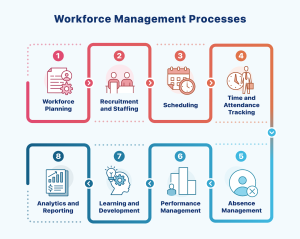
Workforce management (WFM) involves all that keeps a workforce in motion, whether forecasting demand, budgeting, hiring, scheduling, training, monitoring performance, and analysis.
Moreover, WFM is not limited to a single industry. In retail, it manages seasonal fluctuations. In manufacturing, it optimizes assembly line requirements. In healthcare, it synchronizes critical staffing with patient care needs. Within every sector, the objective is common: sustain performance levels and worker competency consistently.
What the Numbers Say About Workforce Management (WFM)
Did you realize that workforce modeling, one of the important elements of WFM and can significantly cut down on staffing inefficiencies? Classic static planning models provide for approximately 60% of operating hours to be understaffed or overstaffed, whereas current workforce modeling implementations achieve impressive cost savings (Wikipedia).
This informs you of how important expert workforce management is, not only for leveling schedules, but for positively affecting the bottom line.
Monitoring & Performance Tracking: Track and analyze productivity metrics in real time, adjust plans as needed.
Compliance & Labour Law Adherence: Ensure shifts, breaks, and working hours meet legal and policy standards.
Training & Competency Management: Identify gaps, develop skills, and align staffing with evolving needs.
Budgeting & Reporting: Track labor costs and provide insights for management.
These responsibilities vary in scale, from a WFM analyst handling day-to-day scheduling to a WFM manager overseeing strategy across locations or operations.
Why It Matters
WFM isn’t just operational, it’s strategic. Here’s how:
Improves Efficiency: Smart staffing reduces idle time and burnout.
Boosts Satisfaction: Employees get schedules suited to their availability; management stays informed and agile.
Reduces Costs: Minimizing overstaffing and overtime saves serious money.
Increases Business Agility: With real-time monitoring and analytics, organizations can pivot when demand spikes or dips.
Workforce Management Careers & Opportunities
When people enquire about workforce management opportunities, they are frequently startled by the variety of positions available. WFM is no longer purely a back-office role. It’s a high-profile strategic position in fields ranging from finance to e-commerce.
1. WFM Analyst
Focuses on creating forecasts, generating reports, and tracking metrics.
Often, the entry point into the field.
Requires data literacy and attention to detail.
2. Scheduler/Planner
Designs schedules to match forecasted demand.
Balances employee preferences with operational needs.
3. Capacity Planner
Works on long-term projections, budgeting, and headcount planning.
Plays a key role in expansion strategies.
4. WFM Manager
Oversees the entire workforce management function.
Bridges analytics, HR, and operations.
Aligns WFM strategies with corporate goals.
5. Director of Workforce Strategy
Senior leadership role.
Influences technology adoption, process changes, and resource strategy.
Growth & Industry Demand
As businesses adapt to post-pandemic realities, the demand for skilled WFM professionals is surging.
Industries hiring WFM experts include:
BPO & Call Centers for real-time staffing alignment.
Aiming for a career in workforce management? To thrive, you’ll need a blend of technical and soft skills, like:
Data Analysis: Reading trends, predicting needs, optimizing schedules.
Communication: Explaining staffing decisions clearly to stakeholders.
Leadership: Managing teams and resolving conflicts.
Technical Proficiency: Using WFM software like Kronos, NICE, or ADP.
Problem-Solving: Adjusting plans on short notice during disruptions.
Tools & Technology in Workforce Management
Modern WFM relies on technology. The days of manually creating spreadsheets are long gone. Today’s WFM systems use Artificial intelligence, analytics, and automation to boost accuracy and responsiveness.
Leading WFM Tools
UKG (Ultimate Kronos Group): Popular for scheduling and compliance.
NICE Workforce Management: Known for call center optimization.
ADP Workforce Now: Combines HR and WFM features.
Verint Systems: Focused on customer engagement and staffing.
SAP SuccessFactors: Enterprise-grade talent and scheduling solutions.
How Technology Transforms WFM
Real-Time Adjustments: Managers can react instantly to absenteeism or demand spikes.
Forecast Accuracy: AI algorithms use historical and live data to fine-tune predictions.
Employee Self-Service: Staff can view and swap shifts through mobile apps.
Compliance Automation: Systems flag violations of labor laws before they occur.
The result? Lower costs, better employee satisfaction, and higher operational resilience.
The Strategic Power of Workforce Management in the AI-Driven Era
In a business environment where chatbots respond to consumer enquiries, algorithms predict demand, and cloud platforms instantly sync calendars, workforce management (WFM) has evolved from a backroom HR procedure to a boardroom strategy.
Here’s why AI is redefining WFM roles and responsibilities:
Predictive Forecasting: AI-powered WFM systems analyze historical sales, seasonal patterns, and even weather data to forecast staffing needs weeks or months in advance.
Dynamic Scheduling: Instead of rigid rosters, shifts can flex in real time based on call volumes, foot traffic, or online orders.
Skill-Based Allocation: Algorithms match the right employee to the right task at the right time, boosting both customer satisfaction and employee engagement.
Overall, it means WFM experts must evaluate AI insights, match them with company objectives, and make decisions that strike a balance between productivity and worker well-being in order to transition from administrative schedulers to strategic workforce architects.
The AI-WFM Career Advantage
Here’s the career twist: as AI becomes embedded in WFM, the demand for tech-savvy, data-literate managers is skyrocketing.
Roles like WFM Data Analyst or Workforce Optimization Specialist are emerging, requiring professionals who can:
Translate AI-driven forecasts into actionable staffing plans.
Work cross-functionally with HR, IT, and Operations.
Understand the compliance implications of automated scheduling.
These are future-proof roles, as while software can crunch numbers, it’s the human WFM leader who sets the strategic course, resolves conflicts, and champions employee experience.
Workforce Management and the Psychology of Peak Performance
Now the most crucial part: To start a career in workforce management, technical skills like scheduling, forecasting, and data analysis are crucial but what will truly set you apart is understanding how human performance works.
The best WFM professionals aren people strategists who know how to align schedules with human psychology for maximum productivity and satisfaction.
Here’s how performance psychology becomes your competitive advantage in WFM:
1. Understanding Energy Cycles
Employees don’t work at the same intensity all day, we have natural high-focus and low-energy phases. As a WFM specialist, you can use this knowledge to create smart schedules that match peak-focus periods with high-priority work.
Employers highly value WFM professionals who can boost productivity without increasing hours.
2. Managing Cognitive Load
Cognitive load refers to the mental effort needed to complete a task. Too much at once can cause burnout and errors. By balancing complex and routine tasks in a schedule, you help teams stay sharp throughout their shifts.
This skill proves you can manage not just time, but mental performance, a highly sought-after ability in HR and operations roles.
3. Motivation-Driven Scheduling
Motivation levels rise when employees feel recognized, have varied tasks, and see their preferences respected. WFM professionals can use surveys or performance trends to detect when morale dips then make proactive scheduling changes.
You’ll stand out as someone who can keep both productivity and employee satisfaction high, improving retention rates.
4. Chronotypes and Shift Matching
Some people are early risers (“larks”) while others perform best at night (“owls”). Mapping these chronotypes and aligning shifts accordingly leads to better performance.
This makes you an adaptable WFM planner, able to optimize both efficiency and employee well-being.
Overall, companies are increasingly looking for data-driven WFM specialists who also understand human factors. Combining scheduling software skills with performance psychology knowledge will make you a stronger candidate in HR, operations, and team leadership roles.
How Does Jaro Education Help You Succeed in Workforce Management?
At Jaro Education, we understand that thriving in workforce management careers takes more than just knowing how to schedule shifts or track attendance. It’s about combining strategic thinking, analytical skills, and leadership to drive organizational success. That’s exactly what we prepare you for.
We offer online programs in Human Resource Management and MBA specializations that immerse you in the key areas of workforce management, including:
Talent Management: Building, retaining, and motivating high-performing teams.
Performance Management: Driving measurable improvements in productivity.
HR Analytics: Using data to forecast staffing needs and optimize resources.
Strategic HR: Aligning people strategies with long-term business goals.
Industry-Driven Curriculum: Designed to match the evolving needs of HR and WFM professionals.
Flexible Online Learning: Study at your own pace while balancing work and personal commitments.
Experienced Faculty & Mentors: Learn from industry veterans and academic leaders.
Powerful Networking: Engage with peers, alumni, and corporate connections for career opportunities.
Comprehensive Career Support: From resume building to interview preparation and placement guidance.
At Jaro, we don’t just teach theory, we bridge the gap between academic learning and the real-world demands of workforce management, helping you step confidently into roles that shape organizational success.
Ready to take the next step toward a successful workforce management career?
Visit our website today to explore our programs, download detailed brochures, and start your journey with Jaro Education.
Conclusion
Workforce management is more than a set of tasks, it’s a leadership discipline that blends numbers with people skills, technology with empathy, and short-term fixes with long-term planning.
For professionals who want to step into a decision-making role with tangible business impact, WFM offers a clear path forward. It’s dynamic, cross-industry, and increasingly tech-powered, making it a rewarding choice both financially and intellectually.
Frequently Asked Questions
Workforce management (WFM) is an organizational process encompassing all activities—forecasting, scheduling, analytics, training, and budgeting—required to support a productive workforce in alignment with demand.
Primary roles in workforce management are forecasting, scheduling, performance monitoring, compliance, and training. These roles assist in ensuring productivity and balance among the workforce.
Workforce management saves money, avoids overstaffing or understaffing, and increases worker satisfaction. This results in greater efficiency, improved customer service, and more powerful business outcomes.
The retail, BPO, healthcare, manufacturing, and logistics sectors are the major industries that depend on workforce management. All these industries employ it for matching staff with operational needs.
Effective workforce management professionals require data analysis, communication, leadership, and WFM software skills to meet business demands while promoting employee wellness.utomate the mundane tasks with the help of AI.
Get Free Upskilling Guidance
Fill in the details for a free consultation
Related Courses
Explore our programs
Advanced Data Science Certificate Programme (Rotman-IITMP)
 HOME > BLOG > Online MBA > What is Workforce Management? Roles, Responsibilities & Career Opportunities Explained
 November 1, 2025
 8 min read





 ChatGPT
 Perplexity
 Claude
 Grok
Grok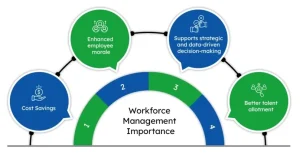








 ROI Calculator