 HOME > BLOG > Business Management > What is On-the-job training: Methods, Benefits, Challenges, and More
What is On-the-job training: Methods, Benefits, Challenges, and More
 October 26, 2025
 6 min read





Table Of Content
- What is On-the-Job Training?
- On-the-Job Training Methods
- Benefits of On-the-Job Training
- Challenges of On-the-Job Training (and Smart Ways to Overcome Them)
Imagine this: it’s your first day at work. You’ve cleared the interviews, signed the offer letter, and are finally sitting at your new desk. The human resources gave you a quick office tour, and now someone senior says, “Alright, let me show you how we do things here.” Within a few hours, you’re not just reading about your role, you’re actually doing it, guided by your team.
That, in essence, is on-the-job training (OJT).
But here’s the thing, OJT isn’t just about “shadowing” or “copying what others do.” It has layers, structured methods, clear benefits, and, yes, its own set of challenges. And that’s what we’re going to unpack in this blog.
By the end, you’ll not only understand the meaning of OJT, but also how it can shape careers, businesses, and maybe even your own growth.
What is On-the-Job Training?
At its core, on-the-job training meaning is simple: it’s a process where you learn by doing. Employees get trained while performing their actual work responsibilities, often under the guidance of a manager, mentor, or experienced colleague.
Think of it as the opposite of reading a manual. Instead of learning in theory first, you dive straight into real tasks, with someone ensuring you don’t sink.
In fact, the OJT meaning has evolved with industries. Earlier, it was seen mainly in manufacturing or trade apprentices working under carpenters, electricians, or mechanics. Today, it’s everywhere: IT firms, retail, healthcare, hospitality, even startups.
Why? Because businesses have realized something crucial, which is that no matter how many degrees or certifications someone holds, real competence only comes from real practice.
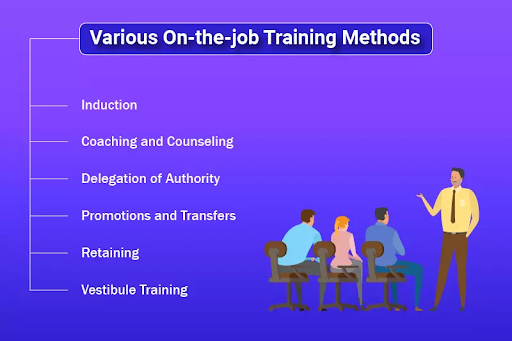
On-the-Job Training Methods
Benefits of On-the-Job Training
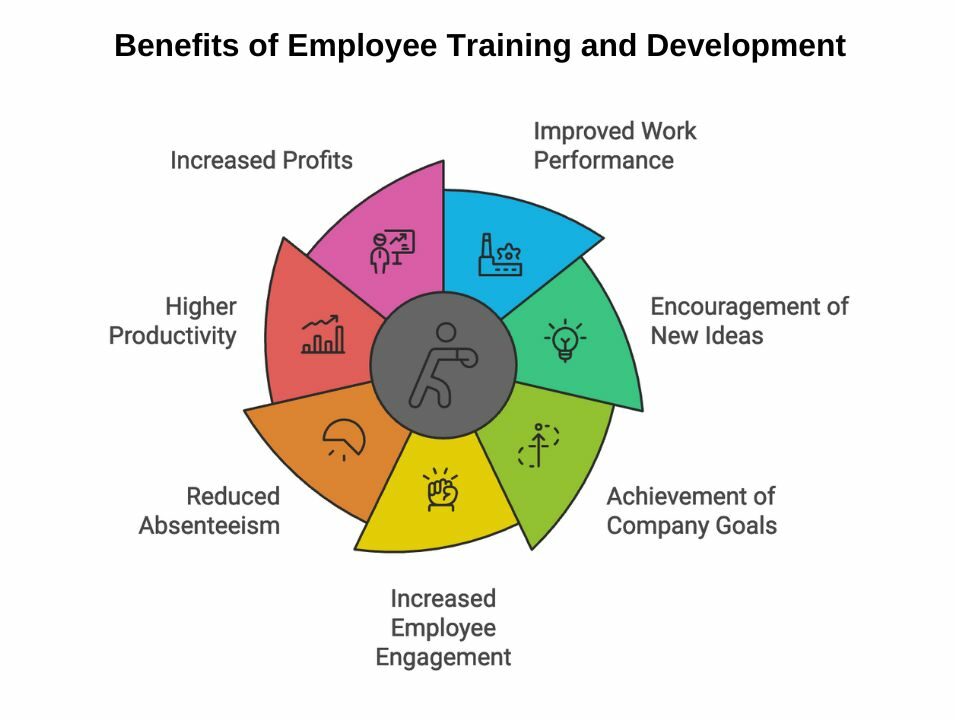
If you’re wondering, “Why not just send employees for a workshop instead?” Here’s why on-the-job training works better in many cases:
- Practical experience from day one: No hypothetical case studies, just real work.
- Cost-effective: Companies don’t spend heavily on external trainers or offsite programs.
- Faster productivity: Employees transition smoothly into contributing members.
- Boosts retention: Employees feel invested in, which often makes them stick around longer.
- Customization: Every company has its unique processes, and OJT teaches exactly that.
Essentially, it’s about learning that feels natural, timely, and directly useful. And in short, OJT is as much about shaping individuals as it is about strengthening organizations.
Challenges of On-the-Job Training (and Smart Ways to Overcome Them)
On-the-Job Training vs Off-the-Job Training
So which one’s better? Truth is, it depends. For skills that need real-time practice, OJT wins. For theoretical frameworks, compliance, or leadership principles, off-the-job work is better. Smart companies blend both.
| On-the-Job Training (OJT) | Off-the-Job Training |
| Hands-on, real environment | Classroom, labs, or online |
| Cost-effective, practical | More theoretical & broad |
| Immediate productivity impact | Broader conceptual clarity |
| Trainer = colleague/manager | Trainer = external expert |
How Jaro Education Can Help
Here’s a thought: while on-the-job training sharpens your skills in the workplace, what about the bigger picture? How do you ensure your knowledge stays updated, competitive, and future-ready?
That’s where Jaro Education comes in.
At Jaro, you will find programs that balance academic depth with practical relevance in partnership with leading universities. Be it online degrees, certifications, or executive education, you won’t just get theory but also real-world applications through case studies, projects, and industry exposure.
For students, this means a smoother transition from campus to corporate life. For professionals, it means continuous upskilling that complements OJT, so you don’t just know how to do your current job, but also prepare for leadership roles and future opportunities.
Think of it as the missing puzzle piece: on-the-job training gives you practice, Jaro gives you perspective. Together, they shape complete professionals.
Conclusion
We’ve come full circle, from understanding the on-the-job training meaning and exploring its methods, to weighing its benefits and challenges. If there’s one thing to take away, it’s this: learning at work is not optional anymore, it’s essential.
The workplace is your greatest classroom, and OJT is your teacher. But like any good education, it becomes truly powerful when combined with structured learning.
So, level up your on-the-job learning with Jaro Education’s future-ready programs.
Frequently Asked Questions
It’s a method where employees learn skills directly at the workplace by performing real tasks under supervision.
Yes, companies now use video calls, digital platforms, and screen-sharing to deliver OJT online.
The duration varies, some roles need a week, others may extend to a few months based on complexity.
Most employers treat OJT as part of the job, so employees continue to get their regular pay while learning.
Find a Program made just for YOU
We'll help you find the right fit for your solution. Let's get you connected with the perfect solution.

Is Your Upskilling Effort worth it?
 ROI Calculator

Are Your Skills Meeting Job Demands?
Try our Skill Gap tool
Experience Lifelong Learning and Connect with Like-minded Professionals
Explore Jaro Connect

