
What is MVP in design thinking?
 May 25, 2023
 5 min read




Table Of Content
- What is MVP: The Meaning and its Concept
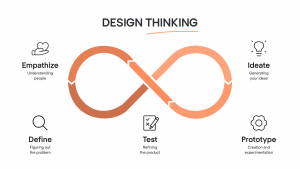
- MVP in the Design Thinking Process: Understand the Approach
- How to Craft a Successful MVP in Design Thinking
- Minimum Viable Product (MVP) – Testing Approaches
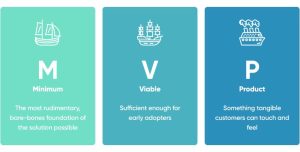
In the world of innovation and user-centered design, MVP in design thinking plays a very important role in turning ideas into practical solutions. MVP stands for Minimum Viable Product in design thinking, which is a strategic approach that focuses on the building of a simplified version of a product with just enough features to satisfy the needs of early users and collect valuable feedback. It helps teams test assumptions, validate ideas, and consequently minimize risks from full-scale product development.
Minimum Viable Product design thinking allows designers and innovators to learn, not strive for perfection. Instead of spending several months or even years developing a fully complete product, teams release a basic version to understand user behavior and preference. Further, this iterative process aligns completely with the core principles of design thinking: empathize, prototype, and test. By implementing MVP in design thinking, an organization will be assured of making data-driven decisions, enhancing product-market fit, and ensuring that a final solution addresses the needs of users while minimizing time, cost, and effort.
 ChatGPT
 Perplexity
 Claude
 Grok
GrokWhat is MVP: The Meaning and its Concept
MVP stands for in design thinking as Minimum Viable Product. It is a product development strategy in which a product with just enough features is created to satisfy early customers and to gain feedback for future product development. The MVP approach involves testing a product idea in the market with minimal investment to validate its potential success.
MVP is an essential aspect of the design thinking process. It helps designers to test their ideas before spending too much money on the final product. By trying this small version of the product, they get feedback to improve it. This method can save both time and money and create a better product as per the customers’ needs.
MVP in the Design Thinking Process: Understand the Approach





How to Craft a Successful MVP in Design Thinking
Here’s a step-by-step guide to building an MVP in the design thinking approach:
- Identify the problem or need.
- Conduct research and gather information.
- Define the target audience and user personas.
- Brainstorm ideas and develop a hypothesis.
- Create a prototype.
- Test the prototype with real users.
- Gather feedback and refine the prototype.
- Test and iterate until the MVP meets user needs.
- Launch the MVP and collect user feedback.
- Continue to improve and iterate based on feedback.
Minimum Viable Product (MVP) – Testing Approaches
Conclusion
MVP in design thinking is useful because it helps teams check their ideas and get feedback from users before they spend a lot of time and money making a final product. In the future, MVPs will still be important for making new and user-friendly solutions that meet what customers want. As technology gets better, MVPs will be even more helpful for design thinking.
Boost your career in design thinking by knowing the vitals of MVPs with IIT Delhi’s Executive Programme in Product Innovation & Design Thinking for Business Growth. This comprehensive course, offered in collaboration with Jaro Education, offers practical skills and knowledge, with live classes and mentorship from industry experts. Enroll in this programme and gain valuable insights to take your career to the next level.
Frequently Asked Questions
The main goal of an MVP in design thinking is to test assumptions, assess usability, and learn from user feedback. This minimum viable product design thinking process helps ensure that the final solution effectively meets genuine user needs.





Find a Program made just for YOU
We'll help you find the right fit for your solution. Let's get you connected with the perfect solution.
Is Your Upskilling Effort worth it?
 ROI Calculator

Are Your Skills Meeting Job Demands?
Try our Skill Gap tool
Experience Lifelong Learning and Connect with Like-minded Professionals
Explore Jaro Connect
