What is IPO? - Meaning, Types, Process & Eligibility
In the world of investing, few events create as much excitement as an IPO. It represents growth, ambition, and a company’s shift into the public markets. But beyond the excitement, what does it really mean forinvestors and businesses?
This guide explains the full form of IPO, its meaning, types, process, eligibility criteria, and important details like IPO allotment, IPO allotment status, NSE IPO, and BSE IPO status—all in one place.
IPO Full Form and Meaning
The full form of IPO is Initial Public Offering. An IPO is the process through which a private company sells its shares to the public for the first time. This allows the company to be publicly listed on a stock exchange like the National Stock Exchange or the Bombay Stock Exchange.
Before an IPO, ownership of the company usually belongs to founders, early investors, and private stakeholders. After the IPO, public investors can buy and sell shares freely in the stock market.
In simple terms, an IPO marks the change of a company from private ownership to public participation.
When a company lists on exchanges like an NSE IPO, it gains visibility, regulatory recognition, and access to larger pools of capital.
Types of IPO
Not all IPOs follow the same structure. Generally, IPOs are categorized into these types:
1. Fixed Price IPO
In this type, the company sets a fixed price for shares offered to investors. The price is disclosed in advance, and investors buy shares at that price.
2. Book Building IPO
This is the most common type today. The company provides a price range, and investors place bids within that range. The final issue price is determined based on demand.
3. Offer for Sale (OFS)
In this method, existing shareholders sell their shares to the public. The company does not raise new capital; instead, the ownership changes hands.
4. Fresh Issue
The company issues new shares to raise additional funds, which directly strengthens its balance sheet.
IPO Process: Step-by-Step Explanation
Launching an IPO is a structured and regulated process. Here’s how it typically unfolds:
1. Appointment of Investment Bankers
The company hires investment bankers (underwriters) who guide the IPO process, valuation, documentation, and regulatory approvals.
2. Draft Red Herring Prospectus (DRHP) Filing
The company files a DRHP with the regulator. This document details financials, risks, objectives, and business operations.
3. Regulatory Review and Approval
After the review and approval, the company announces issue dates and price bands.
4. Subscription Period
Investors can apply during the IPO window. They can submit applications through online trading platforms or banks.
5. IPO Allotment
Once the subscription closes, shares are allotted to investors based on demand and category reservations. This is where IPO allotment becomes crucial.
If the IPO is oversubscribed, allotment occurs using a lottery system for retail investors.
6. IPO Allotment Status Check Online
After shares are allocated, investors can check their IPO allotment status online through registrar websites or stock exchange portals. This process is commonly referred to as checking the IPO allotment status.
Investors who applied through the NSE IPO route can verify their status via the National Stock Exchange portal. Those who applied via BSE can check their IPO status through the Bombay Stock Exchange website.
7. Listing on Stock Exchange
Finally, shares are listed and start trading publicly on the exchange.
IPO Allotment: What Investors Should Know
IPO allotment decides if you get the shares you applied for. Allocation depends on:
– Total demand
– Investor category (Retail, HNI, Institutional)
– Oversubscription levels
If demand is higher than supply, retail investors might receive only one lot or none.
Monitoring your IPO allotment status is important. It tells you whether shares are credited to your Demat account or if funds will be refunded.
How to Check IPO Allotment Status Online
Checking your IPO allotment status online is easy:
Visit the registrar’s official website.
Select the IPO name.
Enter your PAN number, application number, or Demat ID.
Submit to view your status.
You can also check the BSE IPO status directly on the Bombay Stock Exchange website or track NSE IPO updates on the National Stock Exchange portal.
To apply for an IPO, investors must meet some basic eligibility requirements:
– Must be 18 years or older
– Must have a PAN card
– Must have a Demat account
– Must have a bank account linked for ASBA transactions
There is no income limit for retail participation. However, investment limits vary by category.
Risks Associated with IPO Investments
While IPOs can provide strong listing gains, they also carry risks.
Market volatility.
Overvaluation.
Limited historical public data.
Lock-in periods for promoters.
Investors should read the prospectus carefully and evaluate the fundamentals before investing.
Advantages of Investing in an IPO
Despite the risks, IPOs have several advantages which are listed as below:
Opportunity to invest early in growth companies.
Potential listing gains.
Portfolio diversification.
Long-term wealth creation.
Many successful public companies have generated strong returns for early IPO investors.
Jaro IPO Listing
Jaro Education, officially known as Jaro Institute of Technology Management & Research Ltd., completed its IPO and got listed on the stock market on September 30, 2025. The IPO was priced at ₹890 per share, and the company’s shares were listed on both the National Stock Exchange (NSE) and the Bombay Stock Exchange (BSE) on that date.
The IPO involved a ₹450 crore issue, which included a fresh issue of ₹170 crore and an offer for sale worth ₹280 crore by promoters. It drew strong interest from both institutional and retail investors before the listing.
Despite the healthy subscription levels during the IPO, the market debut was disappointing. The stock opened at the IPO price of ₹890 per share, showing no significant premium or “listing pop,” which resulted in a flat opening.
Key Documents to Review Before Applying
Before applying for any IPO, investors should review:
This due diligence helps reduce decisions based on speculation.
Key Factors to Consider Before Investing in an IPO
Investing in an IPO can be exciting, but it requires careful evaluation. Unlike established companies with years of trading history, IPO investments often rely on financial disclosures, projections, and market sentiment. Before applying, investors should look at the company’s revenue growth, profitability trends, debt levels, competitive position, and industry outlook.
One of the most important documents to review is the Red Herring Prospectus (RHP). It includes detailed information about the company’s business model, risks, reasons for the issue, and management background. Understanding why the company is raising funds, whether for expansion, paying off debt, or working capital, can give insights into its long-term sustainability.
Valuation is another key aspect. Sometimes IPOs are priced high due to strong demand or branding. Comparing valuation ratios like Price-to-Earnings (P/E) and Price-to-Book (P/B) with industry competitors can help determine if the pricing is fair. Overvalued IPOs may experience volatility after listing, especially if market conditions shift.
How Market Conditions Impact IPO Performance
IPO success often depends on overall market sentiment. In a bullish market, IPOs may see heavy oversubscription and strong listing gains. In contrast, during bearish or uncertain economic conditions, even fundamentally strong companies may have muted responses.
Market liquidity, interest rates, inflation levels, and global economic trends all affect investor appetite. Institutional investors play a big role in determining IPO momentum, and their participation often shows confidence in the offering.
Moreover, sector trends are important. For instance, technology, renewable energy, fintech, and healthcare companies may draw greater investor interest based on industry growth cycles. Understanding broader market dynamics can help investors make better IPO decisions.
Long-Term Investment vs. Listing Gains Strategy
Many retail investors apply for IPOs mainly for short-term listing gains. Listing gains refer to profits made when the stock lists at a price higher than the issue price. While this strategy can produce quick returns, it also carries risks if the stock lists at a discount.
On the other hand, long-term investors focus on business fundamentals and growth potential. They examine whether the company has a sustainable competitive advantage, strong leadership, innovative capabilities, and expansion plans. If these elements are solid, holding IPO shares for the long term can potentially build wealth beyond immediate listing performance.
Free Courses
Stakeholder Communication & Negotiation Skill Sets
In India, IPOs are regulated to ensure transparency and protect investors. Strict disclosure norms, eligibility criteria, and compliance standards are enforced before a company can go public. This regulatory oversight builds trust in the primary market.
Additionally, mechanisms like ASBA (Application Supported by Blocked Amount) keep investor funds in their bank accounts until shares are allotted. If shares are not allotted, the funds are automatically unblocked, reducing financial risk.
Common IPO Terms Every Investor Should Know
– Lot Size: Minimum shares you can apply for
– Price Band: Range within which bids are accepted
– Oversubscription: When demand exceeds shares offered
– Listing Day: First trading day on the exchange
– Cut-off Price: Final issue price determined
Understanding these terms makes tracking the IPO allotment and listing performance easier.
An IPO is more than a fundraising event; it marks a milestone in a company’s growth journey. Investors must stay informed at every stage, from understanding the IPO full form to tracking IPO allotment status, evaluating NSE IPO listings, and checking BSE IPO status.
Whether you are considering a Jaro IPO or another upcoming public offering, the key is research, patience, and disciplined investing. IPOs can offer great opportunities, but only when approached with clarity and informed decisions.
Frequently Asked Questions
An IPO (Initial Public Offering) occurs when a private company offers its shares to the public for the first time. The term IPO stands for Initial Public Offering. This process allows investors to buy shares before the company is listed on exchanges like the NSE or BSE. Once listed, shares can be traded in the stock market.
The four main types of IPO are Fixed Price IPO, Book Building IPO, Fresh Issue, and Offer for Sale (OFS). In a Book Building IPO, investors place bids within a price range. In a Fixed Price IPO, the price is set in advance. Fresh issues focus on raising new capital, while OFS enables existing shareholders to sell their shares.
Investing in an IPO can be advantageous if the company has strong fundamentals and good growth potential. However, returns are not guaranteed. The performance after listing depends on market demand and subscription levels. Investors should examine financial details before applying and check the IPO allotment status online after submitting their applications.
There isn’t a single “best” IPO, as it varies based on market conditions, company performance, and valuation. Investors should compare fundamentals, industry outlook, and subscription figures before committing to an investment. Checking the IPO allotment status, keeping an eye on NSE IPO updates, and reviewing BSE IPO status can help in making informed choices.
Shubham Lal
Lead Software Developer
Shubham Lal joined Microsoft in 2017 and brings 8 years of experience across Windows, Office 365, and Teams. He has mentored 5,000+ students, supported 15+ ed-techs, delivered 60+ keynotes including TEDx, and founded AI Linc, transforming learning in colleges and companies.

 March 5, 2026
 8 min read





 ChatGPT
 Perplexity
 Claude
 Grok
Grok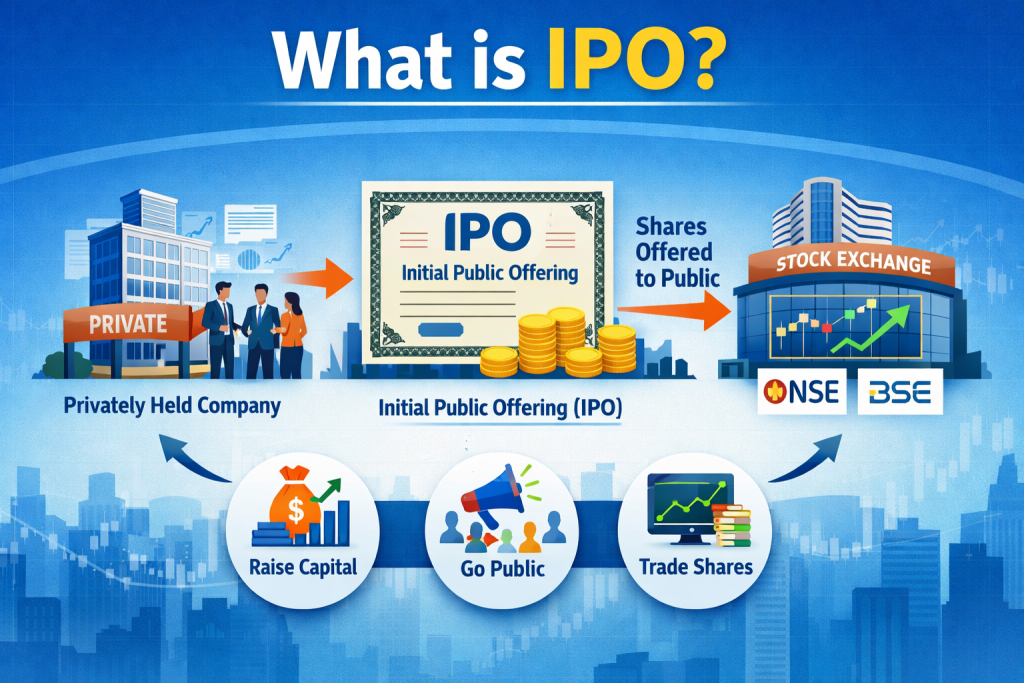










 ROI Calculator