What Is Media Management and Why Is It Important Today?
J
By Jaro Education
January 20, 20268 min read
Last updated on September 1, 2026
SHARE THIS ARTICLE
Table Of Content
What Is Social Media Management?
Types of Media Managed Today
Why Is Media Management Important Today?
Careers in Media Management
Media is one of the most powerful forms of communication today and the key to any brand’s success, especially with so many platforms available for companies to communicate their brand message through. Within the media world, the ability to produce high-quality content on many platforms is now easier than ever before. But simply producing high-quality content on one or more of these platforms will not ensure that a company will attract a target audience or remain competitive.
This is why media management has become such an essential part of a company’s communication strategy. With the right media management tools and techniques, organisations can manage their brand’s narrative, connect with their target markets, and remain competitive. It consists of several core components that ensure consistency and engage viewers. Thus, it is important for every organization to take full advantage of this new way to communicate effectively.
In this blog, we will cover the essential elements of media management, examples of different media types being managed today, the importance of media management, career opportunities, and what we can expect for the future of media management.
Social Media Management is the process of creating, scheduling, analysing, listening, and responding to the content you post on Social Media Sites (SMS). Social media management today represents one of the most critical components of media management.
While many people assume that managing social media means only posting updates to a Facebook account and responding only occasionally to comments. But the truth is, it entails developing a full social media management strategy aligned with your company’s overall business objectives.
A well-developed social media management strategy includes:
Generating interesting and relevant social media content appropriate for each platform.
Responding to user-generated content, both in the form of questions and comments, quickly.
Evaluating user engagement through monitoring follower counts and interactions.
Reviewing social media data and utilizing the information gathered to find ways to improve social media performance.
Creating social media campaigns to expand reach, generate traffic, drive conversions, and increase revenue.
Simply put, the focus of the management of social media is to interact with both current and potential customers to market and sell products/services and to create long-term brand loyalty.
Types of Media Managed Today
*slidegeeks.com
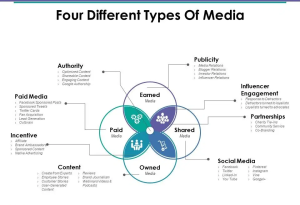
Modern media management spans a wide range of platforms and formats:
Digital Media: it is the foundation of modern communication. This includes websites, blogs, mobile apps, email marketing, SEO content, and online advertisements. Digital media helps brands share information quickly, track performance easily, and reach global audiences with minimal cost.
Social Media Platforms : Daily Digital Communication is heavily reliant upon Social Media Sources, such as Instagram, Facebook, LinkedIn, YouTube, and Twitter. Social Media requires brands to produce content regularly, manage active profiles, and respond to customers in real-time.
Paid Media: Visibility and conversion counts are the primary objectives of Paid Media Platforms. Brands can use paid media to target specific audiences quickly through sponsored advertisements, influencer partnerships,”display” ads, and paid search advertising programs. Brands most often find that paid media is most effective when launching new products, promoting products, and generating leads.
Owned Media: Owned Media comprises the brand’s platforms. These consist of the brand’s own websites, blogs, newsletters, and official social media pages. Brands own and control their own media, which makes Owned Media a key opportunity for story-telling, establishing thought leadership, and engaging with customers for an extended period of time.
Earned Media: Earned media comes from third-party sources, so it builds authority and trustworthiness for your business through use of third-party-created media or through sharing information by third parties (word-of-mouth).
Traditional Media: Even today, traditional types of media are integrated into digital marketing strategies for greater reach and to ensure companies have a consistent brand representation across various types of media. By incorporating traditional and digital media together into your overall media management strategy, your brand is able to maintain a strong presence online and offline.
Media management plays a crucial role in how organisations create, distribute, and evaluate content across multiple platforms. With the explosion of digital channels and constant content consumption, effective media management ensures that messages reach the right audience at the right time.Strong media management helps brands stay relevant, maintain consistency, respond quickly to trends, and measure engagement in real time. It also supports smarter decision-making and long-term growth.
Digital Transformation
The demand of digital content adoption shifts at rapid pace, and media management helps companies to support various platforms and formats while focusing on maintaining clear messages and creating relevance.
Data-Driven Strategies
The raw power of Analytics allows Media Managers to know what audiences want, how they like to be engaged, and what the overall trends are. This allows for the creation of targeted, impactful, and cost-effective campaigns.
Reputation and Branding
It can take only a moment for a company’s online reputation to change. Media Management allows for a consistent brand message to be portrayed and builds trust and credibility.
Content Proliferation
With millions of new posts being published every day, media management provides direction on how to make your brand stand out through creative storytelling and engagement.
Adapting to New Technologies
The rise of AI, Automation, and developing platforms is creating major disruptions in how consumers will consume Media. The best way to succeed in this new world is by implementing effective Media Management strategies.
Community Engagement
Through Media Management, companies are able to listen, respond, and interact with their customers and build stronger relationships.
Crisis Management
Media Managers are integral to helping brands maintain their brand image in times of controversy or negative publicity.
Careers in Media Management
Media management offers diverse and fast-growing career opportunities across industries:
1. Social Media Manager
A Social Media Manager manages a brand across different social media sites including Instagram, LinkedIn, X (formerly Twitter), Facebook and YouTube by creating content that will build a voice for the company, interact with customers, and increase the visibility of the company.
The responsibilities of a Social Media Manager include:
Creating and scheduling social media posts,
Managing customer comments/messages and audience interactions,
Monitoring social media trends and adjusting content strategy accordingly, and
Using social media metrics from each platform to analyze the effectiveness of the company’s social media marketing efforts.
2. Media Planner
A Media Planner helps to optimise the placement of digital, TV, print, and outdoor advertisement as well as scheduling the right time/amount of exposure for maximum effectiveness. They will combine their analytical skills with their creative side to identify effective advertising methods.
The responsibilities of a Media Planning includes:
Developing the overall strategy to reach,
Measure and evaluate the audience,
Identifying areas of opportunity (e.g., target market) and
Developing a detailed plan of action for implementing that strategy.
3. Digital Marketing Manager
The Digital Marketing Manager is responsible for overseeing everything online that will enhance our business’s brand exposure, increase lead generation, and help drive sales.This is accomplished by managing SEO, paid advertisement, email marketing, and social media.
The responsibilities of a Digital Marketing manager include:
Track the ROI on their campaigns and monitor performance metrics regularly.
Coordinate with the design, content, and media teams on all Digital Marketing activities.
4. Content Strategist
A Content Strategist is responsible for strategising content development while focusing on aligning content to the Business Goals of the organization through established methods.
Major Roles & Responsibilities:
Establish content calendars and develop messaging frameworks
Align content with the Brand Tone & Audience Needs
Support content creators (writers, designers, video producers)
Evaluate Content Performance and adjust content strategies based on results.
5. Brand Manager
A brand manager is accountable for creating and maintaining the brand’s identity across multiple channels and campaigns. Brand Manager Responsibilities include:
Defining the positioning and messaging of the brand;
Planning marketing and branding campaigns;
Providing a consistent message across all channels for the brand;
Conducting marketplace research, and using this insight to develop strategies for effectiveness.
6. Public Relations Manager
The PR Manager manages the reputation and public image of a brand, as well as how it communicates with its media, stakeholders, and the public.
The responsibilities of Public Relation Manager include:
Write and distribute press releases; interact with reporters/news media
Manage communication in times of crisis
Establish relationships with influencers and journalists
Media management’s future is rapidly changing, becoming more dynamic, and highly influenced by technology. Digital media’s growth will be more abundant; with tools that utilise AI & Automation for organizing content; creating content; distributing and measuring Content. Additionally, using AI analytics will create new opportunities for media professionals & allow for predicting Audience behaviour; Personalizing content; & enabling Data-based decision making at an incredible speed.Moreover, all-encompassing technology like Augmented Reality (AR & VR) will offer Brands an innovative way to tell their stories and connect with their Audience, creating even more engaging & unforgettable User Experiences (UX). Personalisation will no longer be optional, and all Audiences will expect Personalized content built around their preferences, interests, and behaviour.
For media professionals, having the ability to create creatively while thinking strategically and having strong Data Skills will be key to standing out in this changing landscape. Hence, Media Managers who understand technology as well as Audience Insights and possess excellent storytelling abilities will be highly sought after in future Media Management.
How an Online MBA Through Jaro Education Can Help
For professionals aiming to move into leadership roles in media management, an Online MBA in media management can be a powerful career accelerator. Specialisations in marketing, digital marketing, or media management help develop strategic, analytical, and managerial skills.
Jaro Education partners with top universities to offer industry-relevant online MBA programs. These programs provide flexible learning, real-world case studies, expert faculty, and career support, making them ideal for working professionals who want to grow in the media and communication domain.
Media management has become a necessary tool for organisation who want to be ahead in the competition. From content creation and analytics to community engagement and crisis handling, it plays a central role in shaping brand success. Organisations that invest in strong media management strategies are better equipped to adapt, grow, and stay competitive.
As the media landscape continues to evolve, skilled media managers will remain in high demand. With the right education, tools, and mindset, media management offers exciting career growth and long-term opportunities.
Frequently Asked Questions
Social media management focuses only on social platforms, while media management covers all media channels.
Yes, it offers creativity, growth, and strong career prospects.
Content strategy, analytics, communication, creativity, and crisis management.
Yes, it builds strategic and leadership skills needed for senior roles.
Get Free Upskilling Guidance
Fill in the details for a free consultation
Related Courses
Explore our programs
Digital Marketing: Business Models, Processes and Technologies

 January 20, 2026
 8 min read




 ChatGPT
 Perplexity
 Claude
 Grok
Grok *hotshothotelier.com
 *slidegeeks.com





 ROI Calculator




