Defining Hybrid Learning: A Blend of Flexibility and Structure
Evolution of Hybrid Learning Models in Professional Education in India
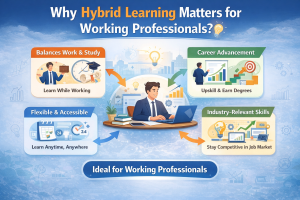
Why Hybrid Learning Matters for Working Professionals?
Industry-Relevant Curriculum in Hybrid Degrees
In today’s fast-changing job market, continuous learning is essential. As industries change due to digital innovation, automation, and global competition, professionals must regularly update their skills to stay relevant. This need for flexibility and career-focused education has led to the development of Hybrid Learning Models in India, which blend traditional classroom teaching with digital learning methods.
Hybrid learning offers a balanced yet adaptable educational structure that lets students mix online courses with face-to-face interactions. Unlike traditional full-time education, this model accommodates work commitments while maintaining academic standards. In India, blended learning and hybrid degrees are becoming more popular among universities, corporate training institutions, and executive education providers to meet the needs of today’s workforce.
As professionals look for education that addresses real-world issues, Hybrid Learning Models in India have emerged as a strong tool for career advancement, leadership growth, and long-term job security.
Defining Hybrid Learning: A Blend of Flexibility and Structure
At its core, hybrid learning is a teaching method that combines in-person classroom interactions with online learning. This mix allows learners to benefit from personal mentorship, peer collaboration, and hands-on experiences while enjoying the convenience of digital access.
In India, blended learning often includes recorded lectures, live virtual sessions, online tests, and discussion forums. It also features occasional on-campus workshops, lab sessions, or immersion programs. These elements are designed to meet industry expectations and professional learning goals.
Hybrid degrees offered by top institutions have the same academic credibility as traditional programs, while providing more flexibility. For working professionals, this method reduces career disruption and increases skill development. The rise of Hybrid Learning Models in India shows a move toward student-centered education that values both accessibility and quality.
Evolution of Hybrid Learning Models in Professional Education in India
India’s education system has changed significantly over the last decade. With more internet access, better digital infrastructure, and supportive regulations, Hybrid Learning Models have become popular across various sectors.
Professional education, especially in management, technology, healthcare, and analytics, has adopted blended learning as a viable alternative to full-time programs. Regulatory bodies like UGC and AICTE have recognized the benefits of hybrid and online education, adding credibility to hybrid degrees.
For working professionals, this shift addresses ongoing challenges like limited time, geographic barriers, and financial obligations. By combining digital learning with structured academic engagement, hybrid learning has transformed how professionals improve their skills in a competitive economy.
Why Hybrid Learning Matters for Working Professionals?
Balancing Career Growth and Education Through Blended Models in India:
One of the biggest benefits of Hybrid Education Framework is their support for career continuity. Working professionals often face a tough choice between furthering their education and keeping their career on track. Hybrid learning solves this problem by allowing learners to study while continuing their jobs.
With blended learning, professionals can access course materials, attend live sessions, and complete assignments at flexible times. This approach helps to integrate learning into daily life, which makes education sustainable over time.
In addition, hybrid degrees focus on practical application. This allows learners to quickly use their new knowledge in their jobs. This immediate blend of learning and practice improves both academic results and work performance.
Another reason hybrid learning matters is its close connection to industry needs. Unlike traditional academic programs, Blended Academic Models India often develops their courses with input from industry experts. This ensures that the curriculum is relevant and can be applied in real situations.
Blended learning environments allow institutions to regularly update their course content. They can include emerging trends like artificial intelligence, digital marketing, data analytics, and strategic management. This flexibility helps keep hybrid degrees relevant and in line with changing job roles.
For professionals looking for leadership or specialized knowledge, hybrid learning provides a curriculum that mixes theoretical concepts with real-world case studies, simulations, and projects.
Flexibility Without Compromising Academic Excellence
Many people mistakenly believe that flexible learning lowers quality. However, Hybrid Learning Models in India aim to maintain high academic standards while providing convenience.
In blended learning setups, online elements come with structured assessments, faculty interaction, and peer engagement. Regular in-person sessions promote hands-on learning, teamwork, and networking.
Hybrid degrees from respected institutions follow the same evaluation criteria, faculty qualifications, and accreditation standards as traditional programs. For working professionals, this allows them to earn a respected qualification without giving up educational quality.
Improving Skill Development Through Blended Learning
Skill development is key to professional success. Blended learning is important for ongoing upskilling. Hybrid programs focus on both technical and soft skills, such as leadership, communication, strategic thinking, and decision-making.
With Blended learning approach, professionals can use digital tools, simulations, and collaborative platforms to improve their learning outcomes. Online modules allow for self-paced exploration, while in-person sessions promote discussion, mentorship, and hands-on learning.
This combined approach ensures that hybrid degrees create well-rounded professionals ready to tackle complex business challenges.
Accessibility and Inclusivity in Hybrid Learning Models in India
India’s diverse workforce covers many regions, industries, and career stages. Hybrid Learning Models in India tackle this diversity by providing high-quality education beyond major cities.
With blended learning, professionals in Tier II and Tier III cities can take programs from top institutions without having to move. This access makes education more equitable and increases job opportunities across different areas.
Furthermore, hybrid degrees promote inclusivity by accommodating professionals with different schedules, responsibilities, and learning styles. This flexibility makes hybrid learning a fair and sustainable education model.
Technology as a Catalyst for Hybrid Learning Success
Technology is essential for the success of Hybrid Learning Models in India. Learning management systems, AI-driven analytics, and virtual collaboration tools improve the learning experience for working professionals.
In blended learning settings, technology allows for personalized learning paths, tracks progress, and provides continuous feedback. Virtual classrooms create interactive learning experiences. Digital assessments promote transparency and consistency.
For hybrid degrees, technology supports scalability without sacrificing quality, making professional education more efficient and effective.
Employer Recognition and Career Advancement
Employers have increasingly accepted hybrid degrees. Organizations recognize the discipline, time management, and practical skills shown by professionals who pursue education while working.
Hybrid Learning Models in India are often seen as signs of initiative, flexibility, and a commitment to lifelong learning. Employers appreciate professionals who can manage their responsibilities while gaining new skills.
Additionally, blended learning programs often feature industry projects, internships, and capstone assignments that directly improve employability and career growth.
Hybrid Learning Models vs Traditional Learning
While traditional education is important, it often doesn’t provide the flexibility that modern professionals need. Hybrid Learning Models in India offer a more dynamic option by combining structured learning with adaptability.
Unlike full-time classroom programs, blended learning allows professionals to manage the pace and timing of their education. Compared to fully online programs, hybrid degrees offer deeper engagement through face-to-face interaction.
This balanced approach ensures well-rounded learning outcomes, making hybrid education especially suitable for mid-career professionals and aspiring leaders.
The Future of Professional Education Through Hybrid Degrees
As industries evolve, the need for flexible, skill-based education will keep growing. Hybrid Learning Models in India are set to become the norm for professional and executive education.
With technology advancing and more support from institutions, blended learning will keep changing, providing more personalized and engaging experiences. Hybrid degrees will be important for closing skill gaps and getting professionals ready for leadership roles in a global economy.
For working professionals, hybrid learning is not just an educational option; it is a smart investment in long-term career growth.
Strategic Value of Hybrid Learning Models in a Competitive Job Market
As competition in the job market gets tougher, professionals are evaluated not just on their experience but also on their ability to learn and lead in changing environments. Hybrid learning models in India provides an advantage by allowing continuous professional development without interrupting careers. This model supports professionals who must keep their skills in line with changing organizational needs and technological progress.
Through blended learning, professionals access content that meets global standards while remaining relevant to the Indian market. The mix of digital instruction and in-person engagement helps learners deepen their understanding and strengthen their practical decision-making skills. As a result, hybrid degrees provide professionals with skills that are immediately useful in real business situations.
Another important benefit of professional hybrid format is their focus on measurable outcomes. Many programs include performance-based assessments, real-time case studies, and industry-driven projects that address current market challenges. In blended learning settings, professionals get continuous feedback, allowing them to improve their skills over time instead of just relying on final exams. This outcome-focused approach boosts both learning retention and workplace effectiveness.
From an organizational viewpoint, employers increasingly support employees pursuing hybrid degrees because of the clear return on investment. Professionals trained through Hybrid Learning Models India show better strategic thinking, leadership abilities, and collaboration skills. These traits contribute directly to organizational flexibility and long-term growth.
Moreover, blended learning promotes a culture of lifelong learning, encouraging professionals to see education as an ongoing process rather than a one-time event. As industries become more dynamic, this mindset is essential for staying relevant in careers. By opting for hybrid degrees, professionals show they are ready to grow alongside industry demands, making themselves valuable assets in competitive and innovative workplaces.
Conclusion: Why Hybrid Learning Is the Smart Choice for Working Professionals
In a time of constant change, flexibility is the most valuable skill for professionals. Professional hybrid formats help working individuals stay competitive without hurting their careers. By combining flexibility, strong academics, and relevance to the industry, hybrid learning offers a modern way to pursue education.
With blended learning, professionals take charge of their own learning paths while still receiving structured support and practical experience. Institutions and platforms like Jaro Education further strengthen this model by partnering with reputed universities and delivering structured hybrid programs tailored for working professionals. Hybrid degrees provide recognized qualifications that meet changing industry needs.
In the end, hybrid learning is not just a response to current challenges; it is a forward-thinking approach that reshapes professional development, continuous learning, and career success in India’s dynamic economy.
Frequently Asked Questions
Hybrid learning is an educational approach that combines online instruction with in-person classroom interaction. This method offers flexible and organized learning experiences. In Hybrid Learning Model, it supports blended learning formats and officially recognized hybrid degrees for working professionals.
The hybrid working method merges remote work with in-office collaboration. This setup allows professionals to find a balance between productivity and flexibility. It closely connects with Hybrid Learning Models, where blended learning and hybrid degrees support ongoing skill development while meeting professional obligations.
The main benefits of hybrid learning are flexibility, accessibility, and relevance to the industry, all without sacrificing academic quality. Hybrid Learning Models enables professionals to improve their skills while keeping their careers on track.
The 5 C’s of hybrid working are Communication, Collaboration, Connectivity, Culture, and Continuity. These principles fit well with Hybrid Learning Models, where blended learning and hybrid degrees encourage structured engagement, digital access, and sustainable career growth.
Shubham Lal
Lead Software Developer
Shubham Lal joined Microsoft in 2017 and brings 8 years of experience across Windows, Office 365, and Teams. He has mentored 5,000+ students, supported 15+ ed-techs, delivered 60+ keynotes including TEDx, and founded AI Linc, transforming learning in colleges and companies.
 HOME > BLOG > Career Development > What Is Hybrid Learning & Why It Matters for Working Professionals
 February 26, 2026
 8 min read





 ChatGPT
 Perplexity
 Claude
 Grok
Grok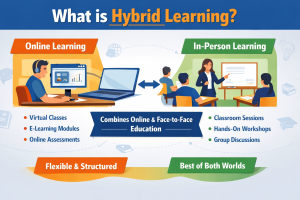


 Admission Open

 Admission Closed
 ROI Calculator