HOME > BLOG > Finance > What is Financial Modeling? Step-by-Step Beginner’s Guide
Finance
What is Financial Modeling? Step-by-Step Beginner’s Guide
J
By Jaro Education
November 29, 20258 min read
Last updated on September 2, 2026
SHARE THIS ARTICLE
Table Of Content
What is Financial Modeling?
Why is Financial Modeling Important?
Key Objectives of Financial Modeling
Core Elements of a Financial Model
In today’s data-driven and competitive business environment, financial modeling has become one of the most crucial skills for finance professionals, entrepreneurs, and analysts. Whether you’re evaluating a business idea, planning an investment, or analyzing company performance, understanding what financial modeling is a game-changer. For those starting their journey, mastering financial modeling for beginners lays the foundation for better decision-making, forecasting, and valuation.
This complete tutorial takes you through financial modeling step by step, explaining its application, elements, and real-world applications — even if you have no experience.
Let’s get back to the fundamentals — what is financial modeling, anyway? Simply put, financial modeling is a process of building a representation (most commonly in Excel) of a company’s financial performance. It synthesizes historical information, assumptions, and projections to estimate future financial results. A financial model is a decision-making instrument used by firms to project revenues, costs, profits, and cash flows. Investment bankers, financial analysts, and corporate strategists extensively employ it to examine “what-if” situations.
Financial modeling enables you to model alternative business scenarios and observe the impact of changes in sales, costs, or investments on overall profitability. It is thus an invaluable tool for contemporary financial planning and analysis.
Why is Financial Modeling Important?
Financial modeling is important because it simplifies complex financial decisions. Whether you’re looking at mergers, launching new products, or raising capital, a solid financial model offers clarity and confidence.Businesses use financial modeling to help beginners understand how different financial components relate, including revenue growth, margins, operating costs, and investment returns. Investors and stakeholders depend on these models to evaluate business viability and make informed choices.
In short, financial modeling converts raw data into useful insights. It connects financial theory with real-world application, making it one of the most valuable skills in finance and business strategy.
Before we dive deeper, let’s look at the main objectives of financial modeling:
Forecasting Future Performance:
A well-constructed financial model helps predict a company’s financial future based on assumptions about revenue growth, costs, and market trends.
Business Valuation:
Financial modeling allows analysts to estimate the true value of a business using tools like DCF (Discounted Cash Flow).
Scenario and Sensitivity Analysis:
With financial modeling, you can examine how different assumptions, such as sales volume or changes in pricing, affect profitability.
Decision-Making Tool:
It supports strategic decisions like funding, expansion, or restructuring by providing a data-driven outlook.
For those learning financial modeling, understanding these objectives helps clarify why models are crucial in both corporate finance and investment analysis.
Core Elements of a Financial Model
A financial model has interdependent elements that form the financial story of a business. The following are the key elements you need to grasp while learning financial modeling for beginners:
Historical Data:
Start with the historical financial statements of the company — income statement, balance sheet, and cash flow statement. This information is the foundation for assumptions.
Assumptions:
Financial modeling relies on assumptions such as sales growth rate, operating margins, and capital expenditure. These inputs trigger the model’s projections.
Forecasting:
Based on your assumptions, you forecast future revenues, expenses, and profits. This is where the heart of financial modeling occurs — translating data into actionable forecasts.
Financial Statements:
The model must refer to three key statements — the income statement, balance sheet, and cash flow statement — and ensure they are balanced and consistent.
Valuation Metrics:
To those learning what financial modeling is, it is important to know valuation metrics such as NPV (Net Present Value), IRR (Internal Rate of Return), and ROI (Return on Investment).
Having a good understanding of these elements guarantees your financial modeling process is both systematic and accurate.
Free Courses
Finance for All – Free Finance Certification Course
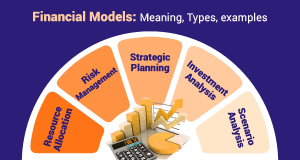
span style=”font-weight: 400;”>There are a number of different financial modeling methods for various business situations. For starters, these are the most popular models you need to know:
*IIFL Finance
1. Three-Statement Model:
The starter for financial modeling for beginners, this model integrates the income statement, balance sheet, and cash flow statement into a single combined projection.
2. Discounted Cash Flow (DCF) Model:
Perhaps the most widely used type of financial model, it estimates a company’s worth by projecting free cash flows and discounting them to the present.
3. Budget Model:
Applied by businesses to budget and track financial performance within a stated timeframe. An excellent first step in financial modeling for beginners.
4. Merger and Acquisition (M&A) Model:
Designed to evaluate the financial effects of a company acquiring another. This sophisticated finance model will calculate synergies and value of a deal.
5. Initial Public Offering (IPO) Model:
Aids in determining the possible valuation and stockprice of a company intending to go public.
All these types of financial models have a different purpose, but they have one thing in common — financial data analysis to aid in making intelligent business decisions.
Step-by-Step Process of Building a Financial Model
Creating a financial model may seem complicated, but a clear approach makes it easier. Here’s a step-by-step guide designed for beginners in financial modeling:
Step 1: Define the Purpose
Before you begin, clarify what you want to achieve with your financial model. Are you valuing a business, predicting revenue, or assessing an investment?
Step 2: Gather Historical Data
Collect financial statements for at least three to five years. Historical data helps reveal growth patterns and financial trends, which are essential for financial modeling.
Step 3: Make Key Assumptions
Establish assumptions for future performance, such as growth rate, cost structure, and working capital needs. Every financial model relies on these assumptions.
Step 4: Project the Financial Statements
Link your assumptions to future projections. Create forecasted income statements, balance sheets, and cash flows. This step is crucial for beginners in financial modeling.
Step 5: Analyze Ratios and KPIs
Incorporate financial ratios like profit margins, debt-to-equity, and return on assets to evaluate business performance in your financial model.
Step 6: Perform Scenario and Sensitivity Analysis
Assess how changes in variables impact results. This part of financial modeling allows for informed decision-making in uncertain situations.
Step 7: Validate and Review
Make sure your model balances, that formulas are correct, and projections are reasonable. In financial modeling, making sure everything is accurate and clear is essential.
By following these steps, even newcomers to financial modeling can create solid models ready for decision-making.
Best Practices for Effective Financial Modeling
Building a model involves more than just formulas; it requires clarity, structure, and insight. For those starting in financial modeling, the following best practices ensure quality and trustworthiness:
Keep it Simple:
Don’t complicate your financial model with unnecessary details. Focus on the main drivers.
Maintain Transparency:
Use clear labels, color coding, and documentation so anyone reviewing your financial model can understand your logic.
Use Consistent Assumptions:
Ensure assumptions are aligned throughout your model for consistent financial modeling results.
Validate Results Frequently:
Regularly check your calculations to catch errors. Accuracy is crucial in financial modeling.
Scenario Planning:
Always create multiple scenarios (best, base, worst). This helps you see how well your financial model can handle uncertainty.
By applying these techniques, you can gain confidence in your financial modeling skills while ensuring your model provides real value to the business.
Common Financial Modeling Mistakes for Beginners
It’s simple to make mistakes as a beginner in financial modeling that can undermine the validity of your financial model. Below are some traps to shun:Neglecting the Purpose: Always keep your model in line with its purpose — valuation, budgeting, or forecasting.
Incorrect Linking: All financial statements have to be properly linked. Broken links can skew results in financial modeling.
Unrealistic Assumptions: Unrealistically high growth rates or cost structures can render your financial model useless.
Insufficient Documentation: In the absence of proper notes, other people will not be able to easily interpret your financial modeling.
By avoiding these errors, your model will stay realistic, logical, and reliable.
Data Applications of Financial Modeling in the Real World
Financial modeling is extremely useful across various business functions. Some of its most widespread uses include:
Investment Analysis:
Analysts apply financial models to estimate stock, bond, and startup valuations for investment purposes.
Corporate Finance:
Companies use financial modeling for forecasting, budgeting, and considering strategic projects.
Banking and Private Equity:
Financial modeling assists in M&A analysis, LBO analysis, and deal structuring in banking.
Entrepreneurship and Startups:
Startups apply financial modeling for novices to gain investors’ attention and predict future funding requirements.
Performance Management:
Companies monitor KPIs and performance against projections with the help of financial models.
Whether you’re looking to become an analyst or are the owner of a business, knowing what financial modeling provides you with a skill that informs wiser financial decision-making.
Starting with financial modeling doesn’t require a finance degree; you just need curiosity and practice. Here’s how to begin your learning journey:
1. Learn Excel Fundamentals
Excel is the backbone of financial modeling, so master functions, formulas, and shortcuts.
2. Understand Financial Statements
Learn how to read and interpret income statements, balance sheets, and cash flow statements.
3. Take a Financial Modeling Course
Enroll in online programs for beginners that provide hands-on case studies and templates.
4. Practice Real-World Cases
Try building models for publicly listed companies. This strengthens your understanding of financial modeling in real business situations.
5. Seek Feedback and Improve
Review models built by others, compare approaches, and refine your own financial modeling techniques.
Consistent practice and curiosity are the keys to mastering financial modeling for beginners.
Conclusion: The Power of Financial Modeling in Decision-Making
So, what is financial modeling really about? It’s more than just numbers; it’s about storytelling with data. A well-structured financial model shows how a business grows, evolves, and sustains itself under different conditions.
For those just getting started, a firm understanding of financial modeling will open the door to numerous experiences in investment banking, corporate finance, consulting, and entrepreneurship. Financial modeling provides the ability to generate strategic conclusions from financial data.
In a world where every decision counts, mastering financial modeling can help you stand out as a data-driven professional capable of shaping smarter financial outcomes. Whether you’re forecasting revenues or evaluating investments, financial modeling will always be your strongest analytical ally.
Frequently Asked Questions
The benefits of financial modeling include accurate forecasting, better business planning, and improved decision-making. With financial modeling, companies can assess risks, evaluate investments, and optimize financial performance.
Yes, financial modeling is a very useful skill for finance professionals, entrepreneurs, and analysts. It helps with data-driven decisions and allows you to understand the financial impact of strategic choices.
The value of financial modeling is in its ability to predict future performance, analyze investments, and support strategic growth. Businesses use financial modeling to gain insights that guide important financial and operational decisions.
While SAP is a software system for managing enterprise operations, financial modeling focuses on analyzing and forecasting financial data. For strategic planning and valuation, financial modeling provides deeper insights into financial performance.
Get Free Upskilling Guidance
Fill in the details for a free consultation
Related Courses
Explore our programs
Advanced Programme in Financial Technologies and Financial Analytics

 November 29, 2025
 8 min read





 ChatGPT
 Perplexity
 Claude
 Grok
Grok










 ROI Calculator



