
MongoDB Explained: Benefits, Features, etc.
 April 8, 2025
 5 min read





Table Of Content
- NoSQL Databases and MongoDB
- Top MongoDB Advantages Over MySQL
- Advantages of MongoDB
- Key Features of MongoDB
In the world of databases, MongoDB has emerged as a powerful and flexible solution for managing large datasets. Unlike traditional relational databases, MongoDB is a document-oriented NoSQL database that provides a scalable and schema-less approach to data storage. With its robust features and easy scalability, MongoDB has gained popularity among developers and organisations seeking efficient and flexible data management solutions.
If you want to revamp your professional life in the rapidly growing sector of Data Analytics and gain knowledge about various databases, the Adani Institute of Digital Technology (AIDTM) will offer you ample opportunities to do so. This course offers an industry-driven one-year Executive Program in Business Analytics (EPBA). Through this program, you get to interact with well-known industry experts and academics. Plus, this business analytics online course offers an unparalleled and flexible learning experience to people with personal and professional commitments.
 ChatGPT
 Perplexity
 Claude
 Grok
GrokNoSQL Databases and MongoDB
Top MongoDB Advantages Over MySQL
1. Flexible Schema Structure
One of the most salient advantages of MongoDB is its extremely flexible schema. In direct contrast to MySQL’s very strict table-based structure, MongoDB natively supports dynamic, document-based storage. This flexibility makes schema changes fast and effortless, clearly showing major MongoDB benefits over MySQL for evolving applications.
2. High-Speed Performance for Large Data
Another clear advantage of MongoDB is its ability to handle high-volume data at superior speed. The architecture of MongoDB eliminates heavy join operations and deploys efficient indexing for faster reads/writes. The resulting performance edge forms one of the strongest MongoDB advantages over MySQL for real-time and data-driven platforms.
3. Effortless Horizontal Scalability
When it comes to scaling, MongoDB’s advantages become even more apparent. MongoDB natively supports auto-sharding, so applications can horizontally scale across many servers. MySQL doesn’t do that well, making MongoDB’s advantages far superior for enterprise-level and cloud-native workloads.
4. Better Handling of Unstructured Data
MongoDB does an excellent job in persisting semi-structured and unstructured data without complicated transformations. A big plus for MongoDB against MySQL when talking about IoT, analytics, and big data applications is the need for flexibility in formats.
5. Optimized for Modern Applications
Basically, all the advantages of MongoDB—flexibility, speed, scalability, and document-oriented storage—together tend to highlight obviously why stronger MongoDB advantages exist compared to MySQL for modern digital ecosystems.
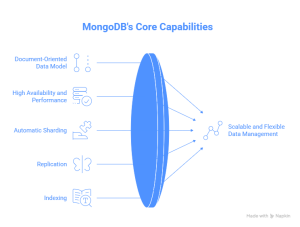





Advantages of MongoDB
MongoDB offers a multitude of advantages which are the highlight of this section.
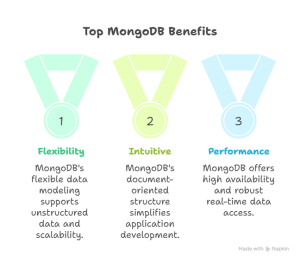
1. Unmatched Schema Flexibility
Perhaps the biggest advantage of MongoDB is its ultra-flexible, schema-less structure. While traditional databases lock you into rigid tables, MongoDB enables you to evolve your model of data instantly. It is this dynamic structure that makes it one of the most celebrated advantages of MongoDB, enabling businesses to update fields, add data, and transform schemas without any kind of downtime.
2. Blazing-High Performance
A major advantage of MongoDB is its phenomenal speed. Its document-based architecture and in-memory capabilities mean lightning-fast read/write performance. This is where the MongoDB advantages truly shine: handling huge volumes of real-time data without slowing down, even under extreme workloads.
3. Scale Effortlessly
Extraordinary scaling makes the advantages of MongoDB even more apparent. Via horizontal scaling and auto-sharding, MongoDB can grow from thousands to billions of records easily. This scalability-first design is one of the strongest MongoDB advantages for large enterprises.
4. Developer-Friendly Structure
Among the most practical advantages of MongoDB is its simplicity for the developer. Its JSON-like documents make it easier to code faster and cleaner, more intuitively. A critical aspect, this developer-centricity lies at the root of the MongoDB advantages, accelerating innovation and bringing down development time dramatically.
5. Perfect for Modern Applications
Among the top advantages of MongoDB, its capability for powering high-performance, cloud-based, AI-driven, and IoT applications stands out. It can handle unstructured data like a powerhouse—another reason the MongoDB advantages make it future-ready.
Key Features of MongoDB
MongoDB offers rich features that enhance data management and application development. Some key features include:
- Flexible Document Model: MongoDB’s document-oriented data model allows you to represent complex hierarchical relationships in a single document, reducing the need for complex joins and improving query performance.
- High Performance: MongoDB’s architecture and indexing capabilities enable fast data retrieval, making it suitable for real-time data access applications.
- Aggregation Framework: With a robust aggregation framework, MongoDB allows you to perform complex data transformations and analysis on large datasets.
- Geospatial Capabilities: Geospatial indexing and queries are supported by MongoDB, making it an excellent choice for applications that involve location-based data.
MongoDB Security
MongoDB Community and Ecosystem
Conclusion
MongoDB offers a versatile and robust solution for managing data in modern applications. Its flexible schema, scalability, and performance optimisation capabilities make it an excellent choice for developers and organisations with diverse and evolving data requirements. By understanding their benefits and features, you may use MongoDB tutorials to construct robust, scalable, and efficient apps.
To have an effective journey in learning MongoDB and other databases, be a part of the Executive Program on Business Analytics (EPBA) offered by AIDTM. Take your career in business analysis to new heights by pursuing this intake through Jaro Education and successfully materialise a promising route in data science and cutting-edge analytics. This program will give an unparalleled and adaptable educational experience while reducing disturbance to working professionals.
Frequently Asked Questions

Related Courses
Explore our programs



Find a Program made just for YOU
We'll help you find the right fit for your solution. Let's get you connected with the perfect solution.

Is Your Upskilling Effort worth it?
 ROI Calculator

Are Your Skills Meeting Job Demands?
Try our Skill Gap tool
Experience Lifelong Learning and Connect with Like-minded Professionals
Explore Jaro Connect
