How to Create a SWOT Analysis: Example and Step-by-Step Guide
J
By Jaro Education
January 22, 202610 min read
Last updated on September 11, 2026
SHARE THIS ARTICLE
Table Of Content
Components of SWOT Analysis
SWOT Analysis Components Table
How to Do a SWOT Analysis
SWOT Analysis Examples
A SWOT analysis is a powerful strategic planning framework that aids businesses to recognise the internal strengths, weaknesses, along with external opportunities, and threats that significantly impact the growth of an organisation and long term goals.
Typically, a SWOT analysis is presented in a simple four-quadrant grid, each section representing one of the core elements. This structure makes it easy to visualize insights and turn them into actionable strategies.
There is no fixed format of creating SWOT analysis examples, it can be in digital document format, or a post, or even can be written on a whiteboard. No matter the preferences, it still remains one of the most effective tools for creating an insightful strategy.
When people hear “SWOT analysis,” they often imagine something very formal or corporate. In reality, it’s just a way of sitting down and taking an honest look at your situation. Nothing fancy. No jargon required. The framework simply asks you to think about four areas that quietly influence every decision you make, whether you’re running a business, planning your career, or figuring out your next move in life.Two of these areas come from within. The other two come from the world around you. And together, they create a surprisingly clear story.
*businessballs.com
Strengths
S in SWOT stands for strength which is an internal factor that works in your favour. They’re the reasons you’ve made progress so far.
For a business, strength is all about company advantage over its competitors. It can be a hard working team, strong distributed network, strong brand loyal customers, etc
For an individual, strengths can be less obvious but just as powerful, good communication, the ability to adapt, self-discipline, or even the habit of showing up every day and doing the work.
Most people underestimate their strengths because they feel “normal.” But what comes easily to you often doesn’t come easily to others. That’s why identifying strengths matters.
Weaknesses
W in SWOT stands for Weaknesses. Weaknesses are also an internal factor that prevent a company or an individual from performing at its optimum level.
In businesses, weakness can be a weak brand, outdated systems, limited resources, high level of debts, inadequate supply chain, and many more. Awareness of these weaknesses can help management to take necessary actions and improve organizations performance and readiness simultaneously.
On the other hand, for individuals, weaknesses might be procrastination, lack of confidence, poor time management, or avoiding difficult conversations.
Opportunities
O in SWOT stands for Opportunities. It is an external factor that gives an organisation and individual a competitive advantage.
For businesses, opportunities can be new trends, new tools, shifting customer needs, or even unexpected situations that open doors to grow them. Also, businesses might find opportunities in new markets or emerging technologies.
For individuals, opportunities can be online learning, career pivots, networking, or roles that didn’t exist a few years ago.
The catch? Opportunities don’t announce themselves loudly. You usually have to pay attention, and act before they pass.
Threats
T in SWOT stands for Threats. It is an external factor that prevents your company or an individual from development or being successful.
For businesses, this could be rising competition, economic uncertainty, changing regulations, or rapid technological shifts. For individuals, threats might look like job instability, burnout, or skills becoming outdated over time. Being aware of threats doesn’t mean living in fear. It simply means you’re prepared. And preparation gives you options.
A SWOT analysis isn’t something you rush through in one sitting or treat like a checklist. When done properly, it feels more like a thinking exercise than a business tool. It’s about slowing down, asking the right questions, and being honest in every situation. Whether you’re doing this for a business decision, a career move, or personal growth, the steps are simple. The value comes from how seriously you take them.
Step 1: Know What You’re Trying to Figure Out
Before you start writing anything, pause and ask yourself one basic question: Why am I doing this?
Maybe you’re unsure about launching a new product. Maybe growth has stalled and you don’t know why. Or maybe you’re at a crossroads in your career. Whatever the reason, be clear about it.
When your purpose is clear, your thoughts stay focused. Without that clarity, a SWOT analysis quickly turns into random observations that don’t lead to any real decision.
Step 2: Look Around and Gather Inputs
No SWOT analysis exists in isolation. Some insights will come from numbers such as sales reports, feedback, performance data. Others will come from conversations, experience, and gut feeling.
If you are performing SWOT analysis for your organisation, don’t do it alone. Work with the right combination of personnel and involve them in analysis. This is because there may be some staff who are more connected to external factors, while others working within organizations in sales or manufacturing departments may have a better understanding of what’s going inside.
The more viewpoints you include, the more grounded the analysis becomes.
Step 3: Put Everything on the Table
This is where you write freely. Strengths, weaknesses, opportunities, threats, list them without overthinking.
Potential questions to list internal factors are:
(Strength) What are we doing well?
(Strength) What’s our strongest asset?
(Weakness) What are our detractors?
(Weakness) What are our lowest-performing product lines?
In fact, external factors are equally important as internal factors. Some of the potential questions you should ask are:
(Opportunity) What trends are evident in the marketplace?
(Opportunity) What demographics aren’t we targeting?
(Threat) How many competitors exist, and what’s their market share?
(Threat) Are there new regulations that potentially could harm our operations or products?
One may consider this step as a whiteboard or sticky note session. There is no write or wrong answer, every participant is required to share their ideas, put up their questions they have. The goal is to come up with as many items as possible to invoke creativity and inspiration in others.
Step 4: Refine Findings
Now it’s time to clean up the ideas. By refining the thoughts that every participant has shared, the goal should only be to be focused on the best ideas or keep what truly matters.
This part often leads to reflection and discussion. Sometimes it even challenges assumptions you didn’t realize you were making. That’s a sign the process is working.
Step 5: Develop the Strategy
At last, convert the SWOT analysis into a strategic plan. Analysis team members take the bulleted lists within each category and create a combined plan that directs the original objective. For instance – the company is debating whether their new product is having an opportunity to expand in the market cost or not. However, the requirement of resources, involvement of team members, and unexpected high product demand mau outweigh the strength and opportunities,
Understanding the theory of SWOT analysis is important, but its real value becomes clear when you see how it works in real-life situations. The following SWOT analysis example shows how it can be applied across different contexts, businesses, companies, students, and individuals to gain clarity, opportunities, and make smarter decisions.
SWOT Analysis Example for Business
Example: A Small Digital Marketing Agency
This SWOT analysis example business is about a small digital marketing agency typically operates in a fast-paced and competitive environment. Conducting a SWOT analysis helps the agency understand where it stands and how it can grow sustainably.
Strengths The agency’s biggest advantage lies in its skilled creative team. Designers, content writers, and performance marketers work closely to deliver customized campaigns rather than one-size-fits-all solutions. Strong relationships with existing clients lead to repeat business and referrals. Additionally, a proven track record of successful campaigns builds credibility and trust in the market.
Weaknesses Despite its strengths, limited manpower restricts the agency’s ability to take on multiple large projects at once. Scaling quickly can strain existing resources and impact quality. Dependence on a small number of high-value clients also creates financial risk, losing even one major client could significantly affect revenue.
Opportunities The growing demand for digital marketing services presents clear expansion opportunities. Businesses are increasingly investing in social media advertising, content marketing, SEO, and performance-driven campaigns. The agency can introduce new services, target niche industries, or expand geographically through remote delivery models.
Threats Competition is intense, with large agencies offering bundled services and freelancers providing low-cost alternatives. Rapid changes in digital platforms and algorithms also require constant upskilling and adaptation.
SWOT Analysis of a Company
SWOT analysis example: A Mid-Sized Manufacturing Company
Through this SWOT analysis of a company example, we will see how manufacturing companies can balance operational realities with long-term strategy.
Strengths The company benefits from long-standing supplier relationships, ensuring consistent access to raw materials. Its reputation for reliable product quality has earned customer trust. An experienced workforce adds operational stability and deep industry knowledge.
Weaknesses Outdated machinery limits production efficiency and increases operational costs. Slow adoption of automation affects competitiveness and makes it harder to meet growing demand.
Opportunities There is rising market demand for sustainable and eco-friendly products. Government incentives and subsidies for modernization and automation present a chance to upgrade infrastructure at lower cost.
Threats Increasing raw material prices reduce profit margins. At the same time, cheaper imports from competitors create pricing pressure.
SWOT Analysis Example for Students
SWOT analysis example: College Student Preparing for Placements
This SWOT analysis examples for students show how they can prepare effectively for career opportunities:
Strengths A strong academic foundation shows consistency and discipline. Problem-solving ability and a structured approach to learning add to employability.
Weaknesses Limited hands-on experience can make it harder to apply theoretical knowledge in real-world situations. A lack of interview confidence may also affect performance during placements.
Opportunities Internships, online certification courses, workshops, and campus placement training programs provide chances to gain practical skills and exposure.
Threats High competition from peers and rapidly changing industry requirements increase pressure to stay updated.
Personal SWOT Analysis Example
SWOT analysis example: Working Professional Seeking Career Growth
A personal SWOT analysis example supports informed career planning and self-improvement.
Strengths Strong communication skills enable effective collaboration. Adaptability and a willingness to learn help navigate changing work environments.
Weaknesses Managing time during high-pressure situations can be challenging, affecting productivity and work-life balance.
Opportunities Leadership development programs, professional networking, and flexible or remote work opportunities can accelerate career growth.
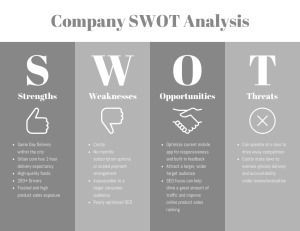
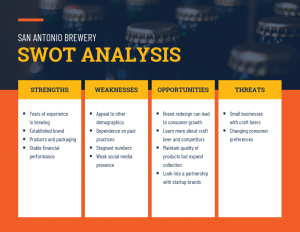
This type of template helps you to understand the competitive landscape, customer preferences and market trends, allowing companies to make the right decisions about any product development.
*venngage.com
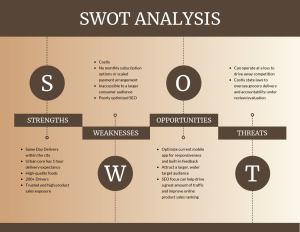
Marketing SWOT Analysis Template
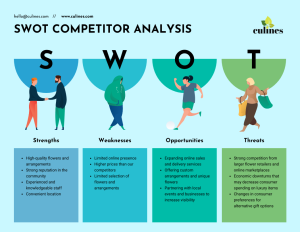
This template represents marketing SWOT Analysis to help you make decisions and gain a competitive advantage.
*venngage.com
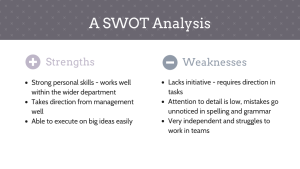
Personal SWOT Analysis Template
A Personal SWOT analysis template is a powerful tool for self-assessment and growth. Here’s a personal SWOT analysis template to get started.
*venngage.com
Nonprofit SWOT Analysis Template
Nonprofit organizations can greatly enhance their strategic planning by utilizing SWOT analyses. This SWOT analysis example highlights three key areas where a nonprofit can improve, including understanding strengths, addressing weaknesses, and overcoming specific threats.
*venngage.com
Consultant SWOT Analysis Template
Consultants are always positioned to do something unique because they are the individuals looking to market. Thus, conducting a SWOT analysis of yourself as a consultant can aid you discover any unique selling points for your services.
A SWOT analysis is a simple yet powerful tool that helps individuals and organizations gain clarity, direction, and strategic focus. By identifying strengths, weaknesses, opportunities, and threats, it becomes easier to make informed decisions, reduce risks, and plan for sustainable growth. Whether applied to business strategy, career planning, or personal development, SWOT analysis encourages structured thinking and better problem-solving.
To truly master its real-world application, learning from industry experts is essential. Jaro Education offers access to top-tier management and executive programs that teach practical strategic frameworks like SWOT analysis through case studies and hands-on learning. With the right guidance, SWOT analysis can become a valuable skill for long-term success.
Frequently Asked Questions
SWOT analysis is used to evaluate internal strengths and weaknesses along with external opportunities and threats. It helps individuals and organizations make informed strategic decisions.
Yes, SWOT analysis is highly effective for personal and career planning. It helps identify skill gaps, growth opportunities, and potential challenges in a structured way.
A SWOT analysis should be revisited whenever there is a major change such as entering a new market, changing career paths, launching a product, or facing new competition.
You can learn practical application of SWOT analysis through industry-oriented programs offered by Jaro Education, which combine strategic frameworks with real-world business case studies and expert mentorship.

 January 22, 2026
 10 min read




 ChatGPT
 Perplexity
 Claude
 Grok
Grok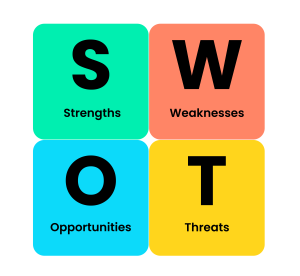



 Admission Open
 Admission Open
 Admission Open



 ROI Calculator




