Best Practices to Enhance Your Project Development Plan
Final Thoughts
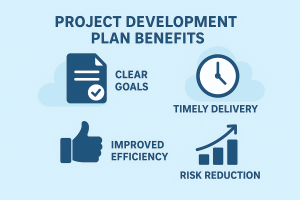
Developing a solid project development plan from the very beginning will significantly enhance your chances of delivering projects on time, within budget, and with quality. A good project management plan brings order, clarity, and alignment to stakeholders. This blog will walk you through a 12-step process, with each step unfolding a critical piece of the overall plan. Use these steps as a blueprint to shape your next project with confidence and control.
Before describing the steps, it is relevant to understand what a project management plan is and why it matters. The project management plan is the single source of truth that collates scope, objectives, schedule, budgets, resources, deliverables, risks, and communication mechanisms.Projects without a well-defined plan tend to result in drifting: unclear expectations, scope creep, miscommunication, and missed deadlines. A good plan aligns stakeholders, outlines clear roles and responsibilities, and serves as a guide through all phases of the project life cycle.
With that in mind, let’s explore the 12 essential steps to build a reliable project development plan.
Step 1: Gather Requirements from Stakeholders
Requirement gathering from all key stakeholders is typically considered the very first step in the project planning process.
Understand expectations by liaising with clients, users, sponsors, and team members.
Document needs, constraints, assumptions, and priorities.
Define the problem that the project is trying to solve or what opportunity it wants to fulfill.
This ensures that the plan reflects real needs rather than assumptions and prevents costly rework later.
Step 2: Define the Project Scope – Project Scope Planning
The collected requirements are next put to another crucial task: project scope planning.
Identify what deliverables are required and what results are expected.
Clearly state what is not within the scope of the project to avoid scope creep.
Develop a formal scope statement and have the stakeholders review and approve the statement.
This scope forms the basis of the entire project management plan.
Step 3: Develop the Work Breakdown Structure (WBS)
With scope defined, create a Work Breakdown Structure to break the project into manageable parts.
Break down major deliverables into smaller work packages.
Identify dependencies within work packages.
Ensure each package is actionable and measurable.
The WBS becomes the backbone in scheduling, budgeting, and resource planning.
Step 4: Define Project Activities and Tasks
Now it’s time to detail the tasks needed to deliver each work package.
List all activities required to achieve each deliverable.
Ensure the tasks are specific, measurable, and actionable.
Name tasks clearly, in order to avoid confusion.
Well-defined tasks allow for smoother execution within the project planning process.
Step 5: Sequence Project Activities
Sequencing ensures smooth workflow because it identifies what needs to happen before, during, and after each task.
Best Practices to Enhance Your Project Development Plan
Writing a project development plan involves more than just steps; it involves strategic thinking, coordination, and continuous improvement. Whether you are just starting to understand how project management works or you run complex multi-phase initiatives, integrating best practices can dramatically improve outcomes and minimize risks. The following expanded insights will help raise your entire project management plan and make certain that every part of your project flows smoothly from initiation to delivery.
1. Focus Early on Stakeholder Alignment
Alignment of stakeholders, no matter the size, is a must. A project can have a good scope and structure in place, but the minute the stakeholders are not aligned, it ends up creating roadblocks. Early alignment ensures that all people know ‘why’, what is aimed to be achieved, and who plays what role.
Spend time conducting workshops, discovery sessions, or interviews to gather expectations. Document these details formally, revisiting them throughout the project planning process. This increases buy-in and reduces misunderstandings. It strengthens communications practices, too, ensuring the team has consistent direction.
2. Make Better Planning Decisions with Data and Insights
Modern project planning is not a guessing game; it’s strategic. Using historical data, team performance metrics, and resource utilization insights makes for a much more accurate plan. If you have access to previous project dashboards or retrospectives, make sure to review them before creating the current plan.
It helps in identifying various patterns, such as regular developmental phase delays, design bottlenecks, or overburdening of QA workload. Insights like these provide refinements to scheduling, resource allocation, and the anticipation of risks, thus reinforcing the whole project management plan in its entirety.
3. Optimize Your Project Scope Planning With Clarity and Control
Poor or indefinite scoping can ruin even the best-planned project. To have effective project scope planning, your scope statement needs to be specific, measurable, achievable, relevant, and time-bound, or SMART.
Also, establish rigorous processes for change control. When stakeholders make requests for additions or modifications, evaluate the time, cost, and resource impact of those changes before approval to protect the team from scope creep.
Besides, revisiting scope during major milestones will keep the team focused by reinforcing alignment with project objectives.
4. Utilize Project Management Tools for More Visibility and Control
Technology can dramatically improve how you execute your project planning process. Tools like Trello, Asana, Jira, Monday.com, Microsoft Project, or Notion enhance visibility and task ownership.
Features like Gantt charts, Kanban boards, burndown charts, task dependencies, and automated reminders make coordination easier. These tools will help track progress, visualize workload, and monitor deadlines-all contributing to predictability.
When integrated correctly, such digital tools become an extension of your overall project management plan, allowing everything to stay transparent and in sync.
5. Break Large Deliverables Into Smaller Wins
Large, complicated deliverables tend to feel overwhelming to teams. Breaking them down into smaller, achievable milestones offers a sense of progress, which maintains the momentum. It also simplifies tracking and enhances accountability. Micro-deliverables also benefit clients or end-users by offering early visibility into the work. This reduces friction, increasing satisfaction as stakeholders see tangible progress. This approach aligns perfectly with the project planning process, allowing adjustments long before major deadlines.
Free Courses
Mastering Product Management: Roadmap,Vision, and Strategy
Project development plans are a means of providing direction and structure to a large team; if every project follows these steps, there is greater potential for successful execution, higher levels of cooperation, and many more opportunities for success at all levels of the project.
Throughout the planning process, certain elements of project management must be considered and incorporated into the project management plan, scope planning, and Planning Process Model; these core components enable projects to be delivered effectively.
Frequently Asked Questions
The project development plan should start with the definition of goals, timelines, and deliverables within a clear project management plan. Further, you need to conduct detailed project scope planning and follow a structured project planning process in order to ensure accuracy and alignment.
The seven key elements include scope, schedule, cost, quality, resources, communication, and risks, which are the heart of any project management plan. In the process of project scope planning, each of these elements is outlined and integrated through the project planning process for effective delivery.
The five steps are: initiation, planning, execution, monitoring, and closure. These form a comprehensive project management plan framework wherein each step is dependent on proper project scope planning and a well-defined project planning process for objectives to be met effectively.
People, Product, Process, and Project form the 4 Ps that provide the basis for an effective project management plan. They help project scope planning and contribute to a smooth project planning process that benefits organizational project success.
Get Free Upskilling Guidance
Fill in the details for a free consultation
Related Courses
Explore our programs
Executive Certificate Programme in Advanced Project Management and Analytics

 December 16, 2025
 8 min read





 ChatGPT
 Perplexity
 Claude
 Grok
Grok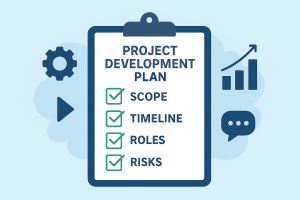











 ROI Calculator