HOME > BLOG > Finance > 5 Signs You’re Ready to Take on P&L Responsibility — And How to Prepare
Finance
5 Signs You’re Ready to Take on P&L Responsibility — And How to Prepare
J
By Arif Siddiqui
August 4, 20264 min read
Published on August 4, 2026
SHARE THIS ARTICLE
Table Of Content
1. You're Already Being Asked to Justify Spend in Financial Terms
2. You Sit in Budget Reviews but Don't Fully Follow the Numbers
3. You're Managing a Team Whose Costs You Don't Fully Control (Yet)
4. You're Comfortable with Your Function but Uneasy About "The Business Side"
A listicle identifying five early signals that a manager is being groomed for P&L ownership — from financial framing in conversations to cross-functional exposure — paired with concrete steps to prepare for each.
Moving from a functional role into one with P&L (profit and loss) ownership is one of the clearest markers of career progression — and one of the most anxiety-inducing. Here are five signs the shift is already happening for you, and what to do about the gaps it exposes.
1. You're Already Being Asked to Justify Spend in Financial Terms
If your manager or leadership has started asking “what’s the ROI on this” instead of “how did the campaign/project go,” that’s a signal. You’re already being evaluated financially, even if the title hasn’t caught up yet.
What to do: Start framing your own proposals proactively in financial terms — cost, expected return, payback period — before you’re asked. It signals readiness rather than reaction. Even a rough, back-of-envelope ROI estimate attached to a proposal changes how it’s received in a leadership review.
2. You Sit in Budget Reviews but Don't Fully Follow the Numbers
Being in the room during budget or forecast discussions, even as a listener, usually means leadership sees P&L exposure in your near future. If you’re nodding along without fully understanding variance explanations or margin discussions, that’s the gap to close before the responsibility formally lands on you.
What to do: After each review, ask a finance colleague to walk you through one number you didn’t fully follow. Repeat this consistently rather than trying to learn everything at once. Over a handful of review cycles, this builds a working vocabulary that would otherwise take much longer to pick up passively.
3. You're Managing a Team Whose Costs You Don't Fully Control (Yet)
If you manage headcount, vendor contracts, or a project budget but don’t yet own the full cost structure, you’re on the edge of P&L ownership. The next step usually involves owning both the cost side and the revenue or output side together.
What to do: Get visibility into the full cost breakdown of your team or function now, even informally, so the transition to formal ownership isn’t your first exposure to those numbers. Ask your current manager or finance partner for a copy of your team’s full cost report, even if you’re not formally required to review it yet.
4. You're Comfortable with Your Function but Uneasy About "The Business Side"
A common tell: you’re confident discussing your specific domain (marketing, product, operations) but go quiet when the conversation shifts to margins, capital allocation, or company-wide financial priorities. That discomfort usually means you’re technically ready for the promotion but not yet fluent in the language it requires.
What to do: This is the single highest-leverage gap to close before stepping into a P&L role — and the one self-study most often stalls on, because it’s easy to deprioritise “learning finance” against daily deliverables. Consider blocking dedicated time weekly, treating it with the same non-negotiable priority as a client meeting.
Free Courses
Finance for All – Free Finance Certification Course
5. Leadership Has Started Giving You Cross-Functional Visibility
If you’re being looped into discussions beyond your immediate function — sales numbers if you’re in operations, cost structures if you’re in marketing — that’s often a deliberate move by leadership to prepare you for broader ownership.
What to do: Treat this exposure as a training ground. Ask questions in these sessions rather than staying silent; it’s a lower-stakes environment to build fluency before you’re formally accountable for the numbers. Leadership rarely minds a thoughtful clarifying question — it usually reads as engagement rather than a knowledge gap.
What Happens If You Take On the Role Before Closing the Gap
It’s worth being direct about the risk of stepping into P&L ownership without addressing these signs first. New P&L owners without financial fluency often spend their first six months reacting defensively in reviews rather than proactively managing their numbers — which can quietly damage the confidence a promotion was meant to build. Closing the fluency gap before (or very early into) the transition tends to make the first year in the role dramatically smoother, both for your own confidence and for how quickly leadership trusts your judgment on financial calls.
If you recognise several of these signs and expect a P&L role within the next 6–12 months, it’s worth mapping out a realistic plan now rather than waiting for the promotion to force the issue:
0–3 months out: Start building baseline fluency — reading statements, understanding your own team’s cost structure, asking questions in reviews you already attend.
3–6 months out: Deepen understanding of budgeting, variance, and capital allocation specifically, since these are the tools you’ll use daily once you own a P&L.
6+ months out or role already confirmed: Consider a structured programme to accelerate and formalise the fluency you’ve been building, ideally completing it before or very early into the new role.
Closing the Gap Faster
Most of these signs point to the same underlying need: financial fluency built specifically for someone stepping into broader ownership, not a deep technical finance specialisation. If you recognise two or more of these signs, it’s worth considering a structured programme rather than piecing this together from articles and finance-colleague favours — something built specifically for managers moving into P&L roles, like IIM Ahmedabad’s Executive Programme in Business Finance.
Frequently Asked Questions
There’s no strict threshold, but recognising two or more is usually a strong enough signal that a P&L-track move is coming or already underway — worth starting preparation now rather than waiting for a formal announcement.
You can, but it’s a much harder way to learn — you’ll be building fluency under pressure while also being evaluated on outcomes. Preparing beforehand, even partially, tends to make the actual transition far less stressful.
Financial fluency remains valuable even without an immediate P&L role in view — it strengthens how you’re perceived in any cross-functional or leadership conversation, and positions you well if such a role opens up elsewhere or internally later.
Arif Siddiqui
Head of Accounting and Treasury
Arif Siddiqui is a finance leader specializing in accounting, treasury, and financial strategy. As Head of Finance at Generali Employee Benefits, he brings extensive experience in managing global financial operations. He is known for driving financial efficiency and governance across organizations. His leadership supports sustainable business growth and financial excellence.

 August 4, 2026
 4 min read





 ChatGPT
 Perplexity
 Claude
 Grok
Grok










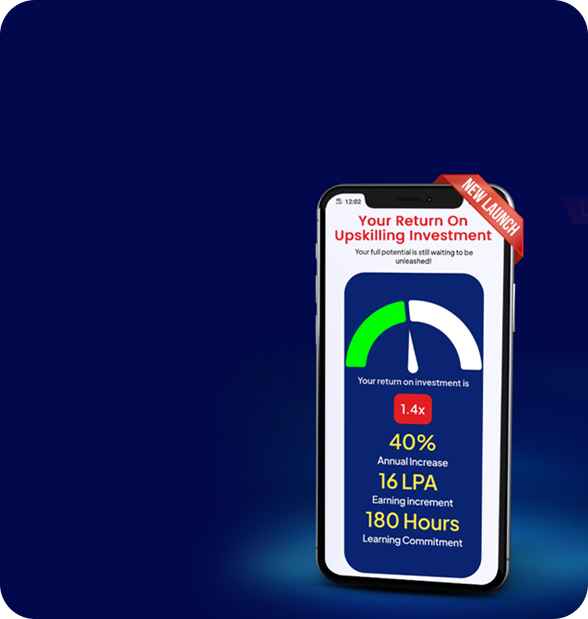
 ROI Calculator