
How to Choose an Online University?
 March 6, 2026
 8 min read





Table Of Content
- Why Choosing the Right Online University Matters
- Role of Technology Infrastructure in Online Degree Programs
- Why You Should Not Overlook Online University Accreditation
- Alumni Success and Employer Views
The demand for online degree programs has soared in the past decade. With flexible schedules, global access, and career-oriented learning, more students and working professionals are seeking digital education. However, with so many institutions claiming to be top online colleges, choosing the right one can feel overwhelming.
Selecting the right institution is not just about convenience; it significantly impacts your career growth, skills, and the long-term value of your online degree in the job market. From verifying online university accreditation to assessing curriculum design, each step is important. Understanding the key factors in choosing an online university can help you make a smart, confident decision.
This blog will outline the key criteria for selecting an online university, ensuring you enroll in quality, accredited online programs with solid recognition.
Why Choosing the Right Online University Matters
Not all online degree programs are the same. Some offer industry-focused curricula and strong faculty support, while others may lack credibility. That’s why it’s crucial to research the best online colleges before you enroll.
Your online university decision factors depend on the following aspects:
– Career progression
– Salary growth
– Employer trust
– Long-term value of your degree
A well-respected institution with proper accreditation ensures your qualification is valued across industries and locations. Ignoring key decision factors may lead you to programs that don’t meet professional standards.
1. Check Online University Accreditation
One of the most important criteria for selecting an online university is verifying its accreditation. Accreditation confirms that the institution meets established academic standards and is recognized by regulatory authorities.
Why accreditation is important:
– Ensures quality education
– Validates curriculum standards
– Improves recognition
– Enhances overall value of your degree
Always confirm whether the institution offers fully accredited online programs. Accreditation protects your investment in time and money. Without proper recognition, even the cheapest online degree programs may not be accepted by employers.
2. Evaluate Reputation and Recognition
When looking for the best online colleges, consider the institution’s reputation. Strong recognition often reflects credibility, alumni success, and employer trust.
Ways to assess reputation:
– National or global rankings
– Alumni testimonials
– Industry partnerships
– Employer collaborations
– Placement records
Reputation directly affects the value of your online degree in competitive job markets. A university with strong accreditation and established programs usually has higher credibility.
When reviewing decision factors, reputation should be a priority.
3. Review the Curriculum and Program Structure
Quality online degree programs should align with industry trends and skill demands. The best online colleges frequently update their syllabi to match emerging technologies and market needs.
Check for:
– Industry-relevant subjects
– Practical projects
– Case studies
– Internship opportunities
– Capstone assignments
A strong curriculum enhances the value of your degree by equipping you with real-world skills. Reviewing the academic structure is a crucial part of your university.
selection process.
Also, confirm that the program is part of accredited online offerings, ensuring strong recognition and compliance with educational standards.
4. Faculty Expertise and Teaching Methodology
The success of online degree programs heavily relies on faculty expertise. The best online colleges invest in experienced professors and industry professionals who bring practical insights to virtual classrooms.
Consider:
– Faculty qualifications
– Industry experience
– Research contributions
– Student engagement methods
Quality faculty improves learning outcomes and increases the value of your degree. Strong accreditation typically requires institutions to uphold high teaching standards, which adds to overall recognition.
Among key decision factors, faculty support and teaching quality are essential.
5. Flexibility and Learning Experience
Flexibility is one of the biggest advantages of online degree programs. However, it should not compromise academic quality.
Evaluate:
– Live versus recorded sessions
– Assignment deadlines
– Self-paced learning options
– Exam schedules
The best online colleges provide structured yet flexible schedules, catering to both working professionals and full-time students. Well-designed accredited online programs balance convenience with academic quality.
Flexibility is a major factor in your university selection, especially for students managing work or family responsibilities. A balanced structure enhances both learning outcomes and the overall value of your degree.

6. Technology and Learning Platform
Modern online degree programs rely on digital platforms. The best online colleges invest in user-friendly learning management systems that facilitate smooth interaction.
Check if the platform offers:
– Interactive discussion forums
– Video lectures
– Real-time support
– Access to digital libraries
– AI-based assessments
A strong technology foundation improves student engagement and strengthens recognition. Institutions with proper accreditation are more likely to maintain a robust digital infrastructure.
Technology support is an important consideration, especially for remote learners.
7. Placement Assistance and Career Support
For many students, career development determines the degree’s value. When assessing online programs, check if the institution offers:
– Resume-building workshops
– Interview preparation
– Career counseling
– Internship support
– Placement assistance
The best online colleges often partner with top recruiters, boosting their recognition in industry circles. Career support services are key in your university selection process.
Accredited institutions offering quality programs are often better positioned to provide structured career development support.
8. Cost and Return on Investment
Affordability is an important factor when choosing among online degree programs. However, lower fees should not mean lower quality.
Compare:
– Tuition fees
– Payment options
– Scholarship availability
– EMI options
– Hidden costs
The aim is to ensure a high return on your investment. Institutions with strong accreditation often justify their fees through recognized programs and solid recognition.
Cost remains a practical consideration, especially for self-funded learners.
9. Alumni Network and Industry Connections
The best online colleges have strong alumni networks that benefit current students. A well-connected alumni base enhances recognition and opens professional doors.
Ask about:
– Alumni success stories
– Networking events
– Mentorship programs
– Guest lectures from industry professionals
A strong alumni network positively impacts the long-term value of your degree and reflects the institution’s credibility and compliance with accreditation standards.
Alumni engagement is an often-overlooked yet vital part of your online university selection criteria.
10. Student Reviews and Feedback
Before making your final decision, research honest student reviews. Authentic feedback can provide insights about:
– Faculty responsiveness
– Course difficulty
– Exam transparency
– Administrative support
Consistently positive reviews often indicate reliable programs and strong recognition. Reviews can help confirm claims made by institutions positioning themselves as top online colleges.
11. Global Exposure and Partnerships
Global exposure enhances the value of your degree, especially in international job markets. Some online programs offer:
– International collaborations
– Global faculty sessions
– Dual certifications
– Exchange modules
The best online colleges utilize global partnerships to strengthen their recognition. Institutions with recognized accreditation can build international credibility more effectively.
International alignment should be part of your broader selection criteria.
12. Compare Multiple Universities Before Deciding
Don’t finalize your admission based on ads alone. Compare at least three to five institutions offering similar online programs.
Evaluate them based on:
– Accreditation status
– Faculty quality
– Curriculum structure
– Placement support
– Cost and flexibility
This structured comparison ensures you thoroughly analyze all the decision factors. The goal is to enroll in high-quality accredited programs with strong recognition and proven value.





Role of Technology Infrastructure in Online Degree Programs
When you’re looking at online degree programs, technology should be one of your main deciding factors. The best online colleges invest in good Learning Management Systems (LMS), AI-based assessments, interactive dashboards, and virtual classrooms that promote collaboration. A smooth digital interface directly affects engagement, productivity, and the overall value of the online degree.
Strong tech support also shows how well the institution is recognized. Reputable universities focus on quick access to study materials, discussion forums, and recorded lectures. When comparing schools, check that their digital platform allows mobile access, live sessions, and real-time help.
A solid technology infrastructure also boosts accredited online programs, making sure that students have a structured and professional learning experience that is comparable to traditional formats.
Why You Should Not Overlook Online University Accreditation
One of the most important factors when selecting an online university is its accreditation. Accreditation shows that the institution meets recognized academic standards and quality measures. Degrees from accredited online programs hold much greater value in the job market and enhance the overall online degree worth.
Employers often check accreditation status before considering candidates. Choosing universities with strong online recognition helps ensure your qualification is respected across industries and even worldwide.
Always confirm accreditation details through official regulatory bodies before making your decision, as this directly affects your long-term credibility.
Alumni Success and Employer Views
Another crucial consideration for selecting an online university is the success of its alumni. Top online colleges usually share placement statistics, salary growth data, and alumni reviews. Looking at graduates’ career paths can help you assess the true value of a program.
Strong alumni networks also improve online university recognition, as successful graduates serve as brand ambassadors for their institutions. Many respected online degree programs partner with leading companies to ensure graduates are ready for the industry.
Employer views have shifted positively toward accredited online programs, especially when the curriculum matches current industry needs.
Cost vs ROI: An Important Online University Factor
While cost is important, it should not be the only reason for choosing an online university. Compare tuition fees, financial aid options, scholarships, and payment plans among top online colleges. Pay attention to long-term return on investment instead of just short-term savings.
A slightly higher fee for reputable online degree programs with strong accreditation may provide better networking opportunities and career outcomes. Evaluating ROI helps you understand the true value of an online degree in terms of promotions, salary increases, or job changes.
In the end, financial considerations should be balanced with academic quality and the credibility of the institution.
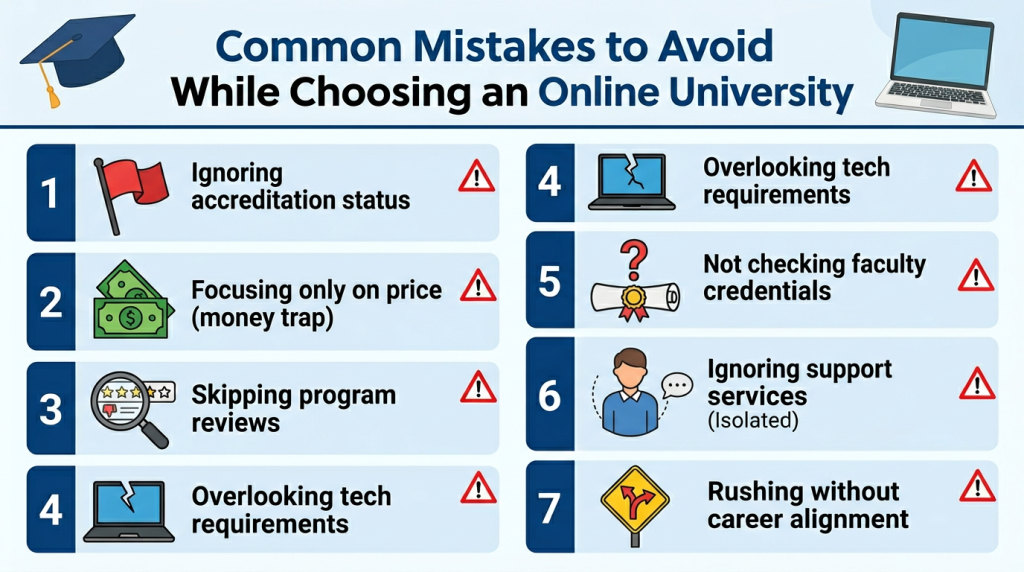
Common Mistakes to Avoid
While selecting from the best online colleges, avoid these pitfalls:
– Ignoring accreditation
– Choosing based only on low fees
– Overlooking curriculum relevance
– Skipping student reviews
– Not checking placement support
Making informed choices based on clear criteria helps you gain maximum benefit from your online degree programs.
Final Thoughts: Making the Right Online University Decision
Choosing the right university for online degrees is a key career decision. With so many options claiming to be the best, careful research is essential.
Focus on:
– Verified accreditation
– High-quality programs
– Strong recognition
– Clear cost structures
– Effective career support
By carefully evaluating all decision factors, you can maximize the long-term value of your degree and secure a qualification that supports your career goals.
Education is more accessible than ever in the digital age. However, accessibility should not come at the expense of quality. When you apply a structured approach to your university selection, you ensure your academic journey leads to meaningful growth, recognition, and success.
The right online university is not just a place to earn a certificate; it is a stepping stone toward a stronger, smarter, and more successful future.
Frequently Asked Questions
There is no single “No. 1” university, as rankings vary by criteria, specialization, and region. The best university for you depends on your field of study, goals, and preferred learning format.

Related Courses
Explore our programs
 Admission Open
 Admission Closed
 Admission Open
 Admission Open
Find a Program made just for YOU
We'll help you find the right fit for your solution. Let's get you connected with the perfect solution.

Is Your Upskilling Effort worth it?
 ROI Calculator

Are Your Skills Meeting Job Demands?
Try our Skill Gap tool
Experience Lifelong Learning and Connect with Like-minded Professionals
Explore Jaro Connect

