What is a Hash Table in Python? And How to Build It?
J
By Shubham Lal
June 25, 20255 min read
Last updated on September 10, 2026
SHARE THIS ARTICLE
Table Of Content
The Digital Skill Gap—Are You Ready?
Understanding and Building Hash Tables in Python
How Jaro Helps You Build This Skill Set
The Right Skills Open the Right Doors
In the ever-evolving field of technology, knowledge and application of core programming concepts are a major strategic advantage. Whether you are a seasoned IT professional looking to improve your coding precision or a business analyst transitioning into data science, proficiency with core data structures like hash tables is becoming increasingly relevant. From technical interviewing optimization to writing more efficient code, this skill has far-reaching applications across many types of roles.
Python, one of the world’s most popular programming languages these days, of course, has hash tables built into its language with dictionaries. But truly, coming to understand what a hash table is like gives you a huge edge. It not only makes you a more proficient user of existing tools but also a more competent designer of algorithms and enables you to solve challenging problems with confidence. This blog demystifies the hash table concept in simple-to-practice terms, keeping you well prepared to execute this knowledge in your career work.
As the employment sector continues to grow increasingly technology-oriented, employees in all industries are facing one scorching question: Am I prepared with the right skills to stay competitive and applicable? If you are switching careers, going for a promotion, or getting into an information-based career path, upskilling in fundamental principles of programming like data structures is crucial for accomplishment in the technology era.
One of the simplest but most effective data structures is the hash table. Applications span sectors—from database indexing and search optimization in real time to cybersecurity and extremely scalable web applications. For professionals targeting software development, data science, or system architecture roles, hash tables are not just a technical skill—it’s an initial step toward future-proof career advancement.
With the demand for digital literacy and system optimization continuing to rise, having the ability to comprehend basic computer concepts, such as hashmaps, Python, can be a stepping stone for you to jump into high-growth tech careers or upgrade your existing skill set in your current profession.
Let’s talk about what type of data structure hash tables are, why they matter, and how you can build one from the ground up with Python.
Hash tables are a type of data structure designed for fast data access and manipulation. Python natively supports hash tables through its built-in dict type. However, understanding how these structures work under the hood not only sharpens your coding skills—it also enhances your ability to troubleshoot, optimize, and innovate with code.
1. What is a Hash Table?
Feature
Description
Definition
A data structure that maps keys to values using a hash function
Performance
Offers constant-time complexity (O(1)) for lookups, insertions, and deletions
Common Use Cases
Caching, database indexing, unique data storage, compiler design
A hash function is used to convert a key (like a string or number) into an index in an underlying array. If two keys hash to the same index (a collision), the table uses a collision resolution method such as chaining or open addressing to store the conflicting data safely.
2. Why Hash Tables Matter in Your Career
Hash tables power much of the real-time processing we see in modern applications—from tracking sessions on websites to managing cache systems and storing encrypted credentials.
Industry
Application
Relevant Role
Tech & Software
Fast data retrieval
Backend Developer, Systems Engineer
Data Science
Frequency counting, data grouping
Data Analyst, Machine Learning Engineer
Cybersecurity
Digital signatures, password hashing
Security Analyst, Cryptographer
Fintech
Fraud detection systems
Software Developer, Data Scientist
Professionals with a solid understanding of hash tables can write more efficient code, clear technical interviews with ease, and build scalable systems that are crucial for handling complex tasks in real-world applications.
3. Components of a Hash Table
To truly understand a hash table, you need to break down its key components:
Keys: Unique identifiers like usernames or product IDs.
Values: The data or information stored against each key.
Hash Function: Converts keys into an index in the array.
Bucket (Array): The core data storage mechanism.
Collision Handling: Techniques like chaining (linked lists) or open addressing (probing) are used to resolve key conflicts.
4. How to Build a Hash Table in Python (From Scratch)
While Python’s built-in dictionary hides the complexities of hash tables, writing one from scratch gives you a deeper understanding of how they function.
Python
CopyEdit
class HashTable:
def __init__(self, size):
self.size = size
self.table = [[] for _ in range(size)]
def _hash(self, key):
return hash(key) % self.size
def insert(self, key, value):
index = self._hash(key)
for pair in self.table[index]:
if pair[0] == key:
pair[1] = value
return
self.table[index].append([key, value])
def get(self, key):
index = self._hash(key)
for pair in self.table[index]:
if pair[0] == key:
return pair[1]
return None
def delete(self, key):
index = self._hash(key)
for i, pair in enumerate(self.table[index]):
if pair[0] == key:
del self.table[index][i]
return True
return False
What You Learn:
Writing your own hash function
Managing key-value pairs manually
Handling collisions using chaining
Gaining insights into how Python dictionaries work internally
5. Skill Demand & Market Trends
The ability to understand and apply data structures like hash tables is increasingly sought-after across industries.
At Jaro Education, the focus is on helping professionals acquire practical, industry-relevant skills through university-certified programs led by expert faculty.
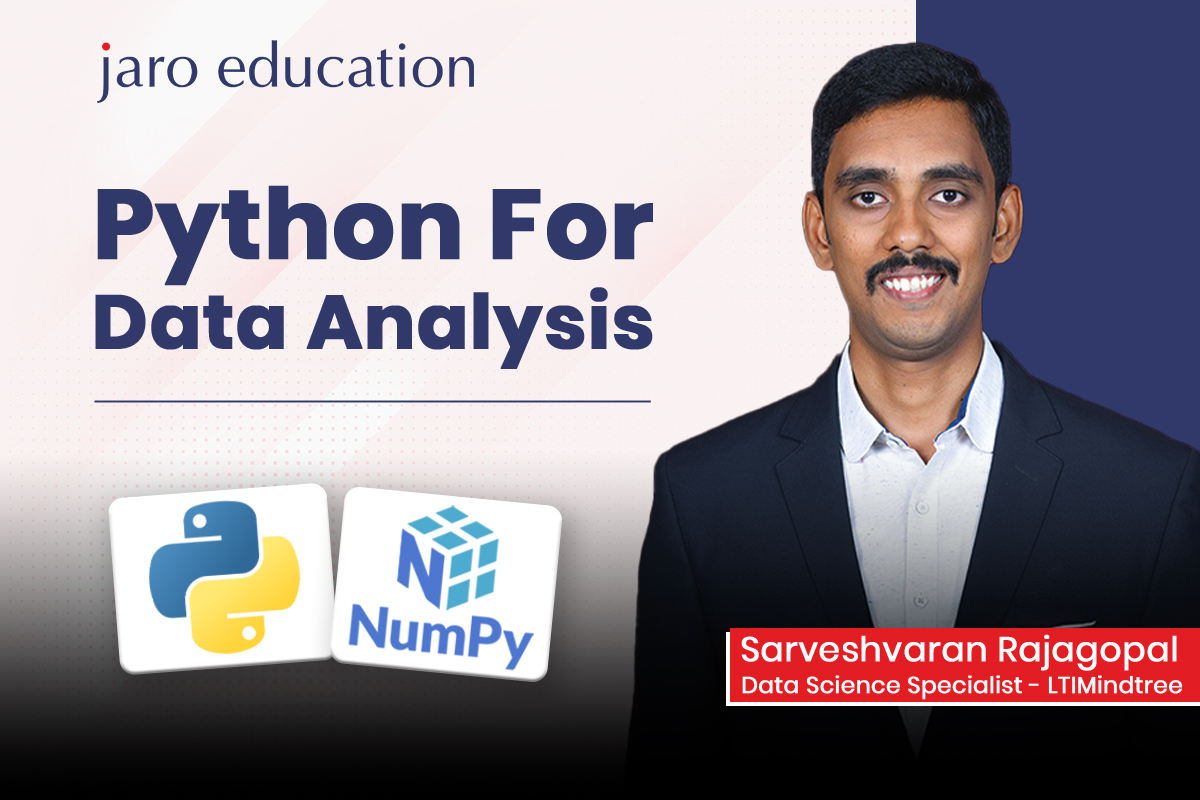
Featured Program: Python for Data Analysis
Program Partner: LTIMindtree
USP: Mastering Python basics to harnessing the power of data visualization
Format: 100% online with live, interactive sessions
Duration: 11-15 hours
Ideal For: Anyone who works with data and wants to leverage Python for more efficient and advanced analysis.
Skills Covered: Fundamentals of Python programming, including variables, control flows, and functions.
Note: Jaro is the official service partner, offering enrollment assistance and ongoing support, but the certification is issued by LTIMindtree.
Why Jaro Stands Out?
Expert Counseling: Personalized guidance based on your career goals
Career Support: Industry networking via Jaro Connect and professional mentoring
Market-Aligned Learning: Programs curated in collaboration with IITs, IIMs, and other elite institutions
Take charge of your career growth. Let Jaro be the bridge to your next big opportunity.
In a world driven by data and innovation, understanding how data structures work—especially hash tables—can be a career game-changer. These concepts don’t just help you pass technical interviews; they prepare you to build robust, efficient systems and tackle real-world challenges with confidence.
Whether you’re pivoting into tech or deepening your expertise, investing in education that mirrors industry needs can be transformative. With Jaro Education, you’re not just learning how to code—you’re shaping your future.
For more information, visit Jaro Education or schedule a free counseling session today.
Frequently Asked Questions
Jaro offers continuous learner support through live doubt-clearing sessions, career guidance, and access to Jaro Connect for peer and industry interaction. Students also get to experience clearly defined learning journeys and personal program managers who address academic and administrative support queries. This is so that learners can experience a guided and smooth learning process from onboarding to graduation.
Yes, Jaro’s Executive MBA programs are specifically tailored for working professionals who wish to continue their job while upskilling. The flexible online learning model allows learners to study at their own pace, attend live sessions on weekends or evenings, and manage coursework without disrupting their current responsibilities. Many learners successfully juggle full-time work and studies with the support of structured timelines and responsive faculty.
Unlike standard online courses, Jaro’s Executive MBA programs are comprehensive, degree-oriented, and developed in collaboration with globally reputed institutions. These programs combine academic depth with practical application, offering structured curriculum, case studies, and project work. Learners graduate with a recognised credential that adds significant value to their professional portfolio and opens doors to advanced roles in corporate leadership and innovation.
While no program can guarantee job placement, the Executive MBA equips you with versatile skills—such as strategic thinking, leadership, and cross-functional knowledge—that are highly transferable across industries. Many learners use this qualification to pivot into roles in tech, finance, consulting, and more. Jaro also provides tailored counseling and career development support to help you chart your transition confidently and effectively.
Basic familiarity with programming is helpful but not mandatory. Many of Jaro’s partner programs are beginner-friendly and include preparatory modules to help you ramp up quickly.
Graduates from Jaro’s programs often move into roles such as software developer, data analyst, backend engineer, and cybersecurity specialist, with the potential for salary hikes and more strategic project responsibilities.
Shubham Lal
Lead Software Developer
Shubham Lal joined Microsoft in 2017 and brings 8 years of experience across Windows, Office 365, and Teams. He has mentored 5,000+ students, supported 15+ ed-techs, delivered 60+ keynotes including TEDx, and founded AI Linc, transforming learning in colleges and companies.
Get Free Upskilling Guidance
Fill in the details for a free consultation
Related Courses
Explore our programs
Advanced Data Science Certificate Programme (Rotman-IITMP)

 June 25, 2025
 5 min read





 ChatGPT
 Perplexity
 Claude
 Grok
Grok










 ROI Calculator