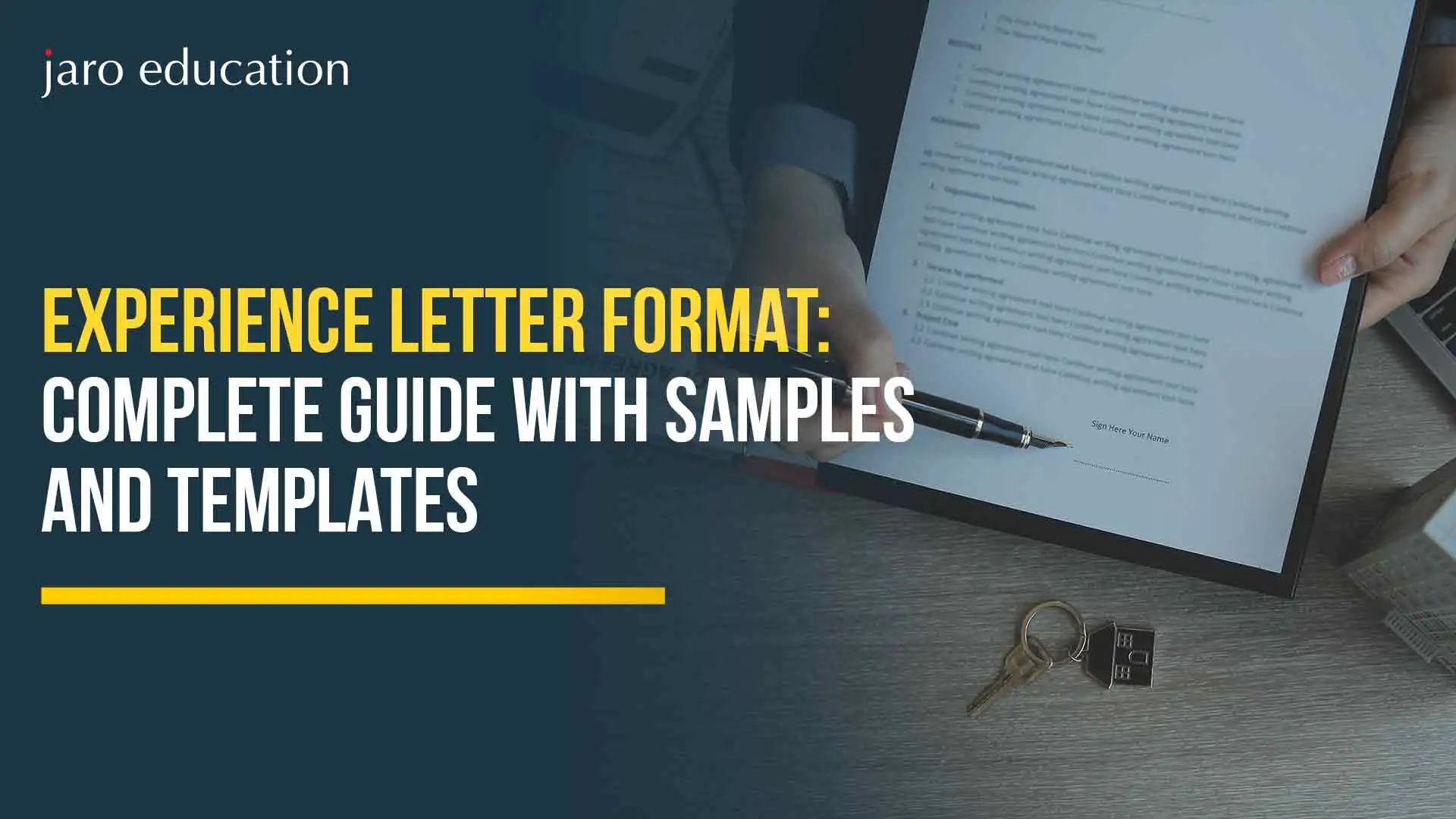
An experience letter is one of the most important professional documents employees receive from an organization after completing their employment. Whether someone is switching jobs, applying for higher education, or submitting documents for visa purposes, an experience letter acts as official proof of work experience and professional conduct.
Today, almost every organization requests previous employment documents during hiring. Because of this, understanding the correct experience letter format becomes important for both employees and HR professionals.
A professionally written experience letter highlights an employee’s role, work duration, responsibilities, and overall contribution to the company. It also helps future employers verify the candidate’s experience and work background.
In this guide, we will explain the proper experience letter format, important elements, writing tips, and multiple experience letter samples that can be used across industries.
An experience letter is an official document issued by a company to an employee after resignation or completion of employment.
The letter confirms that the employee worked with the organization for a specific duration and performed assigned responsibilities professionally.
A company experience letter generally includes:
Employee name
Job role
Employment duration
Work responsibilities
Performance remarks
Company details
The document is usually issued by the HR department or reporting manager on company letterhead.
Why is an Experience Letter Important?
An experience letter is more than just a formal document. It plays an important role in professional growth and career transitions.
When employees apply for new jobs, recruiters often ask for previous employment proof. An experience certificate helps validate the candidate’s professional background and credibility.
Apart from job applications, experience letters are also useful for:
Higher education admissions
Visa applications
Government documentation
Freelance opportunities
Professional verification
For experienced professionals, a strong experience letter can improve hiring opportunities and salary negotiations.
A proper experience letter format should always maintain professionalism and clarity.
The document usually contains several important sections.
Element
Purpose
Company Letterhead
Confirms authenticity
Date of Issue
Specifies issue date
Employee Details
Includes name and designation
Employment Duration
Mentions joining and leaving date
Job Responsibilities
Describes work performed
Performance Statement
Highlights employee conduct
Signature & Seal
Official company verification
These elements help ensure the document is professionally accepted across organizations.
Standard Experience Letter Format
Below is a commonly used experience letter format followed by many organizations.
Experience Letter Format
Date: DD/MM/YYYY
To Whom It May Concern
This is to certify that [Employee Name] worked with [Company Name] as a [Job Role] from [Joining Date] to [Last Working Date].
During their tenure with the organization, they were responsible for handling tasks related to [mention responsibilities]. They demonstrated professionalism, dedication, and sincerity in their work.
We found them to be hardworking and capable of handling responsibilities effectively. Their conduct throughout the employment period was satisfactory.
Below is a simple experience letter sample for working professionals.
Experience Letter Sample
Date: 12 May 2026
To Whom It May Concern
This is to certify that Mr. Rahul Sharma worked with ABC Technologies Pvt. Ltd. as a Software Developer from June 2022 to April 2026.
During his employment, he worked on web application development, database management, and software testing projects. He consistently demonstrated excellent technical knowledge and teamwork skills.
We found him sincere, dedicated, and professional in his responsibilities. His contribution to the organization was valuable.
We wish him all the best for his future career opportunities.
HR Manager ABC Technologies Pvt. Ltd.
Company Experience Letter for IT Professionals
Experience letters may vary slightly depending on the industry and job role.
For IT professionals, companies often include technical responsibilities and project contributions.
Company Experience Letter
This is to certify that Ms. Priya Mehta was employed with XYZ Solutions as a Full Stack Developer from January 2023 to March 2026.
During her tenure, she worked on frontend and backend development projects using technologies such as React.js, Node.js, and MySQL. She actively participated in application development, debugging, API integration, and deployment activities.
She demonstrated strong problem-solving skills and maintained a professional attitude throughout her employment period.
We appreciate her contributions and wish her success in future assignments.
Experience Certificate Letter Sample
Many people use the terms experience letter and experience certificate interchangeably. Both documents generally serve the same purpose.
Below is an experience certificate letter sample.
Experience Certificate Letter Sample
This is to certify that Mr. Amit Verma worked with Bright Media Agency as a Digital Marketing Executive from July 2021 to February 2026.
He was responsible for SEO, social media marketing, content strategy, and campaign management activities.
During his tenure, his behavior and performance were found satisfactory.
We wish him success in his future endeavors.
Difference Between Experience Letter and Relieving Letter
People often confuse experience letters with relieving letters, but both documents serve different purposes.
Experience Letter
Relieving Letter
Confirms work experience
Confirms resignation acceptance
Mentions responsibilities
Mentions release from duties
Focuses on employee performance
Focuses on exit formalities
Used for future job verification
Used for joining new company
Most organizations provide both documents separately after an employee leaves the company.
Common Mistakes to Avoid While Writing an Experience Letter
A poorly written experience letter may create issues during verification or job applications.
Some common mistakes include:
Incorrect employment dates
Spelling errors
Missing company details
Informal language
Lack of official signature
Incomplete responsibilities
Organizations should ensure accuracy and professionalism while drafting employee documents.
Tips for Writing a Professional Experience Letter
A professional experience letter should always be concise, formal, and clear.
Some important tips include:
Use official company letterhead
Maintain formal language
Mention accurate dates
Include relevant responsibilities
Avoid unnecessary personal opinions
Ensure HR verification and signature
Employers should also customize the content according to the employee’s role and contribution.
An experience letter is an essential professional document that validates an employee’s work history, skills, and contribution to an organization. Whether someone is applying for a new job, pursuing higher studies, or completing documentation processes, a properly written experience letter plays a crucial role in professional verification.
Understanding the correct experience letter format helps both HR professionals and employees ensure clarity, professionalism, and authenticity in official communication. By following a structured format and including all necessary details, organizations can create professional experience letters that support employees in their future career growth.
Frequently Asked Questions
An experience letter is an official document issued by a company confirming an employee’s job role, work duration, and responsibilities.
An experience letter should include employee details, job role, employment duration, responsibilities, performance remarks, company details, and authorized signatures.
Yes, experience letters are commonly required by employers for verification during recruitment and background checks.
An experience letter confirms work experience, while a relieving letter confirms that the employee has officially resigned and completed exit formalities.
Experience certificate letters are usually issued by the HR department or authorized company management.
Priya Sahu
Sales & Digital Marketing Strategist
Sales and Marketing professional with 6+ years of experience in B2B and B2C growth, specializing in business development and digital marketing. Skilled in CRM systems, paid campaigns, and AI-driven strategies to drive revenue, optimize performance, and build lasting client relationships.
Get Free Upskilling Guidance
Fill in the details for a free consultation
Related Courses
Explore our programs
Admission Closed
Advanced Certificate Programme in Smart Supply Chain Management & Transformation
 HOME > BLOG > Career Information > Experience Letter Format: Complete Guide with Samples and Templates
 July 20, 2025
 4 min read




 ChatGPT
 Perplexity
 Claude
 Grok
Grok




 Admission Closed
 Admission Open
 Admission Closed
 ROI Calculator