 HOME > BLOG > General Management > Basics of Entrepreneurship: Skills, Qualities, and Key Characteristics
Basics of Entrepreneurship: Skills, Qualities, and Key Characteristics
 March 21, 2026
 7 min read




Table Of Content
- What Are the Basics of Entrepreneurship?
- What Are Entrepreneurial Skills?
- Why Are Entrepreneurship Skills Important for Business Success?
- What Skills Are Required for Entrepreneurship?
Entrepreneurship is often associated with startups and breakthrough innovations, but in reality, it begins with a much simpler question: how can a problem be solved better? From technology ventures to small local businesses, entrepreneurs identify opportunities and turn ideas into solutions that create real value.
However, building a successful venture requires far more than just a good idea. Entrepreneurs must develop a range of entrepreneurship skills, including leadership, strategic thinking, financial management, and problem-solving. These capabilities help founders navigate uncertainty, build strong teams, and grow sustainable businesses in competitive markets.
Understanding the basics of entrepreneurship is therefore essential for anyone interested in starting a business or leading innovation within an organisation. Learning the skills required for entrepreneurship and recognising the characteristics and qualities of entrepreneurial leaders can help aspiring founders transform ideas into impactful ventures.
In this guide, we explore the core foundations of entrepreneurship, the most important entrepreneurial skills, and practical ways to develop them in today’s digital business environment.
 ChatGPT
 Perplexity
 Claude
 Grok
GrokWhat Are the Basics of Entrepreneurship?
The basics of entrepreneurship refer to the core principles involved in identifying opportunities, creating value, and building sustainable businesses. At its foundation, entrepreneurship involves recognising market needs and developing innovative solutions to address them.
Entrepreneurship is not limited to starting companies. It also involves developing a mindset that focuses on innovation, risk-taking, and value creation.
Key elements of entrepreneurship include:
- Identifying market opportunities
- Developing innovative products or services
- Managing financial and operational resources
- Taking calculated risks
- Building scalable business models
- Delivering value to customers
Entrepreneurs act as problem-solvers who create solutions for real-world challenges. Many successful startups began by addressing everyday problems faced by consumers or businesses.
For example, many technology companies emerged because entrepreneurs identified inefficiencies in traditional systems and built digital platforms to solve them.
Aspiring founders often begin their journey by learning these fundamentals through structured programmes or by exploring free courses, which helps them understand how business ideas evolve into viable ventures.
What Are Entrepreneurial Skills?
Entrepreneurial skills are the abilities that help individuals identify opportunities, start businesses, and manage growth successfully. These skills combine business knowledge, leadership abilities, and creative problem-solving capabilities.
In simple terms, what are entrepreneurial skills? They are the practical and strategic capabilities that allow entrepreneurs to turn ideas into successful ventures.
Unlike specialised job roles that focus on a single domain, entrepreneurs must develop skills across multiple areas.
Key entrepreneurial skills include:
- Strategic thinking
- Financial management
- Leadership and team building
- Communication and negotiation
- Creativity and innovation
- Risk assessment
- Problem-solving and decision-making
These capabilities help entrepreneurs navigate challenges, manage teams, and adapt to changing market conditions.
Why Are Entrepreneurship Skills Important for Business Success?
Entrepreneurship skills are essential because they help founders transform ideas into sustainable businesses. Without these skills, even strong business ideas may fail due to poor execution, lack of planning, or ineffective leadership.
Entrepreneurs operate in uncertain environments where decisions must often be made with limited information. Strong skills allow founders to evaluate risks, allocate resources effectively, and adapt to changing market conditions.
Entrepreneurship skills help founders:
- Build effective business strategies
- Manage financial resources
- Lead teams and motivate employees
- Develop innovative products
- Navigate market competition
For example, many startups fail not because of weak ideas but because founders lack strong management or financial planning skills.
Learning the skills required for entrepreneurship, therefore, plays a crucial role in building resilient and scalable ventures.
What Skills Are Required for Entrepreneurship?
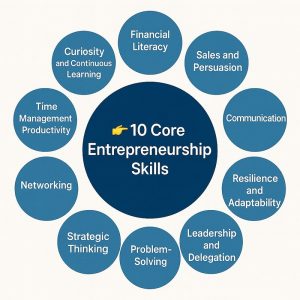
The skills required for entrepreneurship combine strategic thinking, operational management, and leadership capabilities. Entrepreneurs must be able to manage multiple aspects of a business simultaneously.
*intellspot.com
Below are some of the most important entrepreneurship skills every founder should develop.
1. Identify Business Opportunities
Successful entrepreneurs identify business opportunities by analysing market trends, customer needs, and industry gaps. Opportunity recognition is one of the most important entrepreneurship skills.
Entrepreneurs constantly observe problems that people face and think about how to solve them effectively.
Opportunity recognition often involves:
- Studying customer pain points
- Analysing industry trends
- Monitoring technological changes
- Identifying underserved markets
For example, the growth of food delivery platforms occurred because entrepreneurs recognised the increasing demand for convenience in urban lifestyles.
2. Strategic Thinking
Strategic thinking helps entrepreneurs plan long-term growth and navigate competitive markets. Without a clear strategy, businesses may struggle to scale or adapt to market changes.
Strategic entrepreneurs analyse market conditions, define goals, and develop roadmaps for growth.
Key elements of strategic thinking include:
- Market positioning
- Competitive analysis
- Growth planning
- Product development strategy
This skill ensures entrepreneurs move forward with a clear direction rather than reacting to short-term challenges.
3. Financial Literacy
Financial literacy is essential because entrepreneurs must manage budgets, investments, and cash flow effectively.
Even profitable businesses can fail if founders mismanage finances.
Entrepreneurs must understand:
- Cash flow management
- Profit margins
- Financial forecasting
- Investment planning
- Cost control
Learning financial fundamentals is one of the most valuable steps aspiring founders can take.
4. Leadership Skills
Leadership skills enable entrepreneurs to build motivated teams and execute business ideas effectively. Successful ventures rely on strong collaboration between founders, employees, and partners.
Entrepreneurs must inspire their teams and create a culture that encourages innovation.
Strong leadership includes:
- Motivating employees
- Delegating responsibilities
- Resolving conflicts
- Encouraging creativity
Great leaders also understand how to align team goals with organisational vision.
5. Communication and Negotiation
Communication and negotiation are essential because entrepreneurs constantly interact with investors, customers, partners, and employees.
Effective communication helps entrepreneurs clearly present ideas and build trust with stakeholders.
Entrepreneurs use communication skills to:
- Pitch business ideas to investors
- Build partnerships
- Market products and services
- Lead teams effectively
Negotiation skills also help founders secure better deals with suppliers, investors, and collaborators.
6. Problem-solving Skills
Problem-solving skills enable entrepreneurs to address challenges quickly and adapt to changing business environments.
Every business faces obstacles such as financial constraints, market competition, or operational issues.
Entrepreneurs must analyse problems and identify effective solutions.
Successful founders often follow a structured approach:
- Identify the root cause
- Evaluate possible solutions
- Test and implement strategies
- Learn from outcomes
This ability to solve problems quickly often determines whether startups succeed or fail.




What Are the Characteristics and Qualities of Entrepreneur Leaders?
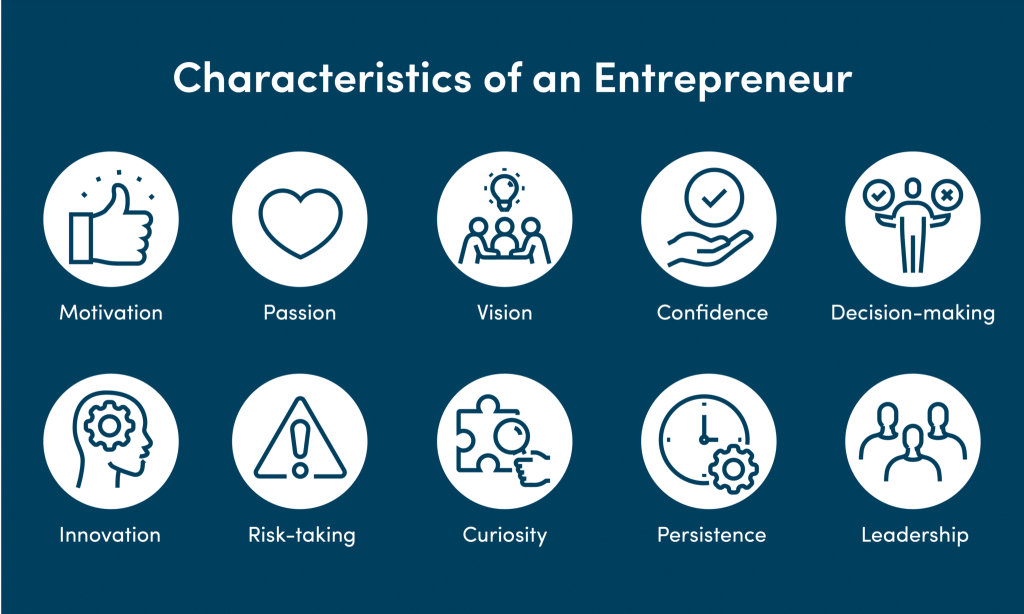
The characteristics and qualities of entrepreneur leaders include behavioural traits and mindsets that support innovation and resilience.
Characteristics of an Entrepreneur
*vistage
While entrepreneurship skills can be learned, successful founders often share certain personality traits.
Vision
Entrepreneurs often begin with a strong vision for the future. This vision guides decision-making and helps founders stay focused on long-term goals.
Visionary leaders also inspire others to believe in their ideas.
Resilience
Entrepreneurship involves uncertainty and setbacks. Resilient entrepreneurs learn from failures and continue improving their strategies.
Persistence often separates successful entrepreneurs from those who abandon their ideas too early.
Risk-Taking Ability
Entrepreneurs take calculated risks when launching ventures or entering new markets.
Rather than avoiding risk entirely, they evaluate potential outcomes and manage uncertainty strategically.
Creativity
Creativity allows entrepreneurs to develop innovative products and solutions. It also helps businesses differentiate themselves in competitive markets.
Creative thinking is particularly valuable in industries driven by technology and innovation.
Adaptability
Markets evolve quickly due to technological changes and shifting consumer preferences.
Successful entrepreneurs adapt their strategies and business models to stay competitive.
How Are Entrepreneurship Skills Evolving in 2026?
Entrepreneurship skills are evolving due to rapid technological advancement and global digital transformation.
In 2026, entrepreneurs must develop new capabilities alongside traditional business skills.
Important modern entrepreneurship skills include:
- Digital literacy: Entrepreneurs must understand digital platforms, online marketing, and analytics tools.
- Data-driven decision making: Businesses increasingly rely on data insights to understand customers and optimise performance.
- Innovation management: Entrepreneurs must develop systems to generate, test, and launch new ideas.
- Customer-centric thinking: Successful businesses prioritise customer needs and focus on delivering meaningful experiences.
Many aspiring founders develop these capabilities by exploring a free Masterclass on Strategy & Leadership that introduces digital business models and innovation frameworks.
How Can You Develop Entrepreneurship Skills?
Entrepreneurship skills can be developed through learning, experience, and mentorship. While some people naturally exhibit entrepreneurial traits, most capabilities can be built over time.
1. Gain Hands-On Experience
Starting small projects or side ventures allows individuals to understand real business challenges.
Practical experience teaches lessons that theoretical knowledge alone cannot provide.
2. Study Business Fundamentals
Learning about strategy, finance, marketing, and operations strengthens entrepreneurial decision-making.
3. Learn from Successful Entrepreneurs
Mentorship provides valuable insights into industry trends and business strategies.
Startup communities and networking events allow aspiring founders to learn from experienced entrepreneurs.
4. Develop a Problem-Solving Mindset
Entrepreneurs must continuously analyse problems and explore innovative solutions.
Practising critical thinking improves adaptability and strategic decision-making.
Why Does Entrepreneurship Matter for Economic Growth?
Entrepreneurship drives economic development by introducing innovation, creating jobs, and increasing productivity.
Many governments actively support startup ecosystems through funding programmes, incubators, and innovation policies.
Entrepreneurs contribute to economic growth by:
- Creating employment opportunities
- Developing new technologies
- Increasing market competition
- Improving efficiency across industries
For example, the rapid growth of sectors such as fintech, health technology, and artificial intelligence has been driven largely by entrepreneurial innovation.
Conclusion
Entrepreneurship is a powerful force that drives innovation, economic growth, and career opportunities. Understanding the basics of entrepreneurship helps aspiring founders build the mindset and capabilities required to launch successful ventures.
Strong entrepreneurship skills, including strategic thinking, financial management, leadership, and problem-solving, enable entrepreneurs to navigate uncertainty and build sustainable businesses.
Equally important are the characteristics and qualities of entrepreneur leaders, such as resilience, creativity, adaptability, and vision. These traits help founders remain motivated and focused despite challenges.
As business environments continue evolving in 2026 and beyond, individuals who continuously develop their entrepreneurial capabilities will be best positioned to create innovative solutions and build impactful ventures.
Exploring structured learning pathways, mentorship opportunities, and even free entrepreneurship courses can be valuable first steps for professionals looking to begin their entrepreneurial journey.
Frequently Asked Questions
Successful entrepreneurs often demonstrate resilience, creativity, adaptability, vision, and confidence. These traits help them manage risk, overcome challenges, and lead teams effectively.

Related Courses
Explore our programs





Find a Program made just for YOU
We'll help you find the right fit for your solution. Let's get you connected with the perfect solution.

Is Your Upskilling Effort worth it?
 ROI Calculator

Are Your Skills Meeting Job Demands?
Try our Skill Gap tool
Experience Lifelong Learning and Connect with Like-minded Professionals
Explore Jaro Connect
