 HOME > BLOG > Data and Technology > All About Computational Thinking and Its Importance in Today’s World
All About Computational Thinking and Its Importance in Today’s World
 April 23, 2026
 11 min read





Table Of Content
- What Is Computational Thinking?
- Why Computational Thinking Matters in the Modern World
- Core Elements of Computational Thinking
- How Computational Thinking Works
How do we usually go about solving problems in our daily lives? From planning our trips to managing a project, and even cooking a new recipe, we usually break the activities into smaller steps and choose the most efficient way to complete them. Without even realising it, we are already using a style of thinking very similar to computational thinking.
As technology integrates into every process of an organisation, developing the ability to think computationally becomes increasingly crucial. From software development and data analysis to business process reengineering, computational thinking is a powerful tool for logically and systematically analysing problems. It is no longer a prerogative of computer scientists; learners, workers, and creators of all kinds use it. By mastering the concepts underlying computational thinking, anyone can achieve much greater success and self-assurance when solving complex problems.
 ChatGPT
 Perplexity
 Claude
 Grok
GrokWhat Is Computational Thinking?
Before understanding its importance, it is helpful first to explore what is computational thinking.
Computational thinking is a method or a way of thinking that we use in solving problems by structuring them in such a way that computers or algorithms can be utilised to provide solutions. Part of it is breaking down large problems into smaller ones, finding consistencies and coming up with methodical solutions step-by-step.
Simply put, the meaning of computational thinking is to align thinking in a logical and systematic way to solve problems efficiently. The idea was taken from computer science, but it is not only in the programming and technological fields. It is the capability to create solutions by means of technical reasoning, pattern identification, abstraction, and the use of algorithms. The methods help anyone to deal with difficult work in a systematic manner and find the best solutions. They can be used for:
- When organising tasks for a project
- When analysing large datasets
- When planning efficient routes in logistics
- When designing software applications
Why Computational Thinking Matters in the Modern World
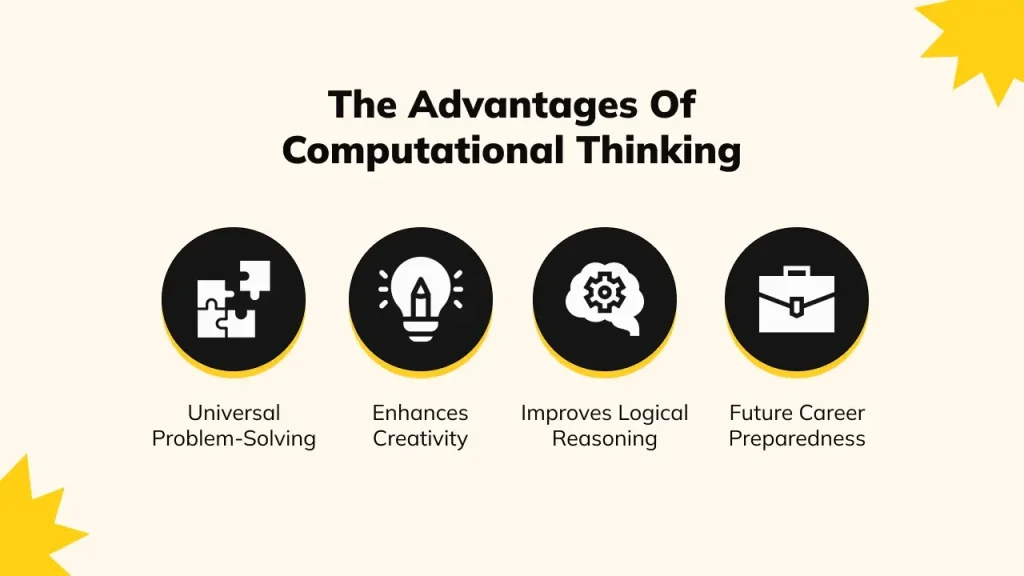
The growing influence of technology has made computational thinking an essential skill for the future. It is no longer limited to computer scientists or programmers. Instead, it has become a valuable capability for students, professionals, and problem-solvers in almost every field.
Helps Solve Complex Problems
Many of today’s problems require handling huge amounts of data, have many variables to consider, and some complicated processes to get to a solution. Computational thinking can help people deconstruct complex problems into smaller parts that are easier to analyse, understand and ultimately solve.
Supports Logical and Analytical Thinking
Computational thinking helps develop logical reasoning. People who utilise computational thinking focus on defining the problem, organising the solution(s), and looking for multiple solutions.
This skill is essential for careers in engineering, business analysis, logistics, data science, and research.
Improves Decision-Making
When you apply computational thinking in decision-making, it helps you to collect, analyze, identify patterns and evaluate multiple potential solutions before making your decision. The result will help you to make sounder decisions and reduce the chances of making errors.
Builds Strong Digital Skills
In a technology-driven world, understanding how computers process information is increasingly important. Computational thinking helps individuals learn how digital systems work and how technology can be used to solve problems.
Many education systems now consider computational thinking a core skill for future digital literacy.
Useful Across Different Fields
One of the most interesting aspects of computational thinking is that it is not limited to programming or coding. In fact, many industries rely on computational thinking to improve efficiency and innovation.
It is used in:
- Healthcare
- Business management
- Engineering
- Logistics and supply chain
- Finance
- Scientific research
Core Elements of Computational Thinking
*hackerkid.org
To understand computational thinking more clearly, it is helpful to look at its core elements. Experts often describe four main components that form the foundation of this approach.
These elements guide how problems are analysed and solved.
Decomposition
Decomposition is breaking down a big or complicated problem into smaller, simpler parts that are easier to handle. Dividing the problem into separate parts allows not only understanding each part better but also coming up with its solutions. Taking one step at a time makes the whole project more manageable. For example, if a company decides to build a mobile app, they could divide the project into smaller pieces, like:
- Designing the interface,
- Programming,
- Testing the application,
- Debugging
Pattern Recognition
Pattern recognition is about noticing the similarities or repeated patterns in problems or data. Once you understand the patterns, you can generally reuse the solutions that you had worked on previously. Besides leading to more effective problem-solving, it also helps people save their time and effort since they employ successful strategies again.
Some examples of situations where recognising patterns is more useful:
- Looking at what sales had been doing over time,
- Understanding the behaviours of the regular customers,
- Recalling the time when the software system had problems and ways to save the software system in time
Abstraction
Abstraction means figuring out the most important elements of the story and leaving out the extraneous ones. While encountering a problem, not all the information matters. Abstraction lets us discard the distracting things and focus only on the important parts.
For instance, when planning a transportation system, it is wise to only focus on routes, traffic flow, and passenger demand factors. This approach can help make complex systems easier and develop solutions more comfortably
Algorithm Design
Algorithm design is the last component of computational thinking.
An algorithm is a sequence of steps that one follows to either find a solution to a problem or perform a task. Computer programmes are the primary users of algorithms, but people can also be found using them in their day-to-day activities.
For example:
- When following a recipe to prepare dinner
- Assembling furniture according to the directions given on the paper
- Creating an office work process
How Computational Thinking Works
Understanding how computational thinking works can help clarify why it is such a powerful tool for solving problems. The process typically follows several steps.
Step 1: Understanding the Problem
Sometimes finding answers feels tricky when the question stays blurry. That is why pinning down the exact issue comes first. This includes identifying:
- What needs to be solved
- What information is available
- What constraints exist
Step 2: Breaking the Problem into Smaller Parts
Once the problem is defined, it is divided into smaller components through decomposition. Each part can then be analysed individually. This approach prevents problems from becoming overwhelming.
Step 3: Identifying Patterns
Next, patterns within the data or problem are identified. Recognising patterns helps predict outcomes and develop efficient strategies. For example, businesses analyse sales data patterns to forecast future demand.
Step 4: Creating an Algorithm
After understanding the problem and identifying patterns, the next step is to design a structured solution. This solution is expressed as an algorithm—a sequence of logical steps that can solve the problem.
Step 5: Testing and Refining the Solution
Finally, the solution is tested and improved. If errors are discovered, the algorithm is adjusted until the solution works effectively. This iterative process ensures the final solution is reliable and efficient.
Applications of Computational Thinking in Real Life
Computational thinking is a practical way to make life easier and is used by many people in their day-to-day lives, as well as in several different industries, such as:
Software Development
When software developers build applications, they use computational thinking to develop algorithms, create software programs, and find problems in those applications.
When developing software, the process of decomposing a complex system into simpler parts is an effective way to improve development efficiency and decrease the time and cost required to build a product.
Data Analytics
Businesses use data analytics to identify patterns and develop knowledge from large data sets using computational thinking. The data scientist uses algorithms and pattern recognition to create predictions and trends from data collected.
Logistics and Supply Chain Management
Using computational thinking in logistics/transportation allows for more efficient route optimisation, improved inventory management, and increased operational efficiency within an organisation.
Companies use data collected from the transportation system to create algorithms that will reduce the time and cost required to deliver products.
Medical
In medical research, researchers use computational thinking to analyse patient data to identify disease patterns and develop treatment plans. Computational thinking is also used by medical technology, e.g. diagnostic devices and health monitoring devices.
Education
Many schools now introduce computational thinking to students at an early age. Teaching these skills helps students develop logical reasoning, creativity, and structured problem-solving abilities.
How Computational Thinking Works
Understanding how computational thinking works can help clarify why it is such a powerful tool for solving problems. The process typically follows several steps.
Step 1: Understanding the Problem
Sometimes finding answers feels tricky when the question stays blurry. That is why pinning down the exact issue comes first. This includes identifying:
- What needs to be solved
- What information is available
- What constraints exist
Step 2: Breaking the Problem into Smaller Parts
Once the problem is defined, it is divided into smaller components through decomposition. Each part can then be analysed individually. This approach prevents problems from becoming overwhelming.
Step 3: Identifying Patterns
Next, patterns within the data or problem are identified. Recognising patterns helps predict outcomes and develop efficient strategies. For example, businesses analyse sales data patterns to forecast future demand.
Step 4: Creating an Algorithm
After understanding the problem and identifying patterns, the next step is to design a structured solution. This solution is expressed as an algorithm—a sequence of logical steps that can solve the problem.
Step 5: Testing and Refining the Solution
Finally, the solution is tested and improved. If errors are discovered, the algorithm is adjusted until the solution works effectively. This iterative process ensures the final solution is reliable and efficient.
Applications of Computational Thinking in Real Life
Computational thinking is a practical way to make life easier and is used by many people in their day-to-day lives, as well as in several different industries, such as:
Software Development
When software developers build applications, they use computational thinking to develop algorithms, create software programs, and find problems in those applications.
When developing software, the process of decomposing a complex system into simpler parts is an effective way to improve development efficiency and decrease the time and cost required to build a product.
Data Analytics
Businesses use data analytics to identify patterns and develop knowledge from large data sets using computational thinking. The data scientist uses algorithms and pattern recognition to create predictions and trends from data collected.
Logistics and Supply Chain Management
Using computational thinking in logistics/transportation allows for more efficient route optimisation, improved inventory management, and increased operational efficiency within an organisation.
Companies use data collected from the transportation system to create algorithms that will reduce the time and cost required to deliver products.
Medical
In medical research, researchers use computational thinking to analyse patient data to identify disease patterns and develop treatment plans. Computational thinking is also used by medical technology, e.g. diagnostic devices and health monitoring devices.
Education
Many schools now introduce computational thinking to students at an early age. Teaching these skills helps students develop logical reasoning, creativity, and structured problem-solving abilities.
How to Develop Computational Thinking Skills
*researchgate.net
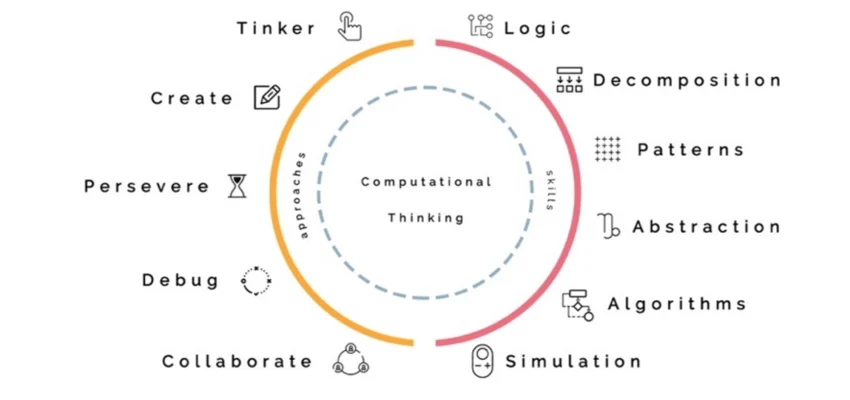
The good news is that computational thinking is a skill that anyone can develop. Here are some practical ways to build this ability.
Practice Problem-Solving
Engaging in solving puzzles, completing coding challenges and working through logical reasoning exercises will help develop your computational thinking skills. This also strengthens your brain’s ability to break down complex problems into smaller sub-problems and recognise similarities among them.
Learn Basic Programming
Although computational thinking is not limited to programming, learning coding can help reinforce its concepts. Programming teaches algorithm design, debugging, and logical thinking.
Analyse Real-World Problems
You can implement computational thinking when you’re evaluating your daily tasks. For example, you can break down larger tasks like setting your weekly schedule into smaller steps to save time and complete the task more effectively.
Use Technology Tools
Educational platforms and software tools often include activities designed to develop your computational thinking skills. These tools provide users with fun, interactive formats for practising structured problem solving.
Computational Thinking and the Future
As technology continues to evolve, computational thinking will become even more important. Artificial intelligence, data science, automation, and digital transformation all rely heavily on computational thinking principles.
Experts increasingly believe that computational thinking should be taught alongside traditional skills like reading, writing, and mathematics. In fact, many education systems worldwide are already integrating computational thinking into their curricula to prepare students for the digital economy.
This shift reflects a growing recognition that the ability to think computationally is essential for innovation and problem-solving in the modern world.
Explore Career Opportunities with Jaro Education
If you are interested in building future-ready skills like computational thinking, choosing the right learning platform can make a significant difference. Jaro Education collaborates with leading universities to offer online degree and certification programmes designed to help learners strengthen analytical thinking, digital skills, and problem-solving abilities.
Jaro Education offers several industry-relevant programmes in areas such as Data Science, Artificial Intelligence, Business Analytics, and Technology Management. For example, professionals who want to develop strong analytical and algorithmic thinking skills can explore programmes like the PG Certificate Programme in Data Science and Business Analytics, which focuses on data interpretation, logical problem-solving, and decision-making using technology.
These areas strongly connect with the principles of computational thinking, especially when it comes to recognising patterns in data, breaking complex problems into manageable parts, and designing structured solutions.





Conclusion
Computational thinking is more than a technical concept; it is a powerful way of approaching problems with clarity, logic, and structure. By breaking complex challenges into manageable parts, recognising patterns, focusing on key information, and designing step-by-step solutions, individuals can solve problems more effectively and efficiently.
As technology continues to shape industries and societies, computational thinking is becoming an essential skill for students, professionals, and innovators alike. It empowers people to work smarter, make informed decisions, and develop solutions that can scale with modern challenges.
By learning and practising computational thinking, individuals improve their technical abilities and strengthen their overall problem-solving mindset. This ability will remain valuable in the future of work and innovation.
Frequently Asked Questions

Related Courses
Explore our programs




Find a Program made just for YOU
We'll help you find the right fit for your solution. Let's get you connected with the perfect solution.

Is Your Upskilling Effort worth it?
 ROI Calculator

Are Your Skills Meeting Job Demands?
Try our Skill Gap tool
Experience Lifelong Learning and Connect with Like-minded Professionals
Explore Jaro Connect

