Start With Your Goal Before You Pick Six Sigma Training
Understanding the Six Sigma Belt Levels
Key Insights
Understand the purpose of Six Sigma: Six Sigma helps improve work processes by reducing errors and variation through a structured, data-driven approach called DMAIC.
Choose the right belt level: Yellow and Green Belts suit beginners and early-career professionals, while Black Belt and Master Black Belt levels are designed for experienced professionals and senior experts.
Compare training and certification carefully: Check accreditation, curriculum quality, practical project work, instructor experience, exam requirements, and the recognition of the certifying body before enrolling.
Evaluate learning format and overall value: Compare online, classroom, and live online training based on your schedule, budget, learning preferences, and access to instructor support, study materials, and project guidance.
In this blog, you'll learn how to choose the best Six Sigma training based on your career goals, understand Green Belt and Black Belt certifications, compare course formats, evaluate key selection factors, and apply your learning to real workplace problems.
You have probably seen the term on job descriptions, LinkedIn profiles, or in a manager's email about "process improvement." Six Sigma sounds impressive, and it is. But the moment you start searching for a course, things get confusing. Yellow belt, green belt, black belt, online, offline, accredited, project-based... which one is actually right for you?
If that sounds familiar, relax. This blog will walk you through everything in plain language, so you can pick the right six sigma training without wasting time or money.
You have probably seen the term on job descriptions, LinkedIn profiles, or in a manager’s email about “process improvement.” Six Sigma sounds impressive, and it is. But the moment you start searching for a course, things get confusing. Yellow belt, green belt, black belt, online, offline, accredited, project-based… which one is actually right for you?
If that sounds familiar, relax. This blog will walk you through everything in plain language, so you can pick the right six sigma training without wasting time or money.
Six Sigma is a method for making work processes better by cutting down mistakes and variation. It began inmanufacturing, where even a tiny defect can be costly, but today it is used in banks, hospitals, IT companies, logistics, retail, and government offices.
The idea is simple. Instead of guessing why something goes wrong, you collect data, find the real cause, fix it, and make sure the fix lasts. Most projects follow a framework called DMAIC:
Define: What problem are we solving, and why?
Measure: How bad is it right now? Let’s get the numbers.
Analyze: What is actually causing it?
Improve: What changes will fix the root cause?
Control: How do we make sure the problem does not come back?
Companies like Six Sigma professionals because they bring a structured, data-backed way of thinking to the table. And for you, that can mean better career options, stronger problem-solvingskills, and a clearer voice in business decisions.
Start With Your Goal Before You Pick Six Sigma Training
Here is the mistake many beginners make: they pick a course first and think about their goal later. Flip that order.
Ask yourself a few honest questions:
Why do I want this? A promotion, a career switch, a salary bump, or simply better skills in your current role?
Where am I in my career? Fresher, mid-level professional, team leader, or manager?
What industry do I work in? Manufacturing, IT, healthcare,finance, operations, or supply chain?
How much time can I realistically give? Two hours a week or ten?
What is my budget? Training costs vary widely, so it helps to know your range before you start comparing.
Once you write down your answers, half the decision is already made. A fresher exploring options needs something very different from a manager leading a team of thirty.
Understanding the Six Sigma Belt Levels
Six Sigma uses a martial arts style belt system to show how deep your knowledge goes. Here is a quick, simple overview:
Belt
Best for
What you do
White Belt
Complete beginners
Understand the basic terms and ideas
Yellow Belt
Team members
Support improvement projects
Green Belt
Professionals with some experience
Lead small to medium projects
Black Belt
Experienced professionals and managers
Lead complex projects and guide teams
Master Black Belt
Senior experts
Mentor Black Belts and shape company strategy
For most working professionals, the real decision comes down to two levels: the green belt and the black belt. Let’s look at each.
Six Sigma Green Belt: The Best Starting Point for Most People
The six sigma green belt is the most popular level, and for good reason. It gives you the core tools of process improvement without demanding years of prior experience.
What you typically learn:
The DMAIC method in detail
Process mapping and basic statistics
Root cause analysis tools such as fishbone diagrams and the 5 Whys
Working professionals in operations, quality, HR, finance, IT, or project management
Team leads who want to improve how their team works
Early-career professionals who want a credential that stands out
Anyone who wants a solid foundation before moving on to a black belt
A green belt usually works part-time on improvement projects alongside their regular job. That is what makes it so practical: you learn something on Monday and can use it on Tuesday.
If you are unsure where to begin, a green belt is almost always a safe and smart choice.
Six Sigma Black Belt: When You Are Ready to Lead
The six sigma black belt is the next level up, and it is a bigger commitment. At this stage, you are not just using the tools. You are leading projects, coaching green belts, and helping the organization decide which problems are worth solving.
Professionals who already have some process improvement experience
Quality managers, operations heads, and project leaders
Consultants who want to offer process improvement services
Green belts looking for the next step
One thing to watch: black belt programs are more demanding in terms of time, math, and experience. Some certifying bodies ask for prior project work or years of experience before you can qualify. So if you are brand new to Six Sigma, it usually makes sense to earn your green belt first.
What Does a Six Sigma Certification Actually Mean?
Let’s clear up a common confusion. Taking a course and earning a six sigma certification are not always the same thing.
Training is the learning part: lectures, exercises, case studies.
Certification is the proof: usually an exam, and sometimes a completed project, that confirms you have met a standard.
Some programs give you a certificate of completion just for attending. Others require you to pass an exam or submit a real project. Employers tend to value certifications that prove you can apply the skills, not just sit through classes.
So when you compare options, always ask: What do I actually receive at the end, and who stands behind it?
Six Sigma Certification Online vs Classroom: Which Is Better?
This is one of the most common questions, and the honest answer is: it depends on you.
The case for a six sigma certification online
Online learning has become the go-to for working professionals, and it is easy to see why:
Flexibility: Learn after work, on weekends, or at your own pace.
Accessibility: You are not limited by your city. Good instructors are a click away.
Cost: Online programs often cost less than classroom ones, since there are no travel or venue costs.
Recorded content: You can rewatch tough topics like statisticsas many times as you like.
A six sigma certification online works best if you are self-disciplined and comfortable with digital tools.
The case for classroom training
Structure: Fixed schedules keep you accountable.
Live interaction: It is easier to ask questions and discuss real examples.
Networking: You meet peers and build connections in person.
The middle path
Many good providers now offer live online classes, which give you the structure of a classroom with the convenience of learning from home. If you tend to procrastinate with self-paced courses, this might be your sweet spot.
Key Factors to Compare Before You Enroll
Now let’s get practical. When you shortlist a few options, run each one through this checklist.
1. Accreditation and recognition
Six Sigma does not have a single global regulator, so different organizations issue their own certifications. Look into who accredits or recognizes the program, and check whether employers in your industry know and respect it. A quick look at job postings in your field can tell you a lot about which credentials companies prefer.
2. Curriculum quality
A strong six sigma training program should cover the full DMAIC cycle, statistics, and practical tools. Read the syllabus carefully. If it looks vague, short, or mostly theory, think twice.
3. Real project work
This is a big one. Six Sigma is a hands-on discipline, and you only truly learn it by doing. Programs that include a live project or case studies help you build confidence and give you something concrete to talk about in interviews.
4. Instructor experience
People who have actually led improvement projects teach differently from people who have only read about them. Check the trainers’ backgrounds. Real-world stories make complex topics far easier to understand.
5. Exam and certification process
Find out the details upfront: Is the exam included in the fee? How many attempts do you get? Is there a pass percentage? Is a project required? Surprises here can get expensive.
6. Tools and software
Many programs introduce statistical software such as Minitab or Excel-based tools. If you are aiming for a black belt, getting comfortable with these tools is a real advantage.
7. Support and community
Good programs offer doubt-clearing sessions, mentor support, and sometimes alumni networks. This matters more than people expect, especially when you are stuck on a tricky statistics concept at 10 PM.
8. Total cost and value
Do not just compare sticker prices. Look at what is included: study material, mock tests, exam fees, project guidance, and re-attempt costs. The cheapest option is not always the best value, and the most expensive is not always the best quality.
9. Reviews and outcomes
Read reviews from past learners. See if they landed new roles, got promotions, or improved their work. Be a little skeptical of perfect five-star ratings with no details.
Tips to Get the Most Out of Your Training
Picking the right course is only half the journey. Here is how to make it count:
Pick a real problem at work. Applying what you learn to a live issue makes the concepts stick.
Do not skip the statistics. It may feel dry, but it is the backbone of the method.
Practice with data. Use simple spreadsheets to try the tools yourself.
Ask questions. If a concept confuses you, chances are it confuses others too.
Document your results. A short before-and-after summary of your project is gold for your resume and interviews.
Keep learning. Move from green belt to black belt when you feel ready, not just because you can.
Final Thoughts
There is no single “best” six sigma certification for everyone. The best one is the one that matches your goals, your experience level, your schedule, and your budget. Start by knowing why you want it. Choose the right belt level, compare programs using the checklist above, watch out for red flags, and commit to applying what you learn.
Whether you begin with a six sigma green belt or aim straight for a six sigma black belt, the real value comes from using the skills to solve actual problems. Do that, and the certificate becomes more than a piece of paper. It becomes proof that you know how to make things work better.
Frequently Asked Questions
Six Sigma does not have a single global regulator, so different organizations issue their own certifications. Look into who accredits or recognizes the program, and check whether employers in your industry know and respect it. A quick look at job postings in your field can tell you a lot about which credentials companies prefer.
A strong six sigma training program should cover the full DMAIC cycle, statistics, and practical tools. Read the syllabus carefully. If it looks vague, short, or mostly theory, think twice.
This is a big one. Six Sigma is a hands-on discipline, and you only truly learn it by doing. Programs that include a live project or case studies help you build confidence and give you something concrete to talk about in interviews.
People who have actually led improvement projects teach differently from people who have only read about them. Check the trainers’ backgrounds. Real-world stories make complex topics far easier to understand.
Find out the details upfront: Is the exam included in the fee? How many attempts do you get? Is there a pass percentage? Is a project required? Surprises here can get expensive.
Many programs introduce statistical software such as Minitab or Excel-based tools. If you are aiming for a black belt, getting comfortable with these tools is a real advantage.
Good programs offer doubt-clearing sessions, mentor support, and sometimes alumni networks. This matters more than people expect, especially when you are stuck on a tricky statistics concept at 10 PM.
Do not just compare sticker prices. Look at what is included: study material, mock tests, exam fees, project guidance, and re-attempt costs. The cheapest option is not always the best value, and the most expensive is not always the best quality.
Read reviews from past learners. See if they landed new roles, got promotions, or improved their work. Be a little skeptical of perfect five-star ratings with no details.
Get Free Upskilling Guidance
Fill in the details for a free consultation
Related Courses
Explore our programs
Post Graduate Certificate Programme in Operations Management & Analytics

 October 17, 2026
 9 min read





 Key Insights
 ChatGPT
 Perplexity
 Claude
 Grok
Grok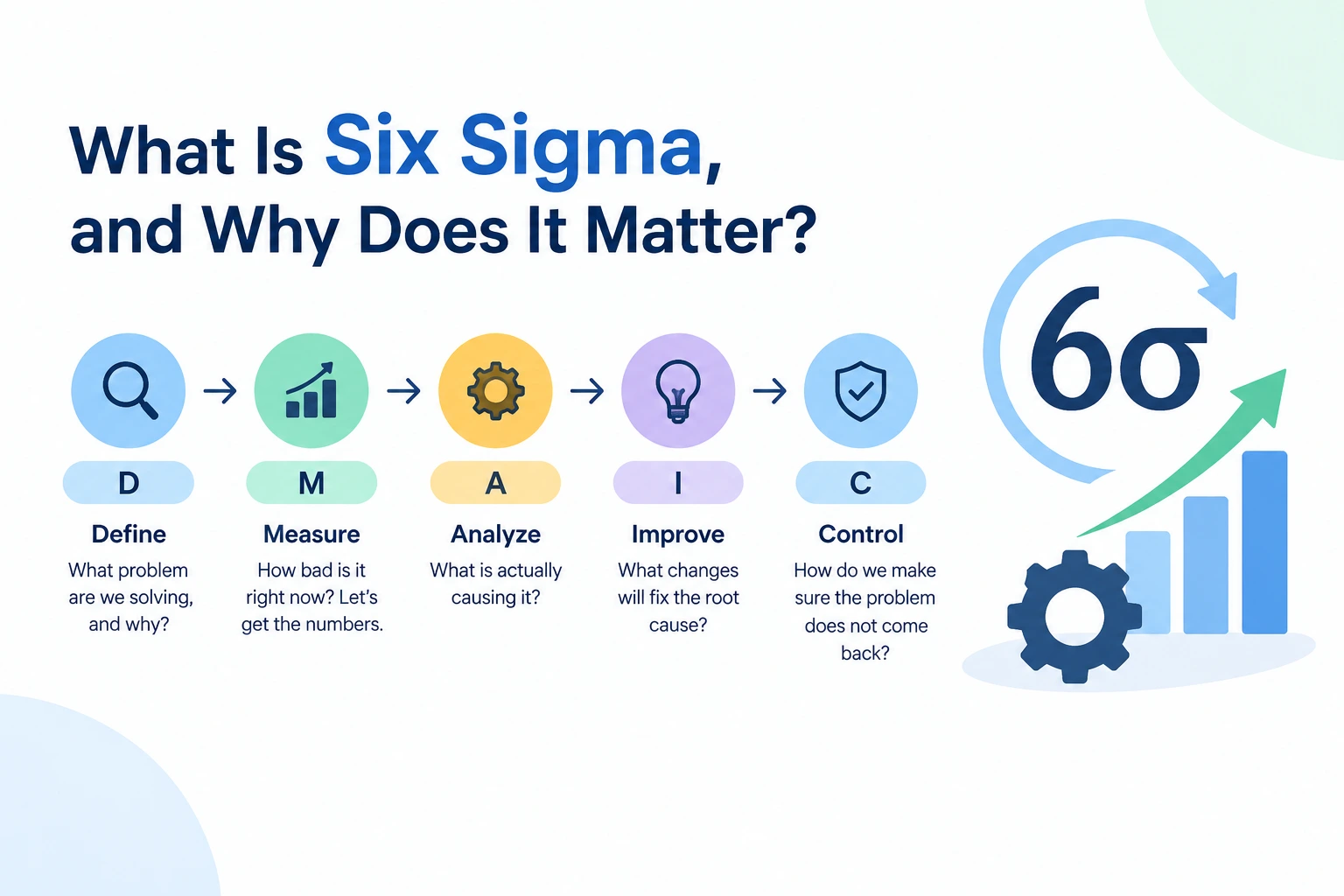










 ROI Calculator



