Best Self-Improvement Books to Transform Your Life in 2027
J
By Bhargavi R
October 7, 20269 min read
Published on October 7, 2026
SHARE THIS ARTICLE
Table Of Content
Why Self-Improvement Books Still Work in the Age of Podcasts and Reels
How to Choose the Right Self-Improvement Book?
The Best Self-Improvement Books for Building Better Habits
Best Self-Improvement Books for Mindset and Mental Strength
Every January, millions of us make the same promise: this is the year I finally change. We'll wake up earlier, speak up more, stop procrastinating, and become the person we keep imagining. By February, most of that energy has faded.
The problem usually isn't willpower. It's that we try to change without a map. That's where the best self-improvement books come in. A great book doesn't just motivate you for a weekend. It gives you a new way of seeing yourself, a few practical tools, and sometimes the exact sentence you needed to hear.
If you want 2027 to be the year something actually shifts, this blog covers the books worth your time, why they work, and how to turn their ideas into real change.
Why Self-Improvement Books Still Work in the Age of Podcasts and Reels
You can get quick tips from a 30-second video, so why read a whole book?
Because change is rarely about information. It’s about understanding, and understanding needs depth. A book lets an author build an argument, tell the stories behind it, and walk you through the why before the how. When you understand why a habit works, you’re far more likely to keep it when life gets messy.
Self-improvement books also slow you down. In a world of constant scrolling, sitting with one idea for twenty minutes is its own kind of training. Many readers say the reading itself, quiet and focused and screen-free, is half the benefit.
How to Choose the Right Self-Improvement Book?
Here’s a mistake almost everyone makes: buying the mostpopular book instead of the most relevant one. A book on productivity won’t help if your real struggle is self-doubt. Before you shop, ask yourself:
What is my biggest pain point right now? Habits, confidence, focus, money, relationships, purpose?
Do I need inspiration or instruction? Some books stir your emotions, others hand you a step-by-step system. Both are valuable, but they feel different.
How much time do I realistically have? A dense 500-page classic is wonderful, but a shorter book you actually finish beats a masterpiece that gathers dust.
Pick one problem, pick one book, and finish it before starting another. That alone puts you ahead of most people.
The Best Self-Improvement Books for Building Better Habits
Atomic Habits by James Clear
If there’s one title that dominates every list of the best self-improvement books, it’s this one, and for good reason. James Clear’s core idea is simple: tiny changes, repeated consistently, compound into remarkable results. He argues you don’t rise to the level of your goals, instead you fall to the level of your systems.
What makes it practical is the framework. Make the habit obvious, attractive, easy, and satisfying. Want to read more? Leave the book on your pillow. Want to stop doomscrolling? Charge your phone in another room. It’s not glamorous, but it works.
The Power of Habit by Charles Duhigg
Where James Clear gives you tactics, Duhigg gives you the science. He breaks down the habit loop of cue, routine, and reward, and shows how it plays out in people, companies, and even whole societies. It’s a great pick if you like your self-improvement with real stories and research behind it.
Four Thousand Weeks by Oliver Burkeman
This book is for anyone who feels permanently behind. Burkeman points out that the average human lifespan is roughly four thousand weeks, and that no productivity system will ever help you do everything. His answer isn’t to do more. It’s to choose more carefully and accept your limits. It’s surprisingly freeing, and perfect for those who feel overwhelmed.
Best Self-Improvement Books for Mindset and Mental Strength
Mindset by Carol Dweck
Dweck’s research on the “fixed” versus “growth” mindset has influenced classrooms and workplaces everywhere. The takeaway: people who believe their abilities can be developed tend to persist longer, learn faster, and handle failure better. After reading it, you’ll start noticing the fixed-mindset voice in your own head (“I’m just not a math person,” “I’m bad at public speaking”) and learn to talk back to it.
Man’s Search for Meaning by Viktor Frankl
Short, heavy, and unforgettable. Frankl, a psychiatrist and Holocaust survivor, writes about finding purpose even in unimaginable suffering. It’s not a how-to book, yet it changes how many readers view their own problems. If you’re going through a hard season, this is the book that reminds you that meaning can be found even when circumstances can’t be controlled.
Can’t Hurt Me by David Goggins
Goggins’s story is intense, and his approach is not for everyone. But if you struggle with excuses and need a loud, unapologetic push, his account of rebuilding himself from a difficult past can light a fire. Just remember: tough love works best when it’s balanced with self-compassion.
How to Improve Self-Confidence: The Books That Actually Help
Confidence is one of the most searched topics in personal growth, and one of the most misunderstood. Many people think confident people are born that way. The truth is more encouraging: confidence is largely built through action, small wins, and changing how you talk to yourself.
If you’ve been wondering how to improve self-confidence, these books offer a solid starting point.
The Gifts of Imperfection by Brené Brown
Brown’s work on shame and vulnerability shows that real confidence doesn’t come from being flawless. It comes from accepting yourself as you are. Her “wholehearted living” ideas are gentle but powerful, especially if perfectionism is quietly running your life.
Feeling Good by David D. Burns
A classic in cognitive behavioral therapy, this book teaches you to spot distorted thinking patterns, such as all-or-nothing thinking or mind reading, and challenge them. Low self-esteem often runs on automatic negative thoughts, and learning to question them is one of the most reliable ways to build self-belief.
The Confidence Code by Katty Kay and Claire Shipman
Combining neuroscience with real-world stories, this book explores what confidence actually is and how to build it. The key insight: confidence grows when you take risks and tolerate failure. It’s particularly useful for people who overthink and hold back.
How to Win Friends and Influence People by Dale Carnegie
Social confidence matters too. Carnegie’s century-old advice about listening, showing genuine interest, and avoiding criticism still holds up remarkably well. If you freeze in conversations or networking events, the simple habits here can transform how you show up.
A few practical tips on how to improve self-confidence
Books can start the process, but here’s what makes the difference:
Keep small promises to yourself. Every time you do what you said you’d do, even something tiny, you build self-trust.
Collect evidence. Write down three things you handled well each day. Your brain remembers failures more easily, so you have to record the wins.
Do one slightly scary thing each week. Ask the question, share the idea, send the email.
Watch your self-talk. If you wouldn’t say it to a friend, don’t say it to yourself.
Stop comparing your behind-the-scenes with everyone’s highlight reel.
Free Courses
Stakeholder Communication & Negotiation Skill Sets
Best Self-Improvement Books for Focus and Productivity
Deep Work by Cal Newport
In a distracted world, the ability to concentrate deeply is becoming a rare and valuable skill. Newport offers strategies for protecting your attention and doing meaningful work without constant interruption. If your phone controls your day, start here.
Essentialism by Greg McKeown
McKeown’s message is “less, but better.” Instead of saying yes to everything and spreading yourself thin, you learn to identify the few things that truly matter and say no to the rest. It’s a gentle antidote to burnout and people-pleasing.
Eat That Frog! by Brian Tracy
Short, direct, and practical. The idea is to tackle your hardest task first thing in the morning. It won’t revolutionize your worldview, but it will help you stop procrastinating, and sometimes that’s exactly what you need.
Best Self-Improvement Books for Purpose, Peace, and Emotional Wellbeing
The Power of Now by Eckhart Tolle
Tolle explores how much of our suffering comes from dwelling on the past or worrying about the future. It’s a deeply reflective read, and while its spiritual tone won’t suit everyone, many readers find it a powerful introduction to mindfulness.
Ikigai by Héctor García and Francesc Miralles
Inspired by the Japanese concept of a reason for being, this light, easy read explores how people in long-living communities find meaning in daily life. It’s a lovely pick if you feel stuck or unsure about your direction.
The Courage to Be Disliked by Ichiro Kishimi and Fumitake Koga
Written as a conversation between a philosopher and a young man, this book is built on Adlerian psychology. It challenges the habit of living for other people’s approval, which makes it excellent for anyone who struggles to set boundaries or follow their own path.
Self-Improvement Trends to Watch in 2027
The way we approach personal growth is shifting, and it shows in the books people are choosing:
Less hustle, more sustainability. Readers are moving away from “grind harder” messaging and toward balance, rest, and long-term wellbeing.
Mental health as a core theme. Books blending psychology, emotional awareness, and practical therapy tools keep growing in popularity.
Digital minimalism and attention. With AI tools and endless notifications, protecting focus has become a central self-improvement skill.
Audiobooks and bite-sized learning. Many people now “read” during commutes, walks, and workouts. The format matters less than actually absorbing the ideas.
Purpose over productivity. More people are asking not just “how do I get more done?” but “what’s worth doing?”
How to Actually Get Results From the Best Self-Improvement Books
Reading is the easy part. Change is the hard part. Here’s how to bridge the gap:
Read with a pen. Underline anything that makes you pause. Highlight less than you think you should, so what you mark actually matters.
Pick one idea per book. You don’t need to implement every tip. If one concept changes your behavior, the book has paid for itself.
Write a one-page summary. After finishing, note the three biggest lessons and one action you’ll take this week. Teaching or summarizing forces you to truly understand.
Apply within 48 hours. Ideas fade fast. Do something small right away, even if it’s imperfect.
Review quarterly. Revisit your notes every few months. Often the lessons that didn’t land the first time suddenly make sense.
Don’t turn reading into procrastination. It’s easy to read about change forever without changing. If you’ve finished three books and haven’t acted on any, pause reading and start practicing.
Not sure where to begin? Here’s a balanced starter list for the year:
Quarter 1: Build your foundation. Atomic Habits, to set up simple routines.
Quarter 2: Strengthen your mindset. Mindset or Feeling Good, to reshape your thinking.
Quarter 3: Build confidence and connection. The Gifts of Imperfection or The Confidence Code, to grow self-belief.
Quarter 4: Find direction. Man’s Search for Meaning or Four Thousand Weeks, to reflect on what truly matters.
One book per quarter is enough. Depth beats quantity every time.
Final Thoughts
You don’t need to become a completely different person in 2027. You just need to become a slightly better version of yourself, consistently, over time. The best self-improvement books won’t do the work for you, but they’ll show you where to begin, remind you that others have struggled with the same things, and hand you tools that actually work.
Choose one book that speaks to where you are right now. Read it with curiosity, not pressure. Take one small action from it this week. Then do it again next week.
That’s how real transformation happens, quietly, one page and one small decision at a time.
Bhargavi R
HR Professional
Bhargavi Reddy is an HR professional with over 6 years of experience in IT recruitment and talent acquisition. She specializes in hiring across technologies like Java, DevOps, Python, and Data Engineering. With strong expertise in full-cycle recruitment and stakeholder management, she focuses on building high-performing teams. Currently, she works as an HR Manager driving strategic hiring initiatives.

 October 7, 2026
 9 min read





 ChatGPT
 Perplexity
 Claude
 Grok
Grok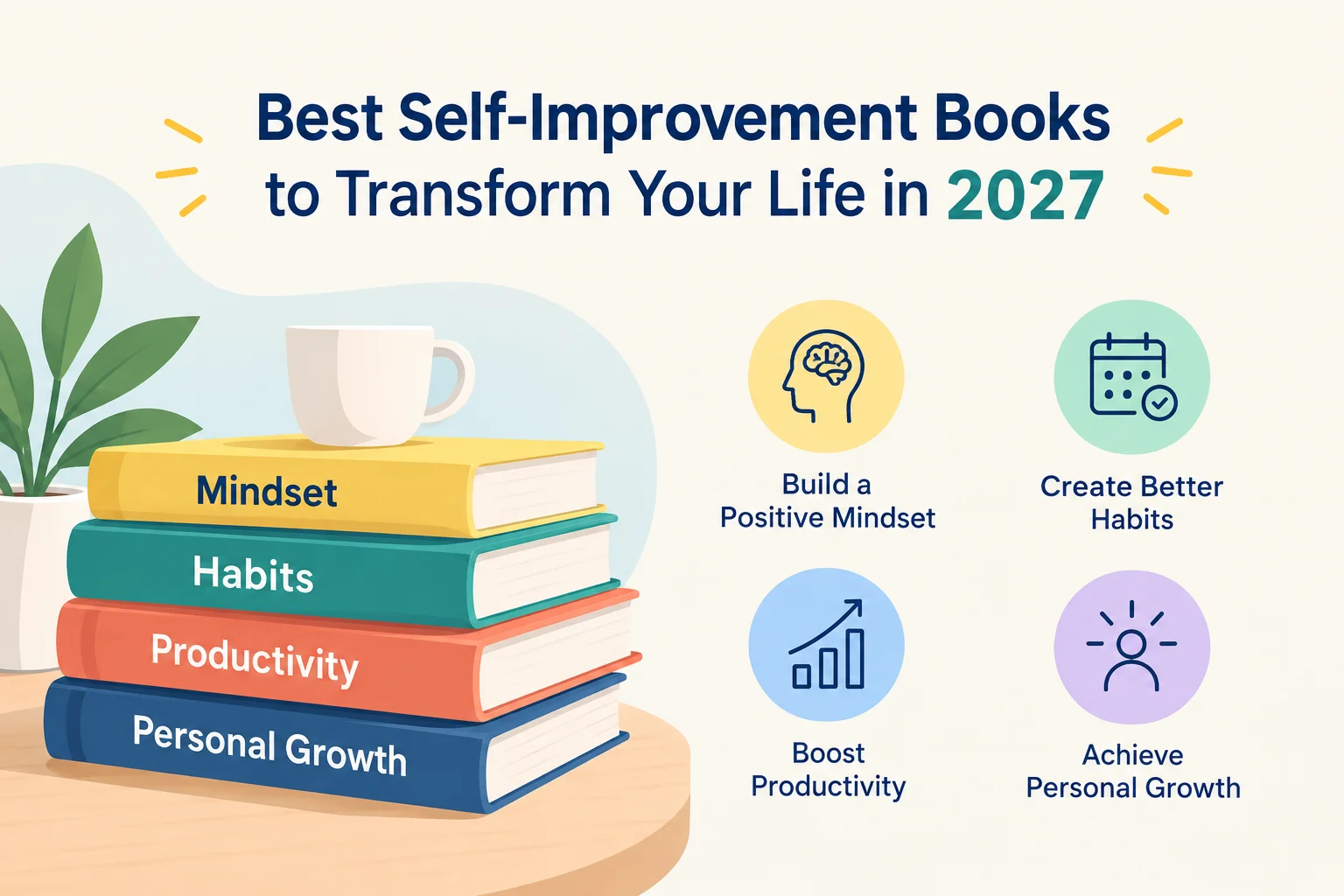









 ROI Calculator