ACCA's own fees are charged in British pounds and include a one-time registration fee, an annual subscription, a fee for every exam sat and a fee for every exemption claimed.
Based on ACCA's published 2026 fees, a student with no exemptions who clears all papers on the first attempt pays roughly ₹3 lakh in ACCA fees over about three years, before coaching and study materials.
Exemptions save time and effort more than money, because ACCA charges an exemption fee for each paper you skip.
Online ACCA coaching is priced by institutes, not by ACCA, and listed prices vary widely depending on the bundle and the number of papers.
Resits, late entries, annual subscriptions and exchange-rate movements are the costs that most often push the total above the initial budget.
In this blog, you'll learn the ACCA fee structure, exam fees by level, exemption fees, online course costs, total cost scenarios and ways to save.
"How much does ACCA cost?" sounds like a simple question, but the answer has several moving parts. Part of the cost goes to ACCA itself, part goes to coaching and study materials, and part depends on how many exams you take, how many attempts you need and how many years you stay registered.
This guide breaks down ACCA course fees in India, including registration, subscription, ACCA exam fees by level, exemption fees and online course costs. It also shows realistic total-cost scenarios and practical ways to save. All fee figures are from ACCA's published 2026 listings and may change, so always confirm them before paying.
ACCA’s own fees: registration, annual subscription, exam entries, exemptions and the Ethics and Professional Skills Module.
Learning costs: classroom or online coaching, study materials and mock exams, charged by your training provider.
Extra costs: resits, late entry penalties, card or foreign-exchange charges and, later, membership fees.
ACCA bills in British pounds (GBP), so the rupee amount depends on the exchange rate on the day you pay. The rupee figures in this guide use an approximate rate of ₹128 per pound.
Strategic Professional options (Sept 2026 standard)
£191
About ₹24,400
Per exam
Ethics and Professional Skills Module
£83
About ₹10,600
Once
Exemption: Applied Knowledge paper
£86
About ₹11,000
Per exemption
Exemption: Applied Skills paper
£114
About ₹14,600
Per exemption
Some listings show a reduced registration fee for India, such as £30, in certain periods or through approved learning partners. Check ACCA’s page or your provider for the fee that applies when you register.
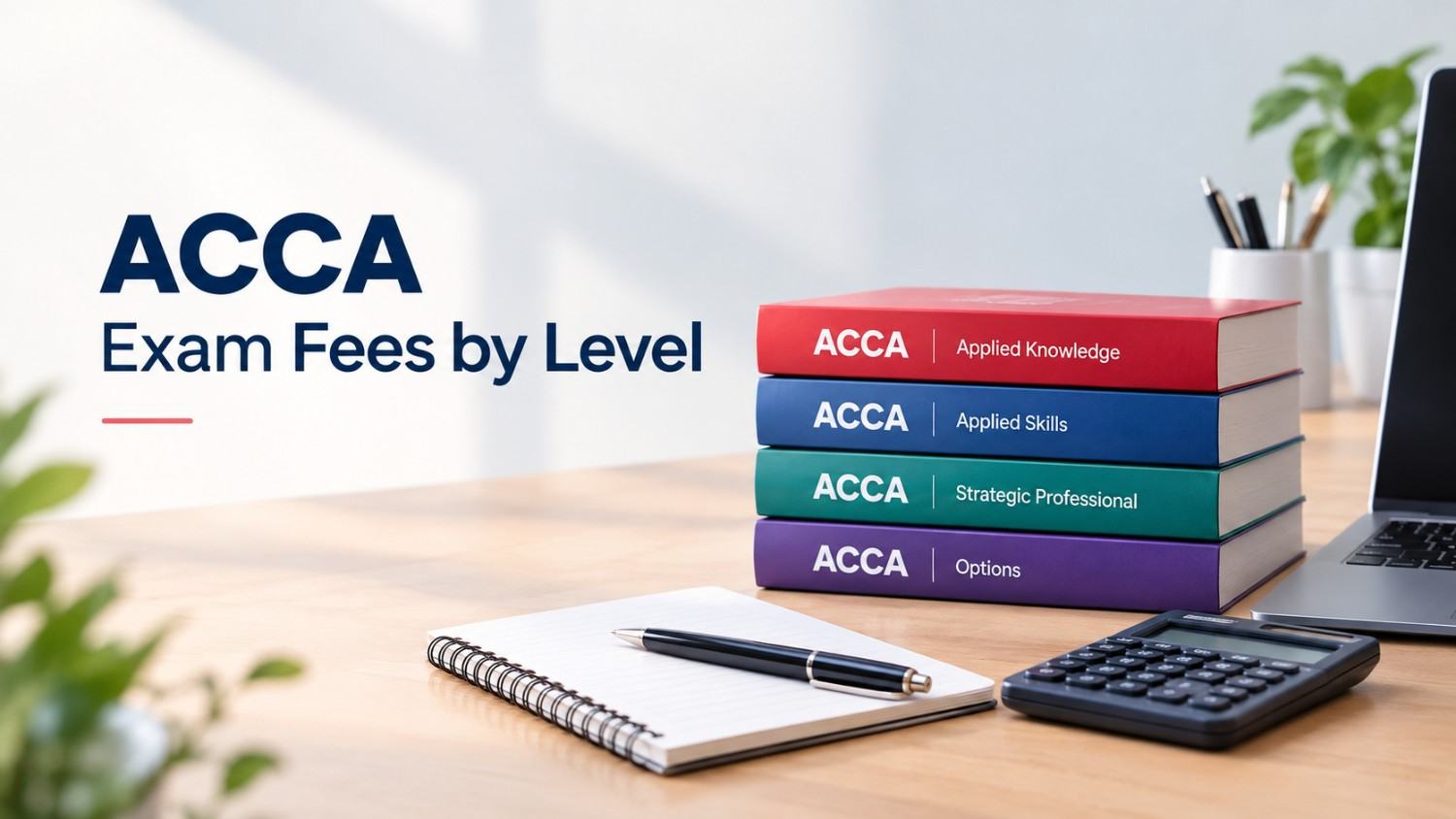
ACCA exam fees depend on the level and on when you enter.
Applied Knowledge (3 Papers)
These are the entry-level exams in Business and Technology, Management Accounting and Financial Accounting. Fees are set by approved exam centres rather than a single ACCA price, so they vary by centre and delivery method.
Applied Skills (6 Papers)
The six papers cover areas such as taxation, financial reporting, audit and financial management. ACCA’s India page lists £151 per exam for standard entry in September 2026, and late entry is far higher at £387. Fees can differ from session to session.
Strategic Professional (Essentials and Options)
This level includes Strategic Business Reporting and Strategic Business Leader, plus two option papers. Standard entry for Strategic Business Leader is £268, while option papers are £191, and late entry is £430 for each.
Ethics and Professional Skills Module
The module costs £83 and is required before you can qualify as an ACCA affiliate.
Why Late Entry and Resits Matter
Late entry costs more than double in some cases, so book before the standard deadline. A failed paper means paying the full exam fee again, so resits are the biggest budget risk. Careful preparation is cheaper than a retake.
ACCA Registration and Annual Subscription
Registration is a one-time fee when you first sign up. The annual subscription then keeps your student status active.
As ACCA’s dates and fees page explains, the subscription is due on or before 1 January each year, ACCA sends an invoice every November, and you must pay it even if you do not plan to take exams that year. If you forget, you may be removed from the student register and have to pay a re-registration fee plus outstanding fees.
Because the subscription repeats annually, a longer journey costs more. Finishing in three years instead of five can save two subscriptions.
ACCA Exemption Fees: Do Exemptions Save Money?
Graduates and professionals with relevant qualifications can claim exemptions from some Applied Knowledge and Applied Skills papers. You can check what applies to you using ACCA’s exemption tools, and the maximum is nine papers.
The catch is that ACCA charges a fee for each exemption, £86 per Applied Knowledge paper and £114 per Applied Skills paper. These fees are close to the cost of the exams themselves, so exemptions mainly save study time, not money. For example, a B.Com graduate claiming three Applied Knowledge exemptions and one Applied Skills exemption would pay £372, about ₹47,600.
ACCA Online Courses Fees: What Does Coaching Cost?
ACCA does not set coaching fees. Training providers do, and their prices vary by city, format and bundle. Published provider listings in India commonly range from about ₹60,000 to more than ₹2.5 lakh for full coaching, with study materials adding roughly ₹10,000 to ₹25,000 per level. Treat these as indicative, since prices differ by institute.
When comparing ACCA online courses fees, look at:
Live vs recorded: live classes cost more but offer interaction.
Coverage: fees per paper, per level or for the full qualification.
Materials and mocks: whether textbooks, question banks and mock exams are included.
Resit support: some providers offer free repeat classes.
Validity period: how long you can access recordings.
A well-priced course is one that helps you pass first time. A cheaper course that leads to resits can cost more overall. For help deciding between professional certificates and degrees, see certification vs degree.
Total ACCA Cost in India: Three Scenarios
The table below uses the fees above, three years of subscription, a rate of about ₹128 per pound and first-attempt passes. It excludes coaching, materials and Applied Knowledge exam-centre fees, which vary.
Two lessons follow. First, ACCA’s own fees come to roughly ₹3 lakh in most cases, and exemptions do not cut that by much. Second, the real saving from exemptions is time: fewer exams, fewer subscription years and lower coaching costs. Adding coaching and materials, total spending commonly lands somewhere between ₹4 lakh and ₹6 lakh, depending on your choices.
ACCA vs Other Finance Qualifications: Cost and Fit
ACCA’s global recognition and IFRS focus suit careers in international accounting, audit and finance. Alternatives include the Indian CA, the CMA and the CFA, and each has different costs and career outcomes. Compare them through our guides on the CMA course and CFA vs MBA in finance.
If your work will involve global reporting standards, read Ind AS vs IFRS.
Is ACCA Worth the Fees?
Whether ACCA is worth it depends on your goals. It can open doors in audit, financial reporting, tax and finance roles, including with multinational employers, and you can study while working. To see where it can lead, look at how to become an auditor.
ACCA’s own fees add up to roughly ₹3 lakh over a typical three-year journey, with coaching and materials on top. The best ways to control the total are to pass first time, avoid late entries, keep your timeline tight and compare coaching carefully. Always check ACCA’s official fee page, because amounts and session-wise fees change.
If you are starting from Class 12 or a diploma and want a degree alongside professional study, the Amrita Online B.Com in Taxation and Finance is a UGC-entitled online degree with a flexible 3 to 6 year completion window, and our overview of the Amrita online B.Com degree explains it in more detail. Its curriculum covers accounting, taxation, corporate finance and auditing, and its final semester includes subjects such as Strategic Business Reporting and Advanced Audit and Assurance. Whether the degree qualifies you for ACCA exemptions depends on ACCA’s assessment, so check its exemption tools, and see the programme page for current fees and eligibility. For more options, read our best finance courses in India.
Frequently Asked Questions
ACCA’s own fees come to roughly ₹3 lakh over about three years if you take all papers without exemptions and pass first time. Coaching and study materials are extra, so total spending often reaches ₹4 lakh to ₹6 lakh.
Applied Skills exams were £151 for standard entry in September 2026. Strategic Business Leader was £268 and option papers £191, while Applied Knowledge fees are set by exam centres. Fees vary by session.
The standard initial registration fee is £89, paid once. Some listings show reduced registration for India, so check ACCA’s page before you register.
The 2026 annual subscription is £140. It is due every year by 1 January to keep your student status active, even if you do not sit an exam.
ACCA does not set these fees. Providers charge their own, and published listings commonly range from about ₹60,000 to over ₹2.5 lakh for full coaching, plus study materials.
ACCA charges £86 per Applied Knowledge exemption and £114 per Applied Skills exemption. Exemptions save study time but do not remove the fee.
ACCA fees are set in pounds. You pay the rupee equivalent at the exchange rate on the day, so the amount in rupees changes.
You may be removed from the student register and have to pay a re-registration fee plus any unpaid fees to continue.
Arif Siddiqui
Head of Accounting and Treasury
Arif Siddiqui is a finance leader specializing in accounting, treasury, and financial strategy. As Head of Finance at Generali Employee Benefits, he brings extensive experience in managing global financial operations. He is known for driving financial efficiency and governance across organizations. His leadership supports sustainable business growth and financial excellence.

 October 18, 2026
 7 min read




 Key Insights
 ChatGPT
 Perplexity
 Claude
 Grok
Grok



 ACCA exam fees depend on the level and on when you enter.






 ROI Calculator



