
What is 360-degree Performance Appraisal?
 March 31, 2024
 5 min read





Table Of Content
- Importance of 360-Degree Performance Appraisal
- Key Components of 360-Degree Appraisal
- Advantages of 360-Degree Performance Appraisal
- Challenges of 360-Degree Performance Appraisal
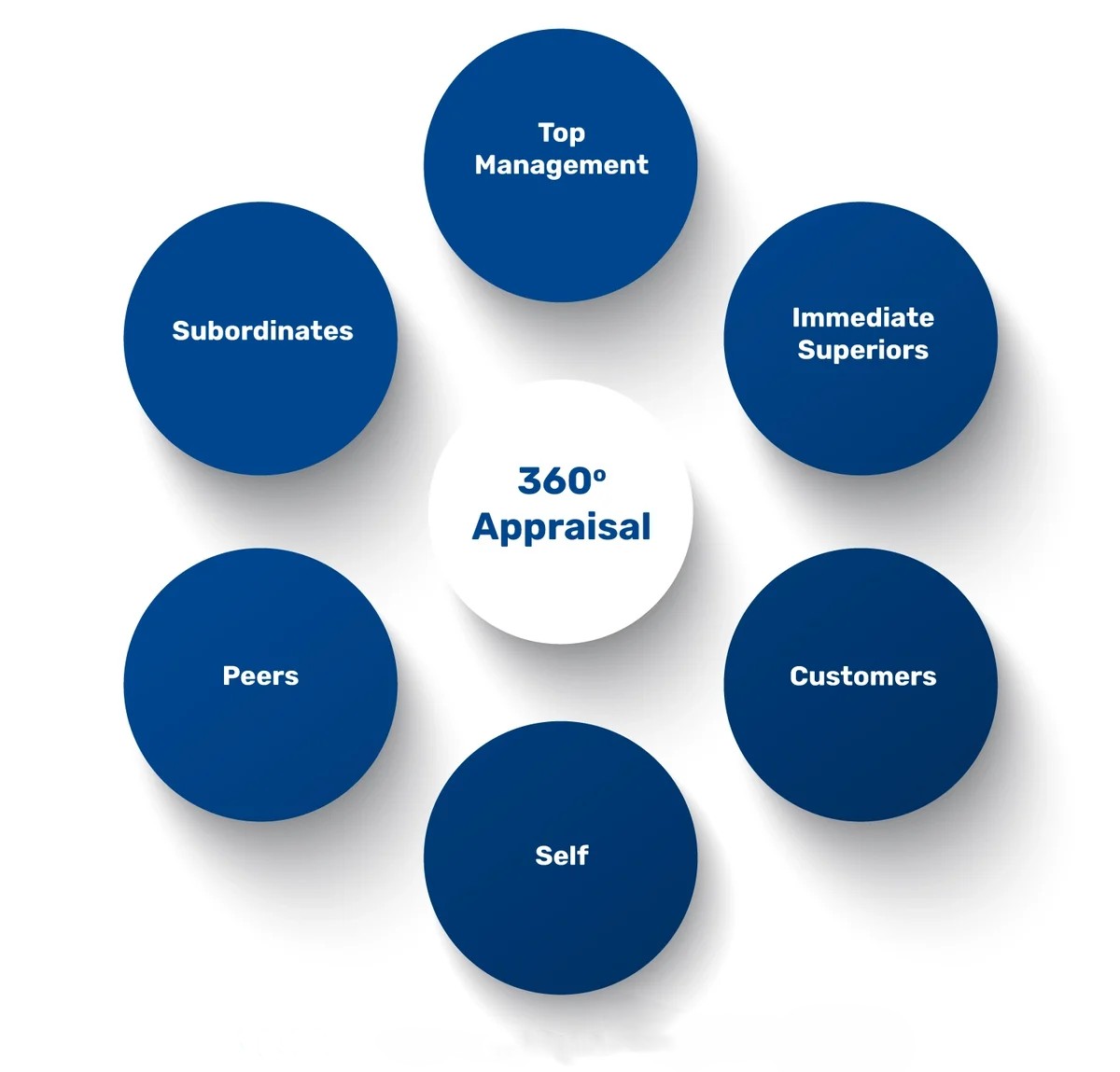
At its core, 360-degree performance appraisal is a holistic evaluation method that goes beyond traditional approaches. It gathers feedback from various sources, including peers, subordinates, supervisors, and even customers, offering a 360-degree view of an employee’s performance.
This method of appraisal has a lot of impact on the global employers. According to the source (link attached), The global 360 Degree feedback software market size is projected to grow from $1,001.2 million in 2023 to $2,136.0 million by 2030, at a CAGR of 11.4% during the forecasting period.
*retorio
 ChatGPT
 Perplexity
 Claude
 Grok
GrokImportance of 360-Degree Performance Appraisal
A 360-degree performance appraisal is a crucial tool in promoting a more accurate and balanced evaluation, ultimately contributing to the growth and success of both individuals and the organization as a whole which makes it a win-win situation. The 360-degree feedback process involves input from colleagues, subordinates, and even clients which was not the case in the traditional performance reviews conducted solely by supervisors. This comprehensive approach provides a more holistic and well-rounded view of an employee’s strengths and areas for improvement.
Key Components of 360-Degree Appraisal
1. Self-assessment
It is a process by which employees get the clarity about where they currently stand in terms of their potential and contribution to the organization. Employees evaluate their performance, reflecting on their strengths and areas for improvement. This helps employees to plan their career growth by developing required skills.
2. Peer assessment
This is a process where Colleagues provide feedback, offering insights into the teamwork, communication, and collaboration skills of an employee. The feedback not only contributes to an understanding of an employee’s performance but also fosters a collaborative and supportive work environment, as it develops teamwork and mutual growth within the organization.
3. Supervisor assessment
Supervisor assessment plays a pivotal role in the importance of 360-degree performance appraisal. In this process, Managers assess the employee’s performance, focusing on job-specific skills, goal achievement, and overall contribution. The supervisor’s evaluation is the culmination of feedback received by different stakeholders.
4. Subordinate assessment
In a hierarchical setting, employees receive feedback from those they manage, fostering a culture of open communication and leadership development. Subordinate feedback adds depth to the assessment, ensuring a comprehensive understanding of a leader’s impact on those they supervise.
5. Customer assessment
Customer feedback helps in improving the performance of the business. The assessment of an employee by external stakeholders based on the employee’s interactions, service quality, and customer satisfaction is valuable. This external viewpoint is crucial for businesses to gauge the impact the employee has on the customers which helps organizations to review the contribution of the employee on the right parameters, which helps to determine how much an employee is able to foster business success.
Advantages of 360-Degree Performance Appraisal
1. Comprehensive Feedback
Provides a well-rounded perspective on an individual’s performance, capturing insights from various angles. It involves all the stakeholders related to the 360-degree Performance Appraisal like Supervisors, Peers, Subordinates and Customers.
2. Developmental Focus
360-degree Performance Appraisal mainly focuses on the continuous improvement of employees and their career growth. It encourages overall growth by highlighting specific areas for enhancement.
3. Team Collaboration
360-degree appraisal Fosters a collaborative work environment, as feedback comes from peers and subordinates, which helps in promoting teamwork and a smooth flow of communication.
4. Identifying Blind Spots
One of the important purposes of having feedback from different stakeholders is to figure out the areas of improvement in every aspect for better performance of the employee and for the organization. It will also help individuals recognize strengths they may not be aware of along areas where improvement is needed.
5. Fairness and Objectivity
This form of appraisal method ensures rational decisions which have been taken by considering the feedback of all the stakeholders. It minimizes biases associated with single-source assessment, which helps in providing a more accurate and objective assessment.
Challenges of 360-Degree Performance Appraisal
1. Feedback Quality
The effectiveness of the appraisal depends on the quality of feedback provided and the individual who is providing the feedback. There might be a lot of factors which may influence the feedback of the respective stakeholders. It might hamper the decision-making process.
2. Implementation Issues
The execution of 360-degree performance appraisals might be difficult in terms of taking feedback from all the stakeholders. However,one of the most important challenges in implementing this appraisal method is communicating and aligning the thought process of all the stakeholders on the same page.
3. Time-Consuming
The process of 360-degree performance appraisal is time-consuming as gathering feedback from multiple sources can take a lot of time, requiring careful planning and coordination.





Best Practices for Implementing 360-Degree Appraisal
1. Clear Communication
One of the most important factors in 360-degree Appraisal is communication between all the stakeholders and to achieve it, HR should take responsibility & ensure all participants understand the purpose, process, and benefits of 360-degree appraisal.
2. Training
The authorized person should provide training on how to give constructive feedback to ensure the quality and effectiveness of the appraisal. Here, the parameters should be clearly mentioned to have a rational assessment.
3. Confidentiality
Keeping the feedback confidential is key to ensuring the smooth flow of communication. It will help in making better decisions.
4. Follow-Up and Action Plans
Establish a system for follow-up discussions and create action plans based on the feedback received, which will ensure the success of 360-degree Appraisal.
Conclusion
360-degree Performance Appraisal stands out as a comprehensive and invaluable tool for assessing employee performance. By incorporating feedback from various sources, it provides a holistic view that fosters individual development and organizational success. While challenges such as feedback quality and implementation issues exist, adopting best practices such as clear communication, training, confidentiality, and follow-up plans can enhance the effectiveness of the 360-degree appraisal process, making it an essential component of modern performance evaluation strategies.




Find a Program made just for YOU
We'll help you find the right fit for your solution. Let's get you connected with the perfect solution.
Is Your Upskilling Effort worth it?
 ROI Calculator

Are Your Skills Meeting Job Demands?
Try our Skill Gap tool
Experience Lifelong Learning and Connect with Like-minded Professionals
Explore Jaro Connect

