
Mastering Multitasking Skills for Efficient Task Management
 April 30, 2026
 8 min read




Table Of Content
- What is Multitasking?
- 14 Top Tips to Help You Improve Your Multitasking Skills
- Final Thoughts
When working on a project, multitasking is the most significant skill to deal with numerous tasks simultaneously. Instead of taking the burden of managing everything at once, it is wise to understand how to multitask. Our brain is already set to handle multiple tasks at the same time.
But sometimes many professionals become overwhelmed, fatigued, and make errors. Thus, it is essential to engage your multitasking skills. Here we are with the right strategies that can help you multitask in an effective way.
 ChatGPT
 Perplexity
 Claude
 Grok
GrokWhat is Multitasking?
*skilltrans.com
Before we dive into tips, let’s quickly define multitasking.
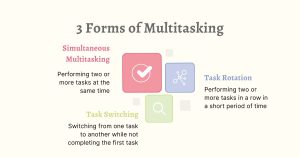
Multitasking is the ability to manage multiple tasks by shifting your attention between them efficiently. It doesn’t always mean doing everything at the same moment. Instead, it’s about switching tasks without losing momentum.
This is where many people get confused.
Multitasking vs Multiprogramming
A quick clarification:
- Multiprogramming vs multitasking is often misunderstood.
- Multiprogramming is a system-level concept used in computers.
- Multitasking is a human behaviour, so it’s all about how we handle work.
So when we talk about multitasking here, we’re talking about how you manage your day, not how a computer runs programs.
14 Top Tips to Help You Improve Your Multitasking Skills
1. Accepting the Boundaries of Multitasking Skills
One of the biggest errors people face when doing multiple things is believing they can manage all of them. In truth, everyone has boundaries, regardless of how much time, focus, or strength they have.
You have exactly 24 hours each day. Your mental resources change over time. Some activities need immediate attention while others can be done later on. Understanding these priorities can help manage tasks efficiently. To understand your task, focus on:
- How many responsibilities can you complete in a day without losing track?
- Which activities need your complete focus?
- Where are you likely to drift away from the task?
2. Prioritising: Understanding the Urgent Requirements
If multitasking seems complicated, it is because priorities are not clear. Create a to-do list and organise it properly to get real value. You need to understand which task matters the most. Most professionals use the following approach to prioritise their tasks:
- Important and urgent
- Important but not urgent
- Not important but urgent
- Not important and not urgent
With this, you can avoid spending time on tasks that feel urgent but don’t actually contribute much to your goals. Simultaneously, you can combine light tasks with heavier ones. For example, after finishing a hard task, you can switch to something simple to give your mind a break.
3. Focus on Mastering: A Crucial Multitasking Skill
Concentration is one of the essential aspects of multitasking skills. Professionals who are highly focused on their current task and then shift their attention to other tasks are highly organised. If you lack concentration, follow the approach to improve it:
- Make a note or doodle: writing improves concentration. You can either make notes or doodle, according to your interest.
- Work on Your Willpower: Controlling procrastination is important. Save time between tasks, especially when deadlines are not on the wall.
- Try Meditation: Meditation is helpful for improving focus. Numerous apps can help you practice, ensuring you’re engaged and not just sitting silently.
4. Preventing Distractions: A Core of Multitasking Skill
Believe us, if you’re still thinking that you’ren’t multitasking, you are wrong. Just look around you. Sitting in an organisation, your phone notifications are continuously popping up, your colleague is texting you back and forth asking for help, there is a song playing in the background, and among all these, you manage to work, which is multitasking.
But too much disturbance can halt your skills. Thus, to maintain balance, you can:
- Note down potential distractions around you.
- Address them systematically. For example, if music disturbs you, shift to another place.
As you move through the project management lifecycle, cutting distractions will be important in ensuring you’re completing tasks on your schedule.
5. Breaking Down Multiple Tasks: The Art of Segmentation
Considerable tasks can feel intimidating, and that often leads to procrastination. Instead of looking at a task as one big responsibility, break it down into smaller, manageable parts. This makes it easier for your brain to process and act.
For example, instead of saying “complete the project,” break it into:
- Research
- Planning
- Execution
- Review
You can also use time-based methods like working in focused intervals followed by short breaks. This approach reduces mental fatigue and helps you stay consistent.
The idea is simple: handling smaller pieces one at a time is much easier than trying to manage everything at once.
6. Efficiently Juggling: Handling Related Tasks Simultaneously
Multitasking doesn’t always mean switching between entirely different types of work. In many cases, you can improve efficiency by grouping similar tasks together. This reduces the mental effort required to switch contexts.
For instance:
- Completing all research work in one go
- Conducting meetings that cover multiple topics
- Preparing a single presentation that addresses different aspects
This approach not only saves time but also gives you a better understanding of the overall picture. When tasks are connected, working on them together allows ideas and insights to flow more naturally.
7. Enhance Your Multitasking Skills through Supervision
A key part of multitasking is knowing when not to do everything yourself. Delegation allows you to focus on tasks that truly require your attention while others handle supporting work. This improves both productivity and efficiency.
However, delegation also comes with its own challenges. Team members may frequently reach out for guidance, which can interrupt your workflow. To manage this:
- Set clear expectations
- Define when you are available
- Clarify what counts as urgent
8. Strategic Forethought: Enhancing Multitasking by Planning Ahead
Planning is one of the most underrated aspects of multitasking. When you start planning your day, week, or even month, you begin to notice patterns:
- Some tasks repeat regularly
- Some require more focus
- Some are connected to larger goals
This awareness helps you organise your work better and switch between tasks more smoothly. Over time, planning becomes a habit, and your workflow starts feeling more structured and predictable.
9. Brain Fitness: The Ultimate Tool to Amplify Multitasking Skills
Apart from work, get yourself involved in various activities like playing games and solving puzzles. These techniques can help you keep your mind fresh and ready to work on new tasks.
10. The Multitasking Blueprint: Crafting a Comprehensive To-Do List
When your mind is overloaded with tasks, putting them on paper helps clear the clutter. A clear to-do list lets you sort out your thinking, follow what’s done, and pick which tasks matter most. You don’t need fancy formatting – just a few lines can change how you handle your day.
Simple items listed out in order can save hours of confusion later. This list shows just what you need to know right now. But it gives you control over your schedule without making it harder to follow.
11. Digital Assistance: Online Tools to Perfect Your Multitasking Techniques
Right now, tonnes of apps help you handle several things at once without stress. Choose from plain task apps, project trackers, or chat tools based on what works for you. These options cut down on time wasted and reduce the chance of missing steps.
You should look for tools that fit your habits, not ones that add more work. The right digital support keeps things moving smoothly and on track.
12. Visual Tools Boost Multitasking Skills
Seeing tasks on a board or chart makes complicated work feel easier to manage. A simple visual layout helps show exactly what’s finished, what’s still going, and what’s urgent now.
With these tools, you can spot changes fast and adjust quickly without extra effort. You’ll catch gaps in your plan before they grow into problems.
13. Feedback: A Cornerstone of Effective Multitasking Skills
Regular feedback is essential in improving multitasking skills. You might see that you’re efficiently juggling multiple tasks, but insights from others can reveal areas for improvement. By actively seeking feedback, you fortify the quality of your work, ensuring it remains top-notch even in the midst of multitasking.
14. Mindfulness: The Unsung Hero of Handling Multiple Tasks
Mindfulness is often overlooked, but it plays a huge role in multitasking. It means being fully present in whatever you’re doing at the moment.
Instead of rushing through tasks, give each one your complete attention before moving on. This improves both efficiency and quality of work.





Final Thoughts
Indeed, understanding and refining one’s multitasking skills is crucial. We’re hardwired to handle a single task at a time, yet today’s world often demands that we juggle several responsibilities concurrently. By using techniques such as strategic planning, utilising technology, understanding the difference between urgent and important, and practising mindfulness, we can navigate the maze of tasks with finesse and efficiency.
Yet, multitasking isn’t merely about doing many things at once; it’s about doing them effectively. The 15 strategies outlined offer a roadmap to hone this skill, ensuring tasks are not just completed but accomplished with purpose and precision. Whether it’s by segmenting tasks, seeking feedback, or using technology, the journey to effective multitasking is iterative, demanding patience and persistence.
This is where structured learning and the right guidance can make a real difference. As one of the trusted online higher education and upskilling companies, Jaro Education focuses on helping professionals build practical, career-relevant skills that go beyond theory. By learning how to manage time, improve productivity, and approach work more strategically, you can strengthen not just your multitasking abilities but your overall professional growth as well.
In the end, it’s not about doing everything; it’s about doing the right things in the right way and at the right time.
Frequently Asked Questions

Related Courses
Explore our programs




Find a Program made just for YOU
We'll help you find the right fit for your solution. Let's get you connected with the perfect solution.

Is Your Upskilling Effort worth it?
 ROI Calculator

Are Your Skills Meeting Job Demands?
Try our Skill Gap tool
Experience Lifelong Learning and Connect with Like-minded Professionals
Explore Jaro Connect

