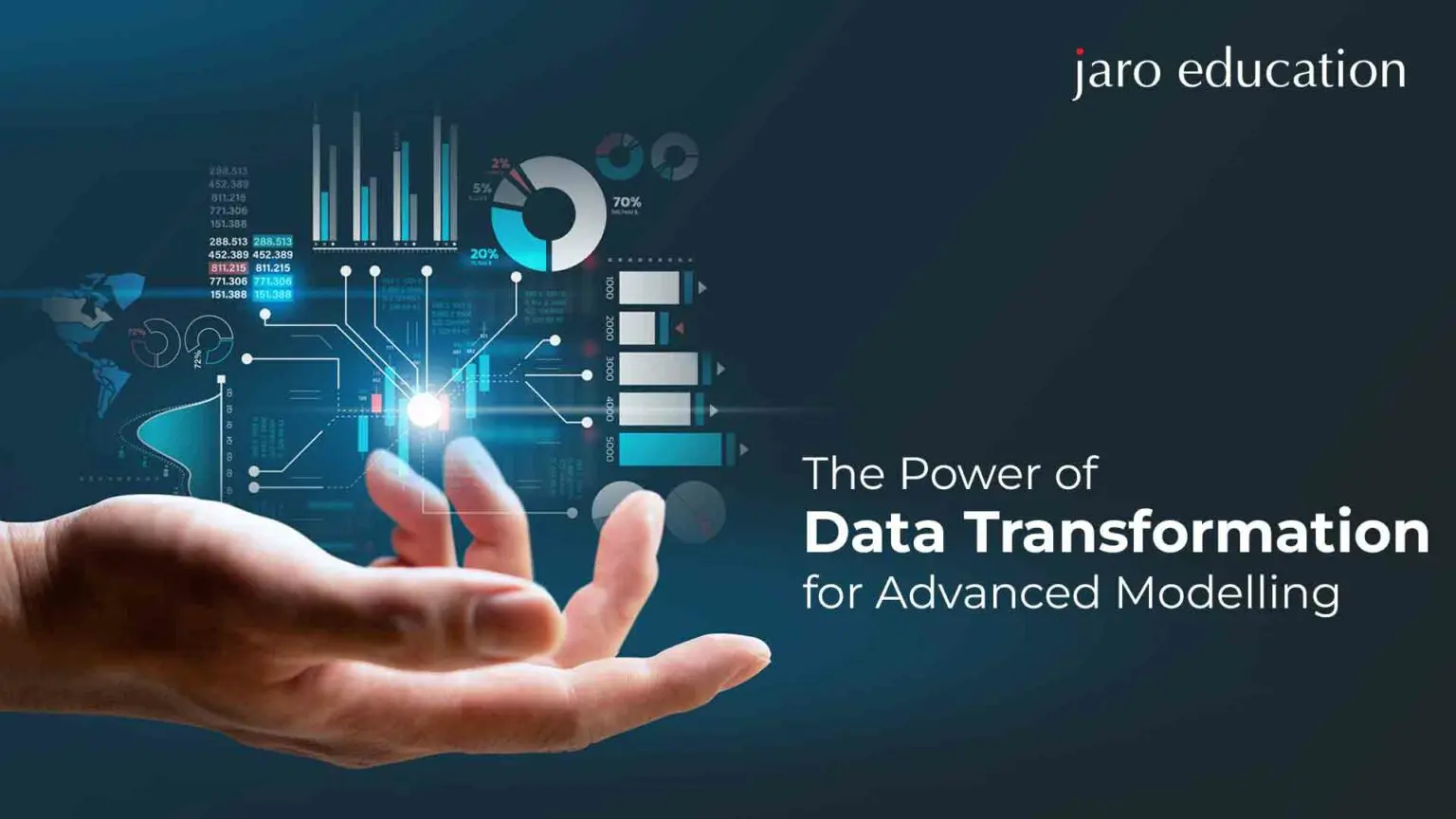
Data transformation is a crucial step in the process of advanced analytics and modelling. It involves converting raw data into a more useful and structured format, making it suitable for analysis. With the increasing demand for advanced analytics in today’s data-driven world, data transformation has become an essential skill for professionals.
Data transformation is the process of converting raw data into a more useful and structured format that is suitable for analysis. The purpose of data transformation is to prepare the data for advanced modelling techniques such as machine learning algorithms, statistical analysis, and data mining. The transformed data must be consistent, complete, and accurate to ensure that the models built on them are reliable.
There are different types of data transformation techniques used to preprocess the data before analysis. Some common techniques include:
Normalization Normalization involves scaling the data so that it falls within a specific range. This is done to ensure that variables with different scales are on a level playing field.
Standardization Standardization involves transforming the data to have a mean of zero and a standard deviation of one. This technique is used to ensure that variables with different units are comparable.
Encoding Encoding involves converting categorical data into numerical data so that it can be processed by machine learning algorithms.
Scaling Scaling involves converting the data so that it falls within a specific range. This technique is used to ensure that the data is on a level playing field.
Data transformation plays a critical role in improving the quality of data for advanced modelling. Here are some of the ways data transformation helps in improving the quality of data:
Removes inconsistency Data transformation helps in identifying and removing inconsistencies in the data. This ensures that the data is consistent, complete, and accurate.
Increases accuracy By eliminating inconsistencies and transforming the data, data transformation increases the accuracy of the data, which leads to more reliable models.
Handles missing or incomplete data Data transformation techniques such as imputation can be used to handle missing or incomplete data, which is common in real-world datasets.
Enables machine learning algorithms Data transformation enables machine learning algorithms to process the data. Without data transformation, machine learning algorithms will not be able to make sense of the data.
Data transformation techniques can be applied in various machine learning algorithms, such as decision trees, logistic regression, and neural networks. Here are some examples:
Decision Trees Decision trees require transformed data to work effectively. Data transformation techniques such as normalization and encoding can be used to preprocess the data before building a decision tree.
Logistic Regression Logistic regression works best with normalized data. Therefore, normalization is a critical data transformation technique when building logistic regression models.
Neural Networks Neural networks require standardized data for optimal performance. Standardization is a data transformation technique used to preprocess the data before building neural network models.
Here are some best practices for data transformation:
Understand the data Before applying any data transformation techniques, it is important to understand the data thoroughly. This includes understanding the nature of the data, its distribution, and its features.
Choose the right transformation techniques Different data transformation techniques are suitable for different types of data. It is important to choose the appropriate technique for the data being analyzed.
Evaluate the results After applying data transformation techniques, it is important to evaluate the results to ensure that the transformed data is accurate and appropriate for analysis. This involves checking for consistency, completeness, and accuracy.
To get a core understanding of data transformation and its aspects, you must consider enrolling yourself into IIM Kozhikode’s Professional Certificate Programme in Advanced Analytics & Business Intelligence which is designed to provide participants with a comprehensive understanding of advanced analytics and business intelligence concepts covering data transformation extensively as it forms the foundation for building accurate models. Apart from that, you will also learn how to use various software tools such as R, Python, and Tableau for data analysis and visualization with the help of case studies and practical assignments, through this new-age programme.
Fill The Form To Get More Information
Dr. Sanjay Kulkarni
Data & AI Transformation Leader
Dr. Sanjay Kulkarni is a Data & AI Transformation Leader with over 25 years of industry experience. He helps organizations adopt data-driven and responsible AI practices through strategic guidance and education. With experience across startups and global enterprises, he bridges the gap between theory and real-world application. His work empowers teams to innovate and thrive in AI-driven environments.
Get Free Upskilling Guidance
Fill in the details for a free consultation
Related Courses
Explore our programs
Advanced Certificate Programme in Smart Supply Chain Management & Transformation
 HOME > BLOG > Data Science and BI Analytics > The Power of Data Transformation for Advanced Modelling
 June 6, 2025
 3 min read




 ChatGPT
 Perplexity
 Claude
 Grok
Grok









 ROI Calculator