HOME > BLOG > HR Management > What Is Talent Acquisition? Essential Insights for Beginners
HR Management
What Is Talent Acquisition? Essential Insights for Beginners
J
By Bhargavi R
February 15, 20266 min read
Last updated on August 31, 2026
SHARE THIS ARTICLE
Table Of Content
What Is Talent Acquisition?
Why Talent Acquisition Matters More Than Ever?
Talent Acquisition vs Recruitment: The Real Difference
The Talent Acquisition Lifecycle (How It Actually Works)
The way organizations hire has changed, quietly at first, then all at once. Hiring is no longer about reacting to vacancies. It’s about anticipating skills, shaping employer reputation, and competing for people long before they ever apply. That’s where talent acquisition steps in.
If you’re new to HR, exploring people operations, or simply curious about how modern companies build winning teams, this guide breaks it down clearly and practically.
Talent acquisition is a long-term, strategic approach to identifying, attracting, engaging, and retaining skilled professionals to meet an organization’s current and future needs.
Unlike traditional hiring, it doesn’t start when someone resigns. And it definitely doesn’t end when an offer letter is signed.
Think of it this way:
Recruitment = filling a seat
Talent acquisition = building a bench
It blends workforce planning, employer branding, candidate experience, and data-driven hiring into one cohesive system.
So, your answer to what is talent acquisition in simplest form is: It’s how companies make sure the right people are available before they’re desperately needed.
Skills are expiring faster than job titles. Roles evolve. Technologies replace tasks. Expectations shift.
In this environment:
Reactive hiring creates bottlenecks
Poor hiring damages culture
Talent shortages stall growth
So what’s the solution? It’s a strong talent acquisition that helps organizations by following means:
Hire faster without compromising quality
Reduce attrition by hiring for long-term fit
Build credibility as an employer of choice
Align people strategy with business strategy
It’s not an HR function anymore. It’s a business growth lever.
Talent Acquisition vs Recruitment: The Real Difference
Let’s clear the confusion with a side-by-side view.
Aspect
Recruitment
Talent Acquisition
Time horizon
Short-term
Long-term
Focus
Open roles
Future capabilities
Approach
Reactive
Proactive
Metrics
Time-to-fill
Quality of hire, retention
Scope
Hiring
Workforce strategy
Basically, recruitment solves today’s problem. Talent acquisition prevents tomorrow’s problem. Both matter, but it’s important to understand that they’re not interchangeable.
The Talent Acquisition Lifecycle (How It Actually Works)
Talent acquisition isn’t a single action. It’s a sequence that involves:
1. Workforce Planning
Before sourcing begins, smart teams ask:
What skills will we need in 6–18 months?
Which roles are critical to growth?
Where are the skill gaps forming?
This phase turns business goals into hiring forecasts.
2. Employer Branding
People don’t apply to companies. They apply to stories. Employer branding shapes how talent perceives:
Your culture
Your leadership
Your growth opportunities
Your values
Career pages, LinkedIn presence, leadership visibility, all of it counts.
3. Talent Sourcing
This goes far beyond job portals. Common sourcing channels:
Professional networks (LinkedIn, GitHub)
Employee referrals
Talent communities
Campus and early-career programs
Passive candidate outreach
The goal isn’t volume. Its relevance.
4. Candidate Engagement
Modern talent acquisition is conversational, not transactional. That means:
Personalized outreach
Clear communication
Respect for candidate time
Feedback loops
Candidate experience directly affects employer reputation, whether the candidate is hired or not.
5. Selection & Hiring
This includes:
Structured interviews
Skill-based assessments
Culture alignment checks
Stakeholder collaboration
Decisions here are informed by data, not instinct alone.
6. Onboarding & Retention Alignment
Talent acquisition doesn’t stop at “You’re hired.” Strong teams align closely with:
Learning & development
Managers
HR operations
Why? Because a bad onboarding experience can undo a great hire in weeks.
Core Pillars of an Effective Talent Acquisition Strategy
*ismartrecruit.com
No strategy survives without structure. High-performing organizations build talent acquisition around five pillars:
These five pillars are what separate reactive hiring from real talent strategy:
1. Strategic Workforce Planning
Most hiring problems don’t start with people quitting. They start months earlier with missed signals. Strategic workforce planning forces organizations to slow down and ask uncomfortable but necessary questions. What skills are becoming obsolete? Which roles will matter more next year than they do today? Where are teams already stretched too thin?
When hiring is guided by data, forecasts, and business direction, decisions feel calm, even during growth. Without it, every resignation becomes an emergency.
2. Employer Value Proposition (EVP)
Candidates don’t compare you to one company. They compare you to every option they have. Your employer value proposition is the answer to a simple question they rarely ask out loud: Why here?
And the answer is shaped by leadership visibility, growth stories, work culture, flexibility, and how honestly the company communicates, especially during hiring. A strong EVP doesn’t attract everyone. It attracts people who actually stay.
3. Proactive Talent Pipelines
Waiting for a job opening before speaking to talent is like looking for an umbrella after it starts raining. High-performing talent acquisition teams build relationships early. They stay in touch with potential candidates, past applicants, and referrals, even when there’s no immediate role.
When positions do open, hiring feels less like a scramble and more like a conversation already in progress. Speed improves. Quality improves. Stress drops.
4. Technology Enablement
Spreadsheets don’t scale. Memory doesn’t either. Modern talent acquisition depends on tools, like Applicant Tracking Systems, talent CRMs, sourcing platforms, analytics dashboards. This is to keep hiring consistent and transparent.
The technology handles volume, patterns, and tracking so humans can focus on judgment, relationships, and decision-making. The goal isn’t automation for its own sake. It’s clarity.
5. Continuous Optimization
Hiring strategies age quickly. What worked last year may quietly fail this year, longer hiring cycles, lower offer acceptance, higher early attrition. That’s why mature talent acquisition teams constantly review what the data is telling them and adjust accordingly.
Metrics like time-to-hire, quality of hire, and retention aren’t reports. They’re feedback loops. And feedback, when used well, prevents costly mistakes from repeating.
Talent Acquisition Jobs: Roles You Should Know
Now let’s talk careers. Talent acquisition jobs exist across industries, company sizes, and experience levels. The responsibilities expand as you grow, but the core remains people-centric and strategic.
Talent Sourcer: Focused on identifying and engaging passive candidates
Talent Acquisition Manager: Strategy, team leadership, metrics, hiring alignment
Head of Talent / TA Director: Employer branding, workforce planning, executive hiring
Key Skills for Talent Acquisition Jobs
Hard skills:
ATS & recruitment tools
Data interpretation
Interview frameworks
Soft skills (non-negotiable):
Communication
Relationship building
Negotiation
Judgment under ambiguity
The best talent acquisition professionals think like marketers, analysts, and advisors simultaneously.
Career Growth in Talent Acquisition
There’s no rigid ladder. Growth can look like:
Recruiter → TA Manager → Head of Talent
Recruiter → Employer Branding Specialist
Recruiter → HR Business Partner
TA → People Analytics → Strategy roles
The skill set is transferable and increasingly valued.
Trends Reshaping Talent Acquisition in 2026
The function is evolving fast. Here’s what’s shaping the future:
AI & Automation: The inclusion of AI and automation tools is creating a significant impact on better resume screening, candidate matching and even chat-based engagement.
Candidate Experience as a Differentiator: Candidates now evaluate companies the way customers evaluate brands. Silence, delays, and vague processes cost talent.
Skills-Based Hiring: Degrees matter less. Capabilities matter more. Companies are hiring for what people can do, not just where they studied.
Hybrid & Global Talent Pools: Geography is no longer a constraint, but compliance and culture matter more than ever.
Where Talent Strategy Meets Leadership: Jaro Education’s Role
Hiring today isn’t about filling roles, it has now shifted about reading signals early and acting with intent. That’s exactly the space where Jaro Education operates.
Jaro works at the intersection of business, leadership, and capability building, enabling professionals to move from execution-heavy HR roles to strategic talent acquisition leadership. The focus is clear: real-world relevance, decision-making depth, and future-ready skills.
Take the Executive Development Programme in Digital HR Transformation & AI-Driven HR Analytics from XLRI Jamshedpur as a case in point.
Learn how AI reshapes hiring and workforce planning
Decode HR analytics to drive smarter talent decisions
Transition from operational HR to strategic influence
It’s not a course you consume. It’s one you apply directly to your talent acquisition challenges.
So, look no further and connect with us today to build the kind of talent strategy tomorrow’s businesses are already hiring for!
Talent acquisition is no longer a support function sitting quietly within HR. It’s a strategic engine that fuels growth, resilience, and innovation. If you’re just starting out, understanding what is talent acquisition gives you an edge, whether you’re building a career, managing teams, or scaling a business.
Because in the end, companies don’t compete on products alone. They compete on people. And talent acquisition is how they win that race.
Frequently Asked Questions
A talent acquisition professional designs and executes long-term hiring strategies, not just fills vacancies. Their role spans workforce planning, sourcing, employer branding, and building future-ready talent pipelines.
No. Talent acquisition is a specialized, strategic function within HR that focuses on attracting and securing talent, while HR manages the broader employee lifecycle including operations, compliance, and engagement.
The seven stages typically include workforce planning, job analysis, sourcing, screening, interviewing, selection, and onboarding. In talent acquisition, these stages are optimized with data and long-term planning.
Talent acquisition is a blend of strategic, analytical, and interpersonal skills, combining stakeholder management, data-driven decision-making, sourcing expertise, and strong communication.
The five pillars are workforce planning, employer branding, proactive sourcing, candidate experience, and data & analytics. Together, they ensure hiring supports long-term business growth, not just immediate needs.
Bhargavi R
HR Professional
Bhargavi Reddy is an HR professional with over 6 years of experience in IT recruitment and talent acquisition. She specializes in hiring across technologies like Java, DevOps, Python, and Data Engineering. With strong expertise in full-cycle recruitment and stakeholder management, she focuses on building high-performing teams. Currently, she works as an HR Manager driving strategic hiring initiatives.
Get Free Upskilling Guidance
Fill in the details for a free consultation
Related Courses
Explore our programs
Admission Closed
Executive Programme in Healthcare for Industry 5.0

 February 15, 2026
 6 min read





 ChatGPT
 Perplexity
 Claude
 Grok
Grok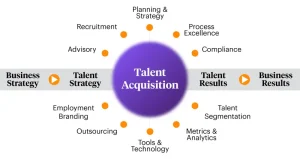


 Admission Closed

 Admission Open
 Admission Closed
 ROI Calculator