
What Role will AI Play in Shaping Future Education Systems?
 May 3, 2026
 7 min read



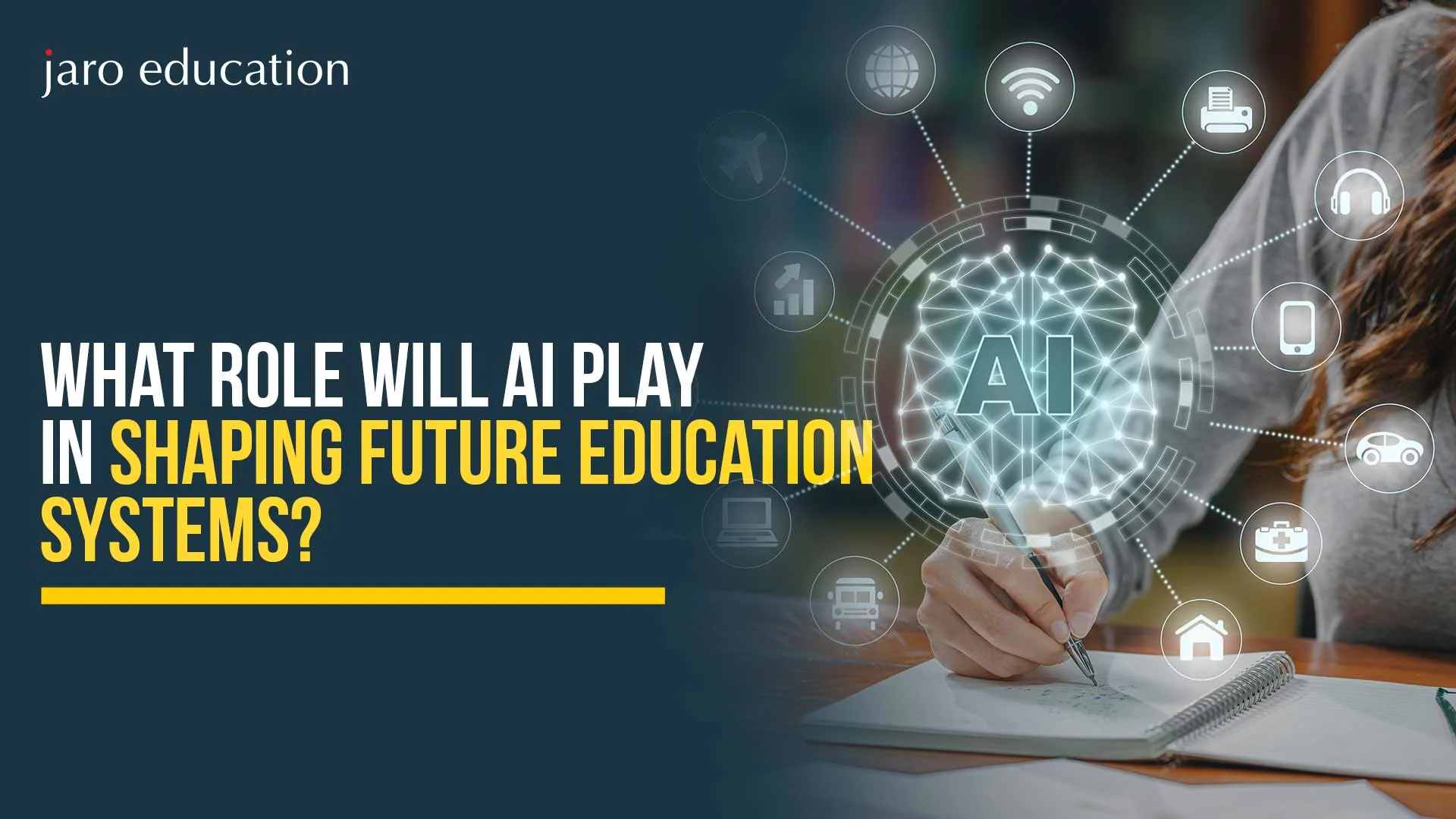

Table Of Content
- The Rise of Intelligent Tutoring Systems and Adaptive Learning
- Empowering the Educator: AI as the Ultimate Teaching Assistant
- Universal Design: AI as an Equalizer for Students with Disabilities
- The Ethical Frontier: Bias, Privacy, and the Digital Divide
For over 150 years, education operated like an assembly line. Students of the same age moved through the same curriculum at the same pace, measured by the same standardized tests — regardless of how they actually learned. That industrial-era model was designed for uniformity, not mastery. Today, AI in education is dismantling that architecture entirely.
The contrast couldn't be sharper. The 19th-century factory model assumed all students were essentially identical inputs requiring identical processing. A student who grasped algebra in two days waited for classmates who needed two weeks. A student who needed three weeks was quietly left behind. According to a World Bank analysis of AI's role in education, this structural inefficiency has real consequences for learning outcomes globally.
AI isn't simply a digital upgrade to existing tools — it's a foundational redesign of how learning is structured and delivered. Think of it less like adding a smartboard to a traditional classroom and more like replacing the entire building's blueprint.
At the center of this redesign is the concept of Personalized Learning Pathways — dynamically adjusted curricula that respond to each student's pace, strengths, and gaps in real time. Rather than a single road all students walk, the AI-powered classroom offers thousands of tailored routes to the same destination: genuine mastery.
Critically, this shift doesn't eliminate teachers. It reframes them as essential human partners in a system where intelligent technology handles pattern recognition and adaptive delivery. That human-in-the-loop philosophy — keeping educators meaningfully in control — is foundational to responsible AI deployment in schools.
Does the engine power these personalized pathways? A new generation of intelligent tutoring systems that are far more sophisticated than anything education has seen before.
 ChatGPT
 Perplexity
 Claude
 Grok
GrokThe Rise of Intelligent Tutoring Systems and Adaptive Learning
The paradigm shift described above isn’t purely theoretical — it’s already being engineered into classroom technology through intelligent tutoring systems (ITS) and adaptive learning platforms. These tools represent one of the most consequential developments in the future of education, fundamentally changing how students receive instruction and how gaps in understanding get identified and addressed.
Algorithms That See What Teachers Can’t
A classroom of 30 students generates an enormous volume of behavioral and cognitive signals — hesitation patterns, repeated errors, skipped steps — that no single teacher can fully monitor in real time. Adaptive algorithms process this data continuously, detecting learning gaps with a precision that periodic quizzes simply can’t match. According to research published by the NIH, intelligent tutoring systems have demonstrated learning gains comparable to one-on-one human tutoring in several subjects. That’s not a minor improvement — that’s a structural one.
Adaptive learning works by mapping each student’s knowledge state dynamically, adjusting difficulty, pacing, and content type based on ongoing performance rather than waiting for a semester-end report card to reveal problems.
Generative AI and On-Demand Custom Content
Generative AI adds another powerful layer. Rather than pulling from a fixed library of exercises, these systems can create custom explanations, practice problems, and worked examples on the fly, tailored to a student’s specific misconception in the moment. A student struggling with fractions doesn’t get the same generic worksheet — they get a targeted intervention built for exactly where their understanding broke down.
From Periodic Testing to Continuous Assessment
Perhaps the most meaningful shift is away from high-stakes, infrequent testing toward real-time, low-stakes continuous assessment. As the World Bank’s AI in Education brief notes, this approach helps prevent students from falling behind undetected while simultaneously ensuring advanced learners aren’t held back waiting for peers to catch up.
The most powerful promise of adaptive learning is equity: every student gets the instruction they actually need, not just the instruction everyone receives. This technological foundation naturally raises a compelling question — what does it mean for the educators delivering it?
Empowering the Educator: AI as the Ultimate Teaching Assistant
The previous sections established how AI personalizes learning at the student level — but the transformation doesn’t stop there. One of the most immediate and practical benefits of AI in education is the time it gives back to teachers, allowing them to focus more on teaching and less on administrative tasks.
In practice, administrative tasks consume a staggering portion of an educator’s day. Grading, progress tracking, attendance logging, and lesson documentation routinely pull teachers away from what they trained to do — teach. According to the U.S. Department of Education’s report on AI and teaching, technology should be designed to enhance human connection rather than replace it, a principle that positions AI as a support layer rather than a substitute.
Reclaiming Hours Through Automation
AI-powered tools can handle automated grading for multiple-choice assessments, short-answer responses, and even structured essays, flagging nuanced cases for human review. Lesson planning is similarly tratarnsformed — AI can generate differentiated curriculum materials aligned to specific learning standards within minutes. What once took hours of preparation can become a starting framework that teachers then refine with professional judgment.
From Administrator to Mentor
This efficiency gain creates space for something no algorithm can replicate: genuine human mentorship. When teachers aren’t buried in paperwork, they’re free to notice a student struggling emotionally, encourage during a difficult week, or build the kind of trust that drives long-term academic motivation. Intelligent tutoring systems manage the repetitive instructional scaffolding, freeing educators to lead with empathy.
As the World Economic Forum notes, the educator’s evolving role is less about information delivery and more about socio-emotional guidance — a shift AI actively enables.
That same capacity for individualized support extends powerfully to students with disabilities, as the next section explores.



Universal Design: AI as an Equalizer for Students with Disabilities
Beyond personalizing instruction and supporting teachers, AI-powered learning is breaking down barriers that have historically excluded millions of students from full participation in education. For learners with disabilities, this shift isn’t incremental — it’s transformative.
Real-time speech-to-text technology now converts spoken classroom instruction into on-screen text within milliseconds, giving students who are deaf or hard of hearing independent access to lectures without relying solely on interpreters. Meanwhile, advanced image recognition tools can describe visual content aloud, allowing students with visual impairments to engage with charts, diagrams, and on-screen media that were previously inaccessible. For students with motor impairments, AI-driven eye-tracking and voice navigation tools eliminate the keyboard-and-mouse barrier entirely, letting them interact with digital learning environments through gaze or speech alone.
These capabilities align directly with the framework of Universal Design for Learning (UDL) — a research-backed educational philosophy that advocates for multiple means of representation, engagement, and expression. As outlined in The AI-Driven Classroom, AI gives UDL principles genuine technical infrastructure rather than keeping them aspirational.
The most powerful outcome is this: features designed for students with disabilities consistently benefit all learners — captions help non-native speakers, text-to-speech supports tired readers, and simplified interfaces reduce cognitive overload universally.
In practice, the line between “special education” accommodations and mainstream learning tools is dissolving. However, as these capabilities expand, critical questions about access and equity inevitably follow — and not every student or institution is positioned to benefit equally.
The Ethical Frontier: Bias, Privacy, and the Digital Divide
The promise of AI in education is genuinely exciting — but excitement without scrutiny is a recipe for harm. As adaptive learning systems become embedded in classrooms worldwide, a parallel conversation about ethics, equity, and accountability is no longer optional. It’s urgent.
Algorithmic Bias: Who Gets Left Behind?
AI tools are only as fair as the data they’re trained on. When training datasets skew toward specific demographics — typically students from wealthier, English-speaking, Western contexts — the resulting algorithms can quietly disadvantage everyone else. A student in rural Mississippi or rural Ghana may receive recommendations shaped by data that has nothing to do with their reality. According to research published by Frontiers, ensuring equitable AI development in education requires deliberate, diverse data inclusion from the ground up.
Unchecked algorithmic bias doesn’t just reflect existing inequalities — it compounds them.
Student Data Privacy: A Non-Negotiable Right
Every personalized recommendation, every assessed response, every behavioral signal that AI captures represents sensitive student data. Without robust protections, that data becomes a liability. Schools and platforms must operate within clear legal frameworks and transparent data governance policies to maintain trust.
The Digital Divide: A Widening Gap
Here’s an uncomfortable truth: institutions with bigger budgets will adopt more powerful AI tools faster. That technological advantage translates directly into better learning outcomes — widening the gap between well-funded and under-resourced schools.
The Case for Global Standards
Addressing these risks demands coordinated, human-centric oversight across governments, institutions, and technology developers. Voluntary guidelines aren’t enough. The field needs enforceable global standards that prioritize student welfare over efficiency metrics. How educators and policymakers respond to this challenge will ultimately define whether AI becomes education’s great equalizer or its newest fault line.
Conclusion: The Future is Human-Centric
The journey through AI-powered classrooms, adaptive learning systems, accessibility tools, and ethical challenges all point to one consistent truth: AI is a co-pilot, not the pilot. The most effective educational outcomes emerge when human judgment, empathy, and creativity remain firmly at the center of the learning experience.
What’s genuinely changed is the architecture of education itself. Rigid, one-size-fits-all models are giving way to fluid, data-informed ecosystems — environments that respond to each student’s pace, needs, and potential in real time. The rise of generative AI in education accelerates this shift dramatically, turning static curricula into dynamic, responsive learning experiences.
The technology is ready. The question is whether educators are.
For teachers, administrators, and policymakers, the call to action is clear: embrace AI literacy not as a technical skill, but as a professional imperative. Understanding how these tools work — and where they fall short — is what separates informed adoption from uncritical dependence.
The future belongs to educators who partner with AI thoughtfully. And naturally, that raises some important questions worth addressing directly.
Frequently Asked Questions

Related Courses
Explore our programs




Find a Program made just for YOU
We'll help you find the right fit for your solution. Let's get you connected with the perfect solution.

Is Your Upskilling Effort worth it?
 ROI Calculator

Are Your Skills Meeting Job Demands?
Try our Skill Gap tool
Experience Lifelong Learning and Connect with Like-minded Professionals
Explore Jaro Connect
