
How to Write a Resignation Letter: Step-by-Step Guide
 December 24, 2025
 6 min read





Table Of Content
- Step-by-Step Guide to Writing a Resignation Letter
- Resignation Letter Samples
- How to Write a Resignation Letter for Email vs. Paper
- Common Mistakes to Avoid in a Resignation Letter
Stepping away from your current job can feel liberating, but drafting that resignation letter often brings hesitation. Should it sound formal or friendly? How can you maintain professionalism without causing a rift? What exactly should you say, and what should you absolutely avoid?
If you’re typing “how to write a resignation letter” into your search bar at 2 a.m., you’re not alone. Most professionals pause right here, unsure how to express gratitude while staying firm about leaving.
This guide breaks everything down for you: from writing a resignation letter step by step to sharing ready-to-use resignation letter samples and email templates for every kind of exit.
Whether you’re sending it via email or on paper, this article will help you write a clear, polite, and impactful resignation letter that maintains professionalism and your reputation.
 ChatGPT
 Perplexity
 Claude
 Grok
GrokStep-by-Step Guide to Writing a Resignation Letter
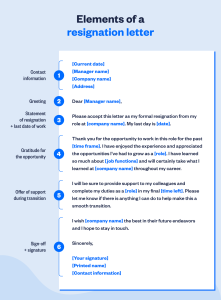 *wellfound.com
Let’s start with what matters most: the structure. A well-written resignation letter isn’t just a goodbye note; it’s an official document that shapes how your departure is remembered.
Here’s how to write one effectively:
Step 1: Start With a Clear Subject Line
If you’re emailing, clarity matters from the start. Your subject line should directly mention your intent.
Examples:
- “Resignation – [Your Full Name]”
- “Resignation Effective [Date]”
- “Notice of Resignation – [Your Job Title]”
Tip: Avoid vague lines like “Goodbye” or “Thank You.” HR systems often use subject lines to track correspondence.
Step 2: Begin With a Professional Greeting
Keep it respectful. Address your immediate supervisor or manager by name.
Examples:
- Dear [Manager’s Name],
- Dear [Supervisor’s Name],
If you work in a large organization and aren’t on a first-name basis, use full names or professional titles.
Step 3: Clearly State Your Intention to Resign
This is your opening line. Get straight to the point without extra emotion.
Example:
- I am writing to formally resign from my position as [Your Position] at [Company Name], effective [Last Working Day].
This clarity eliminates confusion and ensures human resources can begin the exit process smoothly.
Step 4: Mention Your Notice Period
If your contract requires a specific notice period (typically two weeks or one month), state it. This signals professionalism and respect for company policy.
Example:
As per my notice period, my final working day will be [date].
Step 5: Express Gratitude
A sincere note of appreciation can turn an ordinary resignation into a memorable one. Even if your experience wasn’t perfect, highlight something positive.
Example:
I’d like to thank you and the team for the opportunities and experiences I’ve had during my time here. I truly value the support and learning I’ve gained.
This section humanizes your letter and reinforces goodwill.
Step 6: Offer Assistance During Transition
Show that you’re willing to help make the transition easier. It reflects responsibility and leaves a positive impression.
Example:
I’m happy to assist with the handover process and ensure a smooth transition before my departure.
Step 7: End with a Polite Closing
Keep your closing formal yet warm.
Examples:
- Sincerely,
- Best regards,
- With appreciation,
Then sign your name. For email versions, include your contact details below your signature.
Resignation Letter Samples
Below are a few resignation letter samples for different situations—from short and formal to more expressive versions.
1. Basic & Formal Resignation Letter Sample
Subject: Resignation – [Your Name]
Dear [Manager’s Name],
I am writing to formally resign from my position as [Your Job Title] at [Company Name], effective [Last Working Day].
I truly appreciate the opportunities and experiences I have gained during my time here. Thank you for your support and guidance.
Please let me know how I can assist in ensuring a smooth transition.
Sincerely,
[Your Name]
2. Short Email Resignation Letter (Quick Exit Version)
Subject: Notice of Resignation – [Your Name]
Dear [Manager’s Name],
Please accept this email as formal notice of my resignation from [Company Name], effective [Date].
I am grateful for the time I’ve spent here and wish the team continued success.
Best regards,
[Your Name]
3. Resignation Letter for a New Job Opportunity
Subject: Resignation Effective [Date]
Dear [Manager’s Name],
I am resigning from my role as [Job Title] at [Company Name], effective [Date], as I have accepted another opportunity that aligns with my career goals.
I want to express my sincere gratitude for your support and mentorship during my tenure. Working with this team has been a valuable experience.
I am committed to completing ongoing tasks and assisting with handovers before my departure.
Warm regards,
[Your Name]
4. Resignation Letter Due to Personal Reasons
Subject: Formal Resignation – [Your Name]
Dear [Manager’s Name],
I am writing to resign from my position as [Job Title] at [Company Name], effective [Last Working Day]. This decision was made due to personal reasons that require my full attention.
I appreciate the opportunities and experiences gained during my tenure and hope to stay connected in the future.
Thank you for your understanding.
Sincerely,
[Your Name]
5. Gratitude-Based Resignation Letter Sample
Subject: Resignation – [Your Name]
Dear [Manager’s Name],
After much consideration, I have decided to resign from my position as [Job Title] at [Company Name], effective [Date].
I am deeply thankful for the support, learning, and camaraderie I’ve experienced during my time here. The leadership and culture have helped me grow both professionally and personally.
I will ensure a seamless handover of my duties and remain available for any assistance during the transition.
Warm regards,
[Your Name]
How to Write a Resignation Letter for Email vs. Paper
While the resignation letter format remains similar, there are slight differences between emailing it and printing it.When Sending via Email:
- Use a clear subject line (e.g., “Resignation – [Your Name]”).
- Keep it concise and polite — 150–200 words is ideal.
- End with your digital signature or typed name.
- Always use your official company email ID.
- Attach a formal version as a PDF if required by HR.
When Submitting on Paper:
- Use company letterhead if available.
- Include date, address, and signature.
- Print on white A4 sheet in professional font (Times New Roman or Calibri).
- Hand-deliver it to your HR or reporting manager, if possible, followed by a polite email confirmation.
Common Mistakes to Avoid in a Resignation Letter
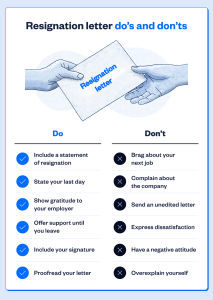 *wellfound.com
Many people unintentionally damage relationships by mishandling their exit communication. Avoid these pitfalls:
- Being emotional or venting frustrations
- Writing an essay — keep it short and direct
- Forgetting to mention the last working day
- Not proofreading for typos
- Sending it without notice or through informal channels
A resignation letter should reflect composure, not complaint. You’re leaving, not litigating.
Tips for Writing a Professional Resignation Letter
- Keep it short (one page max)
- Stay positive, even if leaving for a better job
- Follow your company’s notice policy
- Inform your manager personally before emailing HR
- Send during business hours
- Save a copy for your records
Remember: your resignation is a career move, not just a formality. A thoughtful message today can lead to strong references tomorrow.





Why a Good Resignation Letter Matters
A resignation letter is more than a professional courtesy, it’s your final impression. HR teams store it in your employment file, managers often reference it for rehires, and future employers may indirectly learn of your professionalism through it.A well-drafted resignation letter demonstrates:
- Integrity and respect
- Accountability
- Emotional intelligence
- Confidence without arrogance
In short, it defines how you close a chapter.
Final Thoughts
Whether you’re moving to a new opportunity, taking a career break, or pivoting into something completely different, how you exit matters as much as how you entered.
A well-written resignation letter ensures your professional reputation remains intact while keeping the door open for future collaboration. It’s not about leaving a company; it’s about leaving a legacy of professionalism.
Besides, if you’re preparing your next big move, make it smoother with Jaro Education career-forward programs, designed for working professionals ready to evolve into leadership and strategic roles. Elevate your expertise before your next step!
Frequently Asked Questions
It’s optional, include it only if relevant or positive; otherwise, simply state your resignation professionally.
Related Courses
Explore our programs





Find a Program made just for YOU
We'll help you find the right fit for your solution. Let's get you connected with the perfect solution.

Is Your Upskilling Effort worth it?
 ROI Calculator

Are Your Skills Meeting Job Demands?
Try our Skill Gap tool
Experience Lifelong Learning and Connect with Like-minded Professionals
Explore Jaro Connect

