NEET Preparation Strategy for Beginners: How to Start Smart
J
By Jaro Education
January 25, 20269 min read
Last updated on September 11, 2026
SHARE THIS ARTICLE
Table Of Content
NEET Exam Overview & Syllabus
Importance of a Preparation Strategy
How Beginners Should Start NEET Preparation
Creating an Effective Study Plan
For many students, NEET preparation appears to be very difficult, with extreme confusion over how to begin studying for such a vast exam. In India, every year millions of candidates apply for fewer than 15,000 seats across all medical institutions. If you're a new NEET candidate, you won't only need to figure out what to study and how. Getting through the NEET exam does not require long hours of studying; it requires focused study that ensures you work correctly using the correct techniques and the appropriate tools.
When you start your NEET preparation journey you'll need to develop a structured study approach that includes:
- Establishing an understanding of the format of the NEET exam
- A clear timeline of how much time you want to dedicate to preparing every day
- Maintaining a healthy lifestyle
- Using resources to help you learn
- Using the best NEET preparation books
You need to avoid wasting several months bouncing between books, online courses or other resources without any clear direction; or, also, experiencing burnout from studying too much and studying without proper time management.
Within this comprehensive guide, we will share some of the best NEET preparation strategy, syllabus, and also how to choose the correct NEET preparation books. Whether you are a Class 11 NEET candidate, a drop-out student or someone who is just getting into their journey again, join us to grab some important information that works for you.
Before diving into preparation, it’s essential to understand what NEET actually is and what it tests.
What is NEET?
NEET (National Eligibility cum Entrance Test) is a national-level entrance exam conducted for admission to MBBS, BDS, AYUSH, veterinary, and other medical courses in India. It is a pen-and-paper-based test with multiple-choice questions.
NEET Exam Pattern
Biology carries 50% of the total weightage, making it the most scoring and decisive subject in NEET preparation.
Total Questions: 200 (180 to be attempted)
Subjects: Physics, Chemistry, Biology
Biology: Botany + Zoology (90 questions)
Total Marks: 720
Marking Scheme: +4 for correct answers -1 for incorrect answers
NEET Syllabus
The NEET syllabus is strictly based on NCERT Class 11 and Class 12:
Physics: Mechanics, Thermodynamics, Electrodynamics, Modern Physics
Chemistry: Physical, Organic, and Inorganic Chemistry
Biology: Diversity in Living World, Human Physiology, Genetics, Ecology, Biotechnology
NEET is more than just an examination that tests your knowledge; it evaluates how well you prepare, rework, and use your knowledge. Many students spend hours studying but do not achieve a favourable score, often due to the lack of organised and predictable planning and processes.
Well-structured NEET preparation strategies provide you with an overview of what you need to do. Therefore, if you are wondering how to prepare for NEETm here is the answer to achieve your goals:
Organising Your Time to Get the Most from It: Using a planned approach to studying will enable you to distribute your time fairly evenly across all three sections of the NEET material Physics, Chemistry, Biology and will prevent you from overloading any one of the sections.
You Will Not Be Overwhelmed by the Material of the NEET Syllabus: By preparing with a strategy, you will be able to remain focused on the NEET Syllabus, and therefore, minimise the chances of studying irrelevant materials in other subject areas.
Balanced Preparation Across All Subjects/Chapters: All subjects are studied and revised according to their current importance.
Reduce Your Anxiety and Stress Levels: Knowing what you are studying and when you are going to do it will help reduce stress and uncertainty about your performance.
Higher Levels of Accuracy and Confidence: Regular planning and revision will lead to improved exam performance.
How Beginners Should Start NEET Preparation
*theknowledgeacademy.com
Starting NEET preparation in the right manner is extremely important, as it lays the foundation for your entire journey ahead. If you’re a beginner who feels lost in the initial month, don’t fret as we have got you covered. Follow these easy techniques that will help you with your preparation:
Step 1 – Understand NEET Exam First
The first thing you should do is to completely understand the NEET exam before you pick up your books or start taking sample tests. To do this, learn about the NEET exam pattern such as, subject-wise distribution of marks, subject-wise weightage, syllabus, marking scheme (how marks are awarded based on responses), and negative marking (how your wrong answers are penalised).
Step 2 – Assess Your Basics
To evaluate yourself, start with your current level of NCERT concepts and theories. Determine if there are particular subjects you feel you do not know as well as others do. Then understand whether you are struggling more with theory or problem solving and how well you are able to apply the NCERT theory to solve problems in Physics and Chemistry.
Step 3: Set Clear Study Goals
You should not just list your study topics but rather establish a set of specific goals that are measurable. For example, you could say “I want to finish reading all the material in Chapter 5, complete all MCQs associated with Chapter 5 and do sample/past years’ questions (PYQs) and then review all the key formulas”.
Step 4: Build Consistency from Day One
If you have a regular study pattern from the beginning you’ll develop your knowledge and skills over time. However, if you study for only a couple of hours every day throughout your whole preparation it will be nearly impossible to develop the same retention of knowledge and skills as if you had developed that regularity of study time throughout the whole process.
If students do not have an effective study plan, it can lead to incomplete syllabus coverage and poor revision results. So, here we have created a plan that might work for you:
A balanced study time table is important for all beginners. For instance, a student should spend 3-4 hours each day studying Biology, because Biology is the most weighted subject.
A student should assign 2-3 hours for each Chemistry and Physics study session to concentrate on learning concepts and applying them to solving problems.
Moreover, you should set aside at least two hours for revision and/or practice with MCQs.
Your weekly planning should be planned in such a way that you cover one or two chapters per subject during the week (depending on how difficult the chapters are to understand).
At least one month should be kept to reviewing and clearing up any backlog of work on any subjects where you were weak in.
Note: Always remember that being consistent is much better than studying for a long period of time at irregular intervals.
NCERT-Based Preparation Approach
The NCERT textbooks are the foundation of the NEET preparations and should not be overlooked whatsoever!
NCERT Books Are Non-Negotiable!
About 85%-90% of Biology-related questions will come directly or indirectly from the NCERT textbooks; and for Chemistry, most reactions, illustrations, and tables will be taken from the text, while for Physics, its theoretical basis is almost identical to that of NCERT. Thus, if you do not use these resources, they will affect your score!
Ways to Use Your NCERT Textbooks to the Best of Your Ability
Read from cover-to-cover line-by-line in the NCERT textbooks specifically for the Biology and Inorganic Chemistries; and remember to highlight key terms, definitions, and relevant factual statements when doing so.
Regularly investigate/review the types of diagrams, tables, and examples found within the NCERT textbooks and commit them to memory.
Use reference books for obtaining additional practice and clarity, but always refer back to the NCERT books first!
Subject-Wise NEET Preparation Strategy
Biology Preparation Strategy
Biology is the most scoring subject in NEET.
Tips:
Read NCERT multiple times
Focus on diagrams and terminology
Practice assertion-reason and statement questions
Revise regularly to retain information
Botany and Zoology should be given equal importance.
Choosing the right NEET preparation books saves time and effort.
Biology
Chemistry
Physics
NCERT Biology (Class 11 & 12)
NCERT Chemistry
NCERT Physics
Trueman’s Biology
Physical Chemistry by O.P. Tandon
Concepts of Physics by H.C. Verma
Organic Chemistry by M.S. Chauhan
D.C. Pandey Series
Common Mistakes to Avoid When Preparing for NEET Exams
Most NEET candidates commit the same mistakes repeatedly in their preparation even after putting 100% effort and study hours over the course of months and years. Thus, understanding these mistake can save your from failure:
It is well known that the majority of the questions on NEET come from NCERT textbooks, almost all students who are preparing for the exam are not looking at these texts. By not studying this material, students will sacrifice a significant number of points on their final score.
Many students find themselves using a multitude of reference materials and reference books, which can cause confusion and make it difficult for students to complete all of their studies and revise effectively. Having only a few high-quality resources is a much better way to prepare.
By studying and not testing themselves with multiple-choice questions (MCQs) candidates lack exam confidence and preparation.
Additionally, many students compare their performance with that of their peers. Comparisons can cause anxiety and result in uncertainty about one’s own progress. Remember that every student has their own potential, so it is important to be focused on your own consistent progress and plan for NEET rather than to create unnecessary stress and worry by comparing yourself to others.
Health, Motivation & Stress Management
Physical Health
Maintaining good physical health will allow you to remain focused and energetic when studying long hours. It’s important to get between 7 and 8 hours of quality sleep every night. This is because sleep is important for your ability to remember what you have learned.
Mental Health
Mental health is equally as important as physical health. Try not to make negative comparisons between yourself and other students, as everyone learns at their own pace. Research shows that practicing mindfulness, meditation, light exercise, and breathing techniques will help manage your stress and anxiety. Make connections with family, friends, or mentors who can support you and lift you.
Quick Expert Tips for NEET Beginners
Begin Early and Be Consistent – Starting your preparation early allows you enough time to fully understand concepts and be able to revise without feeling rushed. Consistency is far more valuable than cramming for long hours once in a while.
Revise More Than You Read – The more you revise, the more your memory strengthens and your conceptual understanding increases. What you have revised many times will remain with you longer than anything read just once.
Accuracy Is Better Than Number of Attempts – To answer only a few questions correctly is far better than to guess on all your answers. Accuracy is very important due to the negative marking situation.
Take A Look At Mistakes – Each mistake provides you with an opportunity to learn. By reviewing your errors, you will learn to not make the same mistakes again in the future.
Believe in Gradual Improvement – Improvement takes time. Whether through gradual improvement from small but disciplined efforts daily, or through incremental improvements, your results will eventually show progress towards your goal of passing NEET.
Wrapping Up
NEET preparation is truly a marathon, not a sprint. Success in this highly competitive exam does not depend on studying endlessly but on studying smartly with a well-defined strategy.
It is also important to remember that every NEET topper once started from the same place, feeling unsure, overwhelmed, yet hopeful. With the right guidance, focused preparation, and a positive mindset, cracking NEET is completely achievable. If at any stage you feel confused about your career path or need expert counselling and academic support, you can trust Jaro Education for reliable guidance.
Additionally, to strengthen your understanding of specific subjects or concepts, exploring Jaro Education’s online courses can help enhance your knowledge and confidence. Stay patient, trust the process, and keep progressing, one chapter and one step at a time.
Frequently Asked Questions
Ideally, NEET preparation should start from Class 11, but even one year of focused preparation can yield excellent results.
NCERT is essential and forms the core. Additional books are needed mainly for practice and concept clarity.
Quality matters more than hours. 8–10 focused hours daily are sufficient with proper planning.
Biology carries the highest weightage, followed by Chemistry and Physics.

 January 25, 2026
 9 min read





 ChatGPT
 Perplexity
 Claude
 Grok
Grok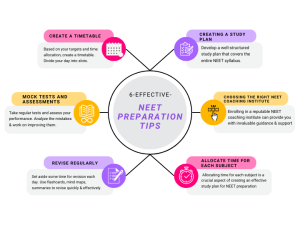



 Admission Open
 Admission Open
 Admission Open



 ROI Calculator