Multi-Cloud versus Hybrid Cloud: Why the Difference is Important for Security
Why Cloud Security Is More Complex Today
Key Security Challenges in Multi and Hybrid Cloud Environments
In a digital-first world, modern enterprise businesses are constantly evolving. With this, the security of cloud environments has come to be one of the most important responsibilities of any technology leader. While operating across multiple cloud platforms and integrating on-premises systems with cloud environments, modern organizations are dealing with massive opportunities that come with equally unprecedented challenges. And it is here that strong security strategies for multi- and hybrid-cloud ecosystems become absolutely crucial. Understanding how businesses can protect large-scale, diverse, and distributed technology environments requires exploration into what multi-cloud is, why security is more complex today, and how strategic implementation helps to minimize risks.
These days, businesses have shifted their single-cloud dependencies to distributed setups for optimized performance, resilience, and compliance. Such decisions are critical because each of these diverse platforms comes with its own sets of tools, configurations, and security responsibilities. When businesses transition to such distributed architectures, it necessitates a well-defined multi-cloud strategy that must be aligned with operational needs, regulatory frameworks, and long-term growth.
Before going deeper into security challenges, we clearly need to understand what multi-cloud is and why it’s becoming a mainstream choice. The multi-cloud environment means using two or more cloud service providers-AWS, Google Cloud, Azure, or Oracle Cloud-within the same organization. This gives companies flexibility, cost control, specialized capabilities, and reduced vendor lock-in. As applications scale and teams deploy workloads globally, their demand for multiple cloud platforms grows even faster. A multi-cloud approach does indeed ensure that organizations are not dependent on one provider, which helps them maintain availability even during outages. But this distribution increases the attack surface manifold. Therefore, firms need to create a secure and coordinated multi-cloud strategy that covers identity, data protection, compliance, and workload monitoring.
Multi cloud vs. hybrid cloud environments are often considered by enterprises for determining the right architecture that suits their goals. Hybrid cloud integrates on-premise infrastructure with cloud platforms, whereas multi cloud spreads workloads across different cloud providers. While both approaches differ in structure, they require robust and aligned security controls.
Multi-Cloud versus Hybrid Cloud: Why the Difference is Important for Security
Misinterpreting the difference between multi cloud vs hybrid cloud typically leads to some very real gaps in planning and protection for many organizations. Multi cloud involves several public cloud systems, while hybrid cloud integrates private and public environments. Each has specific implications in the field of security. The biggest challenge in hybrid cloud environments is to securely connect on-prem systems with cloud-based resources. In a business context, this often means having consistent identity access management, encryption, and secure data transfer channels. With legacy systems, hybrid setups raise additional requirements for monitoring, segmentation, and governance checks. This, therefore, calls for a multi-cloud strategy, especially in combining new and old technologies.
Security, in multi-cloud environments, needs to be applied consistently across diverse service providers. Each cloud platform has different policies, configurations, and risk factors. This adds complexity for authentication, encryption, logging, and compliance management. Understanding what is multi-cloud and the way it differs from the hybrid approaches helps the decision-makers allocate resources effectively.
Increased adoption of distributed cloud architectures has dramatically shifted the threat landscape. Cyber attacks today have grown to be far more targeted, automated, and efficient. The attackers now exploit cloud misconfiguration, weak identity controls, poor network segmentation, and insecure APIs. Businesses must approach security across multi-cloud and hybrid environments as a perpetual, adaptive process rather than a one-time exercise. That also means a cloud environment generates massive volumes of logs, large-scale data transfers, and a high number of integration points across applications, services, and third-party tools. Amidst this much complexity, an organization should adopt an integrated multi-cloud strategy that includes enterprise-wide security monitoring, unified identity controls, and automated remediation workflows. Such decisions affect the multi-cloud vs. hybrid cloud considerations of companies when it comes to future deployments.
Key Security Challenges in Multi and Hybrid Cloud Environments
Enterprises encounter several challenges while operating distributed cloud setups. The most important of them include the following:
1. Expanded Attack Surface
With more cloud platforms to manage, the number of potential entry points increases dramatically. Companies that do not fully understand what is multi-cloud often underestimate the amount of configuration and access rules involved.
2. Inconsistent security controls
Native security tools vary between different cloud providers. Without a unified approach, misalignment in policies leads to exposed data, weak authentication, and compliance failures. It is important that a clear multi-cloud strategy is in place to avoid such issues.
3. Identity and Access Management Complexity
It becomes more and more challenging to manage user identities across different cloud platforms, especially in an environment that mixes multi-cloud versus hybrid cloud architectures. Mapping permissions, roles, and authentication processes requires strong governance.
4. Data Governance and Compliance Risks
Many industries require enterprises to be compliant with stringent regulations such as GDPR, HIPAA, PCI-DSS, or regional data sovereignty laws. Multi and hybrid cloud setups store data in different locations, making governance more complex. Such requirements insist the organization understands what multi-cloud is to track where the data resides and ensure that it meets the regulatory standards.
5. Challenges to Integration
Any integration with multiple platforms has its inherent intricacy. APIs add risk, data pipelines add risk, and third-party apps add risk. A structured multi-cloud strategy is essential in ensuring that integrations are seamless and secure.
The Role of Strong Identity and Access Management (IAM)
Identity forms the basis of all cloud security models. Centralized identity management, RBAC, and least privilege are necessary when organizations scale across multi-cloud platforms. Diversity in cloud ecosystems mirrors the obstacles presented by multi-cloud versus hybrid cloud settings, wherein each platform handles access differently. IAM tools should provide support for federated identities, multi-factor authentication, and continuous authorization checks to maintain security. The strong identity controls reinforce the concepts of what is multi-cloud and how workloads must be protected across environments.
Data Protection as a Core Security Pillar
Data is the most valuable asset, and protecting that is just non-negotiable. In cloud data, risks come from unauthorized access, misconfigurations, insecure storage buckets, unencrypted transfers, among other things. Handling of data becomes complex in distributed architecture where multiple providers are involved. A well-designed multi-cloud strategy will include encryption at rest and in transit, tokenization, key management services, and regular audits. For organizations considering multi-cloud versus hybrid cloud, assessing how each platform handles data security across workloads is an important consideration. Understanding what is multi-cloud helps assess how data moves across providers.
Security Monitoring and Threat Detection
Cloud environments generate massive amounts of logs, metrics, and event data. Without centralized monitoring, organizations will fail to identify unusual behavior or stop attacks. Security teams rely on a unified dashboard to aggregate alerts across all cloud platforms. A robust multi-cloud strategy will also involve automated threat detection tools, anomaly detection systems, and real-time SOC integration. Monitoring becomes even more critical looking at multi-cloud versus hybrid cloud, considering that hybrid cloud setups also include on-premise log sources. Visibility across all operations is possible if an enterprise understands what multi-cloud is.
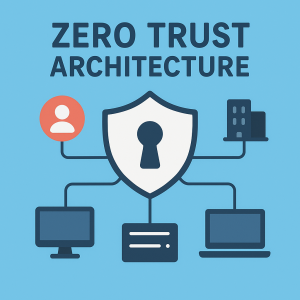
Zero Trust is one of the most effective security frameworks a cloud environment should have today. It assumes that no users, devices, or requests in general should be trusted by default. Users must continuously authenticate and prove authorization before access to any resource is granted.
This model fits perfectly within a multi-cloud strategy, where workloads are distributed and require strict access controls. Zero Trust also complements multi-cloud versus hybrid cloud structures by providing a uniform security approach across different systems. When companies learn what is multi-cloud, they realize that Zero Trust provides consistent protection in diverse environments.
Automation and DevSecOps
Automation lies at the very heart of cloud-scale security. DevSecOps integrates security into the development lifecycle to ensure continuous compliance and faster problem resolution. Risks are significantly reduced with automatic code scanning, configuration checking, policy enforcement, and vulnerability remediation.Security automation is critical to enforcing a consistent multi-cloud strategy across distributed environments. Further, organizations looking at multi-cloud vs hybrid cloud benefit from automation workflows in bridging the gaps between platforms. Understanding what constitutes multi-cloud helps teams build automated pipelines that function across different providers.
Network Segmentation and Secure Access
The risk of unauthorized lateral movement increases with a highly fragmented environment. Network segmentation minimizes this risk by breaking down the cloud resources into isolated sections, restricting access to only where it’s needed.This approach is in line with the structured multi-cloud strategy, especially when workloads move between providers. Network rules also feature prominently in the decision-making between multi-cloud versus hybrid cloud, as hybrid setups often demand secure bridges between on-prem and cloud systems. A strong understanding of what is multi-cloud makes it easier to define the segmentation rules that protect data and workloads across environments.
Disaster Recovery and Business Continuity
One of the most major reasons businesses choose to use multiple cloud options is business continuity. Multicloud environments let an organization replicate data and workloads across providers to minimize downtime risks. Hybrid cloud systems also provide continuity using redundancies both locally and in the cloud.Effective continuity planning is part of every multi-cloud strategy that features automated failover systems, data replication, and backup audits. When comparing multi-cloud vs. hybrid cloud, enterprises need to determine which architecture delivers faster recovery times. Knowing what multi-cloud is empowers informed decisions.
Benefits of Strong Multi & Hybrid Cloud Security Strategies
A well-implemented security model has several business advantages:
Improved data protection
Stronger compliance across regions
Reduced operational risks
Better visibility across distributed workloads
Efficient identity and access controls
Faster detection and response to threats
These benefits reinforce the importance of building a scalable and smart multi-cloud strategy. They also highlight why organizations frequently evaluate multi-cloud vs hybrid cloud to select the structure that best aligns with long-term goals. Knowing what multi-cloud is helps maximize these security benefits.
The future of cloud security is rapidly changing. Some of the trends shaping its future include:
1. AI-driven Threat Detection
AI and machine learning tools analyze cloud logs in real time, recognizing threats in far less time than a human team. The innovation fortifies any multi-cloud strategy.
2. Cloud Security Platforms Unified
With integrated tools, multi-cloud vs. hybrid cloud differences are eliminated, enabling centralized control panels.
3. Greater Emphasis on API Security
APIs are the backbone of cloud communication, which makes understanding what is multi-cloud important for securing integrations.
4. Rise of Cloud Governance Frameworks
More regulations mean more strict audits that will force companies to strengthen identity, data, and network security.
Conclusion
With the increasing complexity of cloud ecosystems, the security of multi and hybrid cloud environments has emerged as a key concern for business leaders across the globe. It is vital to understand what multi-cloud is, the difference between multi-cloud vs. hybrid cloud, and to design an effective multi-cloud strategy-one that leads toward robust, scalable, and secure digital operations. With the right tools, automation, identity controls, and governance frameworks, an organization will be able to tap into all the power of cloud computing while minimizing risks and remaining compliant in an ever-increasingly regulated world.
Frequently Asked Questions
Multicloud involves the use of multiple public clouds, and hence, multi-cloud vs hybrid cloud comparison gains significance for planning. Hybrid cloud is about integrating on-premise systems with cloud platforms, unlike a multi-cloud strategy that involves multiple cloud providers independently.
A hybrid cloud strategy bridges private infrastructure with public cloud services, making multi-cloud vs. hybrid cloud an important differentiation. It centers around workload flexibility and secure connectivity, whereas what is multi-cloud concerns several public clouds.
Multi-cloud strategy involves the use of at least two public cloud providers with a view to achieving an optimized performance, cost, and resilience. This also enables the understanding of what multi-cloud is and how it is different from multi-cloud versus hybrid cloud approaches.
There are four major cloud models: public, private, hybrid, and multi-cloud, each of relevance for understanding multi cloud vs hybrid cloud. Knowing these models helps users define what is multi cloud and when a multi cloud strategy is necessary.

 December 17, 2025
 9 min read





 ChatGPT
 Perplexity
 Claude
 Grok
Grok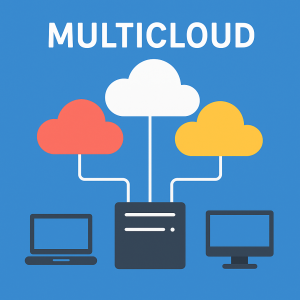











 ROI Calculator




