What Is Lean Management? Definition and Core Principles
J
By Jaro Education
January 17, 20269 min read
Last updated on September 1, 2026
SHARE THIS ARTICLE
Table Of Content
Lean management Definition
Key Objectives of Lean Management
5 Core Principles of Lean Management
Types of Waste in Lean Management: DOWNTIME
Cut the clutter. Boost the value. Work smarter, not harder. That’s the heartbeat of Lean Management. Waste is the common enemy of any company that continues to compete and innovate in the race against time, cost, and competition. It’s not only physical garbage, it can refer to lost time, energy or opportunities.
Lean Management should not be viewed as "just" a trend; rather, it is an effective way of thinking so businesses can create more value with fewer resources while preventing employee burnout. Lean thinking helps businesses achieve their desired performance ahead of their top competitors. This concept has proven effective for both startups and large companies by improving process efficiency and delivering better outcomes for customers.
If you have ever wondered how the most successful businesses deliver their services with the least amount of resources, Lean Management is the secret behind it.
Let’s define lean management.Lean Management is a way of running a business by removing unnecessary steps from processes and focusing only on what truly adds value for the customer.
In simpler words, it helps businesses cut waste, save time, reduce costs, and deliver better results using fewer resources.
Lean Management is more than just a management methodology; it is a philosophy that redefines how a company operates. The objectives of this approach are many, positively affecting all aspects of the organization. Below are some examples of these.
Eliminating waste from every process: Lean focuses on eliminating activities that do not add value, including unnecessary steps, delays, rework, and excess movement to improve efficiency and reduce wasted time and resources.
Increasing productivity without increasing workload: Lean provides ways to improve the structure of work by eliminating bottlenecks and streamlining workflow. This leads to producing higher-quality results faster with less stress and time spent.
Delivering higher quality products and services: By emphasizing the need for quality at every stage of the process, Lean helps organizations create higher-quality products and services. Through the use of standardization, building in checks, and utilizing error-prevention methods, Lean ensures fewer product defects and more consistent output.
Cutting down operational costs: Lean decreases waste, reduces rework, as well as optimizes material and resource use, thus enabling organizations to achieve significantly lower costs of production (i.e., Operations) and, therefore, reduces overall costs from Operations.
Increasing customers’ satisfaction: Lean also aligns processes between the business and its customers, providing customers with faster delivery, better quality service, and more reliable results, leading to an improved experience for all customers.
In order to implement Lean Management effectively within the company, it is necessary to follow the 5 core principles of this method.
Principle
What It Means
Why It Matters
Value
Understand what the customer is truly willing to pay for
Prevents unnecessary work and focuses on real customer needs
Value Stream
Map all steps involved in delivering a product or service
Helps identify waste and unnecessary steps
Flow
Ensure work moves smoothly without delays or bottlenecks
Reduces waiting time and improves speed
Pull
Produce only what is needed, when it’s needed
Prevents overproduction and excess inventory
Perfection
Continuously improve processes
Builds a culture of ongoing growth and innovation
Types of Waste in Lean Management: DOWNTIME
Lean management outlines 8 types of waste that cause businesses to work less efficiently and increase operating costs. Lean Management identifies these waste types in almost ALL industries: Manufacturing, Service, Healthcare, and Information Technology.
Defects: Defects are those products that do not meet the standard quality or specifications required by stakeholders or customers. There is a need for rework or replacements, and this leads to material waste, effort, and time. There are few common causes of defects that include poor design, improper assembly,miscommunication, material and component failure, and so on. Thus, to avoid defects, companies implement quality control measures such as Total Quality Management and Six Sigma, and continuous improvement processes like Kaizen.
Overproduction: When a company produces more products and/or services than the consumer requires, the result is excess inventory, increased storage costs, and the potential for a product to become obsolete or not used at all. Therefore, overproduction can be considered one of the MOST damaging forms of waste because there are typically associated or compounded wastes that result from the overproduction of product/services.
Waiting Waste: Waiting time is waste when either the employee, machine, or process is physically disallowed from doing its job due to delays and/or a lack of approval (delay caused by waiting to get approval), poor coordination between departments, or a system failure.
Non-Utilised Talent: Non-utilised talent occurs when there is loss of employee’s knowledge, skills, and abilities. These types of underutilisation not only demotivate employees but also take the organisation valuable insights and innovation that could lead to process, products, and services improvements.
Transportation waste: Poorly configured workstations and inefficiently designed process flows both contribute to the amount of excess transportation waste within an operation. This also leads to employees having to perform unnecessary handling of products, information, and materials, which increases the amount of time and effort associated with it.
Inventory Waste : Excess inventory is the combination of raw materials, work-in-progress, and finished goods that are being stored or have not been sold. It represents a drain on an organisation’s capital resources, takes up valuable space in warehouses, and creates opportunities for loss, damage, and obsolescence.
Motion Waste: Unnecessary motion is when a worker must move additional distances (for example, walking further than necessary, walking to look for tools, bending or stretching to reach for items) as a result of either poor workplace design or layout. Unnecessary motion reduces a worker’s productivity and increases the potential for fatigue.
Excess Processing Waste: An example of overprocessing is when an organization performs excessive or unnecessary work on its business processes. Examples of this include excessive approvals and repeated inspections, as well as complex (or confusing) steps in using software to complete the business process and excessive amounts of paperwork.
Lean Tools and Techniques
Lean tools are often known as learning and experimentation solutions. Companies choose them and implement them in a process of continuous improvement. Given below are a few examples of these tools and techniques:
5S Methodology
This is the first step in any Lean Transformation which is used to create a clean, organised and effective work environment. By sorting through the clutter of ‘stuff’, visual management, cleaning, standardizing and sustaining the practices of the five S’s, you create the foundation for an efficient and safe workplace.
Kaizen Method
The term “Kaizen,” which translates to “continuous improvement,” describes a philosophy that encourages all team members to think creatively about how to improve their work processes consistently yet steadily every day with small improvements rather than waiting for significant changes.
Instead of concentrating on creating large-scale changes at once, Kaizen focuses on creating continuous, incremental improvements in all areas of business operations, leading to substantial gains in quality, speed, and morale for employees.
Value Stream Mapping (VSM)
Value Stream Mapping (VSM) utilizes a strong visual way of representing every step in any given value stream, including raw materials, production, and shipping. Human Resources have the capability to clearly see all components of every process, helping them to identify delays, redundancies, and waste within their processes so that they can better design their workflows to operate more smoothly, quickly and economically.
Kanban System
Using the Kanban System, teams utilize visual boards or digital tools to see their work and keep track of it. They place tasks into columns defined as “To Do,” “In Progress,” and “Completed.” Using this methodology increases visibility of task status, prevents overload of tasks by one team member, and allows for a continuous flow of work without delays from unexpected interruptions.
Just-In-Time
This method is based on the concept of producing an item exactly when it is needed, and the amount needed at that time. Therefore, the JIT Model will eliminate excess inventory, lower storage expenses and reduce waste due to overproduction.
Poka-Yoke
Poka-Yoke (error-proofing) is simply a way to make sure that mistakes are prevented before they can occur. Using methods such as color coding, checklists, sensors, and design elements to guarantee that processes are more dependable and products are free from defects all contribute to the error-proofing process under Poka-Yoke.
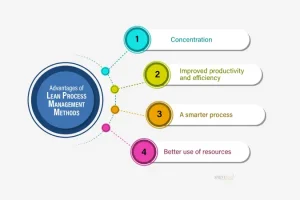
Benefits of Lean Management
*sprintzeal.com
There are significant advantages for managers in implementing Lean Management methods:
Waste Reduction – It is important to identify and eliminate all types of waste in processes, materials, time, and effort. By eliminating wasteful activities, businesses will incur less unnecessary costs, and their overall efficiency will be improved. This will allow them to better utilize their available resources, as well as to perform more efficiently.
Improved Quality – Lean promotes both error prevention and standardisation, while also promoting continual improvement through Kaizen. These methods will help to minimise errors or inconsistencies in products or services, ultimately resulting in increased customer satisfaction and brand reputation in the marketplace.
Higher Productivity – Lean maximises productivity by streamlining workflows, eliminating bottlenecks and allowing for the unencumbered flow of materials and information throughout the organization. Optimizing processes results in teams being able to produce more in less time without any increase in their existing workloads.
Improves Employee Engagement: Employee engagement within the organization has improved as a result of Lean’s emphasis on a culture of employee involvement in identifying and solving business problems and opportunities for improvement. Employees now feel empowered to identify potential solutions to problems, own their individual responsibilities, and contribute positively to the overall growth of the organization.
Real-World Examples of Lean Management
The following are some examples showing how an Organization has implemented Lean Management as part of their Business Plan.
Toyota
Toyota is considered the Leader in Lean Management with its world-renowned Toyota Production System based on a ‘Just in Time’ approach, along with emphasis on continuous improvement and respect for all individuals.
Amazon
Amazon has focused on utilising Lean Principles to enhance Warehouse Operations, minimize Wait Times and maximize Customer Delivery Efficiency.
Nike
Nike has implemented a variety of Lean Practices into their Manufacturing Processes which help to minimise Waste of Raw Materials, reduce Production Timelines, and Improve Sustainability.
Healthcare Sector
Hospitals are utilizing Lean Methodologies within their Operations, to streamline Waiting Times, effectively manage Staff Scheduling, and increase Patient Quality of Care.
If you’re excited about Lean Management and want to master such high-impact business strategies, an online MBA through Jaro Education can be a game-changer.Through Jaro Education you will have access to leading online MBA programs that are focused on business and management disciplines offered by some of the most highly respected universities worldwide.
You will gain the following benefits:
Learn modern management concepts like Lean, Six Sigma, Agile, and Operations Excellence.
Gain practical leadership and decision-making skills.
Access global faculty and expert-led sessions.
Enjoy flexible learning that works around your job.
Lean Management does not mean taking shortcuts, but rather eliminating waste through smart strategies. Organisations that use lean management are more productive (faster, higher quality, more customer-oriented), while those that understand how the system works build their capacity to continually improve.
The application of lean thinking can change the way students, professionals, and entrepreneurs address issues and make decisions. With the support and guidance of the appropriate education, for example, an Online MBA program offered by Jaro, you can further develop these concepts into effective leadership abilities.
Frequently Asked Questions
Lean Management is a way of running a business by removing waste and focusing only on activities that add real value to customers.
The five principles are Value, Value Stream, Flow, Pull, and Perfection.
No, Lean Management is used in healthcare, IT, retail, logistics, and even service-based industries.
You can learn Lean Management through management courses like an Online MBA that covers operations and process improvement.
Yes, Lean Management is highly useful for MBA students as it builds skills in process optimisation, waste reduction, and data-driven decision-making.These competencies are valuable in operations, consulting, product, and leadership roles.

 January 17, 2026
 9 min read




 ChatGPT
 Perplexity
 Claude
 Grok
Grok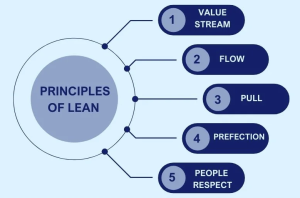 *engineersguidebook.com
 *sprintzeal.com






 ROI Calculator



