 HOME > BLOG > Cloud Computing and Cyber Security > How Can We Integrate Blockchain with Cloud Computing?
How Can We Integrate Blockchain with Cloud Computing?
 April 9, 2025
 9 min read




Table Of Content
- Understanding Blockchain and Cloud Computing
- Blockchain Technology
- Cloud Computing
- Growing Demand for Hybrid Digital Ecosystems
Blockchain and cloud computing have acquired a substantial interest in the technology industry in recent years. Blockchain, famed for its decentralised and transparent nature, has revolutionised several industries, while cloud computing has brought unrivalled scale and accessibility. However, the issue arises: how can we effectively utilise the potential of both technologies and integrate them? We will look at the potential perks of bringing blockchain together with cloud computing for organisations and individuals.
An element of Big Data is being integrated with information systems, allowing enterprises nationwide to take advantage of large-scale computing facilities that offer resources to these organisations for low beginning costs. IIT Palakkad’s PG Certificate Programme in Cloud Computing is one of the most promising programmes of its calibre to gain insights into cloud computing and related aspects. This is one of the best cloud computing programmes that allows you to advance your career in cloud technology like never before, as it has a highly interdisciplinary curriculum offered via effective discussions in an online mode.
 ChatGPT
 Perplexity
 Claude
 Grok
GrokUnderstanding Blockchain and Cloud Computing
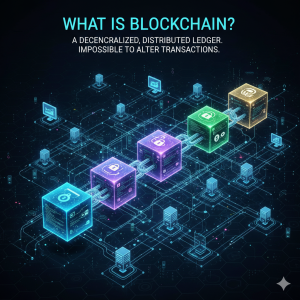
Blockchain Technology
Cloud Computing
Growing Demand for Hybrid Digital Ecosystems
How Blockchain Enhances Cloud-Based Automation
Distributed Frameworks for Reduced Operation Costs
Enhancing Identity and Access Management
Improving Regulatory Compliance and Auditability
Empowering Edge Computing with Distributed Ledgers
Boosting Innovation through Tokenisation and Microservices
Business Continuity and Disaster Recovery
Future Outlook: The Evolution of Decentralized Cloud Infrastructure
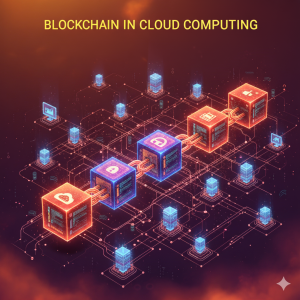
Exploring the Potential of Blockchain Technology in Cloud Computing
- Blockchain’s decentralised nature allows for the establishment of architectures where multiple computers can collaborate on tasks such as data storage and processing. This distributed approach can reduce the overall operation time and enhance the speed of processing and uploading data, ultimately improving the functionality and performance of cloud computing systems.
- Cloud computing deals with vast amounts of data, making data security a crucial concern. Traditional cloud solutions rely on centralised architectures, which can be susceptible to hacking attacks. A breach in the central server can lead to system collapse and potential data loss with no means of recovery. By integrating blockchain technology into cloud computing, the security of the system can be strengthened. Blockchain’s decentralised and immutable nature helps mitigate the risk of data breaches, providing enhanced security measures for cloud-based infrastructures.
The Synergy of Blockchain and Cloud Computing
Enhanced Data Security:
Blockchain’s decentralised architecture makes it inherently secure, as data is stored across multiple nodes rather than a single server. By integrating blockchain with cloud computing, organisations can ensure an added layer of security for sensitive data. The immutability of blockchain technology protects against data tampering, reducing the risk of unauthorised access and cyberattacks.
Improved Data Integrity:
Cloud computing often faces challenges related to data integrity, as centralised storage systems can be vulnerable to data corruption or loss. By integrating blockchain, cloud providers can leverage its inherent data integrity features. Blockchain’s consensus algorithms verify and validate data across the network, ensuring that the stored information remains reliable and accurate.
Transparent Supply Chain Management:
Integrating blockchain and cloud computing offers significant advantages in supply chain management. By utilising smart contracts, which are self-executing agreements on the blockchain, businesses can automate and streamline various supply chain processes. This enables real-time tracking of goods, reduces fraud and counterfeiting, and enhances transparency throughout the supply chain ecosystem.
Decentralised Cloud Storage:
Blockchain’s decentralised nature can be leveraged to create a decentralised cloud storage system. Traditional cloud storage relies on centralized servers, making it susceptible to data breaches or server failures. By integrating blockchain, files can be stored and encrypted across multiple nodes, ensuring redundancy, security, and uninterrupted access.
Real-World Use Cases
1. Healthcare
Integrating blockchain with cloud computing in the healthcare sector can enhance patient data security, interoperability, and privacy. Patient records stored on the blockchain can be securely accessed by authorised healthcare providers, improving data accuracy and streamlining healthcare delivery.
2. Supply Chain and Logistics
By integrating blockchain with cloud computing, supply chain and logistics companies can achieve end-to-end traceability, reduce paperwork, and enhance transparency. Smart contracts on the blockchain enable automated verification and execution of contracts, reducing the need for intermediaries and optimising the supply chain process.
3. Finance
Blockchain technology holds immense potential for transforming various domains within the finance sector. It ranges from securities trading and asset management to banking and insurance. While cryptocurrencies, particularly Bitcoin, have garnered significant attention, blockchain’s impact on finance extends beyond digital currencies.
Within the vast landscape of cryptocurrencies available online, notable examples with substantial market capitalisation include Bitcoin, Ethereum, Tether, and BNB. These cryptocurrencies can be acquired through diverse platforms, enabling users to purchase assets like ETH. Once acquired, these digital assets can be securely stored in a cryptocurrency wallet or traded across multiple exchanges.
Conclusion
With the power of blockchain in cloud-based operations, enterprises can unlock transformative capabilities and stay at the forefront of innovation. The combined use of blockchain and cloud computing enhances efficiency, security, and reliability, revolutionising traditional systems. Stay ahead of the curve by considering the incorporation of blockchain into your cloud-based operations, paving the way for a brighter future.
Sign up for this programme with Jaro Education to ensure a successful future in the field of Cloud Computing. Participants who want to be a part of the technological change and understand its implications can enroll in the programme. Plus, it can help you learn the core concepts of how and why cloud systems work.
Know how to construct cloud applications using Big Data programming models. In addition, acquire hands-on experience with projects and practices to grasp the infrastructure better. So, take your time out of your personal and professional commitments and pursue this career-enhancing course now.
Frequently Asked Questions
Blockchain computing can be defined as making use of decentralized ledger technology to process, store, and validate data securely in multiple nodes. This is usually employed to bring trust and transparency within present systems. Most commonly, blockchain and cloud computing together improve the efficiency of computing.
Blockchain is not going to replace cloud computing, but both technologies complement each other in enhancing decentralization and security in digital infrastructures. A future of combination, wherein blockchain in cloud computing promises stronger protection with more intelligent automation and better data verification.

Find a Program made just for YOU
We'll help you find the right fit for your solution. Let's get you connected with the perfect solution.
Is Your Upskilling Effort worth it?
 ROI Calculator

Are Your Skills Meeting Job Demands?
Try our Skill Gap tool
Experience Lifelong Learning and Connect with Like-minded Professionals
Explore Jaro Connect

