
MBA Full Form, Meaning & Course Structure Explained
 May 5, 2025
 6 min read





Table Of Content
- What Is an MBA Course?
- MBA Course Structure Explained
- Types of MBA Programs
- MBA Scope and Career Opportunities
An MBA course is one of the most widely recognised postgraduate pathways for building expertise in business management, leadership and decision-making. But an MBA is no longer limited to the traditional two-year classroom model. Today, learners can choose from online, executive and specialised MBA programs that are designed around different career stages and professional goals.
From understanding the MBA course structure and specialisations to evaluating eligibility, fees and career opportunities, choosing the right programme requires more than simply looking at the name of the business school.
This guide explains the MBA full form, meaning, structure, eligibility, scope and programme options, including online and executive programmes offered through Jaro Education.
 ChatGPT
 Perplexity
 Claude
 Grok
GrokWhat Is an MBA Course?
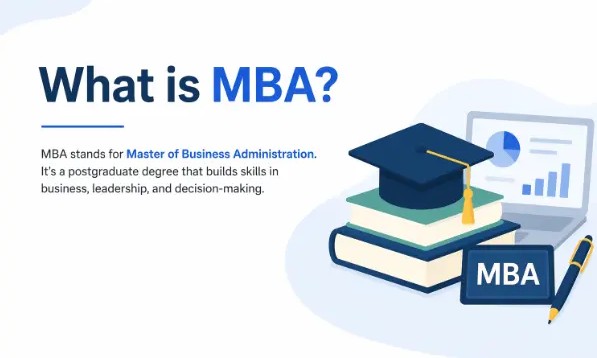
MBA stands for Master of Business Administration. It is a postgraduate management degree that develops knowledge across key business functions while helping learners build analytical, leadership and decision-making capabilities.
The learning experience in an MBA course typically combines:
- Business and management concepts
- Financial and accounting fundamentals
- Marketing and consumer understanding
- Human resource management
- Operations and supply chain concepts
- Business economics
- Organisational behaviour
- Research and analytical methods
- Strategy decision-making
- Projects, case studies and practical applications
The objective is not simply to memorise management theories. A well-designed MBA connects academic concepts with business situations so that learners can evaluate problems, interpret information and make informed decisions.
MBA Course Structure Explained
The MBA course structure usually progresses from broad management fundamentals to more focused areas of study.
While universities may organise their curriculum differently, a typical structure can be understood through four stages.
1. Core Management Subjects
The initial part of an MBA course generally establishes a foundation in business and management. Subjects can include:
- Principles of management
- Organisational behaviour
- Business communication
- Managerial economics
- Accounting
- Business statistics
- Marketing management
- Human resource management
For example, the DPU-COL curriculum includes Principles & Practices of Management, Organisational Behavior, Management Accounting, Managerial Economics, Business Communication and Research Methodology among its core subjects.
2. Functional Business Areas
As students progress, the MBA course curriculum moves into specific business functions. This helps them understand how departments contribute to overall organisational performance.
Common areas include:
- Finance
- Marketing
- Human resources
- Operations
- Business analytics
- Strategy
- Information technology
- Entrepreneurship
3. Specialisations and Electives
Many MBA programs allow students to select a specialisation or elective based on their career interests.
Popular areas include:
- Finance
- Marketing
- Human Resources
- Operations
- Business Analytics
- Artificial Intelligence
- FinTech
- ESG
- Retail
- International Business
- Entrepreneurship
The choice of specialisation can make the programme more relevant to a particular career direction. For example, Amrita Online offers specialisations in areas including Analytics, FinTech, AI, ESG, Marketing, Finance, Operations and HR.
Types of MBA Programs
The right MBA course format depends largely on your career stage, available time and learning preferences.
- Full-Time MBA: A full-time MBA is designed for learners who can dedicate substantial time to academic study. It typically combines classroom learning, projects, peer interaction, internships and other campus-based activities.
- Part-Time/Hybrid MBA: Weekend or evening courses are held for those who wish to continue working while pursuing their education
- Online MBA: An online MBA offers a degree-oriented management education through digital learning platforms. It can be particularly relevant for graduates and professionals who want to continue working while studying.
- Executive MBA: An Executive MBA is generally designed around the needs of professionals who already have work experience.
MBA Scope and Career Opportunities
The MBA course scope extends across a wide range of business functions, industries and career paths. The career possibilities also vary depending on the type of programme, institution, specialisation and professional experience.
| MBA Specialisation | Potential Career Areas |
| Finance | Financial analysis, corporate finance, banking and investment |
| Marketing | Brand management, sales, digital marketing and product marketing |
| Human Resources | Talent management, HR operations, learning and development |
| Operations | Supply chain, procurement, operations and project management |
| Business Analytics | Business analysis, consulting, data-driven decision-making |
| International Business | Global operations, international trade and business development |
| Entrepreneurship | Startups, venture building and business development |





How to Choose the Right MBA Course for Your Career Goals
Choosing an MBA course should go beyond comparing university names or programme fees. The right option depends on your career stage, professional experience, preferred specialisation, learning format and long-term goals. Consider the following factors before selecting an MBA programme:
- Career objective: Decide whether you want to move into finance, marketing, HR, operations, analytics, consulting, entrepreneurship or general management. Your career goal can help narrow down suitable specialisations and MBA programs.
- Learning format: Full-time programmes may suit graduates who can dedicate themselves to intensive study, while online, part-time and executive formats can offer greater flexibility. An MBA for working professionals may be particularly useful when continuing employment is a priority.
- Curriculum and specialisation: Review the MBA course structure to understand the core subjects, electives, projects and specialisations included. Look beyond the programme title to see whether the curriculum develops skills relevant to your target role.
- University and business school: Check the university’s recognition, curriculum quality, faculty expertise, learning resources, assessment methods and student support. The reputation of the business school or degree-awarding institution can also influence the overall learning experience.
- Eligibility and experience requirements: Requirements vary across programmes. Some MBA courses accept graduates from different academic backgrounds, while executive programmes may require relevant work experience.
- Total MBA cost: Compare the complete fee structure rather than looking only at tuition fees. Consider examination charges, learning resources and other applicable costs when calculating the overall MBA cost.
- Career support: If career advancement or a role change is your objective, look at the programme’s industry exposure, projects, networking opportunities and career support services.
A useful approach is to shortlist two or three programmes and compare them across curriculum, specialisation, format, eligibility, university recognition, cost and career relevance. This makes it easier to identify an MBA degree that fits both your current circumstances and future career plans.
MBA Programmes Offered Through Jaro Education
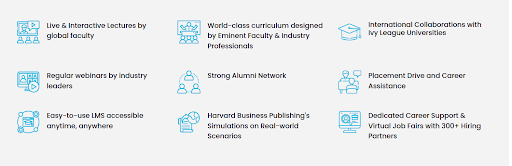
Jaro Education offers a range of online and executive management programmes in collaboration with reputed universities. These options cater to graduates as well as working professionals, with differences in duration, eligibility, specialisations, learning format and fee structure.
| University / Programme | Programme Type | Duration | Mode | Eligibility |
| Symbiosis School for Online and Digital Learning (SSODL) – Online MBA | Online MBA | 24 months | Online | Graduate from a recognised university/institution with minimum 50% marks or equivalent grade; 45% for SC/ST candidates |
| Dr. D. Y. Patil Vidyapeeth, Pune (DPU-COL) – Online MBA | Online MBA | 2 years | Online | Bachelor’s degree in any discipline with the prescribed minimum aggregate |
| Dayananda Sagar University – Executive MBA | Executive MBA | 17 months | Online / Executive | Bachelor’s degree from a recognised university along with the required work experience |
| Manipal University Jaipur – Online MBA | Online MBA | 24 months | Online | Bachelor’s degree with the prescribed minimum marks and applicable admission requirement |
| Amrita Vishwa Vidyapeetham – Amrita Online MBA | Online MBA | 2–4 years | Online | Minimum 3-year undergraduate degree after 10+2; eligible final-year students may also apply with their latest completed semester results |
Note: Programme fees, admission criteria and other programme details may be revised by the respective universities. Students should verify the latest information before applying.
Conclusion
An MBA course can provide a structured understanding of business while allowing learners to develop specialised expertise in areas aligned with their career goals. The right choice, however, depends on more than the MBA label.
Consider the MBA course structure, duration, eligibility, specialisation, learning format, university recognition and overall MBA cost before making a decision. For recent graduates, an online MBA can provide broad management exposure, while an executive format may be better suited to experienced professionals seeking career progression.
With options ranging from the SSODL and DPU-COL Online MBAs to the Manipal University Jaipur Online MBA and Amrita Online MBA, Jaro Education provides multiple pathways to explore depending on your academic background, experience, and professional objectives.
Frequently Asked Questions
MBA stands for Master of Business Administration. It is a postgraduate degree focused on business management, leadership, strategy and organisational decision-making.
An MBA course structure generally includes core management subjects, functional business areas, electives or specialisations, assessments and practical components such as projects or case studies. The exact structure varies by university.
Yes. Online and executive MBA formats can be suitable for professionals who want to continue working while pursuing higher education. Programme schedules, eligibility and learning formats vary by university.
There is no single MBA cost. Fees vary according to the university, programme format and specialisation. For example, the programme information available through Jaro Education lists fees ranging from ₹1.76 lakh for the Amrita Online MBA to ₹2.50 lakh for the Dayananda Sagar University Executive MBA among the programmes covered above.
An online MBA can lead to a master’s degree when it is offered as a recognised degree programme by the relevant university. Candidates should verify the specific programme’s recognition and degree-awarding institution before enrolling.

Related Courses
Explore our programs





Find a Program made just for YOU
We'll help you find the right fit for your solution. Let's get you connected with the perfect solution.
Is Your Upskilling Effort worth it?
 ROI Calculator

Are Your Skills Meeting Job Demands?
Try our Skill Gap tool
Experience Lifelong Learning and Connect with Like-minded Professionals
Explore Jaro Connect

