HOME > BLOG > Digital Marketing > A Comprehensive Guide to Google SEO Algorithms : Major Updates & Its Impact On SEO Ranks
Digital Marketing
A Comprehensive Guide to Google SEO Algorithms : Major Updates & Its Impact On SEO Ranks
J
By Priya Sahu
January 14, 20268 min read
Last updated on September 1, 2026
SHARE THIS ARTICLE
Table Of Content
What are Google SEO algorithms?
Why Google Algorithm Updates Matter for SEO
Role of Machine Learning and Regularization in Google SEO Algorithms
Major Google Algorithm Updates That Changed SEO Forever
Search engine optimization is a field that has changed dramatically over the years, and at the forefront of this change are the Google SEO algorithms. It is imperative for businesses and marketers to be conversant with the Google algorithm updates to be visible on the web. The Google algorithm updates influence the ranking of sites and strategies for improving Google search ranking.
Contemporary Google SEO algorithm implementation is based entirely upon concepts of artificial intelligence and machine learning, and sometimes even machine learning regularization principles. In this blog, we shall walk you through some of the key Google SEO algorithm changes and tips that influence SEO rankings.
Google SEO algorithms are complex systems that Google uses to retrieve data from its search index and instantly deliver the best possible results for a query. They look at hundreds of ranking signals to determine which pages deserve top positions.With each passing day, search engines change their evaluation of content because of frequent Google algorithm updates. This makes it highly essential to understand how to enhance ranking in Google Search by aligning websites with the evolving standards of SEO.
Technically, Google uses machine learning models at a level where methods similar to regularization in machine learning help balance relevance, authority, and user experience without overfitting to spammy tactics.
Each Google algorithm update might bring about wholesale changes in rankings, traffic, and conversions for websites. Some updates make small ripples in the search engine result pages, but others rewrite all rules of SEO.Second, understanding such changes helps marketers seek sustainable methods to improve Google search ranking rather than temporary hacks. Major search engines – Google – employ AI-driven systems based on some concepts inspired by machine learning regularization methods in order to penalize manipulation and reward genuine value.
Neglecting algorithm updates leads to rank implosions, visibility plummets, and organic traffic tanking.
Role of Machine Learning and Regularization in Google SEO Algorithms
Machine learning plays a vital role in modern Google SEO algorithms. Models such as RankBrain and BERT learn from user behavior and refine continuously.
A key concept lying at the core of these systems involves regularization in machine learning, which prevents an algorithm from giving too much important to just one ranking factor. This provides balanced rankings based on relevance, quality, and intent.
For this reason, learning how to increase a Google search ranking today involves reinvesting into holistic SEO, rather than keyword stuffing or manipulating backlinks.
Major Google Algorithm Updates That Changed SEO Forever
Panda Update & Content Quality
Panda was one of the major google algorithm updates that targeted content quality. Sites with thin, duplicate, or low-value content faced huge ranking drops.
To recover from Panda, webmasters had to learn how to improve Google search ranking by creating original, informative, and user-focused content. This update reinforced machine-learning principles similar to regularization in machine learning, where low-quality signals are suppressed.
Penguin Update and Link Spam
The Penguin update targeted the manipulative link-building practices of websites. Websites with spammy backlinks received major penalties.
Post-Penguin, SEO pros had to think hard about how to better rankings in Google search through natural link building. Evolving Google algorithms with advanced learning models and google algorithm updates were identifying the patterns which were unnatural.
This marked a shift toward ethical SEO and authority-based ranking.
Hummingbird Update and Search Intent
Whereas Hummingbird didn’t just focus on keywords; it showed a more absolute understanding of search intent. This update really transformed how content was being evaluated. Until this change, learning how to improve Google search ranking meant optimizing content for user intent. This algorithm used semantic understanding and AI concepts influenced by regularization in machine learning to provide better results.
RankBrain and AI-Driven Search Results
RankBrain introduced machine learning into Google’s main algorithm. It helps interpret unfamiliar queries and improve results based on user behavior.
As one of the most important Google algorithm updates, RankBrain made engagement metrics crucial. To improve Google search ranking, websites now need to focus on dwell time, click-through rates, and relevance.
BERT Update and Natural Language Processing
BERT improved Google’s ability to understand context in search queries. This update enhanced how long-tail and conversational searches were handled.With BERT, improving Google search ranking is about writing content for people, not machines. The algorithm uses contextual understanding inspired by regularization in machine learning to avoid ranking misleading content.
Helpful Content Update
The Helpful Content Update rewards content written for users instead of search engines. This Google algorithm update penalizes AI-generated or keyword-stuffed pages that lack real value.To adjust, businesses must focus on authenticity and expertise when looking to improve Google search ranking.
How Google Algorithm Updates Impact SEO Rankings
Every Google algorithm update reshapes ranking factors, making SEO an ongoing process rather than a one-time task. Google uses AI-driven evaluation models where principles like regularization in machine learning help balance signals such as content quality, backlinks, page experience, and user intent.
Websites that do not evolve often face ranking volatility, while adaptable sites enjoy stable growth.
Key Ranking Factors Influenced by Google Algorithm Updates
Content Quality and Relevance
High-quality content remains the foundation of SEO. Google algorithm updates prioritize depth, originality, and relevance.
To master improving Google search ranking, content should address user problems thoroughly and naturally include keywords.
Page Experience and Core Web Vitals
Recent Google algorithm updates highlight page speed, mobile-friendliness, and visual stability.
Improving Core Web Vitals is crucial for those looking to boost their Google search ranking in competitive areas.
Backlinks and Authority
Google values backlinks, but quality is more important than quantity.
Modern algorithms use filters inspired by regularization in machine learning to disregard spam links while rewarding real authority.
User Engagement Signals
User behavior significantly impacts rankings. Bounce rate, dwell time, and interactions affect visibility.
Understanding how to improve Google search ranking now means enhancing user experience alongside technical SEO.
How to Improve Google Search Ranking After Algorithm Updates
Focus on User-Centric Content
Creating helpful content is the most reliable way to navigate Google algorithm updates.
Google’s learning models, improved through regularization in machine learning, prefer content that meets search intent.
Optimize for Search Intent
Understanding why users search for a term is vital.
Aligning content with intent is a proven method for sustainably improving Google search ranking.
Improve Technical SEO
Technical SEO ensures that Google can efficiently crawl and index your site.
Fast-loading pages, secure HTTPS, and mobile optimization match recent Google algorithm updates.
Build Natural and Relevant Backlinks
Gaining backlinks through valuable content and outreach is key.
Avoid shortcuts, as Google’s algorithms employ AI and regularization in machine learning to detect manipulation.
Monitor and Adapt to Algorithm Changes
Keeping up with every Google algorithm update helps you adjust your strategies quickly.
Ongoing optimization is essential for understanding how to improve Google search ranking in the long run.
Future of Google SEO Algorithms
The future of SEO will involve deeper AI integration, personalization, and predictive search behavior.Google will keep refining its algorithms using advanced machine learning models, where regularization in machine learning ensures fair and accurate rankings.
As Google algorithm updates become more frequent, adaptability and quality will define success.
Algorithm Penalties vs Algorithm Adjustments: Understanding the Difference
Many website owners panic during Google algorithm updates, thinking every drop in ranking is a penalty. However, Google makes a clear distinction between manual penalties and algorithm adjustments. Algorithm adjustments happen when Google fine-tunes ranking signals using AI, ensuring that search results are balanced and relevant. These changes often shift rankings rather than directly punish websites.
Understanding this difference helps clarify how to improve your Google search ranking without using risky SEO tactics. Instead of looking for loopholes, you should focus on quality improvements, which work better with changing algorithms.
Impact of Google Algorithm Updates on Content Strategy
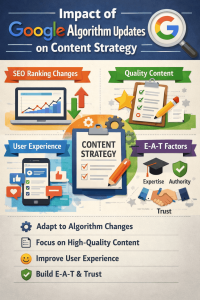
Content strategies must change alongside Google algorithm updates. Earlier SEO relied heavily on repeating keywords, but modern algorithms focus on context, intent, and expertise.Google’s AI systems, guided by principles similar to regularization in machine learning, help prevent over-optimization by reducing the weight of repetitive or unnatural content patterns. That’s why improving your Google search ranking now involves creating comprehensive topic clusters instead of isolated articles.
Content that answers follow-up questions, includes examples, and provides useful insights tends to perform better after major updates.
E-E-A-T and Its Growing Role in SEO Rankings
Experience, Expertise, Authoritativeness, and Trustworthiness (E-E-A-T) are becoming more important in SEO. Recent Google algorithm updates stress the importance of credible sources, expert-backed content, and clear authorship. Google’s evaluation models use machine learning filters similar to regularization in machine learning to reduce misinformation and unreliable content.
For brands looking to improve their Google search ranking, enhancing E-E-A-T through author bios, citations, and real-world experience is essential.
Local SEO and Algorithm Updates: What You Need to Know
Local SEO has also changed due to frequent Google algorithm updates. Google now places greater emphasis on proximity, relevance, and prominence. AI-driven ranking models ensure that local results are unbiased by using principles found in regularization in machine learning, which helps prevent businesses from manipulating local listings.
Optimizing Google Business Profiles, maintaining consistent NAP details, and earning genuine reviews are crucial steps for those trying to improve their Google search ranking locally.
Role of AI-Generated Content in Modern SEO
With the rise of AI tools, Google has made its stance clear through multiple algorithm updates. AI-generated content is acceptable only when it genuinely provides value and originality.Google’s algorithms use pattern detection techniques inspired by regularization in machine learning to identify low-quality, mass-produced content.
To improve your Google search ranking, businesses must ensure that AI-assisted content is edited, enhanced, and matches user intent.
Measuring SEO Success After Algorithm Updates
Tracking performance after Google algorithm updates is vital for long-term growth.Metrics like organic traffic, keyword rankings, engagement rates, and conversion performance help determine whether strategies are effective. Google’s learning systems continually refine rankings using feedback rooted in regularization in machine learning.
For sustainable growth, those looking to improve their Google search ranking should rely on data-driven decisions instead of assumptions.
Final Thoughts
Understanding Google SEO algorithms is crucial for digital success. From Panda to RankBrain and beyond, every Google algorithm update emphasizes quality, relevance, and user experience.
For anyone wondering how to improve Google search ranking, the answer lies in aligning with Google’s AI-driven approach, using ethical SEO practices, and focusing on content excellence. By recognizing the role of machine learning and concepts like regularization in machine learning, businesses can prepare their SEO strategies for the future and maintain strong rankings in a constantly changing search environment.
Frequently Asked Questions
The Google algorithm, in the context of SEO relates to the rules and machine-learning algorithms that determine search engine ranking. Frequent updates in the Google algorithm take hints from machine learning algorithms, specifically guidelines from regularization in machine learning, which helps in providing accurate search results and assists companies in search engine rankings.
These include on-page, off-page, technical, and local SEO-core SEO terminology that every marketer should know from any SEO glossary or list of essential SEO terms.
The 3 C’s-Content, Code, and Credibility-are foundational SEO terminology that you’ll find in every reliable SEO glossary and list of strategic SEO terms.
The most effective SEO techniques involve creating quality content, enhancing technical SEO, fostering valuable backlinks, enhancing user experience, and monitoring progress. These techniques relate to google algorithm updates, involve lessons from regularization of machine learning, and are necessary for how to improve Google search ranking.
Priya Sahu
Sales & Digital Marketing Strategist
Sales and Marketing professional with 6+ years of experience in B2B and B2C growth, specializing in business development and digital marketing. Skilled in CRM systems, paid campaigns, and AI-driven strategies to drive revenue, optimize performance, and build lasting client relationships.
Get Free Upskilling Guidance
Fill in the details for a free consultation
Related Courses
Explore our programs
Digital Marketing: Business Models, Processes and Technologies
 HOME > BLOG > Digital Marketing > A Comprehensive Guide to Google SEO Algorithms : Major Updates & Its Impact On SEO Ranks
 January 14, 2026
 8 min read





 ChatGPT
 Perplexity
 Claude
 Grok
Grok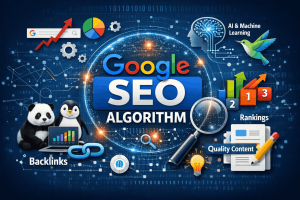









 ROI Calculator