HOME > BLOG > Electric Vehicle Technology > Best EV Technology Courses in India 2026: IIT Delhi’s PG Diploma vs Advanced Programme — Which to Choose?
Electric Vehicle Technology
Best EV Technology Courses in India 2026: IIT Delhi’s PG Diploma vs Advanced Programme — Which to Choose?
J
By Shubham Lal
June 28, 202617 min read
Published on June 28, 2026
SHARE THIS ARTICLE
Table Of Content
Why Is EV Technology One of India's Fastest-Growing Career Fields?
The Rise of Electric Mobility in India
Why Are Professionals Pursuing EV Technology Courses?
IIT Delhi's EV Learning Ecosystem
India's electric vehicle revolution is accelerating rapidly. What was once considered a niche segment of the automotive industry has now become one of the country's most significant technology-driven growth sectors. From electric two-wheelers and passenger vehicles to commercial fleets and smart mobility solutions, electric mobility is reshaping transportation across the nation.
Government initiatives, sustainability goals, battery innovation, and growing consumer adoption are creating unprecedented demand for professionals who understand EV technologies. At the same time, automotive manufacturers, EV startups, battery companies, charging infrastructure providers, and technology firms are actively seeking skilled talent capable of supporting this transformation.
As a result, EV technology education has become increasingly important for engineers and working professionals looking to build future-ready careers. Among the available learning options, IIT Delhi offers specialized programmes designed to help professionals develop expertise in electric vehicle technologies and mobility solutions.
This guide explores IIT Delhi's PG Diploma in Electric Vehicle Technology and Advanced Programme in EV Technology, helping learners understand their differences and identify which programme best aligns with their career goals.
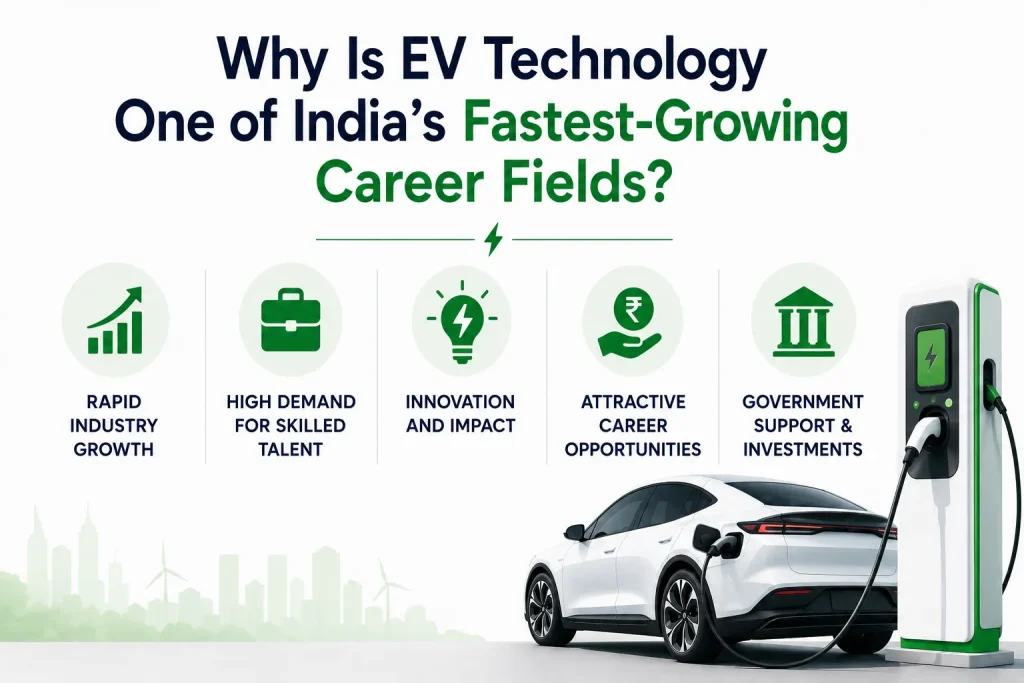
Why Is EV Technology One of India's Fastest-Growing Career Fields?
Electric mobility is rapidly transforming the global transportation industry, and India is emerging as one of the most promising markets for Electric Vehicles (EVs). Driven by technological innovation, government support, sustainability goals, and changing consumer preferences, the EV ecosystem is creating significant demand for skilled professionals across engineering, manufacturing, energy, and mobility sectors.
One of the biggest growth drivers is the rapid adoption of electric vehicles. Rising fuel costs, increasing environmental awareness, and improvements in vehicle performance have encouraged more consumers and businesses to embrace electric mobility. As EV adoption accelerates, organizations require professionals who understand electric powertrains, battery systems, charging technologies, and vehicle integration.
Another key factor is the growing focus on sustainability and climate goals. Governments and businesses worldwide are investing in cleaner transportation solutions to reduce carbon emissions and support long-term environmental objectives. Electric mobility has become a critical component of this transition, creating opportunities for professionals who can contribute to sustainable transportation initiatives.
The sector is also being shaped by continuous battery innovation. Advances in battery chemistry, energy storage systems, battery management technologies, and fast-charging solutions are improving vehicle performance and driving industry growth. Since batteries remain at the core of EV technology, professionals with expertise in this area are increasingly sought after.
Beyond vehicles themselves, the future of transportation is moving toward smart mobility ecosystems. Connected vehicles, intelligent transportation systems, IoT-enabled mobility solutions, and data-driven vehicle management platforms are creating demand for multidisciplinary talent capable of working across engineering, software, and analytics domains.
In addition, India’s expanding EV charging infrastructure is opening new opportunities in project management, operations, infrastructure development, energy management, and technology implementation. Public and private investments in charging networks are expected to play a major role in supporting widespread EV adoption over the coming years.
As the electric mobility ecosystem continues to expand, professionals with specialized EV knowledge are becoming increasingly valuable across industries. For engineers, technology professionals, and mobility enthusiasts, EV technology represents one of the most exciting and future-focused career paths in India today.
India’s electric mobility transformation is gaining significant momentum, driven by a combination of supportive government policies, technological advancements, growing environmental awareness, and substantial industry investments. What was once considered an emerging segment has now evolved into a strategic priority for the country’s transportation and sustainability goals. As a result, electric vehicles are becoming increasingly important to India’s future mobility landscape.
A major catalyst behind this growth has been strong policy support and industry participation. Government initiatives aimed at promoting cleaner transportation and reducing dependence on fossil fuels have encouraged investments across the EV value chain. These efforts have accelerated the development of electric vehicle manufacturing, battery production capabilities, charging infrastructure networks, research and innovation activities, and sustainable mobility solutions. Consequently, both established automotive manufacturers and emerging EV startups are expanding their presence in the market and investing heavily in next-generation mobility technologies.
At the same time, India is witnessing the development of a broader EV ecosystem that extends far beyond vehicle manufacturing. Today’s electric mobility industry encompasses multiple interconnected sectors, including battery technology, power electronics, charging infrastructure, fleet management, mobility services, energy management, and smart transportation systems. This expanding ecosystem is creating diverse career opportunities for professionals from engineering, technology, operations, analytics, and business backgrounds.
Looking ahead, the demand for skilled talent is expected to grow as organizations continue investing in electric mobility initiatives. Companies require professionals who can contribute across technical, managerial, operational, and strategic functions while supporting innovation and large-scale adoption of EV technologies. As the industry evolves, individuals with a strong understanding of electric mobility fundamentals, battery systems, charging technologies, and future transportation trends are likely to remain highly relevant and well-positioned for emerging opportunities in the years ahead.
Why Are Professionals Pursuing EV Technology Courses?
The rapid growth of electric mobility is transforming the automotive and transportation sectors, creating a strong demand for professionals with specialized EV expertise. As organizations invest in electric vehicles, battery technologies, charging infrastructure, and smart mobility solutions, many engineers and working professionals are turning to EV technology courses to stay relevant in an evolving industry landscape.
One of the primary reasons professionals pursue EV education is the opportunity for career transition. Individuals working in traditional automotive, manufacturing, and engineering roles often seek specialized EV knowledge to move into emerging areas of electric mobility. As the industry shifts from conventional internal combustion engine (ICE) vehicles to electric platforms, professionals with EV expertise are increasingly valued by employers.
Another major factor is the need for future-ready technical skills. Electric vehicles bring together multiple engineering disciplines, including electrical engineering, electronics, mechanical engineering, energy systems, control systems, and software integration. Structured EV programmes help learners understand how these technologies work together within modern electric mobility ecosystems, providing a more holistic understanding of the industry.
The growing demand for skilled talent is also encouraging professionals to invest in EV education. Organizations across automotive manufacturing, battery development, charging infrastructure, energy management, and mobility services are actively seeking individuals with practical knowledge of EV systems, battery technologies, power electronics, and electric mobility solutions.
Beyond immediate job opportunities, EV technology courses can also support long-term career growth and specialization. As industries continue adopting sustainable transportation solutions, professionals with expertise in electric mobility are likely to benefit from expanding career pathways and leadership opportunities.
Who Should Consider EV Technology Programmes?
EV technology programmes are particularly relevant for:
Mechanical Engineers
Electrical Engineers
Electronics Engineers
Automotive Professionals
Manufacturing Professionals
R&D Engineers
Technology Professionals
Mobility Sector Professionals
As EV adoption accelerates across India and globally, professionals from diverse technical backgrounds are increasingly exploring EV technology courses to build future-ready skills and participate in one of the fastest-growing sectors of the modern economy.
IIT Delhi's EV Learning Ecosystem
As India’s electric mobility sector continues to expand, professionals increasingly require structured learning opportunities that combine technical knowledge, industry relevance, and practical application. This is where IIT Delhi’s EV learning ecosystem has gained significant attention. Recognized as one of India’s premier institutions for technology education, research, and innovation, IIT Delhi has consistently developed programmes that address emerging industry needs and future workforce requirements.
With rapid advancements in areas such as electric mobility, Artificial Intelligence, automation, robotics, energy systems, and smart transportation, IIT Delhi has created learning pathways designed to help professionals stay aligned with evolving technological trends. Its focus on future-oriented education makes it a preferred destination for individuals looking to build expertise in high-growth sectors.
Why IIT Delhi Stands Out
Professionals often choose IIT Delhi programmes because they combine academic excellence with industry relevance. The institution is known for its strong reputation in engineering and technology education, while its programmes are designed to address real-world challenges faced by modern industries. Learners benefit from technology-focused curricula, practical learning approaches, exposure to emerging trends, and opportunities to understand how innovation is shaping future business and engineering environments.
Another key advantage is IIT Delhi’s emphasis on application-oriented learning. Rather than focusing solely on theoretical concepts, programmes are structured to help participants understand how technologies are implemented across industries, making learning more relevant and career-focused.
Focus on Future Mobility
Electric mobility is transforming the transportation and automotive sectors at an unprecedented pace. To support this transition, IIT Delhi’s EV programmes focus on building knowledge across critical areas of the electric vehicle ecosystem. Learners gain exposure to concepts related to EV technologies, battery systems, vehicle architecture, charging infrastructure, energy management, mobility innovations, and industry applications.
This multidisciplinary approach helps professionals understand the broader EV landscape while developing the technical and strategic perspectives needed to contribute effectively to the industry’s growth. As India continues investing in sustainable transportation and next-generation mobility solutions, IIT Delhi’s EV learning ecosystem provides a valuable platform for professionals seeking to build expertise and participate in the future of electric mobility.
PG Diploma in Electric Vehicle Technology by IIT Delhi
The Online PG Diploma in Electric Vehicle Technology by CART, IIT Delhi is designed for professionals seeking comprehensive exposure to electric mobility technologies and systems.
The programme focuses on building a strong understanding of EV systems, technologies, and industry applications. It combines theoretical concepts with practical perspectives relevant to modern electric mobility.
Key Learning Areas
Participants gain exposure to topics such as:
Electric Vehicle Architecture
Battery Technologies
Power Electronics
Electric Drives
Energy Management
Charging Systems
EV Design Considerations
Who Is It Suitable For?
The programme may be particularly relevant for:
Engineers
Automotive Professionals
Manufacturing Professionals
Technology Specialists
Mobility Sector Professionals
Career Relevance
The programme helps professionals build specialized EV knowledge that can support roles across engineering, product development, operations, manufacturing, and mobility innovation.
As India’s electric mobility ecosystem continues to evolve, professionals across industries are seeking opportunities to understand the technologies shaping the future of transportation. The Advanced Programme in EV Technology by IIT Delhi is designed to address this growing need by providing learners with industry-relevant knowledge of electric vehicles, emerging mobility solutions, and the technological trends driving the EV revolution.
Unlike programmes that focus exclusively on deep technical specialization, this programme aims to provide a practical and comprehensive understanding of the electric mobility landscape. It is particularly suitable for working professionals who want to build expertise in EV technologies while continuing their current careers and professional responsibilities.
The programme offers learners exposure to the key technologies, concepts, and industry developments shaping the electric vehicle sector. Through a structured learning approach, participants gain insights into how electric mobility is transforming transportation, manufacturing, energy management, and smart mobility ecosystems.
By combining foundational knowledge with industry-focused perspectives, the programme helps professionals develop a broader understanding of the EV value chain and its future opportunities.
Key Learning Areas
The curriculum introduces participants to several important aspects of electric mobility, including:
EV Fundamentals
Battery Systems and Energy Storage
Charging Infrastructure
Electric Powertrains
Mobility Technologies
Emerging Industry Trends and Innovations
These topics provide learners with a well-rounded understanding of how electric vehicles function and how the broader EV ecosystem continues to evolve.
Who Should Consider This Programme?
The programme is suitable for professionals who want to gain knowledge of electric mobility without necessarily pursuing highly specialized engineering pathways. It can be particularly valuable for:
Engineers exploring EV career opportunities
Automotive professionals adapting to industry changes
Manufacturing professionals working on mobility-related projects
Consultants interested in future mobility trends
Technology professionals seeking exposure to EV ecosystems
Business leaders evaluating opportunities within the electric mobility sector
Industry Relevance
The relevance of EV education continues to grow as organizations invest heavily in electric mobility, battery innovation, charging networks, and sustainable transportation solutions. Understanding EV technologies is becoming increasingly important not only for engineers but also for professionals working in operations, project management, consulting, strategy, and technology functions.
As the transition toward electric mobility accelerates, professionals with knowledge of EV systems, industry trends, and emerging technologies will be better positioned to contribute to innovation and transformation initiatives across multiple sectors. The Advanced Programme in EV Technology by IIT Delhi helps learners build this understanding while preparing them for opportunities in one of the fastest-growing industries of the coming decade.
PG Diploma vs Advanced Programme: Detailed Comparison
While both programmes focus on electric vehicle technologies, they serve different learner needs and career objectives.
Parameter
PG Diploma in EV Technology
Advanced Programme in EV Technology
Learning Depth
More comprehensive and structured
Focused industry-oriented exposure
Technical Coverage
Extensive
Moderate to Advanced
Programme Focus
Detailed EV specialization
EV technology and industry understanding
Suitable For
Engineers and technical professionals
Professionals from diverse backgrounds
Career Objective
Specialized EV expertise
EV upskilling and industry exposure
Learning Outcome
Strong technical foundation
Broader EV ecosystem understanding
Neither programme is universally better than the other. The right choice depends on your current role, technical background, career goals, and desired level of specialization.
Which EV Programme Is Right for You?
Choosing between the Online PG Diploma in Electric Vehicle Technology and the Advanced Programme in EV Technology by IIT Delhi depends on your current experience, technical background, and long-term career goals. While both programmes focus on electric mobility and future transportation technologies, they are designed to serve different learning needs and professional aspirations.
For Fresh Engineers
Engineering graduates looking to establish a strong foundation in electric mobility may find the PG Diploma in Electric Vehicle Technology more suitable. The programme offers a structured and comprehensive learning experience that covers core EV concepts, battery technologies, vehicle systems, power electronics, and charging infrastructure. For those planning to build a long-term career in the EV industry, the PG Diploma can provide deeper technical expertise and stronger domain specialization.
For Working Professionals
Professionals who want to understand EV technologies while continuing their careers may prefer the Advanced Programme in EV Technology. The programme focuses on industry-relevant concepts, emerging trends, and practical applications, making it suitable for individuals seeking upskilling opportunities without pursuing highly specialized technical education. Its broader approach allows professionals to gain valuable EV knowledge while balancing existing work commitments.
For Automotive Professionals
Individuals already working in automotive manufacturing, vehicle engineering, testing, design, or mobility-related functions can benefit from either programme. The choice depends largely on the depth of expertise they wish to develop. Professionals seeking advanced technical specialization may lean toward the PG Diploma, while those looking for industry-focused knowledge and broader mobility perspectives may find the Advanced Programme more aligned with their goals.
For Manufacturing and Operations Professionals
The transition toward electric mobility is reshaping manufacturing processes, supply chains, and industrial operations. Professionals involved in production, quality management, operations, and industrial engineering can benefit from understanding EV technologies and their impact on future manufacturing ecosystems. Both programmes can provide valuable insights, depending on the level of technical depth required.
For Technology and Business Leaders
Professionals involved in innovation, business strategy, digital transformation, consulting, mobility solutions, or technology leadership often require a broader understanding of the EV ecosystem rather than deep engineering specialization. For such learners, the Advanced Programme in EV Technology may offer a more practical pathway by focusing on industry trends, future mobility solutions, and the strategic implications of electric mobility.
A Simple Decision Framework
Choose the PG Diploma in Electric Vehicle Technology if you want:
Comprehensive EV specialization
Strong technical and engineering-focused learning
In-depth understanding of EV systems and technologies
Long-term expertise in the electric mobility domain
A structured pathway into specialized EV roles
Choose the Advanced Programme in EV Technology if you want:
Industry-oriented exposure to electric mobility
Flexible professional upskilling
Understanding of EV trends and future technologies
Broader knowledge of the EV ecosystem
Career diversification and future mobility insights
Ultimately, both programmes offer valuable opportunities to develop EV expertise. The best choice depends on whether your goal is to build deep technical specialization or gain a broader understanding of one of the world’s fastest-growing technology sectors.
Career Opportunities After an EV Technology Course
The electric mobility sector is creating opportunities across engineering, technology, manufacturing, consulting, and operations functions.
As EV adoption accelerates, organizations require professionals capable of supporting product development, infrastructure expansion, and mobility innovation.
EV Design Engineer
EV Design Engineers contribute to the development and optimization of electric vehicle systems, components, and architectures.
Battery Systems Engineer
Battery technology remains one of the most important areas within electric mobility. Professionals in this domain focus on battery performance, safety, energy management, and lifecycle optimization.
Charging Infrastructure Specialist
As charging networks expand, organizations require professionals who understand charging technologies, deployment strategies, and infrastructure management.
Vehicle Integration Engineer
Vehicle Integration Engineers ensure seamless interaction between mechanical, electrical, electronic, and software systems within EV platforms.
EV Operations Manager
Operations professionals oversee manufacturing, deployment, logistics, and operational efficiency within EV ecosystems.
Mobility Consultant
Consultants support organizations navigating electric mobility transitions, sustainability initiatives, and technology adoption strategies.
Product Manager – EV Solutions
Product Managers help define EV products, charging solutions, mobility services, and customer experiences while balancing business objectives and technological possibilities.
These opportunities continue expanding as the EV ecosystem matures.
EV Industry Salary Trends in India
Compensation in the EV sector varies based on role, expertise, experience level, and industry segment.
However, the rapid growth of electric mobility has created strong demand for specialized talent.
Indicative Salary Ranges in 2026
Role
Average Salary Range
EV Design Engineer
₹6–15 LPA
Battery Systems Engineer
₹8–18 LPA
Charging Infrastructure Specialist
₹6–16 LPA
Vehicle Integration Engineer
₹8–20 LPA
EV Operations Manager
₹10–25 LPA
Product Manager (EV)
₹15–35 LPA
Mobility Consultant
₹12–30 LPA
Actual compensation depends on technical expertise, organization size, project complexity, and industry demand.
As India’s EV ecosystem expands, specialized professionals are expected to remain in strong demand.
EV Technology, Robotics & AI: The Future Connection
The future of electric mobility extends beyond electric powertrains.
Emerging technologies such as Artificial Intelligence, Robotics, Machine Learning, IoT, and Autonomous Systems are increasingly influencing vehicle design and transportation ecosystems.
Intelligent Vehicles
Modern vehicles increasingly rely on software, sensors, and AI-driven decision-making systems.
Autonomous Mobility
While fully autonomous vehicles remain an evolving field, advancements in robotics, perception systems, and AI continue driving innovation.
Smart Manufacturing
Robotics and automation are transforming EV production facilities, enabling greater precision, efficiency, and scalability.
Predictive Maintenance
AI-powered analytics help organizations monitor vehicle performance, predict failures, and optimize maintenance schedules.
Connected Mobility Ecosystems
Future transportation systems are expected to integrate vehicles, infrastructure, charging networks, and data platforms into connected ecosystems.
With electric mobility rapidly transforming the transportation landscape, EV technology has emerged as one of the most promising career domains for engineers, technology professionals, and industry leaders. As governments, automotive manufacturers, energy companies, and technology firms continue investing in sustainable mobility solutions, the demand for professionals with EV expertise is expected to remain strong throughout 2026 and beyond.
However, before enrolling in any programme, professionals should ask an important question: Does this investment align with my long-term career goals? The answer depends on individual aspirations, industry interests, and willingness to continuously adapt to technological change.
Potential Benefits of an EV Technology Course
An EV technology programme can provide several long-term advantages for professionals seeking to participate in the future of mobility. It helps learners develop industry-relevant technical skills, build specialized knowledge in electric vehicle systems, understand battery technologies and charging infrastructure, and gain exposure to emerging mobility innovations. Such programmes can also open doors to new career opportunities while helping professionals remain competitive in industries undergoing rapid transformation.
As organizations increasingly adopt electric mobility solutions, professionals with EV expertise are likely to find opportunities across automotive engineering, manufacturing, energy management, mobility services, product development, consulting, and technology-driven transportation ecosystems.
Important Considerations
While the opportunities are significant, prospective learners should also approach EV education with realistic expectations. The EV sector continues to evolve rapidly, with new technologies, battery innovations, charging solutions, and regulatory developments emerging regularly. As a result, continuous learning remains essential even after completing a programme.
Additionally, many EV concepts involve technical and interdisciplinary knowledge spanning electrical systems, electronics, mechanical engineering, software integration, and energy management. Developing meaningful expertise often requires dedication, curiosity, and a willingness to apply learning in practical situations. Ultimately, career outcomes depend not only on the programme itself but also on how effectively learners leverage their knowledge and skills in real-world environments.
A Long-Term Perspective
The value of an EV technology programme extends beyond immediate job opportunities. Electric mobility is becoming increasingly connected with broader trends such as renewable energy, smart cities, autonomous transportation, Artificial Intelligence, robotics, and sustainable infrastructure development. As these ecosystems continue to converge, professionals with EV expertise will play an important role in shaping the future of transportation and mobility.
For individuals passionate about innovation, sustainability, and emerging technologies, investing in EV education can be more than just a career decision—it can be a strategic step toward participating in one of the most transformative technological shifts of the coming decades. As India strengthens its position in the global EV market, professionals equipped with electric mobility knowledge are likely to remain highly relevant in the future workforce.
Final Thoughts
Electric mobility is no longer a niche industry—it has become a major force driving innovation across transportation, energy, manufacturing, and technology sectors. As organizations accelerate investments in sustainable mobility solutions, demand for professionals with EV expertise continues to rise.
Both the PG Diploma in Electric Vehicle Technology and the Advanced Programme in EV Technology by IIT Delhi offer valuable learning pathways for professionals seeking to participate in this transformation. The right choice depends on your background, technical expertise, and long-term career objectives.
If your goal is to build deeper technical specialization and comprehensive EV knowledge, the PG Diploma may be the more suitable option. If you are looking for industry-oriented upskilling and broader exposure to electric mobility trends, the Advanced Programme can provide a flexible and practical pathway.
Regardless of the programme chosen, developing expertise in EV technologies today can position professionals for opportunities in one of the most dynamic and future-focused industries of the coming decade.
Frequently Asked Questions
Neither programme is universally better. The ideal choice depends on your technical background, learning objectives, and desired level of specialization.
The PG Diploma generally provides deeper technical coverage and structured specialization, while the Advanced Programme focuses on industry-oriented EV learning and broader exposure.
EV courses are suitable for engineers, automotive professionals, manufacturing professionals, technology specialists, mobility experts, and professionals interested in future transportation systems.
Common roles include EV Design Engineer, Battery Systems Engineer, Charging Infrastructure Specialist, Vehicle Integration Engineer, Mobility Consultant, and Product Manager.
Yes. The rapid growth of electric mobility, battery technology, and charging infrastructure is creating strong demand for skilled professionals.
Key areas include battery systems, power electronics, electric drives, charging technologies, energy management, vehicle architecture, and mobility solutions.
Yes. Modern EV ecosystems increasingly incorporate Artificial Intelligence, Robotics, IoT, automation, predictive analytics, and intelligent transportation technologies.
Shubham Lal
Lead Software Developer
Shubham Lal joined Microsoft in 2017 and brings 8 years of experience across Windows, Office 365, and Teams. He has mentored 5,000+ students, supported 15+ ed-techs, delivered 60+ keynotes including TEDx, and founded AI Linc, transforming learning in colleges and companies.
Get Free Upskilling Guidance
Fill in the details for a free consultation
Related Courses
Explore our programs
Admission Open
Advanced Programme in Electric Vehicle (EV) Technology
 HOME > BLOG > Electric Vehicle Technology > Best EV Technology Courses in India 2026: IIT Delhi’s PG Diploma vs Advanced Programme — Which to Choose?
 June 28, 2026
 17 min read











 Admission Open
 Admission Open
 Admission Open
 ROI Calculator