
Do’s and Don’ts in Interview – Important To Know For Jobseekers
 January 9, 2026
 11 min read




Table Of Content
- Understanding the Interview Process
- General Interview DOs Every Jobseeker Must Remember
- General Interview Don’ts Jobseekers Should Avoid
Interviewing is an important aspect of the recruitment process and provides the platform on which the hiring manager conducts an initial assessment of the qualification of the potential employee beyond the CV. They assist in enabling the recruiter to gauge the candidate’s ability to communicate ideas, cope with pressure, and fit in with the values of the organization. They assist in enabling the recruiter. Even as qualifications and work experience can make the cut to be interviewed, the session can make the final decision. This is why learning “do’s and don’ts" in a job interview is so important for anyone seeking to succeed in today’s competitive job market.
The manner of interviewing has direct bearing on the level of professionalism, confidence, and attitude that the hiring manager perceives in the job candidate. Simple things like punctuality, body language, or speech can make a lasting impression, one that is often positive or negative.
 ChatGPT
 Perplexity
 Claude
 Grok
GrokA lot of job-seekers end up committing common errors such as interrupting the interview, being unprepared, or speaking ill of previous employers.Knowing the ‘do’s and don’ts’ about interview situations will aid the candidates in avoiding such mistakes and projecting themselves well. A second common problem is that the value of etiquette may be underestimated when only technical skills are required.
Despite this, the skills that are often looked for in a recruiter include those of showing respect, flexibility, and effective communication.
This is where structured preparation becomes crucial to help with better interview performances. Application of the 10 interview do’s and don’ts enables job seekers to possess the correct approach for dealing with job interviews. The point of knowing do’s and don’ts in an interview is to make the interviewee more noticeable in a positive manner. Through interview etiquette skills acquisition, job seekers can enhance their selection and career advancement probabilities.
Understanding the Interview Process
The interview process looks at more than just academic qualifications or technical skills. Employers want to assess a candidate’s problem-solving ability, cultural fit, and potential for growth within the company. They pay close attention to how candidates answer questions, handle stress, and express their ideas. Knowing the do’s and don’ts of interviews is crucial for success.Recruiters also focus on communication, attitude, and professionalism. Clear communication shows confidence and thought clarity, while a positive attitude reflects flexibility and teamwork. Professional behavior, like dressing appropriately and listening well, shows commitment to the role. Following the right do’s and don’ts in interviews helps candidates project a strong professional image.
Interviews usually have multiple stages, including screening calls, technical rounds, HR discussions, and final managerial interviews. Each stage assesses different skills, from subject knowledge to interpersonal abilities. Neglecting to prepare for any stage can weaken a strong profile. Knowing the 10 interview do’s and don’ts helps maintain confidence and consistency throughout the interview process.
Preparation is as important as skills because it allows candidates to anticipate questions and structure their answers effectively. Well-prepared job seekers are calmer, make fewer mistakes, and communicate more persuasively. Ultimately, blending preparation with good interview etiquette increases the chances of success in the hiring process.
General Interview DOs Every Jobseeker Must Remember
Proper preparation for an interview plays a crucial role in making a lasting impression on recruiters. To prepare for an interview, it is crucial to understand the organization, its culture, and its role for which one is appearing for an interview. This will help them link their responses to the organization’s goals and show their interest in it. To approach an interview with confidence, one must follow all these “do’s and don’ts.” The other important element is the preparation of answers to common interview questions. Preparing answers to common interview questions in advance will help you in increasing the effectiveness of communication. It will also help you in dealing with nervousness. Preparation will ensure that your responses are organized. Preparation will also make you aware of what you should and should not do in the interview.
Having confident body language is also important in impressing your interviewers. Making eye contact, a firm handshake, or sitting up straight can make a huge difference in your confidence level, which in turn shows you are keen on the interview. These aspects relate directly to the 10 interview dos and don’ts every job-seeking individual must know.
Arriving professionally attired is equally important, as it portrays your respect for the organization. Dressing according to the company’s attire helps leave an impressive first impression. It is also vital that one has all the required documents like resumes, certificates, and portfolios.
By adhering to these dos and don’ts in a job interview, job seekers can establish themselves as serious and trustworthy professionals. These general “do’s” in an interview are very effective in ensuring that the job “seeker shows the very best version” during the hiring process.
General Interview Don’ts Jobseekers Should Avoid
Although it is important to know what to do in an interview, it is just as important to know what not to do in an interview in order to succeed in an interview process. Turning up late for an interview will leave a negative impression on the interviewer, in addition to time management skills. Turning up too early might also pose an inconvenience to others. A lack of preparedness or overconfidence can also play against you. A lack of preparedness will get you answers that are not very clear, while overconfidence will make you appear arrogant.
A balanced approach, one that is confident and humble, is what is most what impresses the recruiters. These points demonstrate many critical do’s and don’ ts in interview scenarios that must be kept in mind by job seekers.
Commenting negatively about former employers is another common error that the recruiter detects quickly. It gives them reason to doubt your attitude, professionalism, and skills in managing working circumstances. Rather, speak about the positive aspects of the situation and the lessons you’ve learned. This advice is heavily stressed in the top 10 interview dos and don’ts for professional behavior. Cutting off the flow of questioning and speaking in an informal tone and using slang may create problems in communication and may even show disrespect. Let the interviewer finish his questions and answer thoughtfully. In interview answers, having a professional tone in words like “yes,” “no,” “I mean,” and “uh-huh” can bring maturity to expressions. By staying away from these pitfalls and focusing on interview dos and don’ts, job seekers can definitely make their interview experiences better.
Do’s Before the Interview
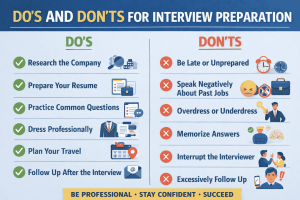
- Understand the job description clearly before you apply or attend the interview. Look at the required skills, responsibilities, and expectations. This will help you prepare effectively and tailor your answers to show your relevant strengths. Following these interview do’s and don’ts will make sure you enter the room with purpose and direction.
- Prepare a professional, updated resume and, if needed, a well-organized portfolio. Highlight the achievements, skills, and experiences that match the job. Keep several copies of your resume and make sure it is clean and error-free. This step reflects important do’s and don’ts in preparing for an interview.
- Plan your travel route and the timing of your interview in advance to avoid last-minute stress. Check the interview location, traffic conditions, or links for online meetings ahead of time. Arriving on time shows punctuality, discipline, and professionalism. Time management is one of the 10 interview do’s and don’ts every job seeker should follow.
- Research common interview questions related to your field and role. Prepare clear responses that showcase your skills, experience, and problem-solving ability. Practicing your answers will boost your confidence and clarity during the interview. This preparation is strongly linked to proven interview do’s and don’ts.
- Prepare specific examples of your achievements using real scenarios. Quantify your results when possible to show impact and value. Clear examples make your answers more credible and memorable. This approach is emphasized in all do’s and don’ts in interview best practices.





Don'ts Before the Interview
- Avoid skipping company research. It shows a lack of interest and preparation. If you don’t know basic details about the organization, it can weaken your credibility. Recruiters expect candidates to be informed and engaged. Ignoring this is a serious violation of interview rules.
- Do not memorize answers without understanding them. Rote responses sound unnatural and don’t handle follow-up questions well. Focus on understanding the concepts instead of just reciting lines. This mistake goes against key interview guidelines.
- Never ignore interview instructions given via email or call. Missing important details about documents, dress code, or interview format can leave a bad impression. Paying attention to instructions shows professionalism and reliability. These points are clearly outlined in the 10 interview do’s and don’ts.
- Avoid dressing casually or inappropriately for the interview. Your attire should fit the company culture and the role’s expectations. First impressions matter, and your appearance is important. Dressing incorrectly goes against the essential interview rules for job seekers.
Do’s After The Interview
One of the most important “do”s and “don’t”s for interviews is to send a thank-you email within 24 hours. It should include an expression of gratitude, reiteration of the continued interest in the position, and a brief statement of qualifications. These are signs of professionalism and communication skills. Another critical step in the process is reflecting on your performance during the interview. Evaluating the Answers to the Selected Interview Questions. Analyze which answers went well and identify areas for improvement for future interviews. Self-reflection enables job seekers to improve their strategies. This behavior is also well aligned with the do’s and don’ts of effective interview practices.Professional follow-up is also important if there has been communication of the time line from the employer. A quick and polite reply email can convey interest in the position without giving the impression of being too eager. It is important that tone be kept at the right level in order to make a good impression.Lastly, be sure to be patient when waiting for responses. Recruitment activities take time, and lack of patience might blur your professional reputation. Being composed, optimistic, shows maturity. Patience is a subtle but strong element of interview dos and don’ts that is commonly underestimated by job applicants.
Don’ts After the Interview
After an interview, avoid reaching out to the recruiter multiple times for updates. Sending too many messages can seem unprofessional and may hurt your chances. Respecting boundaries is important in interview do’s and don’ts.Posting negative comments about the interview or the company on social media is another big mistake. These actions can harm your professional reputation and affect future opportunities. Keeping things private shows maturity and fits with good interview etiquette.
Finally, don’t lose motivation if you face rejection. Rejections are part of learning and help build resilience. Use feedback to improve and keep moving forward. This attitude is recommended in the ten interview do’s and don’ts for long-term career success.
Common Interview Mistakes Jobseekers Make
Many jobseekers struggle in interviews not because they lack skills, but because of avoidable mistakes. Poor communication skills are among the biggest problems. Unclear answers and weak articulation of ideas make it hard for interviewers to see a candidate’s true potential. Ignoring important interview do’s and don’ts often leads to these communication issues.Lack of preparation is another major mistake that hurts performance. Candidates who do not research the role or company seem uninterested and unprofessional. Additionally, not understanding what the employer wants results in irrelevant or generic responses. These errors show why it is vital to know the do’s and don’ts of interviews.
Many jobseekers also fail to highlight soft skills like teamwork, adaptability, and problem-solving. Employers value these traits as much as technical skills. Without providing examples, candidates miss chances to stand out. Following the 10 interview do’s and don’ts helps prevent these common and costly mistakes.
How Interview Do’s and Don’ts Improve Selection Chances
Understanding and applying interview etiquette greatly improves a candidate’s chances of being selected. Following proper interview behavior helps create a strong and positive first impression. Recruiters often form opinions within the first few minutes of an interview. This is why practicing interview do’s and don’ts is crucial for success.Professional behavior and confident communication show seriousness about the role. Maintaining eye contact, speaking clearly, and interacting respectfully reflect maturity and reliability. These traits reassure employers that the candidate can handle workplace responsibilities. Proper do’s and don’ts in interviews reinforce these qualities.
Consistently following interview guidelines also builds employer trust. When candidates look well-prepared and calm, they stand out from the competition. In a crowded job market, small behavioral differences can have a big impact. Sticking to the 10 interview do’s and don’ts gives jobseekers a competitive edge.
Expert Tips to Crack Interviews Successfully
Cracking interviews requires a mix of preparation, practice, and self-awareness. Mock interview practice is one of the best ways to improve performance. It helps you identify weaknesses and build confidence in answering questions. These practices closely follow proven interview dos and don’ts.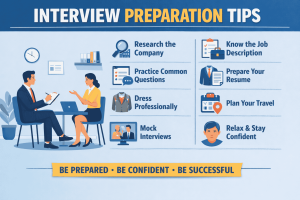
Using storytelling techniques allows candidates to present experiences in a structured and engaging way. Sharing real-life examples helps interviewers understand skills and accomplishments better. Well-told stories leave a lasting impression. This approach supports the essential dos and don’ts in interview strategies.
Handling tricky questions calmly is another important skill. Taking a moment to think before responding shows composure and clarity. Additionally, managing interview anxiety through deep breathing and preparation boosts confidence. Following the ten interview dos and don’ts helps candidates stay calm and focused throughout the interview.
Conclusion: Mastering Interview Do’s and Don’ts for Career Success
Mastering interview etiquette is a key step toward long-term career success. Each stage of the interview matters, from preparation to communication. Understanding and applying the right behaviors can greatly improve performance. This knowledge of interview dos and don’ts is invaluable for jobseekers.
Recapping the key interview dos and don’ts helps reinforce best practices. Being prepared, professional, and confident creates a strong impression on employers. At the same time, avoiding common mistakes allows for smoother interactions. These principles form the foundation of effective dos and don’ts in interview preparation.
Continuous improvement is vital in today’s competitive job market. Learning from past interviews and refining your skills increases future success. Jobseekers should treat every interview as a chance to learn. By following the ten interview dos and don’ts, candidates can stand out confidently.
With the right mindset and preparation, interviews become opportunities instead of obstacles. Stay confident, stay prepared, and move closer to your career goals.
Frequently Asked Questions
A list of the 10 things not to do in a job interview includes the following:
- Arriving late
- Coming unprepared
- Dressing inappropriately
- Using informal language or slang
- Speaking Negatively about past employers
- Poor body language
- Interrupting the interviewer
- Overconfidence or arrogance
- Failing to answer clearly
- Not asking questions
- Research and Preparation: Gather information about the company, role, and industry. Solid interview preparation starts with understanding expectations.
- Resume Tailoring: Customise your resume to match the job description.
- Practising Responses: Rehearse answers to common questions, focusing on clarity and relevance.
- Preparing Questions: Have insightful questions ready for the interviewer.
- Dress Appropriately: Present yourself in a professional manner to make a good impression.
- Active Listening and Clear Communication: Listen carefully to the interviewer and answer confidently.
- Follow-Up: Send a thank-you email expressing your gratitude for the opportunity.


Find a Program made just for YOU
We'll help you find the right fit for your solution. Let's get you connected with the perfect solution.
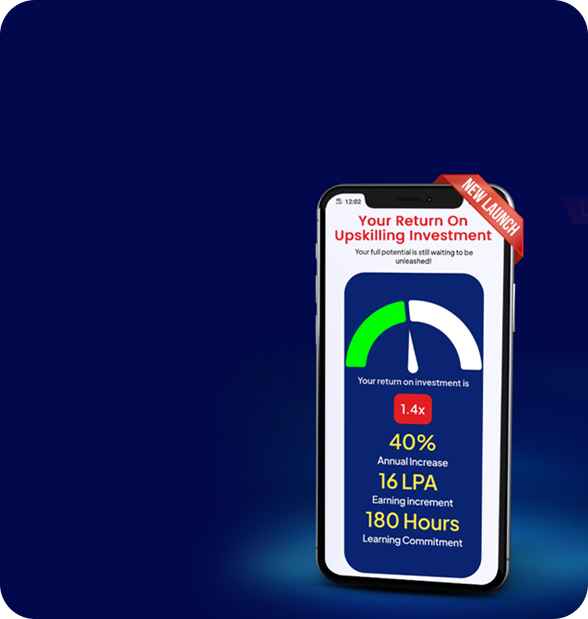
Is Your Upskilling Effort worth it?
 ROI Calculator

Are Your Skills Meeting Job Demands?
Try our Skill Gap tool
Experience Lifelong Learning and Connect with Like-minded Professionals
Explore Jaro Connect

